 edory
edoryLearning to Read with Stories: The Complete Guide
· 11 minutes read
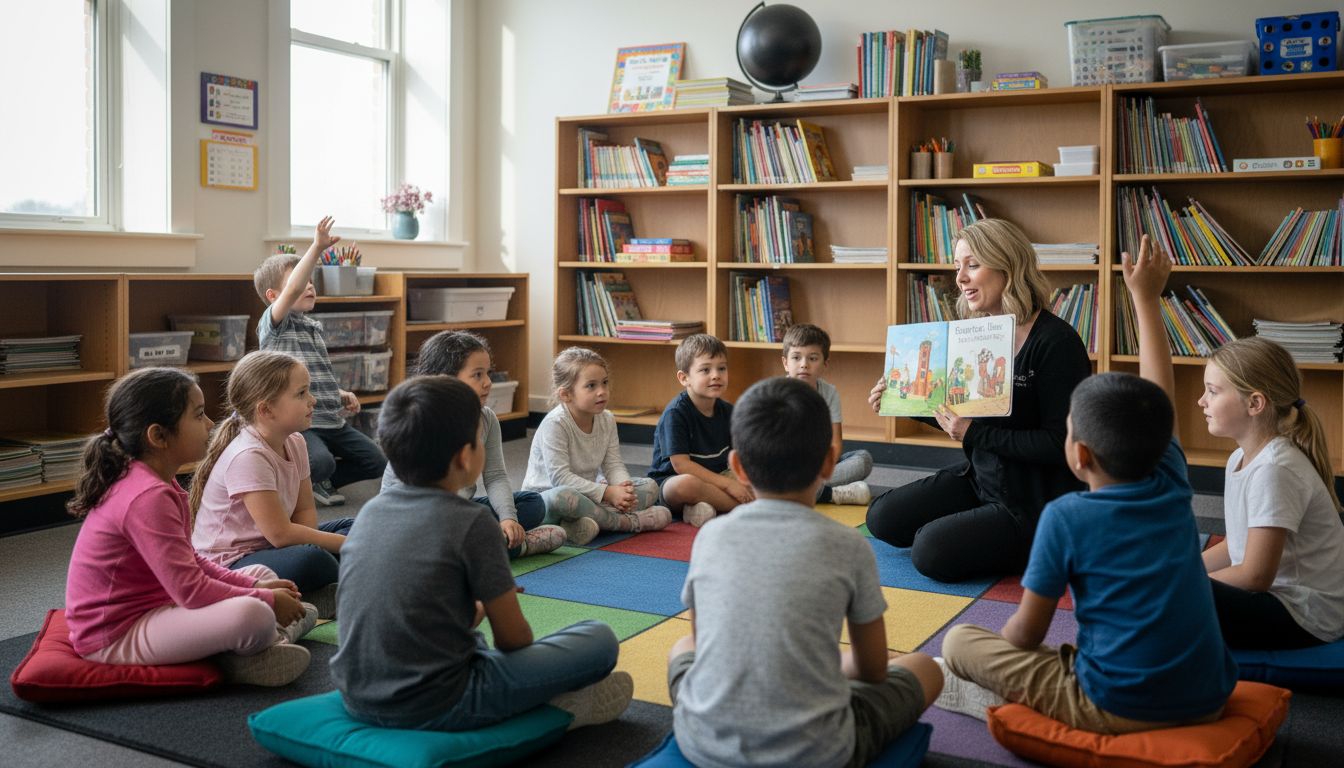
More than 60 percent of children love to discover their first steps in reading through exciting stories. Anyone who wants to make reading promotion playful will find the perfect introduction in narrated adventures. Stories spark curiosity, make connections understandable, and give children the feeling of being part of the action themselves. This approach shows how easily reading enjoyment and learning progress go hand in hand.
Table of Contents
- Learning to Read with Stories Explained
- Popular Methods and Age Groups
- How Personalized Stories Work
- Increasing Motivation and Learning Success in Children
- Safety and Quality of Digital Stories
Key Insights
| Point | Details |
|---|---|
| Stories as the Key | Stories turn learning to read into an exciting adventure and promote the development of important reading skills. |
| Emotional Connection | Personalized stories increase children's motivation by allowing them to identify with protagonists and thus overcome reading barriers. |
| Age-Appropriate Approaches | Choosing the right reading method is crucial and should be tailored to the child's age and interests. |
| Digital Safety | With digital stories, parents should pay attention to age ratings, content quality, and data protection to ensure a safe reading environment. |
Learning to Read with Stories Explained
Stories are magical keys to learning to read — they open doors to new worlds for children while simultaneously developing important reading skills. At its core, the goal is to make reading not a dry exercise, but an exciting adventure.
There are several crucial aspects to story-based reading learning. Children learn through narrative structures not just individual words, but also understand connections and contexts. A story takes children on a journey — it motivates them to keep reading, sparks curiosity, and makes learning playful. Stories also help build reading comprehension, as children learn to follow plotlines and interpret characters.
An important mechanism in learning to read through stories is the emotional connection. When children can identify with protagonists, their motivation increases exponentially. They want to know what happens next, and in doing so, they overcome reading barriers almost incidentally. The Edory Blog shows how personalized stories can amplify exactly this effect — by directly involving children in the narrative.
Fundamental strategies for successful story-based reading learning include:
- Taking the child's age and interests into account
- Reading interactively and exploring the story together
- Regularly offering new and exciting stories
- Providing patience and positive reinforcement
The goal is not perfect reading aloud, but developing a joy of reading. Every child learns differently, and stories offer exactly the individual, loving bridge to reading enjoyment.
Popular Methods and Age Groups
Learning to read is an individual process that requires different methods depending on age and developmental stage. The art lies in finding the right techniques for each age group and conveying the joy of reading to children.
For children from the age of 4, the Alphas method is one option. Wikipedia describes this reading learning method as a playful approach that teaches letters and first words in a fun and child-friendly way. The important thing here is to combine learning with fun and to harness children's natural curiosity.
In the first years of school, learning to read becomes more complex. Techniques such as skimming can be introduced early to improve text comprehension. Wikipedia explains this technique as a method in which texts are scanned diagonally to quickly get an overview. This skill helps children to read more efficiently later on.
Age-specific reading learning strategies include:
- Ages 3–4: Picture books, playful letter exploration
- Ages 4–6: Learning first letters, simple words
- Ages 6–8: Short stories, developing reading techniques
- Ages 8–10: Longer texts, deepening reading comprehension
Selecting age-appropriate stories is the key to successful reading learning. Every child has an individual learning pace, and the challenge is to find exactly the right stories and methods that promote both enjoyment and learning progress equally.
How Personalized Stories Work
Personalized stories are more than just entertainment — they are a powerful tool for the education and emotional development of children. Through individually tailored narratives, children can immerse themselves more deeply in reading adventures and their learning motivation is boosted in a very special way.
The key lies in the emotional connection. When a child recognizes themselves as the protagonist of a story, a unique bond is created. 7 Tips for Creative Personalized Children's Stories shows how important it is to integrate a child's individual interests and experiences into the narrative. These stories speak directly to children and make reading a personal, meaningful experience.
The effects of personalized stories are diverse. They not only promote reading motivation, but also support cognitive development. Children learn better when they can identify with what is being told. They develop a deeper understanding of language, expand their vocabulary, and learn to process complex emotions through the lens of familiar characters and settings.