 edory
edory
More than 75 percent of all German families regularly read stories together. What at first glance appears to be a simple ritual has a deep impact on family life. Whether during evening read-aloud time or telling made-up adventures, stories connect generations and promote children's development. Anyone who wants to know how family time with stories strengthens relationships and creates entirely new spaces for learning and experiences will find valuable insights and practical suggestions here.
Table of Contents
- What does family time with stories mean?
- Experiencing different types of stories
- Benefits of shared storytelling sessions for children
- Digital tools and apps for story creation
- Security and data protection aspects for families
Key Insights
| Point | Details |
|---|---|
| Family time promotes bonding | Shared storytelling strengthens the emotional closeness between parents and children. |
| Diverse storytelling forms enrich | Different types of stories expand horizons and promote creativity and imagination. |
| Positive effects on development | Shared storytelling sessions support language development and social skills in children. |
| Safety in the digital world | Parents should pay attention to data protection and child safety to ensure a safe digital experience. |
What does family time with stories mean?
Family time with stories is more than just a shared reading experience – it's a bridge between generations, a magical moment of connection and shared discovery. According to the WWF, reading time allows families to immerse themselves together in foreign worlds and convey knowledge playfully.
Telling and listening creates a special closeness between parents and children. Stories are not just entertainment, but also a powerful tool for communication and education. Wikipedia describes a narrative as a way to order experiences, interpret them, and participate in foreign worlds.
The benefits of family time with stories are diverse:
- Strengthening emotional bonding
- Promoting language development
- Conveying values and morality
- Developing imagination and creativity
- Building concentration skills
Stories can open windows to new worlds while creating a safe space for shared experience. They are a gift that shapes memories, expands knowledge, and strengthens family bonds.
Experiencing different types of stories
Stories are like keys to unknown worlds that families can discover together. According to Wikipedia, there are various narrative forms that move between diegesis (narrative telling) and mimesis (imitative telling) and open up different narrative perspectives.
For children and families, there are numerous exciting storytelling variants, each offering their own fascinations. For example, the well-known 'Goosebumps' series, which according to Wikipedia combines the adolescent everyday with supernatural elements and tells stories from the perspective of young first-person narrators.
Different types of stories for families:
- Fairy tales: Classic stories with moral lessons
- Adventure stories: Exciting journeys and discoveries
- Animal stories: Educational narratives with animals as main characters
- Fantasy stories: Fantastic worlds and wonderful experiences
- Realistic narratives: Stories from everyday life with learning potential
Experiencing different types of stories not only expands horizons but also strengthens the imagination and creativity of the whole family. Each narrative form offers unique opportunities to learn, dream, and grow together.
Benefits of shared storytelling sessions for children
Shared storytelling sessions are far more than a simple leisure activity – they are a powerful tool for family development. According to the WWF, such moments promote closeness between parents and children and enable images to form in people's minds together.
The positive effects are diverse and far-reaching. During shared storytelling sessions, children not only develop their language skills but also learn complex emotional and social competencies. As a Wikipedia study shows, stories can even serve as sensory educational tools that support perception and learning in unique ways.
Here are the key benefits of shared storytelling sessions:
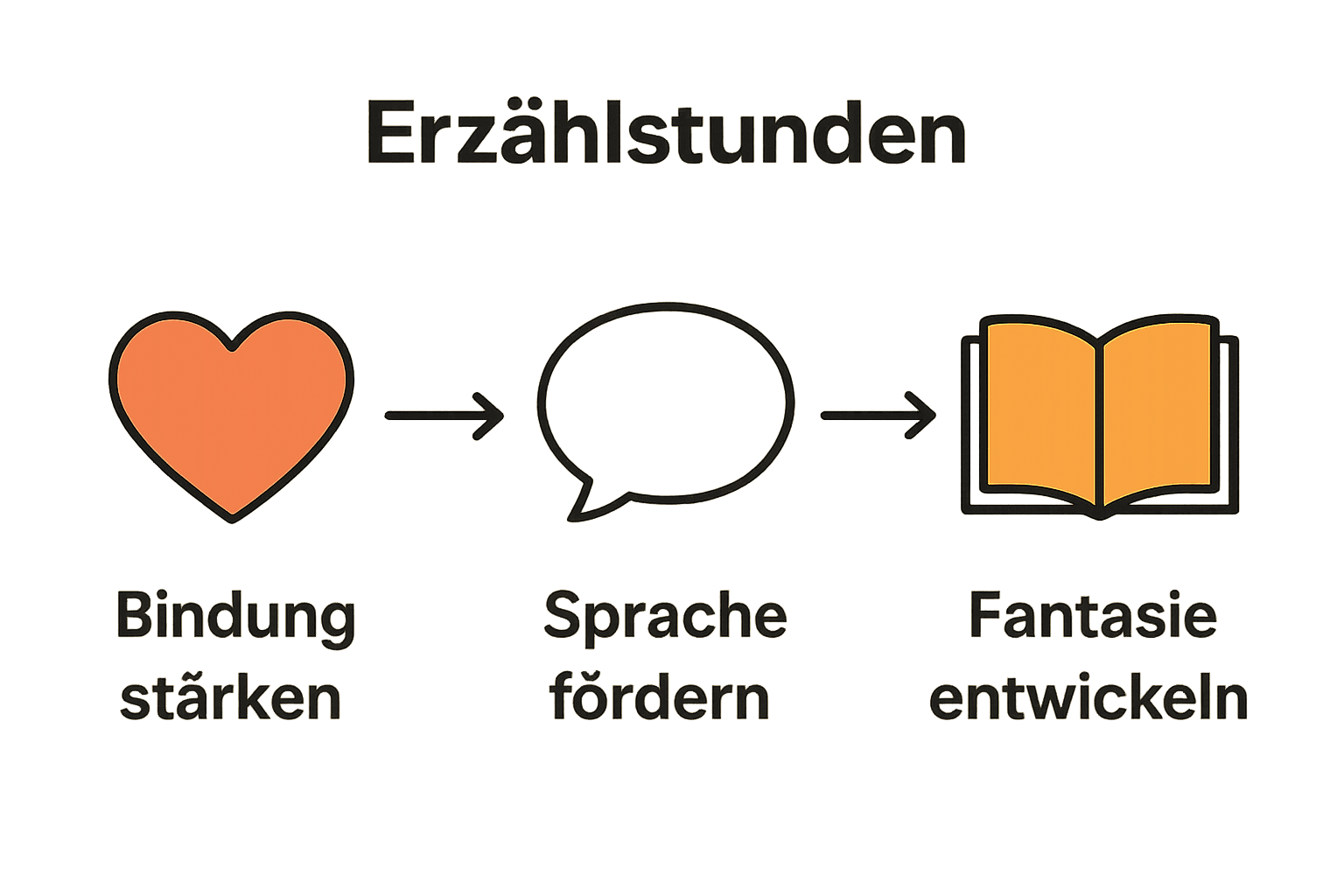
- Strengthening the parent-child bond
- Promoting language development
- Expanding vocabulary
- Developing empathy and emotional understanding
- Increasing concentration skills
- Awakening imagination and creativity
Through regular storytelling sessions, parents create a precious atmosphere of trust and security. Every shared moment is an investment in the child's emotional and intellectual development.
Digital tools and apps for story creation
The digital world opens families entirely new possibilities for storytelling. According to Wikipedia insights, modern storytelling tools can account for complex narrative structures that intelligently integrate aspects such as narrative time, narrative mode, and narrator's voice.
Modern story generators use artificial intelligence to create personalized stories. According to narrative theory, advanced systems even consider the diegesis, meaning the question of which narrative elements exist within or outside the told world. This enables an even more authentic and immersive storytelling experience.
Important features of digital storytelling tools:
- Personalization of characters
- Age-appropriate adaptation of stories
- Interactive storytelling elements
- Multimedia design options
- Voice output and read-aloud functions
- Saving and sharing stories
Technology makes storytelling a dynamic, shared experience.
 Today families can create together, customize stories individually, and discover a new dimension of storytelling.
Security and data protection aspects for families
Protecting children in the digital world is more important than ever. Digital storytelling platforms must meet the highest security standards to provide families with a trustworthy experience. As Wikipedia research shows, this is not just about technical aspects but about a holistic protective approach.
For parents, this means being particularly attentive. Data protection and child safety require a proactive approach. Important areas include protecting personal data, preventing unwanted contact, and controlling content. Despite the lack of direct data protection information in narrative theory, parental awareness is decisive.
Important safety aspects for families:
- Reviewing privacy policies
- Activating parental control features
- Limiting screen time
- Selecting age-appropriate content
- Regular conversations about online safety
- Using parental control functions
The digital world offers wonderful possibilities – with the right caution and attention, families can create safe and enriching online experiences.
Discover stories together and reshape family time
Family time with stories is the key to deep connection and playful learning. Many parents search for ways to find individual and age-appropriate stories that promote imagination and language development while providing safe digital environments. This is exactly where Edory.ai comes in – our innovative platform uses artificial intelligence to create personalized and exciting stories daily that are specifically tailored to your children's interests and needs.
Discover on Uncategorized – Edory AI – Educational Children's Stories how simple and enriching shared storytelling can be with our customized stories. Experience the benefits of automated story diversity and create unforgettable moments of togetherness and learning. Visit now https://edory.ai and start your journey to more family time filled with magical stories.
Frequently asked questions
What are the benefits of family time with stories?
Family time with stories strengthens emotional bonding, promotes language development, conveys values, develops imagination and creativity, and builds concentration skills.
What types of stories are suitable for families?
There are various types of stories suitable for families, including fairy tales, adventure stories, animal stories, fantasy stories, and realistic narratives.
How do shared storytelling sessions promote children's development?
Shared storytelling sessions strengthen the parent-child bond, promote language development, increase vocabulary, develop empathy, and increase concentration skills.
What digital tools can help with storytelling?
Digital storytelling tools offer features such as character personalization, interactive storytelling elements, multimedia design options, and voice output to make storytelling more dynamic.
Recommendation
- Storytelling in everyday family life: What is it and why is it important? – Edory AI – Educational Children's Stories
- Edory – Blog – Edory AI – Educational Children's Stories
- Family playtime with stories: Complete guide – Edory AI – Educational Children's Stories
- Understanding the parent-child relationship through stories – Edory AI – Educational Children's Stories