 edory
edory
Nearly 80 percent of parents in Germany want fairy tales to not only entertain their children but also foster their development. Stories shape how children understand feelings, recognize moral values, and unfold their imagination. Those who deliberately choose pedagogically valuable fairy tales strengthen development and bring exciting variety into family life. This overview helps you recognize the most important criteria for fairy tales so your child benefits from them sustainably.
Table of Contents
- What Characterizes Pedagogically Valuable Fairy Tales?
- Development of Imagination and Emotional Intelligence
- Conveying Moral Values and Life Skills
- Age-Appropriate Selection and Possible Risks
- Using Fairy Tales Creatively and Safely at Home
Key Findings
| Point | Details |
|---|---|
| Pedagogical Function of Fairy Tales | Fairy tales are essential educational tools that shape children emotionally, cognitively, and morally. |
| Imagination and Emotional Intelligence | They promote empathic ability and help in processing complex emotions. |
| Conveying Moral Values | Fairy tales provide a framework for engaging with ethical questions and social competencies. |
| Age-Appropriate Selection | The choice of fairy tales must be made carefully to avoid overwhelming children and triggering anxieties. |
What Characterizes Pedagogically Valuable Fairy Tales?
Pedagogically valuable fairy tales play a central role in child development. They are more than just entertaining stories - they are important educational tools that shape children in a subtle and fascinating way. Scientific research shows that such fairy tales have a complex pedagogical function.
The core features of pedagogically high-quality fairy tales can be divided into several dimensions. First, a clear structural framework is decisive. The stories must be age-appropriate, convey complex emotions and moral messages in an understandable way, and simultaneously stimulate children's imagination. Pedagogical discourses emphasize that such fairy tales should encourage children to actively engage with the narrative.
The most important features of pedagogically valuable fairy tales include:
- Age-appropriate language and narrative style
- Balance between moral instruction and imagination promotion
- Fostering cognitive and emotional development
- Encouraging independence and critical thinking
- Conveying cultural and ethical values
Pro Tip: Choose fairy tales that encourage your children to think and discuss rather than just to entertain.
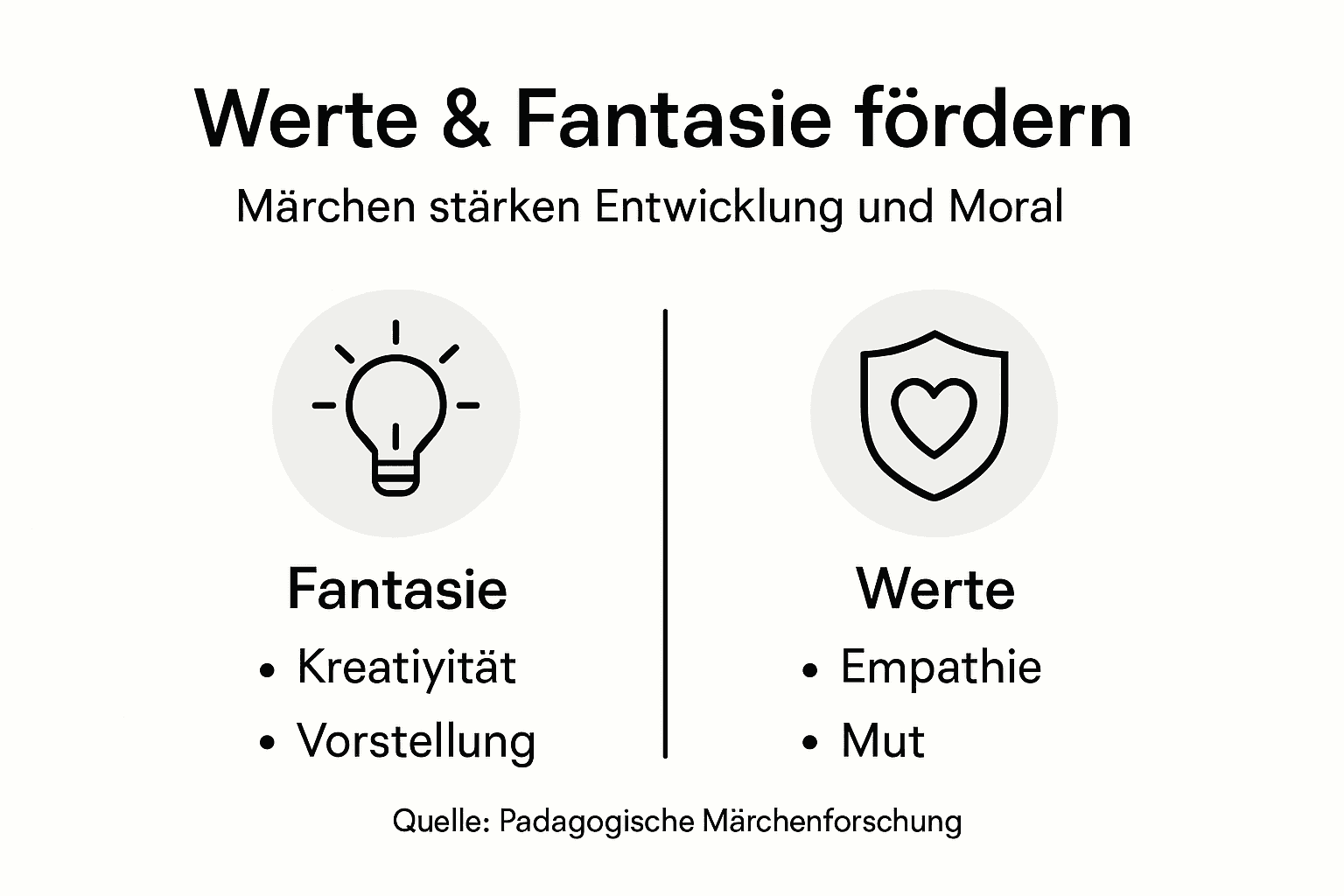
Here is an overview of how different types of fairy tales specifically contribute to child development:
| Fairy Tale Type | Pedagogical Value | Typical Themes |
|---|---|---|
| Folk Tales | Promote imagination and values | Adventure, courage, friendship |
| Literary Fairy Tales | Convey complex morality | Identity, decisions |
| Modern Fairy Tales | Strengthen social competencies | Diversity, togetherness |
| Fables | Sharpen critical thinking | Wisdom, justice |
Development of Imagination and Emotional Intelligence
Fairy tales play a crucial role in fostering imagination and emotional intelligence in children. They offer more than just entertaining storytelling - they are a powerful pedagogical instrument for psychosocial development. Scientific research shows that fairy tales help children understand and process complex emotional processes.
Through symbolic stories and metaphorical representations, fairy tales specifically stimulate children's imagination. They create a safe emotional space where children can learn to recognize, name, and regulate feelings. Research on emotional development underscores that children develop important social and emotional competencies through identifying with fairy tale characters.
The central aspects of imagination and emotion development through fairy tales include:
- Promoting empathic ability
- Development of perspective-taking
- Processing complex emotions
- Strengthening resilience
- Building problem-solving strategies
The stories enable children to explore difficult emotions within a protected framework. They learn to cope with fears, develop hope, and understand different courses of action. In this way, fairy tales work like an emotional training ground that playfully and lovingly conveys social and emotional competencies.
Pro Tip: Read fairy tales interactively and encourage your child to reflect on the characters' feelings.
Conveying Moral Values and Life Skills
Fairy tales are more than just imaginative stories - they are powerful instruments for moral education. Philosophical research shows how fairy tales can convey ethical concepts in a child-friendly and understandable way.

Through narrative structures and complex characters, fairy tales offer children the opportunity to explore moral dilemmas and reflect on social behavior. Pedagogical research confirms that these stories not only entertain but also deliberately develop life skills such as empathy, responsibility, and justice.
The central moral learning aspects through fairy tales include:
- Distinguishing between good and evil
- Development of compassion
- Understanding consequences of actions
- Importance of honesty and respect
- Acceptance of differences
Fairy tales create a safe space where children can playfully explore complex ethical questions. They enable a gentle engagement with moral principles without a judgmental tone. The stories help children adopt different perspectives and understand the consequences of decisions.
Pro Tip: Discuss the moral decisions of fairy tale characters together and encourage your child to share their own thoughts and feelings.
Age-Appropriate Selection and Possible Risks
Selecting fairy tales for children requires great care and sensitivity. Pedagogical overviews recommend carefully selecting fairy tales according to the child's developmental stage and language competency.
When selecting fairy tales, parents and educators must consider various aspects. Research shows the risks of complex fairy tale content that can overwhelm children or trigger anxieties. It is crucial to choose fairy tales that are developmentally appropriate and emotionally suitable.
Important criteria when selecting fairy tales:
- Child's age and emotional maturity
- Complexity of the plot
- Emotional resilience
- Understandable language
- Positive moral messages
Special caution is required with fairy tales containing very dramatic or violent scenes. Not every classic fairy tale is suitable for every age. Important is sensitive, supportive communication that helps the child process and understand the story.
Pro Tip: Read fairy tales yourself first and critically reflect on whether the content is suitable for your child.
The following comparison table shows typical risks when selecting fairy tales and how parents can respond appropriately:
| Risk | Example Situation | Recommended Response |
|---|---|---|
| Overwhelming | Complicated plot | Interpret fairy tales together |
| Fear from content | Violence or loss | Have an open conversation |
| Incomprehensible language | Unfamiliar terms | Explain content in everyday language |
| Missing morality | Characters without consequences | Discuss values in follow-up conversation |
Using Fairy Tales Creatively and Safely at Home
Fairy tales offer wonderful opportunities for creative family activities that go far beyond simply reading aloud. Creative guides recommend designing fairy tales interactively and playfully to promote imagination and learning processes.
Using fairy tales at home can be diverse and playful. Pedagogical platforms show how families can creatively integrate fairy tales into their daily lives. Important is to make the stories lively and interactive rather than consuming them passively.
Creative ideas for using fairy tales:
- Acting out fairy tale scenes together
- Crafting and painting to fairy tale themes
- Inventing your own fairy tale continuations
- Listening to and creating fairy tale audio dramas
- Dressing up as fairy tale characters
Through active engagement with fairy tales, not only creativity and imagination are promoted, but also social competencies and emotional intelligence are strengthened. The shared creative time also creates valuable family bonding and makes learning an enjoyable experience.
Pro Tip: Let your child invent their own fairy tale elements and help shape the story.
Rediscover and Individually Design Pedagogically Valuable Fairy Tales
Fairy tales promote value education, imagination, and emotional intelligence in children. The challenge is finding age-appropriate and morally thoughtful stories that encourage reflection while avoiding fears. This is exactly where Edory.ai comes in. Our platform enables parents to create new, personalized fairy tales daily that adapt to their children's developmental stage and interests. This way, you combine education and inspiring imagination playfully.
Discover in our Uncategorized – Edory AI – Educational Children's Stories section a variety of impulses for creative family moments. Design stories together that convey values and promote emotional development. Start now on https://edory.ai to open up a safe and educational fairy tale world for your child that delights anew every day.
Frequently Asked Questions
What are pedagogically valuable fairy tales?
Pedagogically valuable fairy tales are stories that not only entertain but also foster the emotional, cognitive, and social development of children. They convey important values and stimulate imagination.
How can fairy tales promote children's emotional intelligence?
Fairy tales give children the opportunity to recognize and process complex feelings by identifying with characters. They create a safe space to develop empathy and social competencies.
What features should I consider when selecting fairy tales for my child?
When selecting fairy tales, the child's age and emotional maturity, the complexity of the plot, and the understandability of the language should be considered. Positive moral learning is also important.