 edory
edory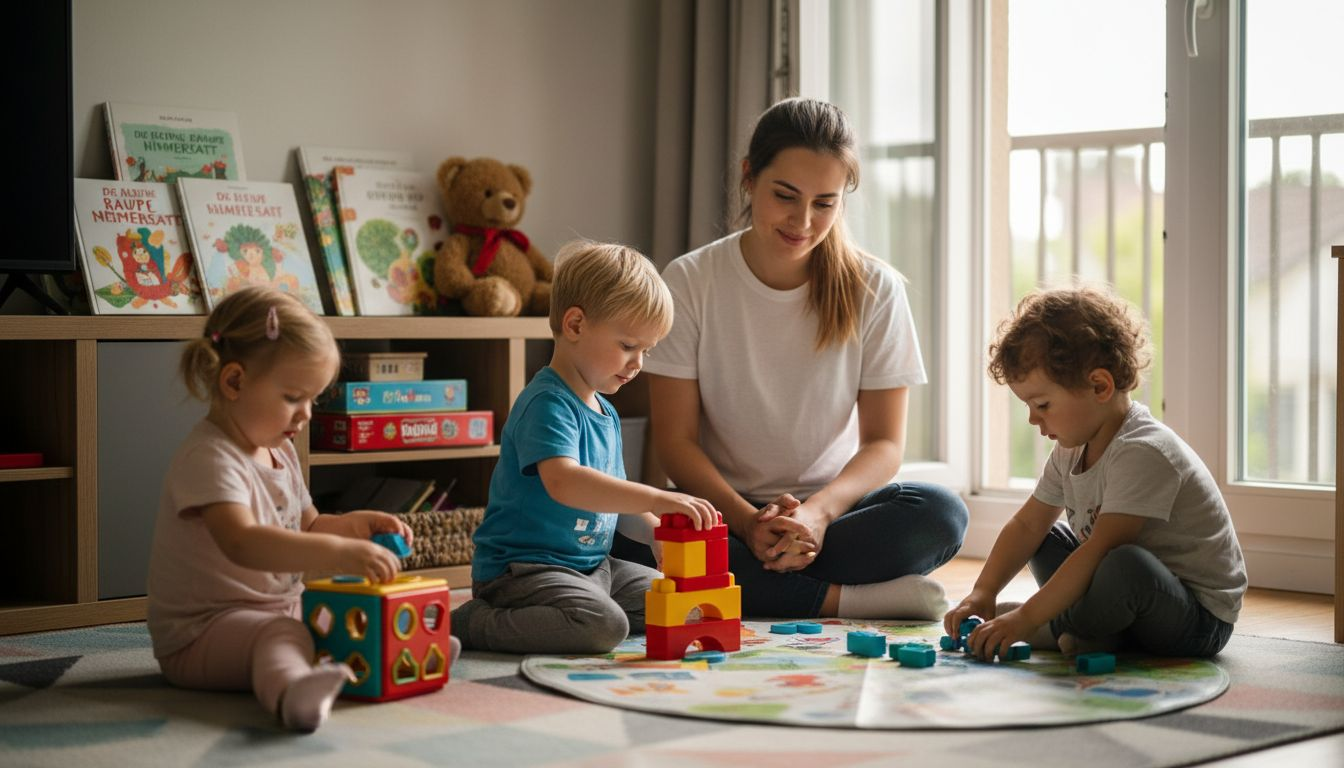
Every third preschool parent in Germany is looking for new ways to combine playful learning and creativity. Early development of colors, shapes, and language not only shapes development but also strengthens children's self-confidence. This article shows practical ideas for how you can achieve amazing learning progress at home with simple games.
Table of Contents
- Recognizing Colors and Shapes Through Sorting Games
- Learning to Count with Simple Movement Games
- Expanding Vocabulary with Picture Story Games
- Promoting Fine Motor Skills Through Craft Ideas
- Role-Playing Games to Strengthen Social Competence
- Discovering Nature with Collection and Search Games
- Musical Games for Rhythm and Hearing
Quick Summary
| Important Insight | Explanation |
|---|---|
| 1. Sorting Games Promote Colors and Shapes | Through sorting games, children from age three playfully learn to recognize colors and shapes, which supports their cognitive development. |
| 2. Movement Games Strengthen Counting Skills | Movement games that integrate counting make mathematics exciting and promote number understanding as well as motor skills. |
| 3. Picture Stories Expand Vocabulary | With picture stories, children can playfully expand their vocabulary and strengthen their communication skills. |
| 4. Craft Ideas Promote Fine Motor Skills | Creative crafting helps children develop fine motor skills through various techniques and materials and improves hand-eye coordination. |
| 5. Role-Playing Games Strengthen Social Competence | Role-playing games enable children to playfully learn social skills and empathy by taking on different roles and learning to resolve conflicts. |
1. Recognizing Colors and Shapes Through Sorting Games
Sorting games are a fantastic method for teaching children from age three to playfully recognize colors and shapes. These educational activities are not only fun but also support cognitive and motor development.
In Montessori sorting games, children learn important concepts such as classification and logical thinking. They train their fine motor skills by sorting objects according to criteria such as color, shape, or size. These games help children recognize and understand differences and similarities.
A simple example is sorting colorful building blocks or buttons into matching color bowls. Children not only learn color names but also develop spatial understanding. Color sorting games support differentiated perception of nuances and promote language development.
Practical tips for parents:
- Use various materials such as buttons, wooden blocks, or paper pieces
- Start with few colors and gradually increase complexity
- Make sorting a shared game with praise and encouragement
Pro-Tip: Integrate sorting games into everyday life by motivating your child to sort objects by color while cleaning up or helping.
2. Learning to Count with Simple Movement Games
Movement games are a brilliant method for teaching children from age three to count in a playful and dynamic way. These activities combine body movement with mathematical learning and make number understanding an exciting adventure.
Mathematical basic competencies develop in children particularly effectively through games that combine running, jumping, and counting. In doing so, children not only learn numbers but also develop an intuitive understanding of quantities and spatial relationships.
A practical example is the number hopping game: children hop on marked squares and loudly count their jumps. They can be given tasks such as hopping ten times or counting backward from five. These activities promote not only mathematical but also motor skills.
More creative movement games for counting:
- Counting sequences while balancing
- Numbers with jumping jacks
- Jumping games with number cards
- Hide-and-seek games with counting tasks
Pro-Tip: Make counting a shared game with lots of laughter and motivation so your child develops a love of learning.
3. Expanding Vocabulary with Picture Story Games
Picture stories are a magical key to language development in children from age three. They offer a playful and creative way to expand vocabulary and strengthen communication skills.
Language games with picture stories enable children to unfold their imagination while developing language skills. The pictures stimulate imagination and help children construct their own stories, form sentences, and discover new words.
Practical implementation of the game:
- Lay out a series of pictures in random order
- Let your child invent a story about the pictures
- Support with targeted questions like "What is happening here?"
- Encourage the use of new words
- Praise creative and expressive storytelling
Pro-Tip: Make storytelling a daily ritual full of fun and discovery.
4. Promoting Fine Motor Skills Through Craft Ideas
Craft ideas are a wonderful way to playfully develop fine motor skills in children from age three. These creative activities train precise hand movements and promote important motor skills.
When crafting, children develop their finger dexterity through various techniques such as cutting, kneading, folding, and gluing. These activities not only improve hand-eye coordination but also strengthen concentration and endurance.
Creative craft ideas for children:
- Folding origami figures
- Threading bead necklaces
- Making potato printing
- Forming figures from pipe cleaners
- Creating collages
- Modeling with clay
Through such activities, children playfully learn spatial thinking and develop a feel for different materials and their properties.
Pro-Tip: Let your child implement their own creative ideas and praise the process more than the end result.
5. Role-Playing Games to Strengthen Social Competence
Role-playing games are a magical world where children from age three can playfully discover and develop social skills. They provide a safe space to explore and understand complex social situations.
Social competencies are promoted through role-playing games in a natural and playful way. In doing so, children learn to put themselves in the shoes of others, conduct conversations, and interpret social cues.
For example, role-playing games like the following can train social skills:
- Playing doctor and patient
- Simulating a shop
- Imitating family situations
- Practicing peaceful conflict resolution
- Developing communication and empathy
By taking on different roles, children learn perspective-taking, communication, and teamwork in an entertaining and relaxed way.
Pro-Tip: Accompany role-playing games with targeted questions and observations to gently support learning.
6. Discovering Nature with Collection and Search Games
Collection and search games are a wonderful way to introduce children from age three to nature in a playful and exciting way. These activities awaken curiosity and promote connection to the environment.
Nature experiences strengthen creativity and language competence in children through interactive outdoor learning. When collecting and searching for natural materials, children sharpen their perception and develop a sense of responsibility for their surroundings.
Ideas for collection and search games:
- Collecting leaves by color
- Finding stones with special shapes
- Making small animal observations
- Storing nature treasures in a collection box
- Hide-and-seek games in the garden or park
- Guessing nature sounds
These games not only promote environmental education but also motor and cognitive skills.
Pro-Tip: Prepare a small explorer's bag with a magnifying glass and collection bag to make the nature experience even more exciting.
7. Musical Games for Rhythm and Hearing
Musical games are a fantastic way to open the magical world of tones and rhythms to children from age three. They are not only fun but also promote important areas of development.
Rhythm games support musical abilities in a playful way. They improve fine motor skills, concentration, and coordination and lay the foundation for musical understanding.
Creative musical game ideas:
- Body percussion with clapping rhythms
- Making music with everyday objects
- Dance games with different music styles
- Building instruments yourself
- Accompanying songs with movements
- Guessing sounds and tones
Pro-Tip: Make music a shared experience and let your child make their own musical discoveries.
Below is an overview of the various educational activities to support the development of children from age three as described in the article. Each method is summarized with its description and benefits.
| Activity | Description | Benefits |
|---|---|---|
| Recognizing Colors and Shapes Through Sorting Games | Children sort objects according to specific criteria such as color, shape, or size. | Promotes cognitive and motor skills as well as logical thinking. |
| Learning to Count with Movement Games | Children count during physical activities such as hopping or balancing. | Develops mathematical competence and motor development. |
| Expanding Vocabulary with Picture Story Games | Language is promoted by inventing stories about picture sequences. | Strengthening of vocabulary and communication skills. |
| Promoting Fine Motor Skills Through Craft Ideas | Cutting, folding, and crafting train finger dexterity. | Improves hand-eye coordination and promotes creative thinking. |
| Role-Playing Games to Strengthen Social Competence | Children imitate social scenarios such as doctor visits or everyday interactions. | Promotes empathy, communication, and social integration. |
| Discovering Nature with Collection and Search Games | Children interact with nature and collect materials such as leaves. | Awakens environmental awareness and improves perception. |
| Musical Games for Rhythm and Hearing | Playful engagement with rhythms and sounds. | Develops musical skills and concentration. |
Expanding Playful Learning with Stories
Children from age three discover the world with playful learning ideas such as sorting games, movement games, and role-playing games. However, parents often search for additional, motivating ways to supplement these experiences daily in a playful manner and promote vocabulary, fine motor skills, and understanding in a simple way. This is exactly where Edory.ai comes in and offers an innovative platform for personalized, richly illustrated children's stories that are created daily anew and individually tailored to the age and interests of your child.
Combine the numerous learning games from this article with the imaginative stories from Edory and playfully and sustainably promote your child's attention, creativity, and language development. Discover exciting and educational stories in the category Uncategorized – Edory AI – Educational Children's Stories and experience how individual narratives make learning success even more intense. Start now with Edory.ai and give your child valuable impulses for a loving educational journey.
Frequently Asked Questions
How can I learn colors and shapes with my child?
Sorting games are a great way to teach your child from age three to recognize colors and shapes. Start with