 edory
edory
Every parent knows it: Children follow along enthusiastically when a story dives into their world and exciting characters come to life. For parents in Germany, choosing age-appropriate topics is crucial so that their preschool child listens attentively, thinks along, and develops their own imagination. With careful preparation, you'll discover how stories not only fascinate but also strengthen language skills and creativity in little ones.
Table of Contents
- Step 1: Prepare Age-Appropriate Topics Intentionally
- Step 2: Develop a Simple Story Structure
- Step 3: Create Exciting Characters and Settings
- Step 4: Use Personal Experiences and Imagination
- Step 5: Review the Story Together with Your Child
Quick Summary
| Key Point | Explanation |
|---|---|
| 1. Choose Age-Appropriate Topics | Consider the interests and needs of your target audience to develop engaging stories. |
| 2. Use a Simple Story Structure | Design the story clearly with introduction, main part, and conclusion for better comprehension. |
| 3. Create Exciting Characters and Settings | Use sensory impressions and emotional details to bring characters and environments to life. |
| 4. Incorporate Personal Experiences | Combine real events with imagination to create emotional and relatable stories. |
| 5. Review the Story Together | Have a feedback conversation with your child to encourage creative ideas and improve storytelling skills. |
Step 1: Prepare Age-Appropriate Topics Intentionally
Carefully preparing age-appropriate topics is essential for creating an engaging and age-appropriate story. To truly excite children, you must choose topics that match their experience and spark their interest.
When selecting topics, you should first consider the needs and interests of each age group. Choosing age-appropriate stories helps you develop tales that children will actually find captivating.
Here are some important aspects to consider when selecting topics:
- Choose manageable topics that children can understand
- Include experiences related to their everyday life
- Develop exciting but not overwhelming plot lines
- Consider emotional developmental stages
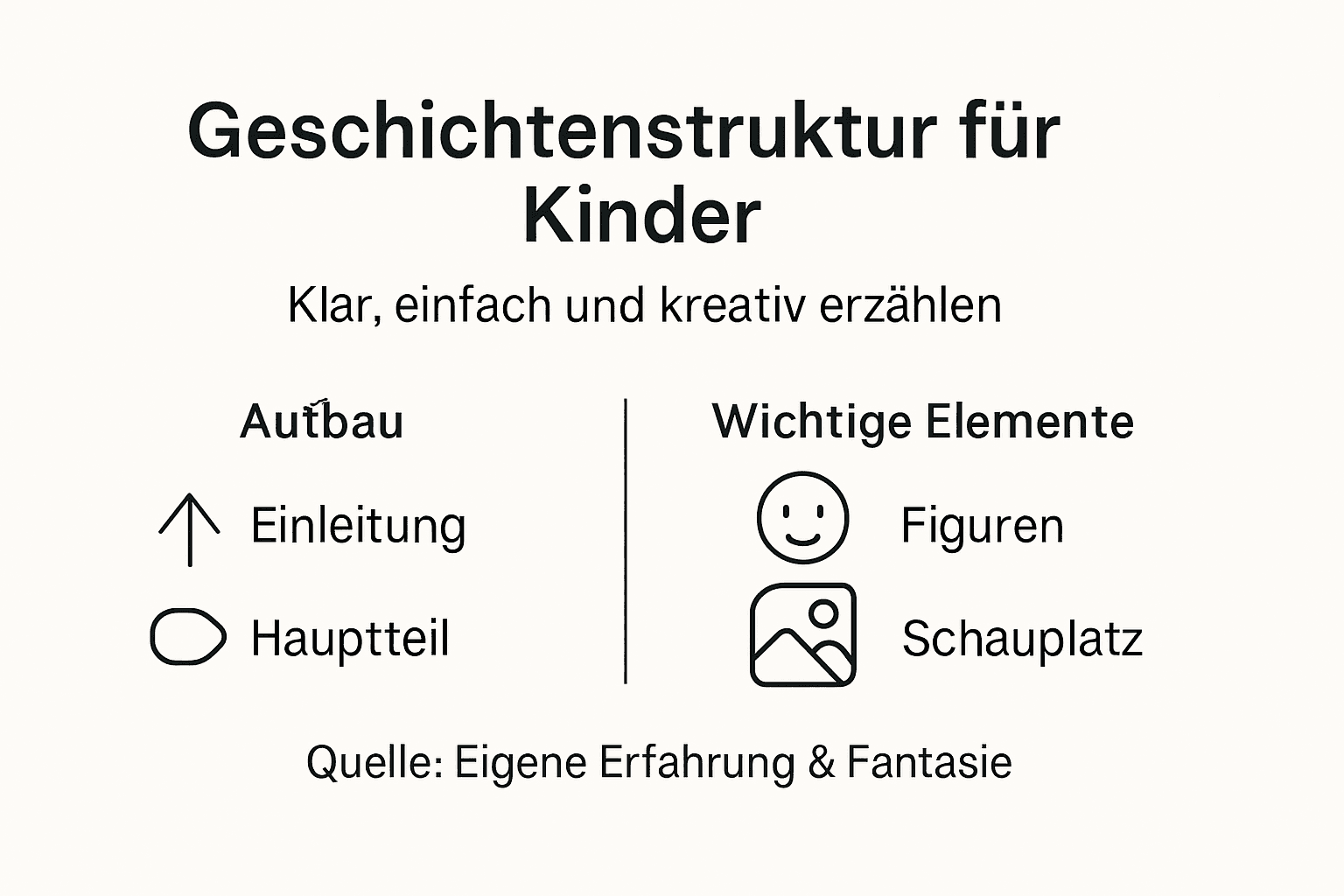
The structure of a child-friendly story follows a classic three-part format: introduction, main part, and conclusion. In the introduction, you answer the most important W-questions: Who are the protagonists? What happens? When does the story take place? Where does it happen?
Below, you'll find an overview of how different age groups affect topic selection and implementation of children's stories:
| Age Group | Suitable Topic Worlds | Storytelling Style Recommendation |
|---|---|---|
| 3–5 Years | Daily life, animals, family | Very simple language, many repetitions |
| 6–8 Years | School, friendship, fantasy | Clear structure, first tension arcs |
| 9–11 Years | Adventure, magic, challenges | Complex tension, simple subplots |
Children need clear, understandable stories that spark their imagination while reflecting their everyday world.
Pro Tip: Read your story aloud first and watch children's reactions to test whether the topic and storytelling style are truly age-appropriate.
Step 2: Develop a Simple Story Structure
A compelling children's story is based on clear and simple structure. With the right approach, you can develop stories that captivate children while remaining easy to understand.
Fundamentals of oral storytelling show that an effective story consists of three essential elements: the introduction, the main part, and the conclusion.
Here are the key components of a child-friendly story structure:
- Introduction: Introduce the main characters, location, and time
- Main Part: Develop the plot with increasing tension
- Climax: Create a surprising or exciting moment
- Conclusion: Wrap up the story or provide an unexpected twist
The art of storytelling lies in captivating children from beginning to end and sparking their imagination.
Make sure to keep the plot simple and easy to follow. Use a clear dramatic line that young listeners can easily understand.
Pro Tip: Practice telling your story aloud and observe children's reactions to test the effectiveness of your structure.
Step 3: Create Exciting Characters and Settings
The art of storytelling lies in the ability to create vivid characters and captivating settings that fascinate children and spark their imagination.

With multimodal storytelling techniques, you can make your story even more authentic and gripping.
Here are some strategies for creating exciting characters and settings:
- Include sensory impressions: smells, sounds, textures
- Describe emotional details of characters
- Give characters surprising qualities
- Describe settings in a lively and detailed way
The more sensory impressions you include, the closer children are to the story.
Be careful not to make characters too complicated. Children need clear, understandable characters with recognizable traits.
Pro Tip: Read the story aloud and observe whether your descriptions of characters and places seem vivid and engaging.
Step 4: Use Personal Experiences and Imagination
Every great story begins with real experiences and the power of imagination. Combining personal moments with creative elements creates unforgettable stories for children.
Stories as a means of processing experiences allow you to transform everyday experiences into magical narratives.
Here are some strategies for combining personal experiences and imagination:
- Enrich everyday situations with imaginative elements
- Use your own childhood memories as inspiration
- Include small details from family life
- Introduce unexpected fantastical twists
True stories with a touch of fantasy become the most exciting adventures.
The art lies in connecting authentic feelings and experiences with creative elements so that children can identify with the characters.
The following table shows how personal experiences and imagination can work together to create an original children's story:
| Source of Inspiration | Contribution to the Story | Possible Added Value |
|---|---|---|
| Your own childhood experiences | Authentic plot, emotional depth | Children recognize themselves |
| Everyday situations | Realistic scenes | Connection to their world |
| Fantastic ideas | Unexpected twists | Promotes creativity |
Pro Tip: Keep a personal experience journal where you record interesting moments and thoughts that can later serve as the basis for stories.
Step 5: Review the Story Together with Your Child
Reviewing a story together is more than just a correction—it's a valuable moment of exchange and creative collaboration with your child.
Effective feedback loops allow children to playfully develop and improve their storytelling skills.
Here are practical strategies for a constructive conversation:
- Give positive feedback and encouragement
- Ask open questions about the story
- Discuss characters and plot together
- Give your child room for their own ideas
Appreciative feedback motivates children to invent and tell more stories.
Make sure your feedback is descriptive and supportive. It's not about perfection but about enjoying storytelling.
Pro Tip: Have the conversation as a dialogue on equal footing and show genuine interest in your child's creative ideas.
Creative Storytelling Made Easy with Edory
Telling individual and age-appropriate stories requires courage to be creative and clear structure. In your article, you show how important it is to carefully prepare age-appropriate topics and bring them to life with exciting characters. However, the quick inspiration or the right method to find new original stories every day that truly excite children is often missing. This is where Edory comes in—as an innovative platform, edory.ai supports parents in generating exactly these stories easily. With personalized suggestions based on age, interests, and life worlds, you get a wealth of ideas directly on your smartphone.
Benefit from the unique combination of educational expertise and modern AI technology that playfully promotes storytelling. Also discover exciting content in the Uncategorized – Edory AI – Educational Children's Stories category that will inspire and motivate you. We invite you to take the next step now and bring your creative stories for children to life with Edory.
Frequently Asked Questions
How do I choose age-appropriate topics for my stories?
To choose age-appropriate topics, you should consider the interests and needs of the particular age group. Start with topics from the child's everyday world, such as daily life and animals, and incorporate familiar experiences. Ask the most important W-questions in the introduction to ensure a clear start.
What structure should a good children's story have?
A good children's story follows a simple structure: introduction, main part, climax, and conclusion. Begin with an introduction where the main characters and setting are presented, followed by an exciting main part, until you finally wrap up the story. Work with increasing tension to maintain interest.
How do I create exciting characters and settings?
To create exciting characters and settings, add emotional details and sensory impressions. Describe smells and sounds to create a vivid atmosphere. Make sure characters have clear traits so children can easily identify with them.
How can I incorporate personal experiences into my children's stories?
Incorporate personal experiences by enriching everyday situations with imaginative elements. Use your own childhood memories as inspiration to tell authentic stories. This allows children to better identify with the characters and find the plot relatable.
How do I review the story together with my child?
Go through your story with your child to get valuable feedback. Give positive comments and ask open questions about the plot and characters. Make room for their own ideas to encourage your child's creativity and ensure exciting collaboration.