 edory
edory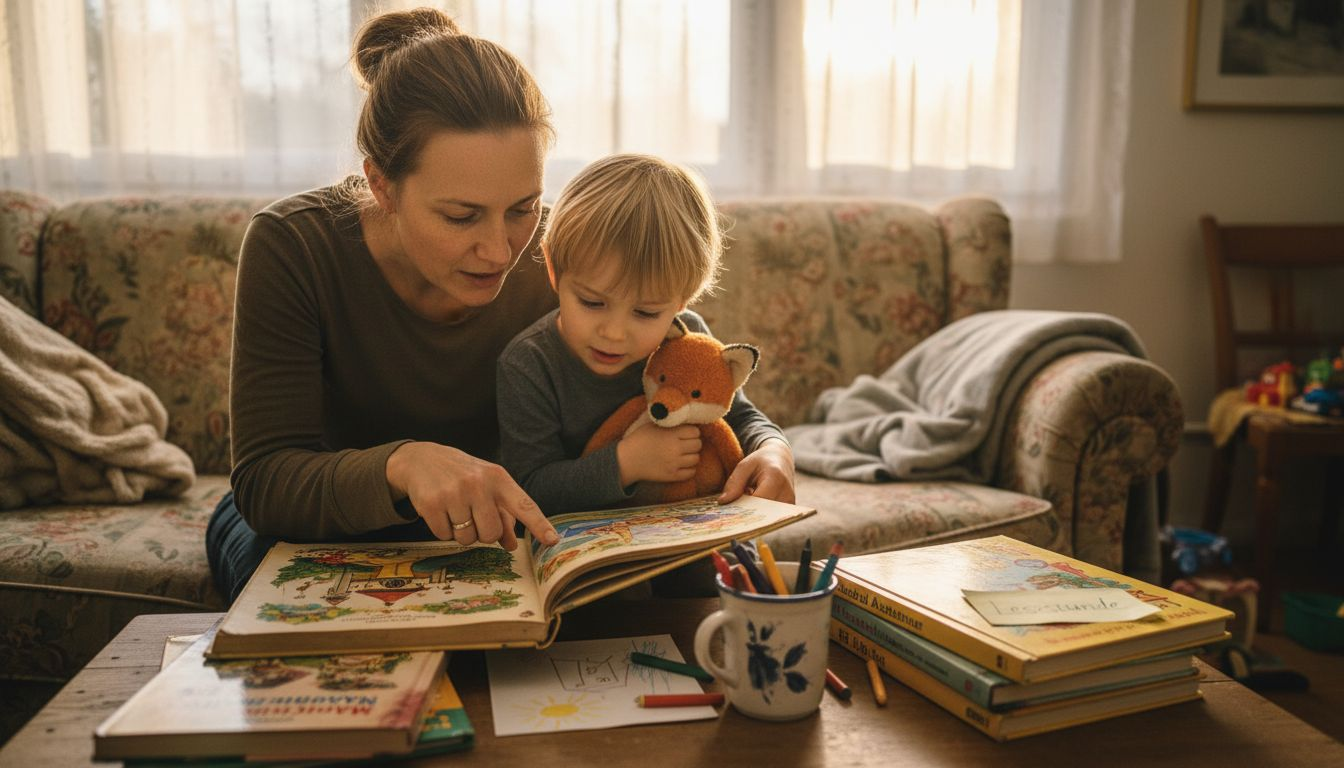
Short Children's Stories: The Most Beautiful Stories for Little Listeners
What are short children's stories?
Definition and special features
Short children's stories are literary works written specifically for children and characterized by their small scope. They are usually written in simple, clear language and adapted to children's cognitive and emotional development. Their brevity is typical: they often consist of only a few paragraphs or one to two pages. Another characteristic is a manageable number of characters and a clearly structured narrative flow. This focus keeps the attention of young listeners engaged.
Short children's stories often address everyday events, small adventures, or fantasy worlds. The ending is usually positive, so children feel a sense of security and joy while listening. Often a clear message or moral is conveyed without being preachy.
Difference from long children's stories
Long children's stories, such as fairy tales or children's novels, are designed across multiple pages or chapters. They are characterized by more complex plot lines, a larger number of characters, and often multiple settings. Short children's stories, on the other hand, compress their plot to the essentials. They forgo subplots and offer a quickly comprehensible structure, making them particularly suitable for small children and for quick reading aloud.
Furthermore, short children's stories are better suited to engage young listeners with limited attention spans. They work well as a conclusion to the day or for small breaks, while long stories require a longer time window and more intense attention.
Why are short children's stories important?
Benefits for children
Short children's stories fulfill several important functions in child development. They promote concentration because children can more easily absorb and process stories with clear structure and limited scope. They also strengthen listening comprehension and language development because children learn new words and sentence structures through repeated listening.
Short stories often also spark impulses to think and recreate. By reaching an ending quickly, children regularly experience success, which strengthens self-confidence. Thanks to their short length, stories remain flexible to use – whether as a quick pastime or as a sleep aid.
Development of language and imagination
Especially in toddlerhood and preschool years, listening to and retelling stories plays a crucial role. Short children's stories provide children with a safe framework to playfully discover words and story structures. They help expand active and passive vocabulary and promote language comprehension. Repetitive elements, typical expressions, and simple descriptions promote language learning success.
Furthermore, short stories stimulate imagination: children put themselves in the place of animals, fantasy creatures, or various roles and expand their own imagination through storytelling, playing, or drawing.
From what age are short children's stories suitable?
Stories for toddlers (1-3 years)
For children aged one to three years, particularly simple, very short stories should be chosen. This age group has a very limited attention span, which is why the story should be told clearly, with repetition, and using familiar themes. Animals, everyday objects, and topics like eating, sleeping, or bathing are particularly popular. The language should be very clear, the action understandable, and the structure simple.
Example:
The little bear is looking for his ball. He asks one animal after another until he finally finds it.
Stories for preschool children (4-6 years)
Children of preschool age are already able to follow somewhat more complex actions. The stories may contain a short tension curve, simple conflicts, or surprises. Typical themes are friendship, adventure, and animal stories. It can certainly be humorous, imaginative, or slightly adventurous. Nevertheless, the story should not be too extensive and should be told without major time jumps.
Example:
The mouse and the hare want to build a treehouse, but they argue about the tools. In the end, they manage it together and celebrate their success.
Recommendations for elementary school age
For elementary school children, short children's stories are suitable that encourage thinking or discussion. Topics such as togetherness, courage, or small everyday problems are in the foreground. The language can certainly be more sophisticated and can include witty dialogues or small riddles. Still, the story should be clearly structured and readable aloud in a few minutes.
Example:
A child must learn not to be discouraged by a new hobby and learns that practice and patience lead to success.
The most popular themes for short children's stories
Animals
Stories with animals as main characters are a classic. They are not only child-appropriate but also open up diverse opportunities for identification. Examples include the little rabbit who overcomes his fear, or the clever ravens who solve a problem together. Animals can convey feelings, wishes, and difficulties in a child-friendly way and promote empathy and compassion.
Friendship & Family
Family and friends play a central role in early childhood. Stories in which siblings, parents, or best friends manage tasks together, overcome conflicts, or master adventures mirror the everyday lives of many children. Such narratives help children playfully experience conflict resolution strategies, helpfulness, and solidarity.
Adventure & Fantasy
Short adventure stories transport young listeners to fairy-tale worlds where there are wizards, talking animals, or magical objects. The journey to an imaginary planet or the discovery of hidden treasure spark creativity and offer exciting entertainment without overwhelming.
Short children's stories to read aloud
Tips for reading aloud
Reading aloud short children's stories is a valuable shared time. Some tips help make the reading experience even more beautiful:
Checklist for successful reading time:
- Create a calm and cozy environment
- Maintain eye contact with the child
- Bring different characters to life with altered voices
- Pay attention to the child's reactions
- Take breaks, ask questions, or look at pictures together
- Include the child (e.g., speak the closing sentence together)
Create reading rituals
Reading rituals provide structure and orientation. A fixed reading ritual, such as the story before bedtime or after lunch, conveys security. This includes a fixed place (e.g., sofa or bed), the selection of a favorite story, and sometimes a small shared closing ritual, such as blowing out a candle. Children become accustomed to the consistent shared time, which strengthens bonding and reading motivation.
Find free short children's stories online
The best websites and sources
Many high-quality, free short children's stories are available on the internet. Good starting points include, for example:
- vorleser.net
- gute-nacht-geschichten.com
- SWR Kindernetz Stories
- Märchenstunde.de
- Public library offerings
Make sure that the pages are reputable, ad-free, and child-friendly and comply with common data protection regulations.
What should you look for in free stories?
Not all online sources are equivalent. Important points to consider when selecting:
- Are the texts age-appropriate and written in correct, simple English?
- Are they original, self-written, or legally freely available stories?
- Are problematic contents avoided (e.g., frightening scenes, clichés, violence)?
- Are there additional notes on the age level or reading/reading-aloud duration?
Writing short children's stories yourself
Simple instructions for parents and children
Short children's stories are excellent for creative writing with children. With a little practice, a small story emerges together.
Step-by-step instructions:
1. Find a topic: What particularly interests the child? Animals, vehicles, fantasy creatures?
2. Choose a main character: A child, an animal, or a talking object?
3. Think of a simple plot: The main character has a small problem (e.g., lost something, wants to find a friend).
4. Find a solution: The character solves the problem, possibly with help.
5. Conclusion: The ending is positive, the characters are satisfied.
Examples of child-friendly stories
- The little moon bear waits for light, but the fireflies help him illuminate the night.
- Paul, the tractor, finally dares to go into the big field and is cheered on by the other vehicles.
- Anna and the magic duck have an adventure in the park and together help a baby bird.
Educational value of short children's stories
Promotion of social skills
Short children's stories often convey values and social behavior. By empathizing with the characters and their conflicts, children recognize how important mutual help, listening, or honesty are. Often children can identify with the characters and transfer the experienced situations and solutions to their own actions.
Conveying morals and values
Many stories conclude with a clear moral, such as togetherness, justice, or courage. The compact form allows for direct engagement with values that can be discussed uncomplicated and found again in everyday life. Short children's stories thus promote value awareness without being preachy.
Short children's stories on different media
Audiobooks and podcasts
Many short children's stories are available as audiobooks or in podcast format. They are particularly suitable for on-the-go or as an alternative to classic reading aloud. Children experience stories with all their senses and simultaneously train their listening comprehension.
Well-known platforms and apps offer free or paid short stories. Pay attention to sound quality, speaking pace, and a pleasant, clear voice.
Books and eBooks
In addition to printed books, there is a growing range of eBooks for tablets or e-readers. They are space-saving and often offer additional features such as animated pictures or interactive elements. Collections of short children's stories are particularly popular, such as those found in reading books or thematic anthologies.
FAQ: Frequently asked questions about short children's stories
Which short children's stories are recommended for bedtime rituals?
For bedtime rituals, calm, positively-ending short stories without exciting action or conflicts are suitable. Popular themes include bedtime rituals, friendly animals, or fantasy journeys to quiet places.
How long should a short children's story be for children?
A short children's story usually contains 150 to 600 words. For toddlers, stories with few sentences are sufficient, while preschool and elementary school children enjoy longer, but structured short stories.
How can I motivate my child to listen?
Choose topics that interest the child and make the reading alo