 edory
edoryEducational Stories for Preschool Children Ages 4 and Up 2026
· 6 minutes read
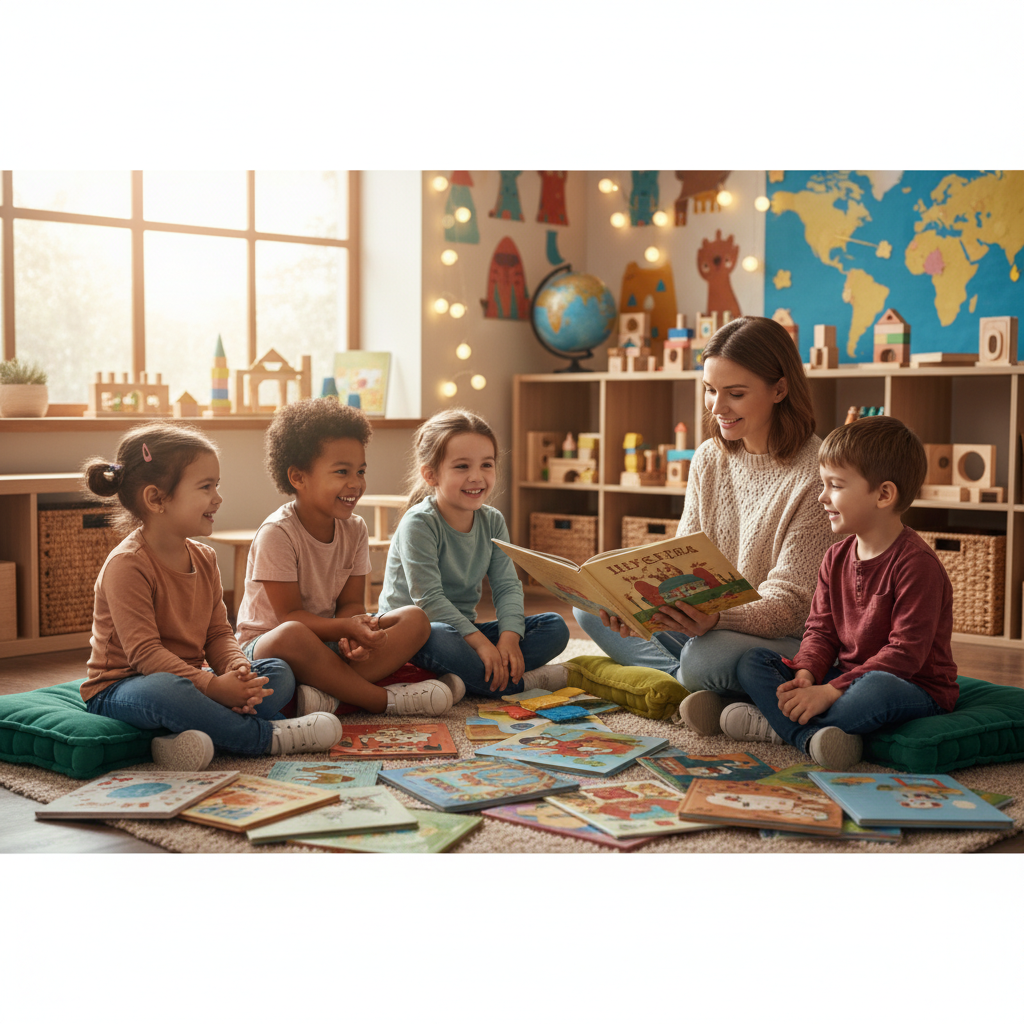
Educational stories for preschool children ages 4 and up are the key to successful developmental support during the most important learning phase of young children. In 2026, the requirements for child-appropriate educational stories have continued to evolve, and parents as well as educators are looking for content that not only entertains but also purposefully imparts skills. These special stories combine fun with learning and create the perfect foundation for future academic success.
What Makes Educational Stories for 4-Year-Olds So Valuable?
Children of preschool age are in a critical developmental phase during which their brains are particularly receptive to new information. Educational stories make optimal use of this natural readiness to learn while simultaneously promoting various areas of competence:
- Language development and vocabulary expansion
- Social-emotional competence
- Logical thinking and problem-solving skills
- Concentration ability and attention span
- Creativity and imagination
Research in 2026 clearly shows that children who regularly come into contact with high-quality educational stories have better starting conditions for their school careers.
Core Elements of Effective Educational Children's Stories
Age-Appropriate Complexity
Stories for 4-year-old preschool children must find the right balance between simplicity and challenge. The plot should be clearly structured, yet still offer enough depth to captivate the child and encourage reflection.
Emotional Connection
Successful educational stories create an emotional bond between the child and the characters. This connection makes learning more authentic and lasting, as children can identify with the protagonists.
Interactive Elements
Modern educational stories in 2026 increasingly integrate interactive components that encourage children to actively participate in the story. These can be questions, puzzles, or tasks that the child can solve during or after the story.
The Most Important Learning Areas in Educational Stories
Basic Mathematical Skills
Numbers, shapes, and simple mathematical concepts can be wonderfully incorporated into stories. Whether counting objects, recognizing patterns, or understanding size relationships — mathematical learning becomes tangible and understandable through stories.
Scientific Curiosity
Educational stories for preschool children ages 4 and up can transform complex scientific concepts into simple, understandable adventures. Topics such as the water cycle, plant growth, or the properties of various materials become accessible through exciting narratives.
Social Competencies
Stories offer a safe space in which children can experience and understand various social situations. They learn about friendship, empathy, conflict resolution, and cooperation without experiencing direct social stress themselves.
Choosing the Right Educational Stories in 2026
Paying Attention to Quality Criteria
When selecting educational stories, parents and educators should look for certain quality features:
- Pedagogically sound content
- Age-appropriate language and complexity
- Positive role models and values
- Diversity in characters and situations
- Scientific accuracy in factual content
Promoting Variety
A balanced mix of different story types ensures comprehensive education. In addition to classic fairy tales, modern stories, realistic narratives, and imaginative adventures should also be part of the repertoire.
Digital vs. Analog Educational Stories
In 2026, parents face the choice between traditional books and digital storytelling formats. Both media have their place and complement each other optimally:
Advantages of Analog Stories
- Promotes concentration without distraction
- Development of imagination
- Shared reading time strengthens the parent-child bond
- No screen time
Potentials of Digital Formats
- Interactive elements and multimedia content
- Adjustable difficulty levels
- Immediate feedback and reward systems
- Barrier-free accessibility
Tips for Parents: How to Make the Most of Educational Stories
Establishing Regular Reading Times
Consistency is the key to success. Fixed reading times, for example before bedtime or after lunch, create routine and anticipation for the child.
Encouraging Active Participation
Encourage your child to ask questions, make predictions about the course of the story, or contribute their own ideas. This interaction deepens understanding and makes the experience more personal.
Following Up on Stories
After reading or listening to a story, shared activities can deepen what has been learned. Paint scenes, act out parts of the story, or together invent alternative endings.
The Role of Educators and Pedagogues
Professional caregivers have recognized in 2026 that educational stories are an indispensable tool in preschool education. They use stories for:
- Targeted language support
- Introduction of new topics and concepts
- Development of social competencies within the group
- Individual support for different learning types
Trends and Developments in Educational Children's Stories
Diversity and Inclusion
Modern educational stories reflect the diversity of our society. Characters with different cultural backgrounds, physical abilities, and family structures help children develop tolerance and understanding.
Environmental Awareness and Sustainability
Given the global challenges, many current stories integrate topics such as environmental protection, sustainability, and responsibility for our planet in a child-appropriate way.
Technology Integration
Augmented reality, interactive apps, and AI-driven personalization are revolutionizing storytelling for children in 2026. These technologies open up new possibilities for immersive and adaptive learning experiences.
Challenges and Solutions
Considering Attention Span
Four-year-old children naturally have a limited attention span. Successful educational stories are therefore compactly structured and offer regular highlights to maintain interest.
Avoiding Overwhelm
The balance between educational purpose and entertainment requires a sensitive touch. Stories should be challenging but not overwhelming, in order to avoid frustration.
Measuring Learning Success
Parents and educators can recognize the success of educational stories through various indicators, including expanded use of new vocabulary, demonstrably improved social behavior, increased curiosity and interest in learning topics, and the child's ability to retell and reflect on stories.