 edory
edoryChildren's Stories About Environmental Protection 2026: Sustainability Explained in a Child-Friendly Way
· 5 minutes read
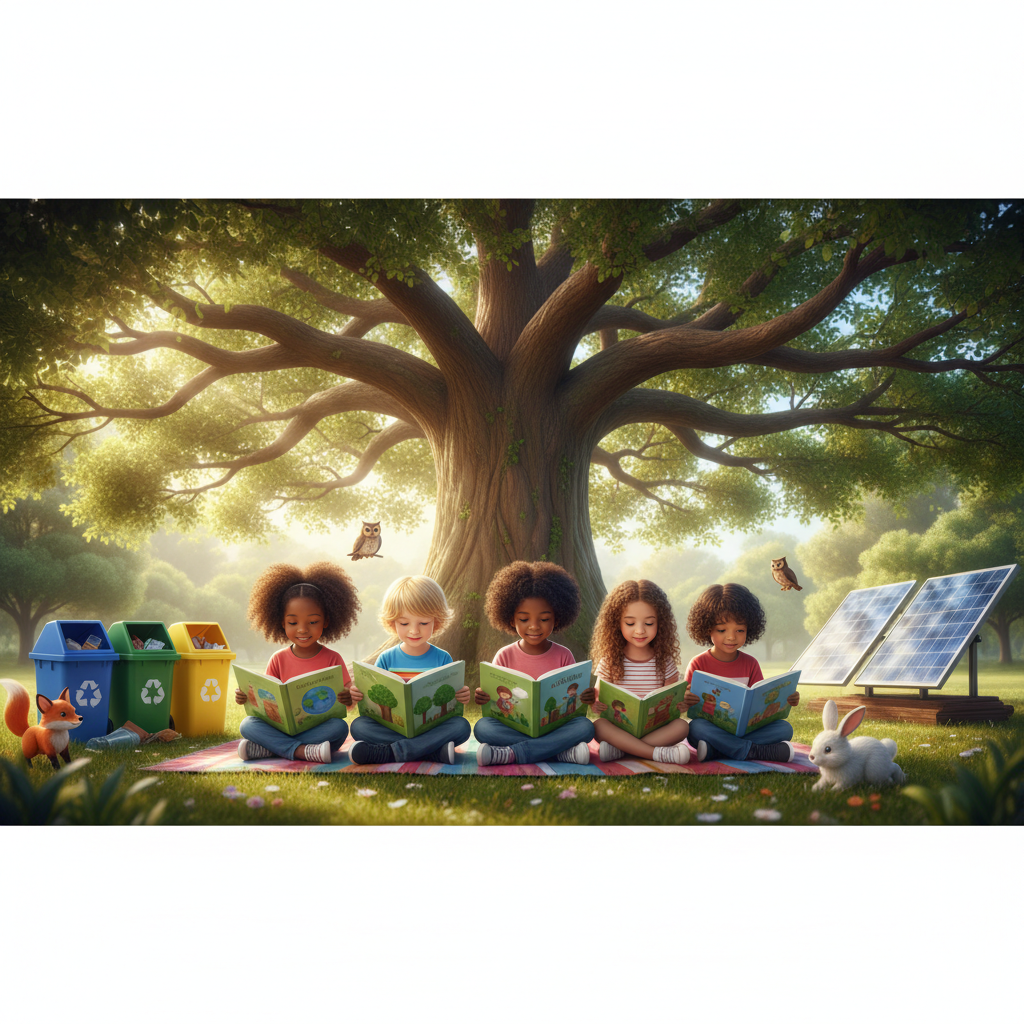
Children's stories about environmental protection and sustainability are more important than ever in 2026. They help convey to even the youngest children how precious our nature is and what each individual can contribute to protecting our environment. Through lovingly told stories, children understand complex topics in a playful way and develop an awareness of sustainable living.
Why Environmental Stories Are So Important for Children
In a time when climate change and sustainability have become central societal issues, educational children's stories play a crucial role. They translate abstract concepts into tangible experiences and create emotional connections to nature. Through stories, children not only learn facts but also develop empathy for the environment. A well-told story about a little hedgehog losing its habitat often achieves more than dry explanations about deforestation. This emotional component is the key to sustainable learning and behavioral change.
The Power of Identification
When children identify with characters in environmental stories, they adopt their values and behaviors. A brave protagonist who collects litter and rescues animals becomes a role model for environmentally conscious behavior in everyday life.
Popular Topics for Sustainable Children's Stories
The variety of environmental topics for children's stories is greater than ever in 2026. Here are some particularly impactful areas:
Waste Reduction and Recycling
Stories about creative reuse are fun for children and present practical solutions. A story about a robot built from recycled materials combines imagination with important environmental messages.
- Adventures in the recycling sorting facility
- The magical compost heap
- How plastic bottles become toys
- The journey of a Tetra Pak
Animal Protection and Biodiversity
Animal stories are especially popular with children and are excellent for explaining biodiversity. Children's stories about environmental protection and sustainability featuring animal heroes instill respect for all living creatures.
- Stories about endangered species
- Adventures in the rainforest
- Life in the ocean and plastic pollution
- Urban life for wildlife
Renewable Energies
Complex energy topics become easy to understand through personified sun, wind, and water. These stories show how clean energy works and why it is important.
Age-Appropriate Design of Environmental Stories
The presentation of sustainability topics must match the developmental stage of the target audience. What is too complex for three-year-olds may be insufficiently challenging for eight-year-olds.
Kindergarten Age (3–5 Years)
For the youngest children, simple messages and repetition are paramount. Stories about saving water while brushing teeth or turning off the lights when leaving a room are ideal.
Key elements:
- Simple language and short sentences
- Clear good-versus-bad structure
- Plenty of repetition
- Concrete instructions for action
Primary School Age (6–10 Years)
Primary school children can understand more complex relationships. Stories about the cycle of nature or global environmental problems become increasingly interesting.
Suitable topics:
- Weather phenomena and climate change
- Sustainable consumption
- Ecosystems and their interconnections
- Environmental technology and innovation
Tips for Parents and Educators in 2026
Selecting and using children's stories about environmental protection and sustainability requires a sensitive touch. Here are proven strategies:
Interactive Storytelling
Modern digital tools make it possible to design stories interactively. Apps and e-books with integrated game elements significantly enhance the learning experience.
Creating Practical Connections
Reading aloud should be followed by concrete actions. If the story is about sorting waste, children can practice directly. This connection between theory and practice consolidates what has been learned.
Emphasizing Positive Messages
Environmental stories should convey hope, not instill fear. Children need to feel that they can make a difference in order to stay motivated.
Successful Real-World Examples
Various educational institutions have already successfully implemented sustainable children's stories in 2026. Kindergartens report significantly increased environmental awareness among their charges.
Project "Green Heroes"
In this nationwide project, new environmental stories are published monthly, turning children into everyday heroes. The response has been overwhelmingly positive.
Digital Story Collections
Online platforms now offer extensive libraries of categorized environmental stories, sorted by age, topic, and difficulty level.
The Future of Sustainable Children's Stories
The trend in 2026 is clearly moving toward multimedia and personalized stories. Artificial intelligence makes it possible to tailor stories to the individual interests and comprehension level of each child.
Virtual Reality
VR technology makes environmental experiences even more immersive. Children can virtually explore the rainforest or experience the effects of climate change.
Community-Based Learning
Platforms are emerging where children can write and share their own environmental stories. This peer-to-peer approach further strengthens engagement.
Practical Implementation in Everyday Life
Children's stories about environmental protection and sustainability only reach their full potential through consistent integration into daily life. Regular reading times create rituals and reinforce the messages.
Developing Family Projects
Family projects can grow out of stories: a vegetable garden modeled after the protagonists or joint beach clean-up activities make sustainability a lived experience.
Start with Sustainable Children's Stories Today
The time is right to give children a strong foundation through powerful stories.