 edory
edoryShort Goodnight Stories to Read Aloud 2026
· 8 minutes read
Why short goodnight stories to read aloud are so valuable
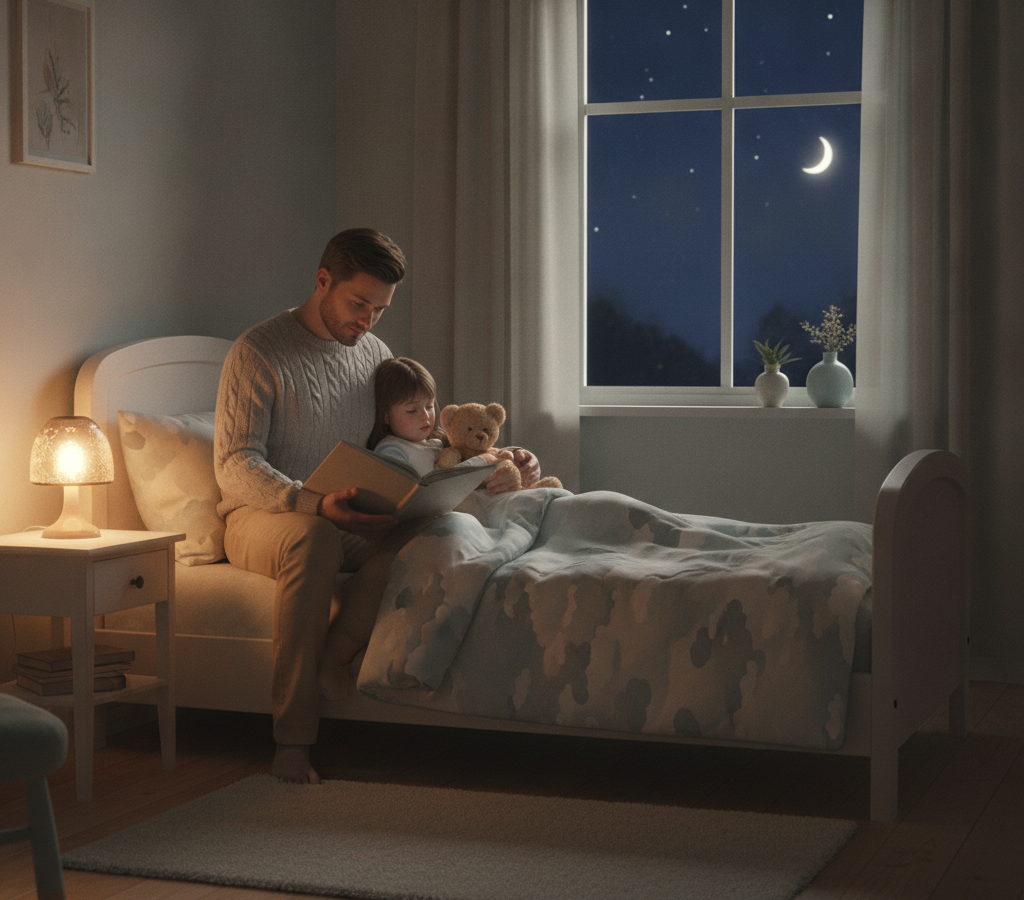
Do you know the feeling? It's 8 o'clock, your child is lying in bed, eyes still full of energy – and you know that now is exactly the right moment for a story. Short goodnight stories to read aloud are genuine sleep helpers: they give children a sense of security, signal to the body "rest time now," and at the same time strengthen the bond between parent and child. And the best part? They don't need to be long. Just five to ten minutes is more than enough to calm little hearts and set dreams in motion.
Reading aloud is far more than mere entertainment. Studies and educational experience show time and again: children who are read to regularly develop a larger vocabulary, greater imagination, and a deep sense of security. Short stories in particular are perfect for everyday life, because they fit effortlessly into the bedtime routine even on stressful evenings.
What makes a good bedtime story?
Not every story is equally well suited to falling asleep. An ideal goodnight story has a few special ingredients:
Calm narrative flow: No wild chase scenes or exciting cliffhangers right before bedtime. The arc of tension should gently wind down.
Familiar main characters: Children love characters they can identify with – ideally ones who have similar experiences to their own.
A positive ending: This soothes the mind and gives a good feeling to carry into sleep.
Appropriate length: For children between three and six years old, five to eight minutes is ideal. Older children can comfortably listen for ten to fifteen minutes.
Beautiful language: Images that form in the mind – a silvery moon, a soft forest path, a gentle rustling in the leaves – help the mind let go.
Three short goodnight stories to read aloud right away
Story 1: The Little Star Who Didn't Want to Sleep
High up in the sky lived a little star named Twinkle. Every evening, when all the other stars were already growing tired and beginning to blink slowly, Twinkle still wanted to keep playing. He hopped from cloud to cloud, tickled the moon on the nose, and sang little songs into the night.
But one evening he noticed how the clouds were quietly yawning and the moon was closing its eyes. "Twinkle," whispered the moon, "come, nestle between us. Tomorrow morning you can be the first to shine again."
Twinkle snuggled between two soft clouds, and before he had even counted to three, he was fast asleep – a little smile on his face.
Story 2: The Mouse in the Moonlight
Little mouse Mia couldn't make up her mind: should she close her eyes, or look out the window just a little longer? The moonlight fell so beautifully over the flower meadow.
But then she heard Mama Mouse humming softly – an old, warm song. The sound was like a soft blanket. Mia pulled her straw tightly under her nose, closed her eyes, and let herself be carried away by the melody.
Sweet dreams, little Mia.
Story 3: Leo the Brave Little Rabbit
Leo was a little rabbit who was afraid of the dark. Every evening he looked anxiously into the corners of his burrow. But today he discovered something new: if he was very still and listened carefully, he could hear the soft murmuring of the stream outside, the gentle rustling of the leaves, and the distant chirping of the crickets.
The night wasn't silent at all – it was full of friendly sounds. Leo smiled, snuggled into his soft straw, and fell asleep, wrapped in all those little night-songs.
Tips for reading aloud: How to turn the evening into a ritual
Reading aloud itself is an art – but not one that takes years of practice. A few small tricks make all the difference:
Adjust your voice: Speak slowly and a little more quietly than during the day. Your voice sets the tone – literally.
A fixed place and time: Always on the same corner of the bed, always after brushing teeth. Rituals are the key to falling asleep.
No screens afterwards: The story should be the last experience before sleep – no phone, no tablet after that.
Involve the child: Ask briefly: "What do you think Leo will dream about tonight?" One sentence is enough – it sparks the imagination without waking them up.
Personalize: Replace the main character's name with your child's name. "The little star Twinkle" suddenly becomes "the little star Emil" – and instantly their eyes light up.