 edory
edoryReading Bedtime Stories to Children: Tips for 2026
· 8 minutes read
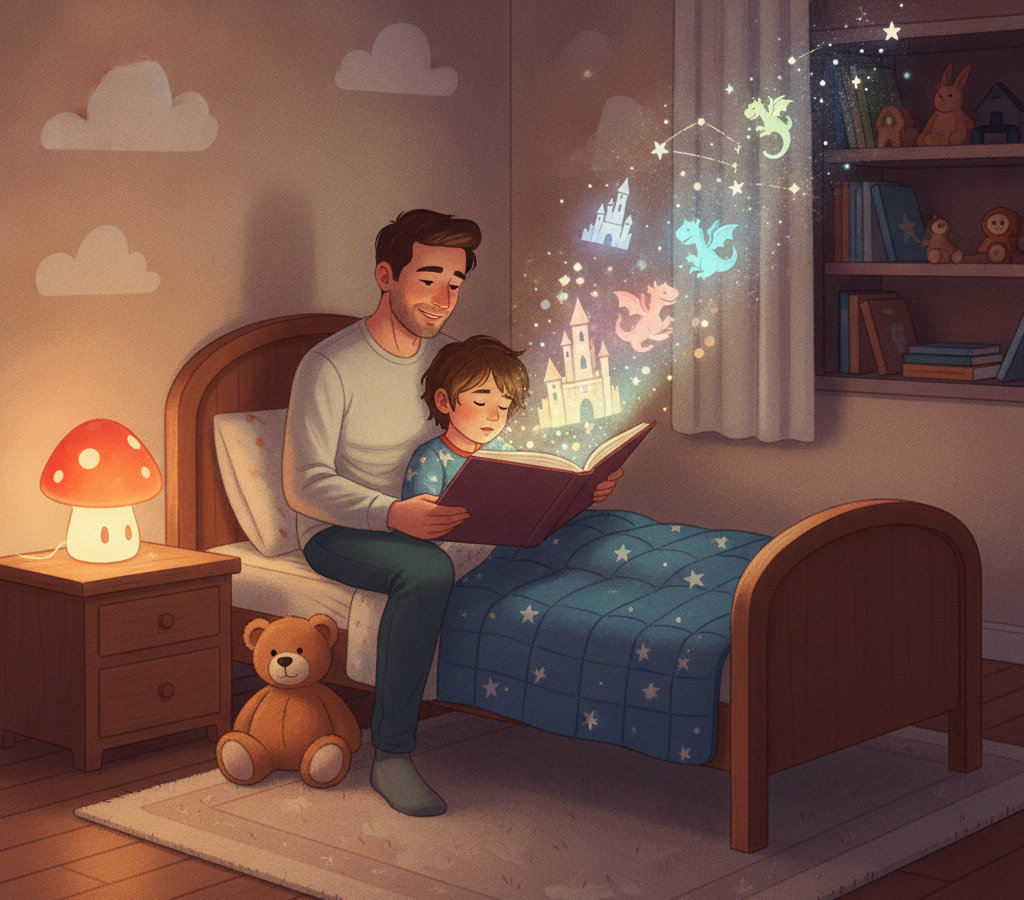
Why Reading Aloud Before Bed Is So Valuable
Reading children's bedtime stories aloud is one of the most beautiful rituals parents can share with their children. Not only do little ones settle down — they also experience genuine closeness, hear a familiar voice, and travel together into imaginative worlds. In an age where screens and sensory overload are everywhere, reading together before sleep is a true anchor.
Studies and real-world experience consistently show: children who are read to regularly in the evenings develop a richer vocabulary, fall asleep more peacefully, and have a deeper bond with their parents.
But many parents wonder: How do I actually do this correctly? Which stories are best suited? How long should the story be? And how do I make sure my child actually listens instead of chatting or jumping up?
That is exactly what this article is about — with concrete, practical tips you can put into practice right away.
Creating the Right Atmosphere for the Bedtime Ritual
Before you open the book or begin the first story, atmosphere is key. The room should be dimmed — a small bedside lamp with warm light is perfectly sufficient. Cozy blankets, a quiet room, and perhaps a subtle background scent like lavender can work wonders. Your child immediately senses: now it is time to sleep, and that is a good thing.
Fixed time: Start the reading ritual at the same time every evening — the body gets used to it and signals to the brain: it is time to relax.
Put the phone away: Give your child your full attention. No scrolling on the side — children notice immediately and feel less valued.
Comfortable position: Snuggle up together. Whether in the child's bed or on a soft armchair — physical closeness calms and makes listening much easier.
No tablet, no TV: Screens should be switched off at least 30 minutes before sleep so that the brain can shift into rest mode.
Which Children's Bedtime Stories Are Best Suited?
Not every story is equally well suited for falling asleep. Adventure-packed plots with many twists, monsters, or excitement can stimulate children rather than calm them. What you need in the evening are stories with a calm narrative pace, positive resolutions, and a soothing overall mood.
Characteristics of a Good Bedtime Story
Calm, steady narrative arc — no extreme climaxes right before the end
Positive, warming emotions such as security, friendship, and courage
A familiar main character your child can identify with
An open or peaceful ending that invites dreaming
Manageable length — 5 to 15 minutes of reading time is ideal
Personalization as a Secret Weapon
Imagine your daughter Lena becomes a brave astronaut who brings a lost moon rabbit back to its friends — and she has the same name in the story as she does in real life. Children love being the main character themselves! That is exactly what an app like Edory AI (edory.ai) makes possible: in just a few seconds, a personalized bedtime story is created in which your child plays the leading role. This increases attention and makes the bedtime ritual even more magical.
Reading Children's Bedtime Stories Aloud — Tips for the Right Voice and Pace
The way you read aloud is just as important as the content of the story. Your voice is the instrument that creates images in your child's mind and draws them into the story — or fails to do so.
Using Pace and Volume Deliberately
Begin the story at a normal storytelling pace and gradually become slower and quieter as it progresses. Speak clearly, but not too loudly. A quiet, warm voice has an almost hypnotic effect — children relax completely automatically. Make deliberate pauses to give your child time to picture the scenes.
Bringing Voices and Characters to Life
You do not need to be a professional actor, but a little variation makes all the difference. Give the wise old dragon a deeper voice, and the little mouse a squeaky one. Children laugh and marvel — and relax in the process. However, do not overdo it: too much excitement can have the opposite effect.
Incorporating Questions — But Sparingly
Small, calm questions along the way, such as "What do you think the fox is going to do now?" encourage thinking along and spark the imagination. But be careful: too many questions can be unsettling. A maximum of one or two per story — and none at all toward the end, so that the child can come to rest.
Common Mistakes When Reading Aloud and How to Avoid Them
Even experienced parents sometimes make mistakes when reading aloud that can disrupt the bedtime ritual.