 edory
Bedtime Stories vs. Bedtime Music: Which Is Better?
· 6 minutes read
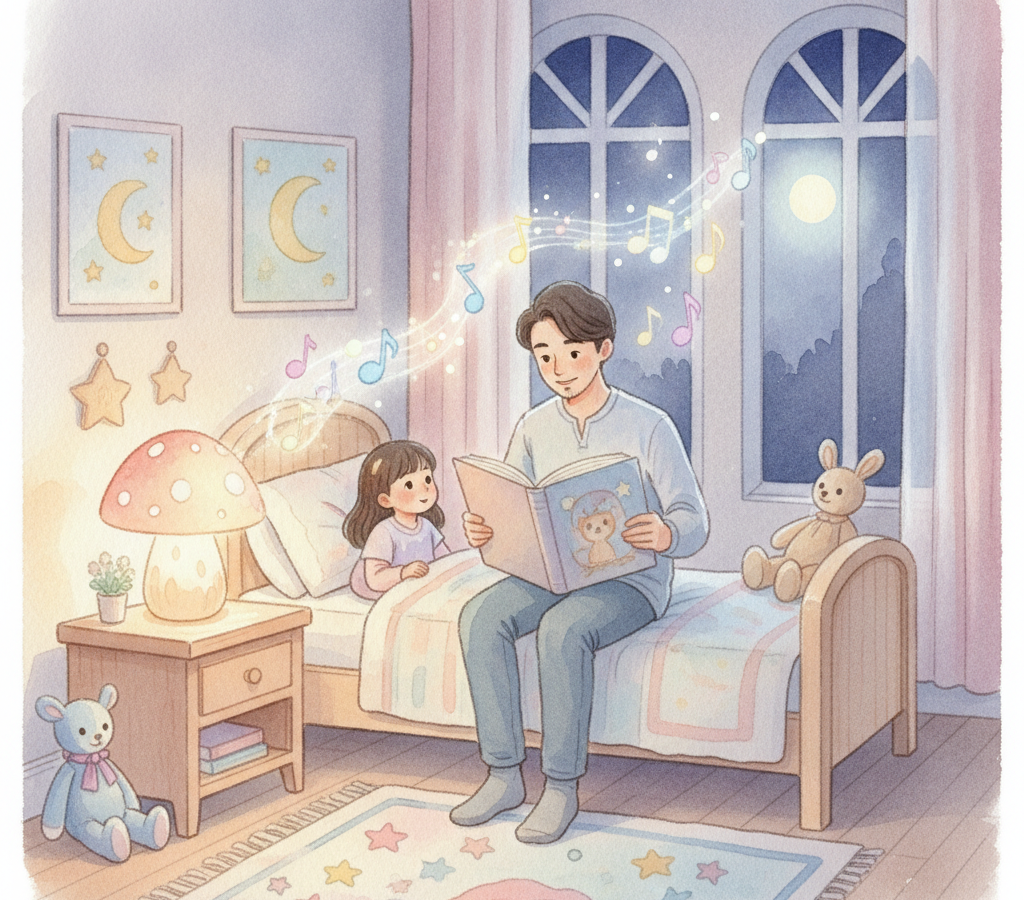
Bedtime stories vs. bedtime music – which is better for children? This is a question many parents ask themselves every evening. One child falls asleep beautifully to a gentle melody, while another absolutely needs an exciting story. But what does experience tell us – and which method really suits which child? In this article, we take an honest look at both approaches so you can make the best decision for your child tonight.
What happens in a child's brain when falling asleep?
Before we compare the two methods, it's worth taking a brief look at what happens in a child's mind when they fall asleep. Children need a transition – from the excitement of daily life into the calm of the night. This transition works better when the nervous system is deliberately soothed. Both music and stories can support this transition, but in different ways. Sleep music acts directly on the body: the heartbeat slows down, the muscles relax, and the child "switches off". Stories, on the other hand, engage the imagination – which can be either calming or stimulating, depending on the story and the child.
The strengths of bedtime stories
Imagine your daughter Lena becomes a brave adventurer who has to solve a mystery on a small island. She listens intently – and before she knows it, her eyes have grown heavy. That is exactly the magic of bedtime stories: they meet children where their minds currently are and gently guide them into a peaceful fantasy world.
Bonding and closeness: When parents read aloud or tell a story, it strengthens the emotional connection with the child. This closeness is the most important part of the bedtime routine for many children.
Language development: Stories enrich vocabulary, even just before falling asleep. Children hear new words in a meaningful context.
Imagination and creativity: A good story gives the child's mind positive images to carry into sleep – which can even help reduce nightmares.
Personalisation: Stories in which the child is the main character are especially effective. This is where modern solutions like Edory AI come into play: with the app, parents can create a story in seconds in which their child is the hero – even based on a drawing the child has made. Parents can also choose a school subject such as mathematics, geography or biology, so the child learns something in a playful way.
Bedtime stories are particularly well suited to children who are still very mentally active and need a distraction to wind down. Also check out our collection of goodnight stories for children – there you will find many inspiring ideas for your next bedtime routine.
The strengths of bedtime music
Bedtime music also has clear advantages – and for some children it is simply the better choice.
Physical relaxation: Gentle, slow melodies help the body switch into a resting state. This works almost automatically, without the child having to actively listen.
No risk of overstimulation: An exciting story can wake a child up rather than send them to sleep. Music carries hardly any such risk, as long as it is calm and steady.
Flexibility: Music can simply play in the background, even when the child is falling asleep alone. It does not require the active presence of a parent.
Ritual effect: When the same music always plays, the child's brain associates that melody with falling asleep – a conditioned signal that makes the process easier.
Bedtime music is ideal for very young children (under 2 years old), for children who seem easily overstimulated, or as an additional background accompaniment while a story is being told.
Bedtime stories vs. bedtime music: which is better for children – a direct comparison
Honestly, there is no universal answer to the question of whether bedtime stories or bedtime music are better for children. It depends on the child's age, personality and how they are feeling on a given day. Here is a practical overview:
Toddlers (0–2 years): Bedtime music is often the better choice. Stories are still too much for children at this age. Gentle sounds or lullabies work more reliably.
Preschool children (3–5 years): Both methods work well. Many children love listening to stories. Combine soft background music with a short story – this can work absolute wonders.
Primary school children (6–10 years): Stories are clearly the winner. Children in this age group love adventures, puzzles and characters they can identify with.
Children with difficulty falling asleep: It is worth experimenting here. Some children sleep worse with too much input – in that case, gentle music is better. Others need the distraction of a story to stop their minds from wandering.