 edory
edory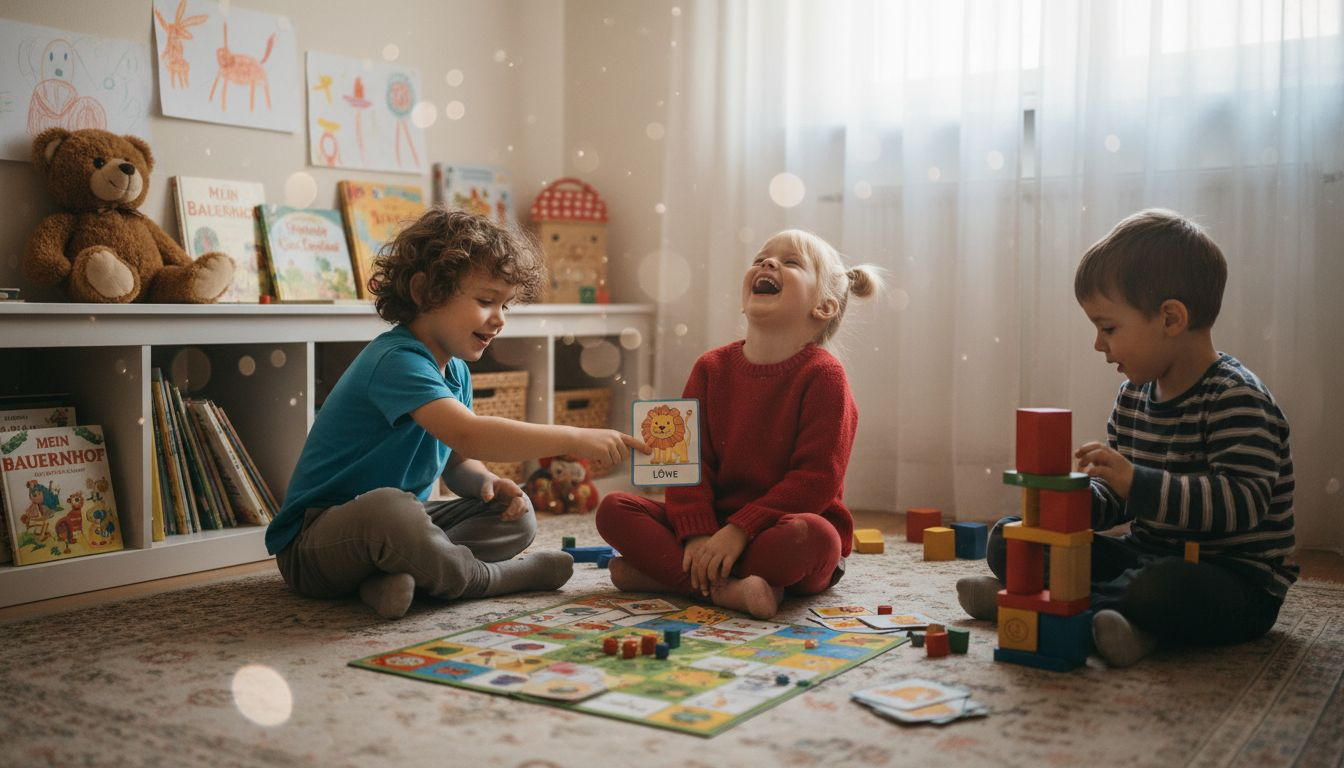
Do you want to actively support your preschooler's language development, but don't know where to start? Between group classes, everyday stress, and countless parenting tips, it's easy to lose track. Yet it's often simple methods that make a real difference and are genuinely fun – for your child and for you.
With varied and scientifically-based language games, you can look forward to concrete suggestions. Many methods also promote phonological awareness, which is considered an important prerequisite for later reading and writing development. Practical ideas help you integrate speaking, storytelling, and listening playfully into everyday life.
You'll soon learn which creative exercises bring language to life and how you can use them immediately. Particularly exciting: These tips work in any children's group and also support multilingual children from different cultures. Look forward to practical impulses that make learning to speak magical and simple!
Table of Contents
- 1. Rhyme and Syllable Games for Vocabulary
- 2. Retelling Picture Book Stories Creatively
- 3. Discovering Letters During Everyday Exploration
- 4. Creating Fantasy Journeys with Story Cards
- 5. Role-Playing Games to Promote Social Competencies
- 6. Audio Plays and Sound Guessing Games for Auditory Development
- 7. Movement and Singing Games for Language and Body
Quick Summary
| Key Message | Explanation |
|---|---|
| 1. Rhyme and Syllable Games Promote Language Development | These games effectively support phonological awareness and vocabulary in preschoolers. |
| 2. Picture Book Stories Strengthen Creative Storytelling Skills | By retelling stories, children learn sentence structure and expand their vocabulary. |
| 3. Everyday Letters Offer Exciting Learning Opportunities | Parents can encourage children to discover letters in daily life, making learning playful. |
| 4. Story Cards Stimulate Imagination and Creativity | Children can develop their own stories, which greatly promotes their language skills. |
| 5. Role-Playing Games Support Social and Language Skills | Through role-playing, children experience social interactions that strengthen their emotional and language development. |
1. Rhyme and Syllable Games for Vocabulary
Rhyme and syllable games are playful methods to promote vocabulary and language development in preschoolers. These creative games help children discover and understand the structure and sound patterns of language.
The importance of these games lies in developing phonological awareness, a central foundation for later reading and writing processes. Language games playfully train rhyming, syllable recognition, and auditory perception in a child-friendly and entertaining way.
Practical examples of rhyme and syllable games include:
- Stop-Rhyme: A game where children must find words that rhyme with a given word
- Rhyme Domino: A game that makes connecting rhyming words playful
- Syllable Clapping: Children clap along rhythmically with the syllables of words
By combining rhymes with movements and music, language impressions become particularly memorable for children. Furthermore, these games can be used in various cultural contexts, which additionally supports language development.
Pro Tip: Make rhyme and syllable games varied and integrate movement to make learning even more entertaining.
2. Retelling Picture Book Stories Creatively
Picture book stories offer preschoolers a wonderful opportunity to develop their language skills playfully. They are not only entertaining but also a powerful tool for language promotion.
Why Picture Book Stories Are So Valuable
Creative retelling of picture stories promotes language competence on multiple levels. Children learn:
- Sentence structure and grammatical structures
- To use tenses correctly
- To expand their own vocabulary
- To develop narrative skills
Practical implementation means concretely: Let your child look at the pictures and encourage them to tell the story independently. What's important is not a perfect reproduction but the creative storytelling process.
Visual orientation particularly supports multilingual children when learning languages. Image sequences provide structure and motivate storytelling.
Pro Tip: Don't interrupt your child while telling the story and show genuine interest in their version of the story.
3. Discovering Letters During Everyday Exploration
The world of letters is full of surprises and discoveries for preschoolers. Everyday moments can become exciting learning experiences when parents direct their children's attention to letters.
Discovering letters in everyday life is more than just a learning game. It's a playful approach to written language that gives children confidence and joy in learning.
Practical Discovery Opportunities
Here are some creative ways to explore letters in everyday life:
- Look for names on mailboxes or doorbells
- Discover letters on traffic signs
- Spell labels together while shopping
- Find the first letter of your own name everywhere
The digital ABC learning book offers additional suggestions with over 450 terms and colorful pictures that make letter learning interesting.
Pro Tip: Make letter discovery a daily game and reward your child's discoveries with enthusiasm and attention.
4. Creating Fantasy Journeys with Story Cards
Story cards are magical tools that help preschoolers unfold their language skills and creativity. They invite children to invent their own stories and explore their imagination.
Why Story Cards Are So Valuable
Magic story cards offer diverse storytelling possibilities that playfully motivate children to tell stories. The benefits include:
- Promotion of language development
- Strengthening of creativity
- Support of social competencies
- Motivating visual inspiration
Similar to story stones, children can work with these cards in many different ways. They can develop stories individually or in groups, combine cards in any order, and create their own narrative world.
Pro Tip: Let your child tell the stories without judgment and show genuine interest in their creative interpretation.
5. Role-Playing Games to Promote Social Competencies
Role-playing games are magical moments of child development in which preschoolers discover and explore the world of adults. They slip into different roles and thus playfully experience social interactions.
Role-playing in kindergarten comprehensively promotes the development of important competencies:
- Emotional intelligence
- Communication skills
- Perspective-taking
- Creative problem-solving
In these games, children learn more than just social behavior. Empirical studies show that through role-playing, they decontextualize language and use it flexibly.
Practical ideas for role-playing games:
- Playing store
- Recreating family scenes
- Simulating professions and everyday situations
Pro Tip: Provide costumes and props, but let your creativity run free.
6. Audio Plays and Sound Guessing Games for Auditory Development
Audio plays are fantastic tools for language development in preschoolers. They enable a special form of learning without visual distractions and stimulate imagination.
The Importance of Auditory Perception
Audio plays provide complex language input for children with varying language development needs. The benefits include:
- Training listening comprehension
- Expanding vocabulary
- Promoting concentration skills
- Developing language rhythm
The Hör-Fink Program demonstrates practical options with sound guessing games and interactive audio plays. Children can assign sounds and playfully train their listening perception.
Pro Tip: Choose audio plays with age-appropriate stories and listen together with your child.
7. Movement and Singing Games for Language and Body
Movement and language are inseparably connected. For preschoolers, movement games offer a wonderful opportunity to develop their language skills in a playful way.
Movement-oriented language promotion shows significant success and can sustainably support language development.
Practical Movement and Singing Games:
- Finger plays with rhymes
- Singing games with body movements
- Dance games with verbal instructions
- Hide-and-seek games with verbal clues
The concept of Moving Language combines language learning with the joy of movement, allowing children to playfully expand their vocabulary.
Pro Tip: Integrate language exercises into movement games and make learning a living experience.
[This table summarizes the various methods and approaches for language promotion in preschoolers described above.]
| Topic | Description | Examples and Results |
|---|---|---|
| Rhyme and Syllable Games | Playful discovery of language structure and promotion of phonological awareness | Stop-Rhyme, Rhyme Domino, Syllable Clapping |
| Picture Book Stories | Creative retelling to strengthen language competence | Expansion of sentence structure, grammatical structures, and narrative skills |
| Everyday Letter Exploration | Promotion of written language understanding through everyday letter discoveries | Mailboxes, traffic signs, labels, finding the first letters of names |
| Fantasy Journeys with Story Cards | Development of creativity and language through magical story cards | Telling, combining, and exploring stories without judgment |