 edory
edory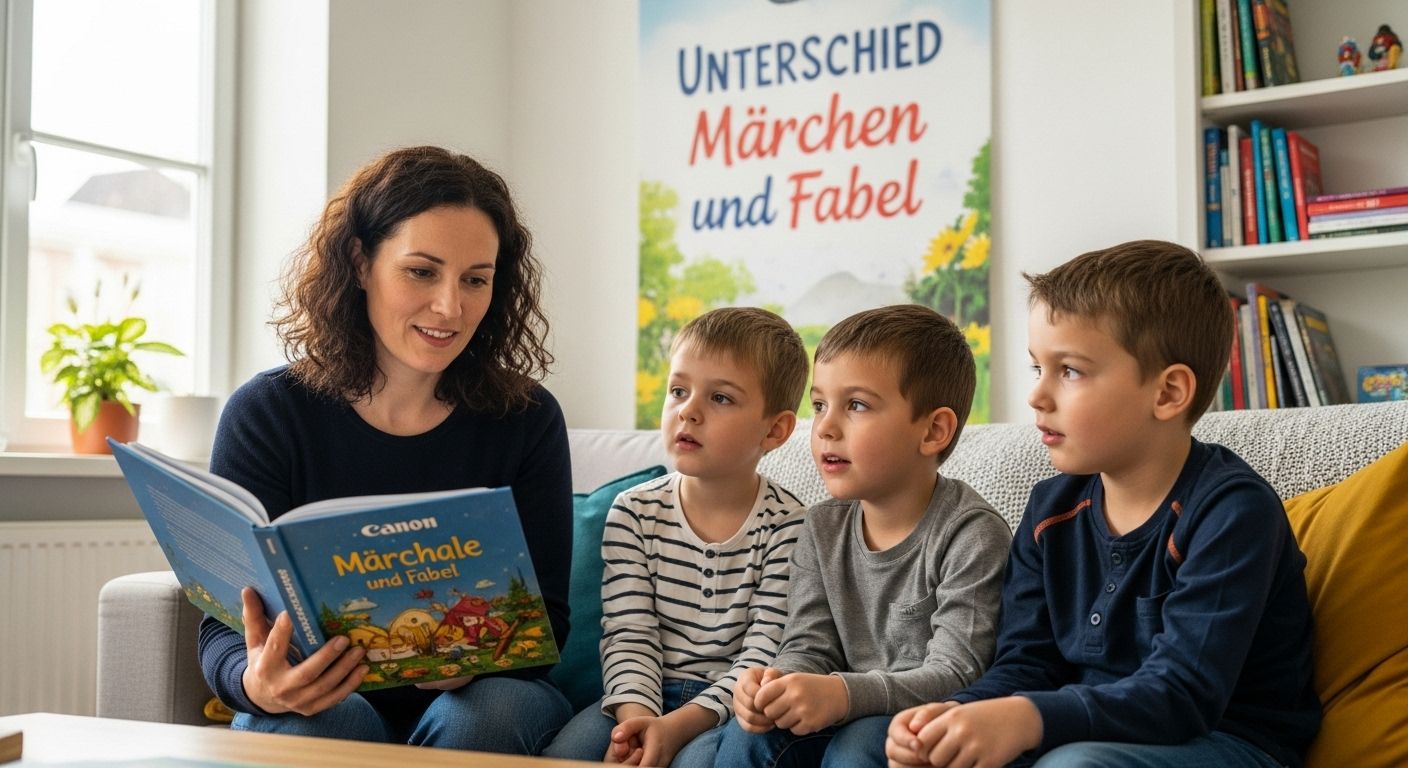
Fairy tales have enchanted children and adults for centuries with magical worlds and adventures. Fables, on the other hand, rely on talking animals that serve up clever life lessons – and all in just a few sentences. Yet hardly anyone knows that fables almost always end with a clear moral, while fairy tales tend to weave their messages in more subtly. Anyone who thinks these stories exist purely for entertainment is missing their greatest treasure: they foster emotional intelligence and help children understand complex feelings.
What Is a Fairy Tale? Typical Characteristics and Examples
The Magical World of Fairy Tales
A fairy tale differs fundamentally from other stories through its unique qualities. The Library of Congress emphasizes that fairy tales typically begin with phrases like "Once upon a time" and involve unlikely or magical events. These stories are usually set in an unspecified time and place, which gives them a timeless quality.
The key characteristics of a fairy tale include:
- Magical elements: Enchantments, transformations, and supernatural events are central
- Archetypes: Typical characters such as good princesses, wicked witches, or brave heroes
- Moral lessons: Every fairy tale conveys an important life lesson
Meaning and Origin of Fairy Tales
Fairy tales were originally passed down orally from generation to generation. They served not only as entertainment but also as an important means of sharing knowledge and values. Famous collectors of fairy tales, such as the Brothers Grimm, gathered countless such stories and preserved them for future generations.
The universal themes in fairy tales are remarkable. They address fundamental human experiences such as justice, courage, overcoming adversity, and the power of wisdom and luck. Talking animals, enchanted places, and sudden transformations make these stories so special and fascinating for children and adults alike.
Every fairy tale is like a small window into a world of wonder, teaching us to believe in goodness, to face challenges with courage, and to see the magic in life. They are more than just stories – they are cultural heritage and timeless wisdom, wrapped in enchanting narratives.
What Makes a Fable? Characteristics and Characters
Distinctive Features of Fables
A fable has very particular qualities that set it apart from other forms of storytelling. Fables typically consist of three essential parts: the narrative section, the dialogue section, and the resolution. The main characters are usually animals that take on human traits and behaviors.
The most important characteristics of a fable are:
- Animal protagonists: Animals represent human characters
- Moral message: Every fable conveys an important life lesson
- Short narrative form: Concise and to the point
The Significance of the Moral in Fables
Fables have a clear moral lesson at the end of the story. The animals represent different human qualities such as cleverness, cunning, foolishness, or arrogance. A fox, for example, often stands for slyness, while a donkey symbolizes stupidity.
The moral of a fable is usually stated directly at the end or can be read between the lines. It aims to impart a life lesson to the reader. Whether it is about showing honesty, exposing arrogance, or highlighting the importance of cooperation – fables use animals as a mirror of human behavior.
Fables are more than simple animal stories. They are clever allegories that prompt us to reflect and teach us important life lessons in a humorous way. They help us recognize and understand human weaknesses and strengths – packaged in short, memorable stories with animal protagonists.
The Key Differences Between Fairy Tales and Fables
Characters and Plot
The most fundamental difference lies in the design of the characters and the narrative structure. In fables, animals take center stage, embodying very specific human traits and flaws. They act as direct stand-ins for human behavior. Fables deliberately pursue educational intentions.
In fairy tales, by contrast, both humans and magical beings appear. The characters are less typified and do not directly symbolize human traits; instead, they experience fantastical adventures involving fairy-tale elements such as enchantments or magical powers.
Central Message and Lesson
The difference in how a message is conveyed is also significant:
- Fable: A direct moral lesson, often explicitly stated at the end
- Fairy tale: An indirect, subtly woven moral message
- Teaching aim: Fables intend to instruct directly; fairy tales aim more to inspire
Narrative Structure and Length
Fables are generally short, concise, and focused on a clear punchline. They follow a structured format with exposition, conflict, and resolution. Fairy tales are considerably longer, have a more complex plot structure, and allow themselves greater narrative freedom.
While a fable quickly and pointedly delivers a lesson, a fairy tale takes the reader on a longer journey through a fantastical world. Fairy tales thrive on transformations, surprises, and magical moments; fables thrive on the precise portrayal of human weaknesses and virtues.
To better understand the key differences between fairy tales and fables, here is a comparison of their main characteristics:
- Main Characters: Fairy tales feature humans, magical beings, and some animals; fables feature talking animals with human traits
- Core Elements: Fairy tales involve magic, enchantment, and supernatural events; fables have a simple plot, clear conflict, and direct lesson
- Message Delivery: Fairy tales deliver messages indirectly, woven into the story; fables state the moral explicitly at the end
- Story Length: Fairy tales are longer and more detailed; fables are short and concise
- Setting: Fairy tales are timeless, unspecified, and fantastical; fables are unspecified but grounded in moral situations
- Purpose: Fairy tales inspire, entertain, and teach subtly; fables educate through moral example and direct instruction
Both forms of storytelling have their own magic: fables with their razor-sharp analysis of human behavior, and fairy tales with their enchanting journey through worlds beyond imagination. They show us different ways in which stories can teach, inspire, and entertain us.
How Parents Can Make Meaningful Use of Fairy Tales and Fables
Emotional Intelligence and the Transmission of Values
Fairy tales and fables offer excellent opportunities to convey complex feelings and moral concepts in a child-friendly way. Stories help children develop empathy and understand different perspectives.
Parents can use these stories to:
- Explain moral values in a playful way
- Discuss emotional reactions
- Explore complex feelings
Age-Appropriate Selection and Reading Techniques
Choosing the right story is crucial. There are suitable fairy tales and fables for every age group. Young children need simple, short stories with clear messages, while older children can understand more complex narratives.
Tips for effective reading aloud:
- Create a calm and undisturbed atmosphere
- Read interactively – ask questions, use facial expressions
- Encourage children to interpret stories
The Educational Value of Fairy Tales and Fables
These stories are more than just entertainment. They help children develop important life skills. Fables teach moral lessons directly, while fairy tales convey values and behaviors more subtly.
Important areas of development that are supported include:
- Language development: Enhances vocabulary and comprehension through stories
- Creative thinking: Stimulates imagination with fantastical settings
- Problem-solving skills: Presents challenges and solutions in story format
- Social skills: Models positive and negative behaviors for discussion
- Emotional intelligence: Helps recognize and process complex feelings
Parents should see fairy tales and fables not merely as a bedtime ritual, but as a valuable educational tool. Through purposeful reading aloud, discussion, and reflection, they can help their children better understand the world and learn important life lessons.
Sharing stories together not only creates closeness but is also a powerful instrument of childhood education. Fairy tales and fables are timeless stories that connect generations and help children develop their own identity and values.
Frequently Asked Questions
What is the main difference between fairy tales and fables?
Fairy tales contain magical elements and fantastical adventures, while fables are generally short stories that use animal protagonists to convey clear moral lessons.
How can fairy tales and fables foster children's emotional intelligence?
Fairy tales and fables help children develop empathy and understand complex feelings by introducing them to moral values and different perspectives through storytelling.
Why do fables have a clear moral while fairy tales convey subtle messages?
Fables are designed to teach directly, which is why the moral lesson is often stated explicitly at the end. Fairy tales, on the other hand, weave their messages subtly into the plot.
What role do fairy tales and fables play in teaching values to children?
These stories are important for conveying moral values and social skills to children in a playful way, helping them recognize and discuss behaviors.