 edory
edory
Over 80 percent of children remember knowledge better when it is presented in stories. Stories spark curiosity, promote empathy, and make even difficult topics tangible. In a world full of information, many parents and educators are looking for ways to convey learning content in an engaging and sustainable manner. With narrative approaches, children experience learning worlds that combine facts, social skills, and imagination.
Table of Contents
- What 'Education Through Stories' Means
- Explaining Analog Versus Digital Storytelling Formats
- Pedagogical Mechanisms in Storytelling
- Education Through Stories in the Digital Age
- Opportunities and Risks of Narrative Education
Key Insights
| Point | Details |
|---|---|
| Educational Value of Stories | Education through stories promotes learning and the social and emotional development of children through narrative structures. |
| Analog vs. Digital Storytelling | Balanced use of both formats maximizes learning success and promotes personal interaction. |
| Emotional and Cognitive Learning | Stories promote empathy and problem-solving skills by making complex topics tangible. |
| Opportunities and Risks of Narrative Education | Narrative education offers profound learning opportunities but requires reflective handling to avoid misunderstandings. |
What 'Education Through Stories' Means
Education Through Stories is a pedagogical approach that promotes learning and development in children through the telling and experiencing of stories. This approach leverages children's natural ability to absorb and understand information and concepts through narrative structures.
Stories are more than just entertainment. They are powerful tools for knowledge transfer that convey complex ideas in an accessible and emotional way. Children learn from stories not just facts, but also develop important social and emotional skills such as empathy, problem-solving competence, and moral understanding. What is the Definition of Educational Storytelling? shows how profoundly stories can influence learning processes.
The pedagogical value of stories lies in their ability to make abstract concepts concrete and enable children to understand complex relationships through emotional connections. Through relatable characters and exciting narratives, children can explore difficult topics such as friendship, respect, problem-solving, and personal development in an age-appropriate and understandable way.
The goal of Education Through Stories is to make learning a vivid, interactive experience. Rather than dry knowledge transfer, information is embedded in a contextual, emotionally engaging framework. Children Learn Through Stories illustrates how this approach helps children not just store knowledge, but actually understand and apply it.
Explaining Analog Versus Digital Storytelling Formats
The world of storytelling has changed fundamentally with technological progress. Analog storytelling formats, traditionally characterized by printed books, oral traditions, and personal interactions, now stand alongside digital storytelling formats, which open new dimensions of the storytelling experience.
Analog storytelling formats preserve a deep human connection. When reading a book aloud, an immediate emotional closeness develops between storyteller and listener. Children feel the warmth, hear the voice, and experience a sensory experience that digital media can only rarely reproduce. Storytelling in Family Everyday Life emphasizes the importance of this personal interaction for child development.
Digital storytelling formats, on the other hand, offer completely new possibilities for interaction and personalization. Interactive stories, animated characters, and dynamic narrative structures enable children to play a more active role in the storytelling process. They can influence story lines, explore characters, and experience multimedia elements. Fairy Tales Today illustrates how modern technologies are revolutionizing traditional storytelling forms.
While both formats have their strengths, the key lies in balanced use.
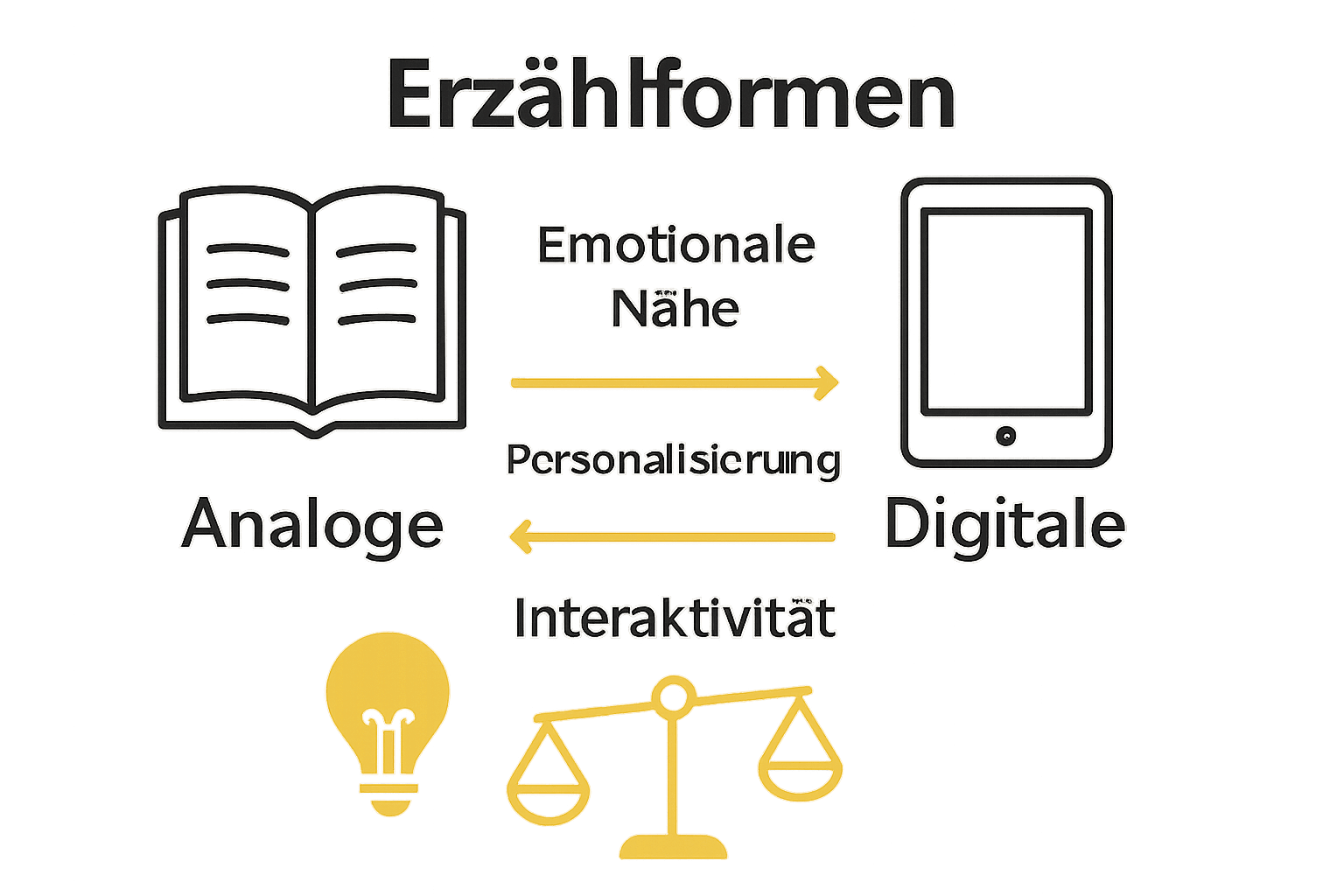 Digital media should complement rather than replace traditional storytelling forms.
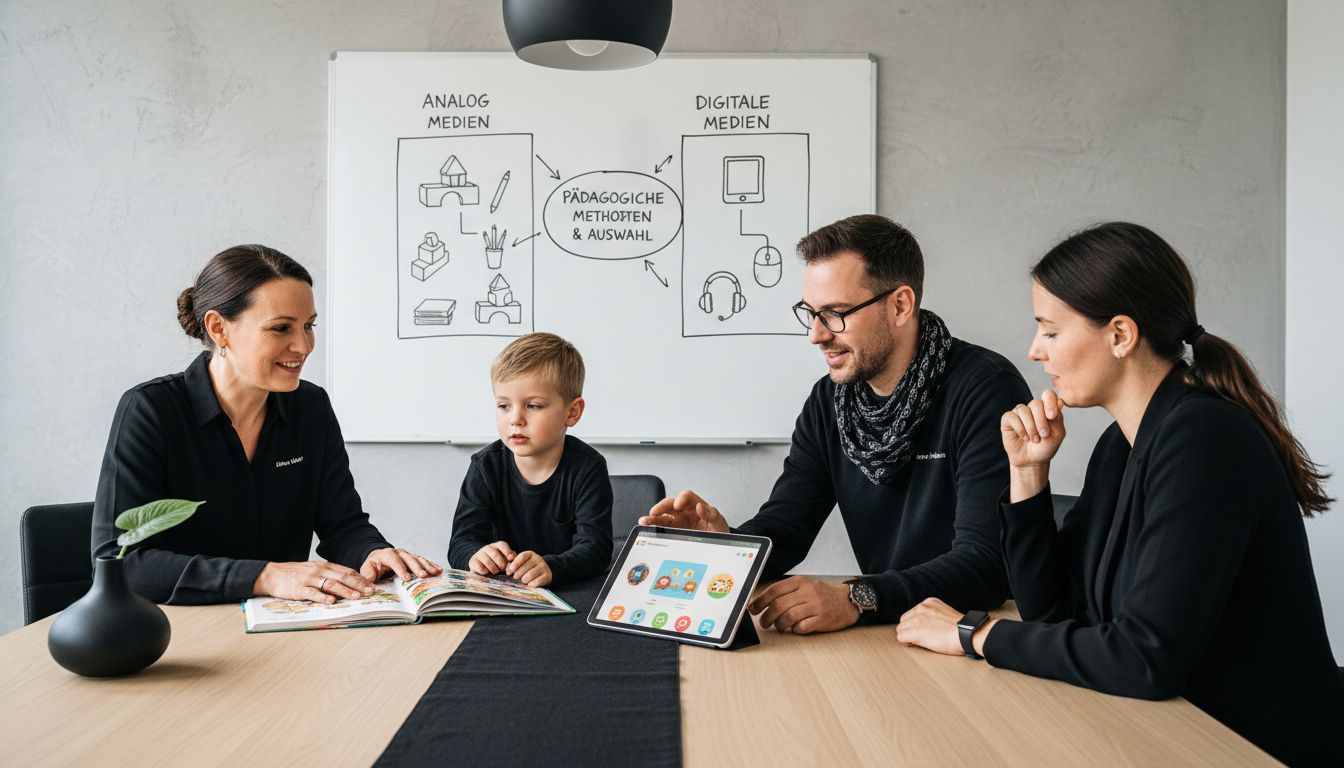 The Pedagogical Value of Storytelling shows that the quality of the story and the emotional connection are decisive—regardless of the medium.
Pedagogical Mechanisms in Storytelling
Storytelling is a complex pedagogical process that encompasses much more than simply conveying information. It is a multidimensional learning mechanism that triggers profound psychological and cognitive developmental processes in children.
The first central mechanism lies in emotional identification. Through stories, children immerse themselves in unfamiliar worlds and develop empathy by empathizing with the feelings and experiences of characters. Understanding Child Education Through Stories illustrates how narratives can playfully promote children's emotional intelligence.
Another significant mechanism is cognitive stimulation. Stories challenge children to understand complex relationships, draw logical conclusions, and develop mental models. By following story lines, children train their problem-solving abilities and abstract thinking. Telling Stories Creatively with Children shows how creative narratives support children's mental flexibility.
Finally, stories act as a social learning medium. They convey cultural values, social norms, and ethical principles in a subtle but lasting way. How Children Learn to Tell Stories emphasizes that storytelling is not only an instrument of knowledge acquisition but also of social conditioning and personality development.
Education Through Stories in the Digital Age
The digital age has fundamentally changed how children learn and experience stories. Digital storytelling formats enable an entirely new dimension of interactive educational experience that goes far beyond traditional storytelling methods.
Technology opens completely new pedagogical possibilities. lehrerweb confirms in a study that a balanced mix of analog and digital educational media achieves the greatest learning success in children. Digital stories can be customized individually, designed interactively, and enriched with multimedia elements such as animations, sounds, and quizzes.
Particularly noteworthy is the increased motivation through digital learning media. home shows in studies that students working with digital devices demonstrate significantly higher interest and engagement. Interactive stories enable children to actively participate in the storytelling process, make decisions, and influence the narrative.
The challenge lies in balance. Digital stories should not replace traditional storytelling forms but complement them. They offer additional possibilities for personalization, interaction, and playful knowledge transfer, without losing the emotional depth and humanity of classical storytelling methods.
Opportunities and Risks of Narrative Education
Narrative education is a complex pedagogical approach that holds both enormous potential and significant challenges. It enables children to process and understand knowledge and experiences through stories but requires a sensitive and reflective approach.
The opportunities lie in the profound emotional and cognitive impact of stories. de illustrates that autobiographical storytelling enables deep-reaching educational processes. Children can grasp and process complex emotions, social dynamics, and ethical concepts on a very personal level through narratives.
At the same time, narrative educational formats carry specific risks. de points out that personal stories without sufficient reflection and contextualization can be problematic. There is a danger that children might unreflectively adopt or misinterpret stories, which could unintentionally shape their perception and understanding of the world.
Storytelling for Parents therefore emphasizes the importance of professional guidance. What is crucial is balanced mediation that helps children view stories critically, understand different perspectives, and develop their own interpretations.
Experience Education Through Stories Vividly with Edory
The comprehensive understanding of "Education Through Stories" clearly shows how important it is not just to convey knowledge to children but to engage them emotionally and cognitively. Many parents face the challenge of offering their children new, age-appropriate, and exciting stories daily that both entertain and promote development. This is where Edory.ai comes in, using intelligent automation to generate individually customizable stories and effectively supporting the potential of narrative education.
Take the opportunity to act now and discover on Uncategorized – Edory AI – Educational Children's Stories how innovative storytelling technologies can enrich your family life. Let yourself be inspired by the diverse possibilities and create a sustainable learning environment with the Edory platform at https://edory.ai. Start today connecting children's imagination and knowledge.
Frequently Asked Questions
What is meant by 'Education Through Stories'?
Education Through Stories is a pedagogical approach that promotes learning and development in children through the telling and experiencing of stories. This approach uses narrative structure to convey complex ideas in an emotional and understandable way.
What are the benefits of storytelling for child development?
Storytelling promotes social and emotional skills such as empathy and problem-solving competence. It also helps children better understand and apply complex relationships and learning content.
How does analog storytelling differ from digital storytelling?
Analog storytelling formats, such as printed books, offer an intimate emotional connection, while digital storytelling formats allow for interactive elements and personalization. Both formats complement each other and should be used equally.
What role does emotional identification play in storytelling?
Emotional identification is a central mechanism of storytelling that enables children to develop empathy by empathizing with the feelings and experiences of characters. In this way, stories support not only learning but also emotional development.