 edory
edory
Every third preschooler in Germany experiences intense emotional learning moments through fairy tale characters. For parents who want to offer their children more than just stories, these symbolic characters are valuable tools. That's because they help even the smallest children develop empathy, find courage, and better understand everyday feelings. Those who tell fairy tales interactively and select them individually promote development and create daily new, exciting adventures for the whole family.
Table of Contents
- What Fairy Tale Characters Are and Why They Work
- Different Types of Fairy Tale Characters and Their Roles
- Explaining Fairy Tale Characters to Children in Age-Appropriate Ways
- Positive and Negative Effects in Everyday Life
- Avoiding Mistakes: Using Fairy Tale Characters in Child-Appropriate Ways
Key Insights
| Point | Details |
|---|---|
| Fairy Tale Characters as Educational Tools | Fairy tale characters convey important moral lessons and help children understand complex social concepts. |
| Identification and Empathy | By identifying with protagonists, children develop empathy and overcome challenges. |
| Age-Appropriate Teaching | Fairy tales should be told in age-appropriate ways to optimally support children's development. |
| Promoting Critical Thinking | Parents should reflect with their children about fairy tale content to develop critical thinking. |
What Fairy Tale Characters Are and Why They Work
Fairy tale characters are more than just fantastic characters in children's stories. They are complex narrative tools that have a profound effect on child development. These symbolic figures convey important moral lessons and psychological insights in a way that children find emotionally and cognitively engaging.
In traditional fairy tales, figures embody archetypal roles and moral dimensions. The brave hero, the cunning witch, or the benevolent wizard represent different human traits and behaviors. Understanding learning content in fairy tales means recognizing how these characters help children grasp complex social and emotional concepts.
The psychological effect of fairy tale characters is based on their ability to transport children into an imaginary world where they can experience and process moral dilemmas. By identifying with protagonists, children learn empathy, perseverance, and how to overcome challenges. They develop an understanding of good and evil without it feeling preachy or moralizing.
Practical Tip for Parents: Choose fairy tales that contain age-appropriate characters and conflicts. Use the stories as conversation starters to reflect together with your child about the characters' actions and feelings and discover their deeper meaning.
Different Types of Fairy Tale Characters and Their Roles
Fairy tale characters can be divided into various characteristic archetypes, each serving a specific narrative and educational function. These symbolic characters represent fundamental human traits and moral dimensions that support children in understanding complex social dynamics.
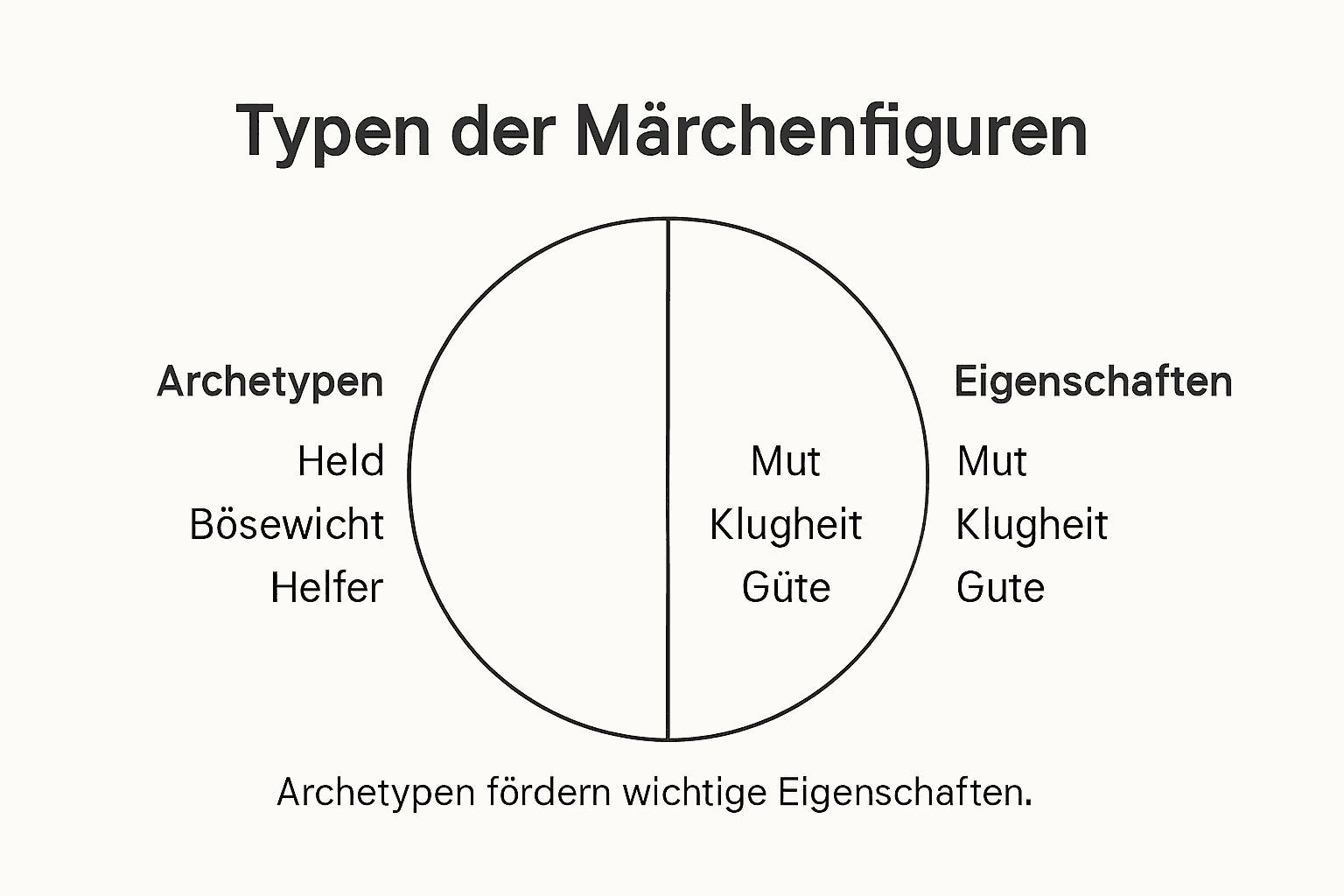
The Hero typically stands at the center of the story and embodies virtues such as courage, honesty, and perseverance. Antagonists like witches or giants symbolize challenges and negative behaviors. Understanding educational content in fairy tales means recognizing how these characters introduce children to complex moral concepts.
Some other important fairy tale character types include:
- Wizards: Represent wisdom and supernatural support
- Animal Protagonists: Convey human traits through animal metaphors
- Princesses and Princes: Illustrate concepts of dignity, hope, and transformation
Practical Tip for Parents: Use different fairy tale characters as conversation starters to discuss character traits, decisions, and their consequences with your children. Encourage your children to analyze the motivations and feelings of the characters.
The following table provides an overview of central archetypes of fairy tale characters and their educational significance:
| Archetype | Symbolic Meaning | Contribution to Child Development |
|---|---|---|
| Hero/Heroine | Courage, endurance, transformation | Strengthens self-confidence and goal-orientation |
| Witch/Antagonist | Challenge, temptation | Promotes risk assessment and problem-solving |
| Wizard | Wisdom, magical help | Emphasizes creativity and thirst for knowledge |
| Animal Character | Human traits as metaphor | Facilitates perspective-taking and empathy |
| Prince/Princess | Hope, transformation, dignity | Supports values such as respect and self-acceptance |
Explaining Fairy Tale Characters to Children in Age-Appropriate Ways
The art of conveying fairy tale characters to children in age-appropriate ways requires sensitivity, creativity, and a deep understanding of child developmental stages. Each age group needs a different approach to understand and process the complex messages and characters of fairy tales.
For preschool children (3-5 years), this means telling stories very simply and emotionally. Focus on clear good-versus-evil distinctions and visual descriptions. How Fairy Tales Stimulate Imagination shows that imaginative storytelling particularly stimulates children's imagination.
Step-by-step explanation strategies by age group:
-
Preschoolers (3-5 years):
- Use simple language
- Emphasize characters' emotions
- Tell short, clear stories
-
School-age children (6-10 years):
- Introduce more complex moral dimensions
- Present characters more differentiated
- Explain characters' motivations
-
Older children (11-13 years):
- Explore metaphorical meanings
- Explain the cultural context of fairy tales
- Interpret symbolic actions
Practical Tip for Parents: Continuously adjust your storytelling style to your child's developmental stage. Be patient, ask follow-up questions, and encourage your child to develop his or her own interpretations and thoughts about the fairy tale characters.
The following table compares age-dependent storytelling strategies for fairy tale characters:
| Age Group | Goal of Teaching | Suitable Storytelling Method |
|---|---|---|
| 3–5 years | Clear good-versus-evil experience | Simple language, focus on feelings |
| 6–10 years | Understanding of motives and morality | Everyday examples, questioning decisions |
| 11–13 years | Recognizing symbolism and context | Shared interpretation, connection to culture and history |
Positive and Negative Effects in Everyday Life
Fairy tale characters have a profound influence on child development that goes far beyond simple entertainment. They are complex educational tools that can have both positive and potentially negative effects in children's everyday lives.
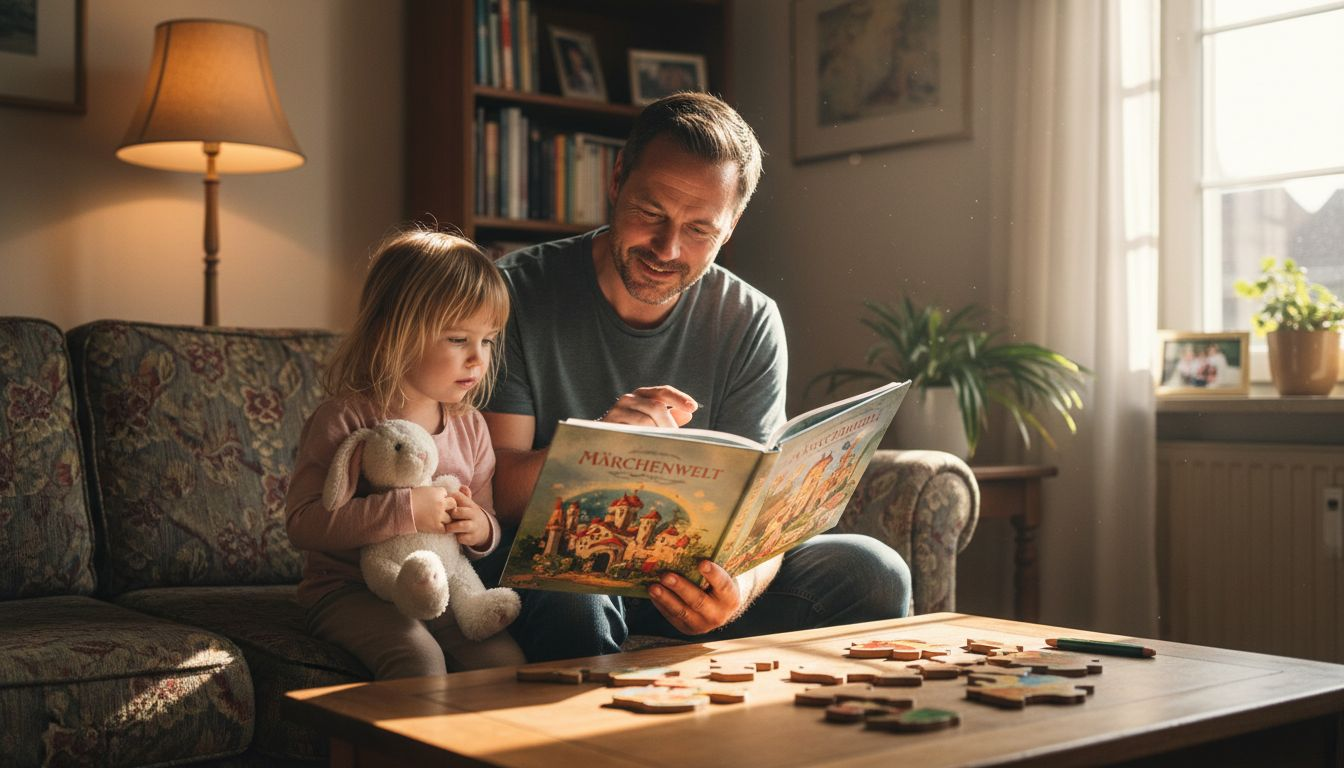
Everyday fairy tales can help children develop emotional competencies and better understand social situations. They allow children to process difficult feelings and challenges through symbolic stories without being directly lectured.
Positive effects:
- Promote emotional intelligence
- Teach conflict resolution strategies
- Develop empathy and social understanding
- Stimulate creativity and imagination
Possible negative aspects:
- Excessive dramatization of conflicts
- Unrealistic expectations
- Reinforcement of clichés and gender roles
Practical Tip for Parents: Reflect on fairy tale stories together with your children. Encourage critical thinking and help them understand the symbolic messages without destroying the magic of the stories.
Avoiding Mistakes: Using Fairy Tale Characters in Child-Appropriate Ways
Using fairy tale characters in children's education requires a sensitive and reflective approach. Not every traditional fairy tale telling is automatically appropriate, but rather requires conscious educational adaptation to promote children without overwhelming them.
Conveying fairy tale values means creating stories that open up age-appropriate messages and development opportunities for children. It is important to avoid stereotypical and problematic representations and instead create positive, empowering narratives.
Common mistakes when using fairy tale characters:
- Telling overly complex or too dark stories
- Conveying moral messages too directly
- Reproducing gender stereotypes without reflection
- Ignoring the child's emotional reactions
- Offering no willingness to talk after the story
Alternative constructive approaches:
- Open discussion formats after telling fairy tales
- Child-appropriate interpretation of characters
- Flexible adaptation to individual needs
- Active involvement of children in the storytelling
Practical Tip for Parents: Observe your child's reactions carefully during the story. Be ready to answer questions and reflect together on the fairy tale plot without destroying the magic and imagination.
Understanding Fairy Tale Characters and Discovering Them Playfully with Edory
Fairy tale characters are valuable companions in child development. They help children recognize complex emotions and understand moral connections. But precisely the age-appropriate communication and the right selection of stories present many parents with challenges. Edory starts exactly here and offers an innovative solution: With personalized, pedagogically well-thought-out stories, the platform fosters your child's imagination and empathy.
Take the opportunity to discover fairy tales tailored individually to your child's age and interests and explore together the meanings behind the characters. This way, education becomes vivid and emotionally moving at the same time. Start today with Edory and experience how Uncategorized – Edory AI – Educational Children's Stories enriches your fairy tale time. Learn more at https://edory.ai and let your children hear new, imaginative stories every day.
Frequently Asked Questions
What are fairy tale characters and what role do they play in children's education?
Fairy tale characters are complex characters that convey important moral lessons and psychological insights. They help children better understand emotional and social concepts.
How can fairy tale characters promote children's emotional development?
By identifying with fairy tale characters, children develop empathy, perseverance, and learn to overcome challenges by experiencing moral dilemmas.
What types of fairy tale characters exist and what does that mean for children?
There are various archetypes of fairy tale characters such as heroes, witches, and princesses that represent fundamental human traits and help children understand social dynamics.
How should I explain fairy tale characters to my child in an age-appropriate way?
Adjust your storytelling style to your child's developmental stage. Use simple language and emphasize emotional aspects for younger children, while introducing more complex moral dimensions for older children.