 edory
edory
Fantasy journeys for read-aloud can not only excite children but also allow their creativity to unfold. And many parents believe that the key is to come up with extraordinary stories. But the surprising thing is: Simply the thoughtful selection of an age-appropriate topic can significantly increase children's emotional connection and attention, as scientific studies show. There is much more magic in the details than expected.
Table of Contents
- Step 1: Choose an Appropriate Fantasy Theme
- Step 2: Create a Vivid Story with Details
- Step 3: Prepare a Pleasant Reading Space
- Step 4: Integrate Creative Elements like Music or Sounds
- Step 5: Take the Fantasy Journey Together with the Children
- Step 6: Reflect on the Experience and Gather Feedback
Quick Summary
| Key Point | Explanation |
|---|---|
| 1. Choose an Age-Appropriate Topic | Analyze children's interests and age to select an exciting theme. |
| 2. Integrate Emotional Elements | Characters should evoke feelings to encourage children's attention and intensify the experience. |
| 3. Create an Inviting Reading Space | A quiet, cozy room promotes concentration and immersion in the fantasy journey. |
| 4. Use Creative Sounds and Music | The right soundscape enhances the story's emotions and atmosphere, making it more vivid. |
| 5. Conduct Interactive Read-Aloud | Ask open-ended questions and encourage children to actively participate in the story. |
Step 1: Choose an Appropriate Fantasy Theme
Selecting a captivating fantasy theme is the crucial first step for a successful read-aloud fantasy journey. A well-chosen theme can transport children to magical worlds and ignite their imagination. There are several important aspects to consider to find the right adventure for your young listeners.
Start by carefully analyzing your children's interests and age group. A four-year-old will want to explore different fantasy worlds than an eight-year-old. Make sure the theme is age-appropriate, exciting, and not too complicated. For example, younger children might love a journey through an enchanted forest with friendly animal characters, while older children prefer complex adventure stories with puzzles and challenges.
According to research on narrative development strategies, the thoughtful selection of storytelling elements increases children's attention and emotional connection. Therefore, choose themes that are not only entertaining but also include light educational aspects. An adventure that conveys friendship, cooperation, or small life lessons can make the fantasy journey even more valuable.
Also pay attention to the dynamics and interactive possibilities of the theme. Read-aloud fantasy journeys should leave room for imagination and shared discovery. Ask your child about their wishes or let them help shape elements of the adventure. Perhaps they would like to determine a magical object or decide which characters appear in the story.
A successful fantasy theme is characterized by three core features:
- A clear but not overly complicated plot structure
- Emotional connection points for children
- Room for personal interpretations and imagination
With these criteria in mind, you will find a theme that captures your children's hearts and promises an unforgettable fantasy journey.
For a better overview, this table summarizes the core features of a successful fantasy theme and shows how they can positively affect the fantasy journey.
| Core Feature | Significance for the Fantasy Journey |
|---|---|
| Clear Plot Structure | Helps children follow the story easily and experience suspense |
| Emotional Connection Points | Promotes bonding and attention through identification and empathy |
| Room for Personal Interpretation | Enables creativity, co-creation, and individual immersion in the story |
Step 2: Create a Vivid Story with Details
The art of a captivating fantasy journey lies in crafting a vivid, detail-rich story that transports children to a magical world. A well-told story comes alive through descriptions that appeal to all senses and fuel imagination. Focus on creating a story that is more than just a sequence of events.
Begin by developing characters who are lively and unique. Give them not just names, but also characteristics, feelings, and little quirks that make them special. A shy dragon who secretly writes poetry, or a brave princess who prefers to learn sword fighting rather than attend dance lessons, will immediately captivate children.
Research on narrative development strategies emphasizes that including emotional elements increases children's attention and engagement. Build in moments that evoke feelings—joy, suspense, surprise, or even gentle challenges. Let your characters overcome obstacles, make friendships, and experience small adventures.
Pay attention to the sensory details that bring a story to life. Don't just describe what happens, but how it feels, smells, sounds, and tastes. How does the forest floor feel under their feet? What sounds surround the characters? What smells are in the air? These details transform a simple narrative into an immersive experience.
A successful fantasy journey is characterized by these core elements:
- A clear but not overly complicated plot structure
- Emotional depth and character development
- Surprising and creative twists
Don't forget to leave room for interaction. Ask your listeners questions, let them make guesses or small decisions for the characters. This way, they become active participants in the story rather than passive listeners.
Step 3: Prepare a Pleasant Reading Space
The reading space is more than just a physical location—it is a magical place where fantasies emerge and connections are made. A carefully designed environment can transform the entire atmosphere of a fantasy journey. Imagine a place where your child feels safe, relaxed, and ready for an adventure.
Choose a quiet area in your home that is free from distractions. A cozy corner in the child's room, a soft reading nook in the living room, or even a snug alcove under a loft bed works wonderfully. Make sure the room has a comfortable temperature and sufficient, but not harsh, lighting.
Research on learning environments shows that enclosed, structured spaces can improve children's concentration and receptivity. Design the space with soft pillows, a cozy blanket, and perhaps a special reading chair. These tactile elements create an inviting atmosphere and signal to your child that it is time for a special journey.
Furnishings play a crucial role. Place a small lamp for soft lighting, have water or a small cup of tea ready. Avoid electronic devices or other distractions nearby. The focus should be entirely on the shared fantasy journey.
An ideal reading space combines the following characteristics:
- Quiet, distraction-free environment
- Comfortable and soft seating
- Pleasant lighting
- Personal atmosphere with familiar elements
Always prepare the space a few minutes before reading. Arrange the pillows, turn on soft lighting, and create an atmosphere of anticipation. Let your child help design the space—perhaps they want to place a special stuffed animal as a listener or choose a favorite blanket. The more your child feels the space is theirs, the deeper they will immerse themselves in the fantasy journey.
This table summarizes the key elements for an ideal reading space and shows how they support children's reading experience.
| Element | Benefit |
|---|---|
| Quiet, Distraction-Free Environment | Maximizes concentration and minimizes interruptions |
| Comfortable and Soft Seating | Promotes relaxation and well-being |
| Pleasant Lighting | Creates coziness and relaxed listening |
| Personal Atmosphere | Increases sense of security and anticipation for reading |
Step 4: Integrate Creative Elements like Music or Sounds
Music and sounds are magical ingredients that can transform a fantasy journey from a simple story into an unforgettable multisensory experience. The right soundscape can intensify emotions, build suspense, and ignite your child's imagination.
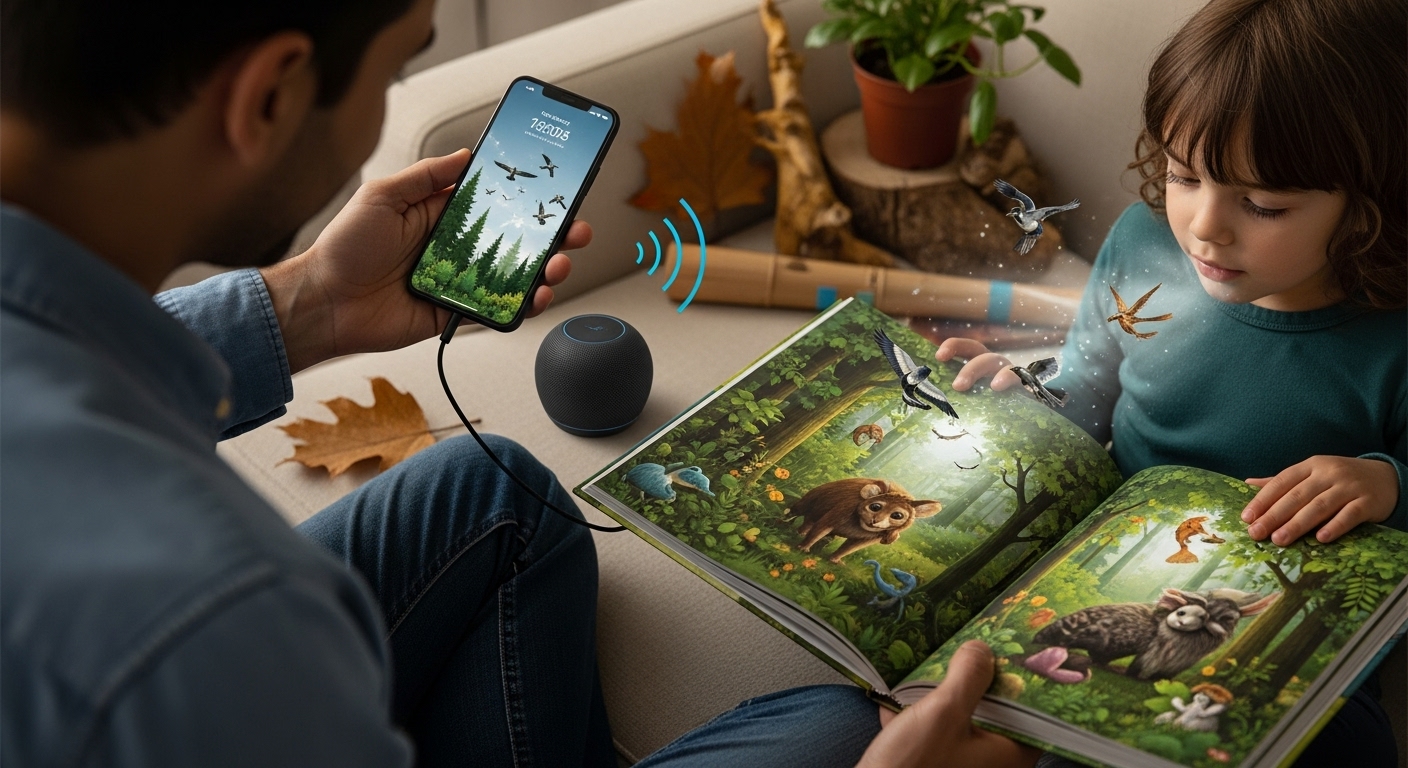
Begin by selecting music or sounds that match the mood of your story. Soft forest sounds with bird chirping can perfectly accompany a story about forest elves. Dramatic orchestral music could underscore a moment of great heroism. Make sure to keep the volume moderate so it complements rather than overshadows the story.
Research on musical development shows that music plays a significant role in children's perception from very early stages of life. Tap into this natural sense by strategically using sounds to evoke specific emotions or atmospheres.
There are various ways to incorporate sounds into your fantasy journey. Use smartphone apps with background sounds, a small Bluetooth speaker, or even self-created sounds. Quiet rustling with a piece of paper can create the impression of wind sounds, gentle finger tapping can simulate rainfall.
Pay attention to these aspects when choosing sounds:
- Matching the story's mood
- Not too loud or distracting
- Age-appropriate
- Flexibly applicable
Experiment with different sounds and observe your child's reactions. Some children love subtle background sounds, others are enchanted by more complex soundscapes. The keys are sensitivity and adaptability. Let your child also contribute their own creative ideas—perhaps they would like to create sounds themselves or play instruments.
Step 5: Take the Fantasy Journey Together with the Children
Conducting a fantasy journey is a delicate art that requires empathy, creativity, and a calm voice. The journey does not begin with words, but with the right atmosphere and preparation. Make sure your child feels relaxed and safe before you start the story.
First, it is important to create a calm, trusting mood. Encourage your child to find a comfortable position—whether on a soft pillow, in a cozy corner, or even on the floor with a warm blanket. Speak in a gentle, rhythmic tone that radiates security and comfort.
The Siemens Foundation especially recommends being careful to tell the story slowly and evenly. Vary your voice, use pauses, and emphasize certain moments. This technique keeps attention alive and allows your child's imagination to come alive.
Interaction is key to a successful fantasy journey. Ask your child occasional open-ended questions: "What do you think will happen next?" or "How do you feel in this place?". Leave room for personal interpretations and additions. Sometimes children can develop surprisingly creative ideas that make the story even more magical.
Pay attention to these critical aspects during the fantasy journey:
- Slow, rhythmic storytelling
- Variations in voice and pace
- Openness to children's impulses and ideas
- Mindful, soothing atmosphere
At the end of the journey, take time for an exchange. Ask your child about their impressions, feelings, and thoughts. What did they enjoy most? Which moments were exciting or touching? This reflection not only deepens the experience but also strengthens the emotional bond between you and your child.
Step 6: Reflect on the Experience and Gather Feedback
Reflection after a fantasy journey is just as important as the journey itself. This moment of exchange transforms a fleeting experience into a profound, educational memory. It provides an opportunity to explore the emotional and creative aspects of your shared journey and strengthen the bond between parent and child.
Begin the reflection with open, inviting questions that encourage your child to think and share. Avoid closed yes-or-no questions. Instead, ask: "Which moment in the story touched you most?" or "How did you feel when our hero overcame the challenge?" Such questions encourage children to articulate their thoughts and feelings.
Research on social interactions shows that guided reflection conversations help children develop emotional intelligence and self-awareness. Be sure to listen actively. Nod, make eye contact, and show genuine interest in your child's stories.
Use creative methods to document the experience. Encourage your child to draw a picture of a moment from the fantasy journey or write a short story about it. These creative forms of expression help process and deepen memories.
Consider these aspects during reflection: