 edory
edory
Nearly 80 percent of all parents report that their children become more confident and creative through shared storytelling. Whether in a quiet cozy corner or with digital tools, telling their own stories strengthens imagination and language development. Those who purposefully create an inspiring environment and actively involve children lay the foundation for strong communication skills and loving learning together.
Table of Contents
- Step 1: Create an Inspiring Storytelling Environment
- Step 2: Choose Age-Appropriate Stories
- Step 3: Actively Involve Children in Storytelling
- Step 4: Use Digital Tools for Creative Support
- Step 5: Monitor the Development of Storytelling Skills
Quick Summary
| Important Point | Explanation |
|---|---|
| 1. Create a Welcoming Storytelling Environment | Design a distraction-free space with comfortable seating and inspiring elements to promote children's creativity. |
| 2. Choose Age-Appropriate Stories | Consider your child's interests and developmental stage to select appropriate and engaging stories. |
| 3. Actively Involve Children in Storytelling | Use open-ended questions and props to motivate children to think along and participate in storytelling. |
| 4. Use Digital Tools Creatively | Employ age-appropriate digital tools to enhance storytelling, combined with traditional methods. |
| 5. Monitor the Development of Storytelling Skills | Observe and document your child's progress to purposefully support positive developmental steps. |
Step 1: Create an Inspiring Storytelling Environment
An inviting storytelling environment can help children unfold their creativity and bring stories to life. The goal is to design a space that encourages imagination and the desire to communicate, signaling to children: "Here you are free to discover your stories."
Start by creating a quiet area free from distractions. Choose a comfortable spot with cozy seating like a reading nook with soft pillows or a special storytelling chair. Jangala emphasizes the importance of engaging children with all their senses, so your storytelling environment should provide various sensory experiences.
Furnish the room with inspiring elements. Provide books, collect interesting objects like figurines, stuffed animals, or small props that can serve as story prompts. A treasure box with various items makes storytelling interactive and exciting. Make sure the materials are age-appropriate and safe.
The key is creating an atmosphere that sparks curiosity and signals to children that their own stories are valuable. Encourage them to view the space as their creative haven.
Next step: Learn how to gently guide and support children during storytelling.
Step 2: Choose Age-Appropriate Stories
Selecting appropriate stories is crucial for developing your child's storytelling skills. The goal is to find stories that are not only entertaining but also stimulate your child's language development and imagination.
Start by understanding your child's developmental stage and interests carefully. Parental guidance resources can help identify age-appropriate and safe content that is both educational and exciting. For children between 3 and 6 years old, short stories with simple plots and clear characters are suitable. Children aged 6 to 8 can already understand more complex storylines and moral messages.
Look for stories that meet these criteria: age-appropriate language, comprehensible plot, positive characters, and an engaging narrative structure. Avoid stories with overly complex conflicts or frightening content. The length of the story is also important—it should match your child's attention span.
A practical strategy is to choose books together. Let your child help select the books—this increases motivation and enjoyment of storytelling. Visit libraries or bookstores and let your child browse through various books.
Next step: Develop interactive storytelling techniques that encourage your child to participate and co-create stories.
Step 3: Actively Involve Children in Storytelling
Shared storytelling is a wonderful way to encourage your child's creativity and language development. The goal is to create an interactive storytelling atmosphere where your child not only listens but also actively participates and contributes their own ideas.

Children develop linguistic skills through active listening, storytelling, and shared play, while also strengthening their confidence and imagination. Start with open-ended questions that encourage your child to think along and participate in storytelling. For example, ask: "What do you think will happen next?" or "How would the story continue if the main character made a different decision?"
Create interactive storytelling moments. Use props like stuffed animals, hand puppets, or action figures to bring the story to life. Let your child play characters, make sounds, or even invent parts of the story themselves. This transforms storytelling into a shared creative process.
Be patient and value every idea your child contributes. Don't interrupt and show genuine interest in their contributions. Sometimes the wildest and most unexpected ideas are the most exciting.
Next step: Develop techniques to continuously support and motivate your child's storytelling enthusiasm.
Step 4: Use Digital Tools for Creative Support
Digital tools can be a wonderful complement to traditional storytelling and open up new creative expressions for children. The goal is to use technology meaningfully and age-appropriately to foster imagination and storytelling joy.
Digital educational tools can provide young people access to creative learning opportunities and help develop new skills through play. Look for child-friendly apps and platforms that offer interactive storytelling experiences. Pay attention to age-appropriate content and user-friendly interfaces.
Some practical options include digital drawing tools where children can create their own story illustrations, audio recording apps with which they can narrate their stories, or interactive story-building programs that make story writing playful. Parental involvement is always important when using digital media.
Pay attention to screen time and alternate between digital and traditional storytelling methods. Digital tools should support creative development, not replace it.
Next step: Reflect on and celebrate your child's creative progress.
Step 5: Monitor the Development of Storytelling Skills
Regularly observing and assessing your child's storytelling skills is crucial for targeted support. The goal is to recognize individual language and creative progress and provide targeted support.
Similar to examining new technologies in education, developing storytelling skills requires a thoughtful and reflective approach. Conduct regular conversation rounds where you explore your child's stories together. Pay attention to various aspects such as language fluency, creativity, structure, and emotional depth.
Document development through audio recordings or written notes. Compare the stories over intervals of several months to recognize progress. Look for changes such as more complex storylines, more detailed character descriptions, or richer vocabulary.
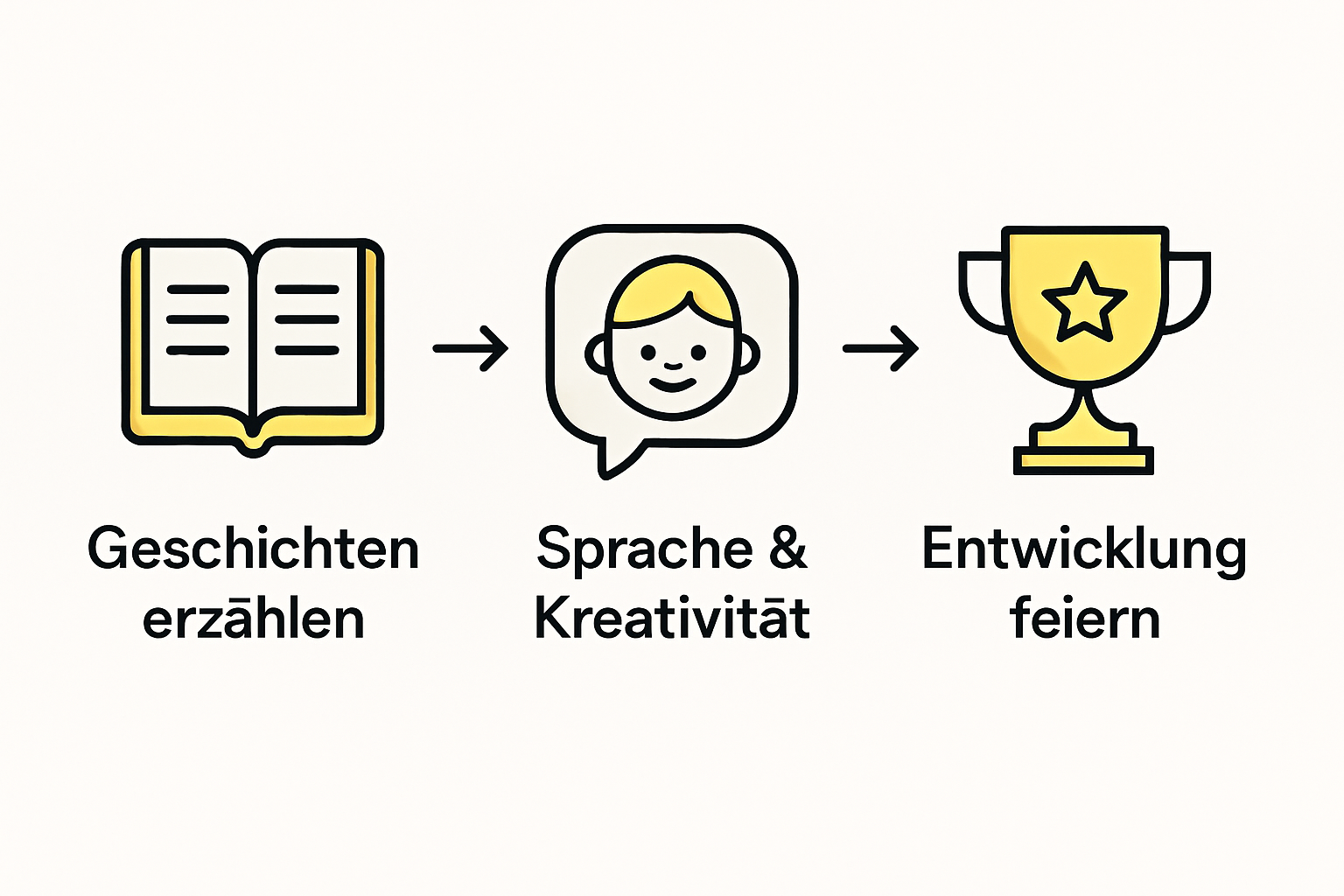
Observe not just the linguistic aspects but also your child's enjoyment and motivation in storytelling. Positive reinforcement and constructive feedback are more important than critical evaluation.
Next step: Develop new creative storytelling strategies together.
Making Creative Storytelling Easy with Edory.ai
Writing and telling stories is a wonderful way for children to promote language and imagination. This article clearly shows how important it is to actively support children and select age-appropriate stories. Edory.ai supports parents in exactly this way by offering daily customized stories that optimally promote the development of storytelling skills. This playfully awakens each child's creative potential and strengthens motivation for independent storytelling.
Discover diverse examples on Uncategorized – Edory AI – Educational Children's Stories and learn how to set new impulses with innovative digital storytelling methods. Start now on Edory.ai and transform shared storytelling into a daily, exciting experience. Purposefully promote your child's imagination and create customized children's stories in just a few clicks that are tailored to your child's specific needs and interests.
Frequently Asked Questions
How can I create an inspiring storytelling environment for my child?
An inspiring storytelling environment consists of a quiet, comfortable space furnished with pillows, books, and interesting objects. Design the room so your child feels comfortable and creative, for example through a cozy reading nook or a treasure box with props.
Which stories are best suited for my child?
Choose stories that are age-appropriate and stimulate your child's language development and imagination. Make sure the stories have a clear plot and positive characters and are appropriate in length for your child's attention span.
How can I actively involve my child in storytelling?
Involve your child actively by asking open-ended questions and using props that encourage creativity. Let your child play characters or invent parts of the story themselves to promote interactivity.
What digital tools can I use to support my child's storytelling skills?
Use child-friendly apps and platforms that offer interactive storytelling experiences. Look for digital drawing tools or audio recording apps to foster your child's creativity, but keep screen time in mind.
How can I regularly monitor my child's storytelling development?
Observe your child's storytelling skills through regular conversations and documentation of stories they tell. Compare these stories over several months to recognize progress in language ability, creativity, and emotional depth.
What techniques can I use to sustainably support my child's storytelling enthusiasm?
Focus on positive feedback and constructive encouragement to foster your child's creativity. Have thoughtful conversations about the stories to maintain interest and enable creative exchange.
Recommendation
- Wisdom – Your AI Guide to Love, Success & Self-Mastery
- Understanding the Benefits of Imaginative Play – The Zoofamily