 edory
edory
Every child brings unique interests and ideas to everyday life. Parents want to recognize these early so their child receives individual support. Targeted observation of children's needs forms the foundation for personalized stories that strengthen creativity and love of learning. Here you'll learn how to better understand your child through conscious preparation and conversation skills, and support them playfully.
Table of Contents
- Step 1: Prepare an observation situation
- Step 2: Analyze behavioral and communication patterns
- Step 3: Capture interests with targeted questions
- Step 4: Verify found interests playfully
- Step 5: Use personalized stories to nurture interests
Quick Summary
| Important Point | Explanation |
|---|---|
| 1. Define observation goal clearly | A precise goal guides the entire observation and helps better understand development. |
| 2. Select observation method | Choose an appropriate method to gain targeted insights into the child's behavior. |
| 3. Ask open questions | Open questions promote communication and enable deeper insights into the child's thinking. |
| 4. Playful interest verification | Play with the child to explore actual interests in a natural, relaxed way. |
| 5. Use personalized stories | Create stories that emotionally engage the child to promote motivation and identification. |
Step 1: Prepare an observation situation
Preparing an observation situation is a crucial process for parents and educators to understand children's individual interests and developmental needs. Professional observation methods help gain targeted insights into child development.
To create an effective observation situation, you should consider the following aspects:
- Define observation goal clearly
- Select an appropriate time and location
- Determine a suitable observation method
- Respect the child's individuality
Concrete preparation involves several important steps. First, you must be clear about your specific observation goal. For example, do you want to examine the child's play interests, social interactions, or motor development? This determines the entire subsequent approach.
Systematic observation helps precisely perceive children's development and learning processes.
Make sure to choose a natural environment where the child feels comfortable and unobserved. Educators recommend conducting observation in familiar situations - such as during free play or group activities.
Below you'll find an overview of the most important observation methods and their respective benefits:
| Observation Method | Description | Application Area |
|---|---|---|
| Systematic Observation | Planned, targeted observation with checklist | Development, learning processes |
| Free Observation | Spontaneous perception of behavior in everyday life | Everyday interaction, play |
| Participatory Observation | Active participation in events | Social dynamics, group behavior |
| Video Documentation | Recording situations for later analysis | Reflection, in-depth analysis |
Pro Tip: Keep a short checklist with your observation goals and criteria to stay systematic and focused.
Step 2: Analyze behavioral and communication patterns
Systematic analysis of behavioral and communication patterns is crucial for deeper understanding of child development and needs. Professional behavior observation requires a neutral and methodical approach.
When analyzing, you should consider the following core aspects:
- View behavior in context
- Take different perspectives
- Identify situational triggers
- Recognize individual communication patterns
The first step is to observe the child's behavior neutrally and without judgment. Every action makes sense and conveys a message. Ask yourself: What might the child be expressing with their behavior? What needs or emotions are behind it?
Every behavior is a communication signal and deserves careful interpretation.
Systematic behavior analysis considers not only visible behavior but also the entire context. Pay attention to triggers, personal factors, and possible consequences of behavior.
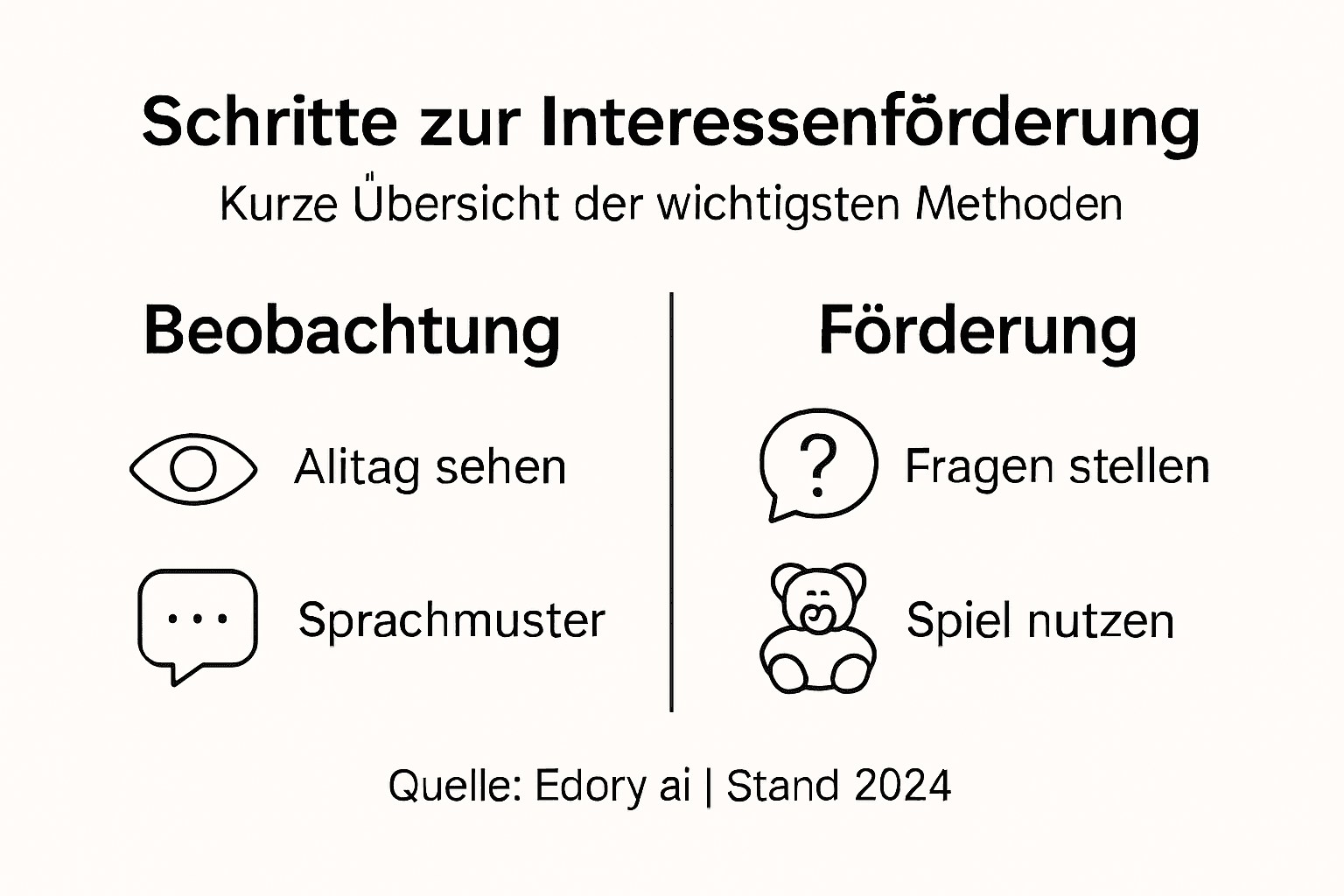
Pro Tip: Keep a brief observation log to precisely document patterns and changes in the child's behavior.
Step 3: Capture interests with targeted questions
Asking children targeted questions is an effective method to understand their individual interests and learning motivation. Professional questioning techniques help you delve deeper into the child's thinking.
When capturing interests, the following aspects are important:
- Use open-ended questions
- Listen actively and ask follow-up questions
- Pay attention to body language and emotions
- Don't pressure the child
The key is how you ask questions. Avoid closed yes-no questions and instead formulate questions that encourage thinking and sharing. Examples could be: "What was the most fun for you today?" or "What story would you like to tell me?"
Children open up when they feel their thoughts truly matter.
Dialog-oriented questioning strategies activate not only cognitive processes but also strengthen the emotional connection between you and the child. Make sure to adapt questions situationally and individually.
Pro Tip: Write down the child's answers in a small notebook to document developments and changes in interests over time.
Step 4: Verify found interests playfully
Playfully exploring children's interests enables a natural and relaxed verification of previously discovered preferences. Playful learning approaches use children's natural curiosity and desire for discovery.
Various methods are suitable for playful interest verification:
- Conduct free play
- Design role-plays
- Offer creative experiments
- Create open play situations
It's important to give the child space for free expression. Observe carefully which activities the child chooses on their own, where they are particularly focused and motivated. Let yourself be surprised by spontaneous discoveries.
Every game is a chance to discover a child's true interests.
Playful learning situations enable children to develop intrinsic motivation and improve their problem-solving skills playfully. Make sure to offer activities that spark curiosity and encourage a desire for discovery.
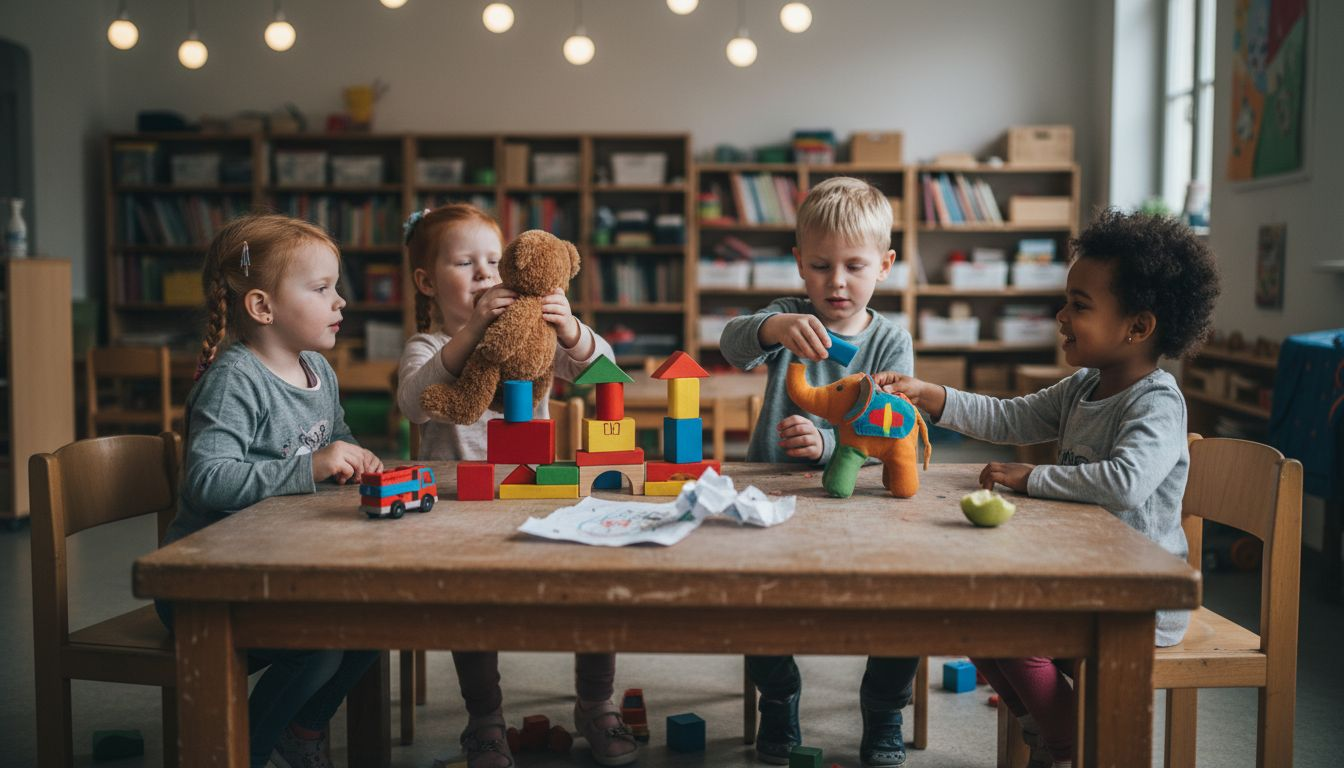
Pro Tip: Document your observations in brief notes to track changes and developments in the child's areas of interest.
Step 5: Use personalized stories to nurture interests
Using personalized stories is a powerful method to purposefully support and deepen children's interests. Personalized educational approaches can significantly increase motivation and engagement.
When creating personalized stories, the following aspects are important:
- Integrate the child's name
- Include personal experiences
- Consider individual interests
- Promote emotional identification
The goal is to create a story in which the child recognizes themselves and feels emotionally connected. Choose themes already known from previous observations - whether dinosaurs, space, or fairy tale worlds.
A personalized story can accomplish more than a hundred abstract learning units.
Make sure to shape the story vividly and interactively. Leave room for imagination and creativity so the child can actively participate in the narrative.
This table shows how different methods for nurturing interests affect children's motivation and development:
| Method | Impact on Motivation | Contribution to Development |
|---|---|---|
| Playful Learning | Strengthens curiosity and self-initiative | Promotes problem-solving skills |
| Targeted Questioning | Enables individual engagement | Improves expression and self-awareness |
| Personalized Stories | Increases emotional connection | Supports identification and engagement |
Pro Tip: Vary the stories regularly and observe which elements particularly fascinate the child.
Recognizing and playfully nurturing children's interests with Edory.ai
Recognizing and purposefully nurturing children's interests is a challenge for many parents and educators. Often, there's a lack of time or the right method to truly discover and support children's individual potential. The steps outlined in this article - such as systematic observation, targeted questions, and personalized stories - show how diverse and demanding this process can be. Using personalized stories is particularly helpful, as they emotionally engage children and strengthen their motivation.
This is where Edory.ai comes in. Our innovative platform offers exactly this solution: daily new children's stories tailored to age and interests, which playfully convey knowledge and spark imagination. This way, you can easily connect the insights about your child's preferences that you've gathered in everyday life with exciting stories that specifically address them. Visit our page Children's Stories – Edory AI – Educational Children's Stories and discover the many ways to immediately convert children's interests into learning motivation. Don't miss the unique benefits of personalized stories and start today at Edory.ai. Your child will love the individual support and you'll experience their potential unfold firsthand.
Discover more about the power of personalized stories for better educational support in our Uncategorized section – Edory AI – Educational Children's Stories. Seize this opportunity and create a new world of learning for your child!
Frequently Asked Questions
How do I identify my child's interests?
To identify your child's interests, you should conduct targeted observations in natural play environments. Pay attention to which activities your child is particularly drawn to and repeats regularly.
What methods help me nurture children's interests purposefully?
You can purposefully nurture your child's interests by creating personalized stories or offering creative games. Experiment with different approaches to find out what works best.