 edory
edory
Did you know that according to studies, grandparents tell certain family stories up to 30 times? These repetitions are no accident, but actually strengthen values like loyalty and togetherness. Stories shared across generations shape not only children's identity, but also create genuine closeness in families. When younger people hear about the experiences and adventures of their elders, they understand traditions and can better contextualize life's challenges.
Key Insights
| Point | Details |
|---|---|
| Intergenerational Stories | They are an important tool for conveying values and strengthening family bonds. |
| Storytelling Formats | Traditional, written, and digital formats each offer unique advantages and should be used in combination. |
| Benefits for Children and Adults | Stories promote identity formation and emotional intelligence in children, as well as mental well-being in seniors. |
| Challenges and Solutions | Open communication and multi-perspective narratives are essential to ensure the effectiveness of storytelling. |
Table of Contents
- What are intergenerational stories?
- Types and formats compared
- Benefits for children and families
- Pedagogical approaches and implementation
- Challenges and proven solutions
What are intergenerational stories?
Intergenerational stories are a special form of storytelling that transfers experiences, knowledge, and memories between different age groups. They serve as a powerful tool to strengthen family bonds and keep cultural heritage alive.
As research shows, these stories play a central role in passing down important values and life lessons. According to a study, older people repeatedly tell stories not due to memory gaps, but to convey core values such as loyalty, work ethic, and family togetherness. These narrative traditions are more than just nostalgic tales - they are an active process of cultural transmission.
Methods of intergenerational storytelling include various formats:
- Oral traditions during family gatherings
- Written records such as diaries or family chronicles
- Digital media such as video recordings or online platforms
From a scientific perspective, as research confirms, this storytelling is an important mechanism for sharing experiences between young and old. It not only creates connections but also enables a deeper understanding of the life paths and challenges of different generations.
Types and Formats Compared
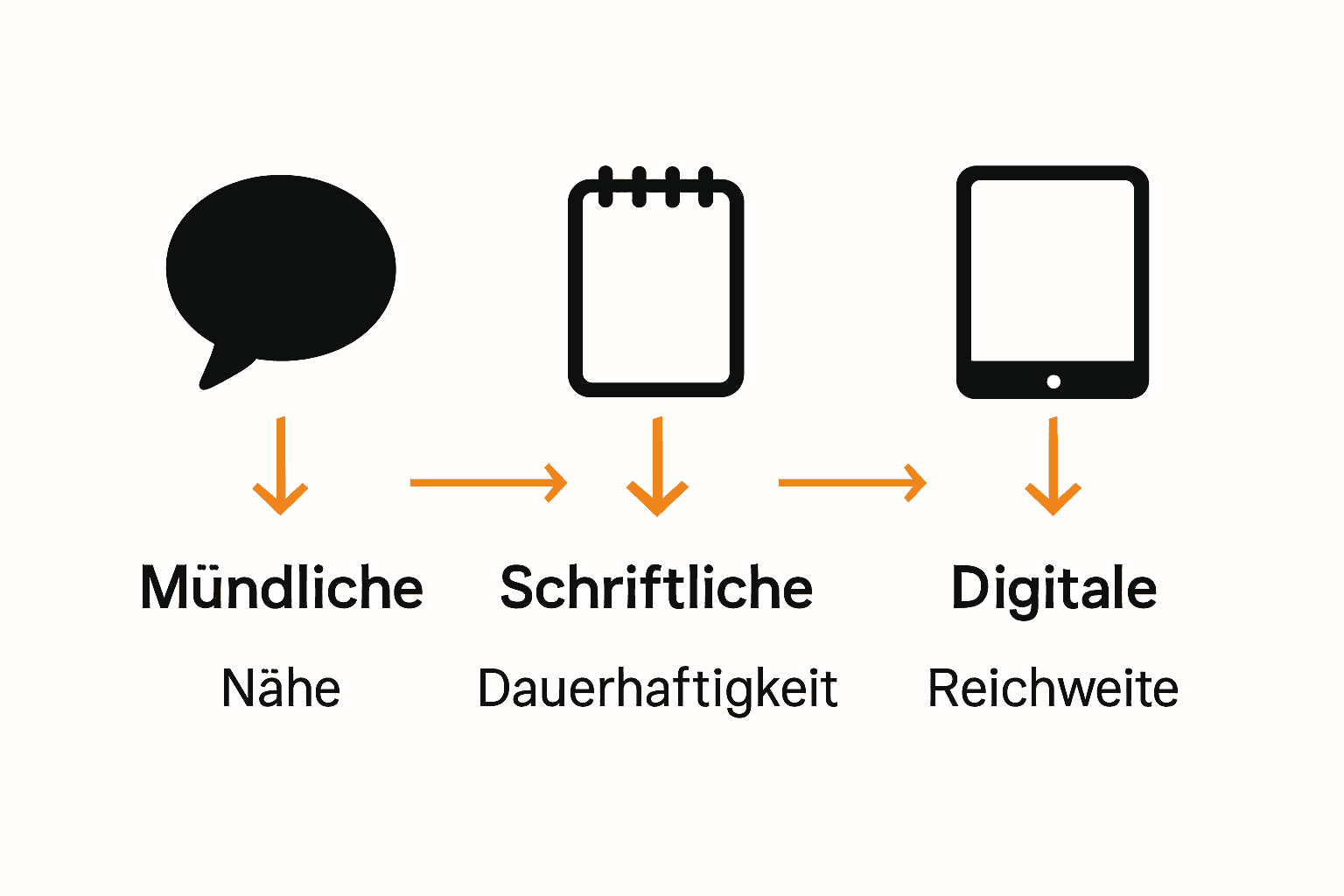
Intergenerational stories exist in different storytelling formats, each with its own strengths and characteristics. According to research, these formats can be roughly divided into three main categories: oral, written, and digital transmission forms.
Traditional Oral Traditions
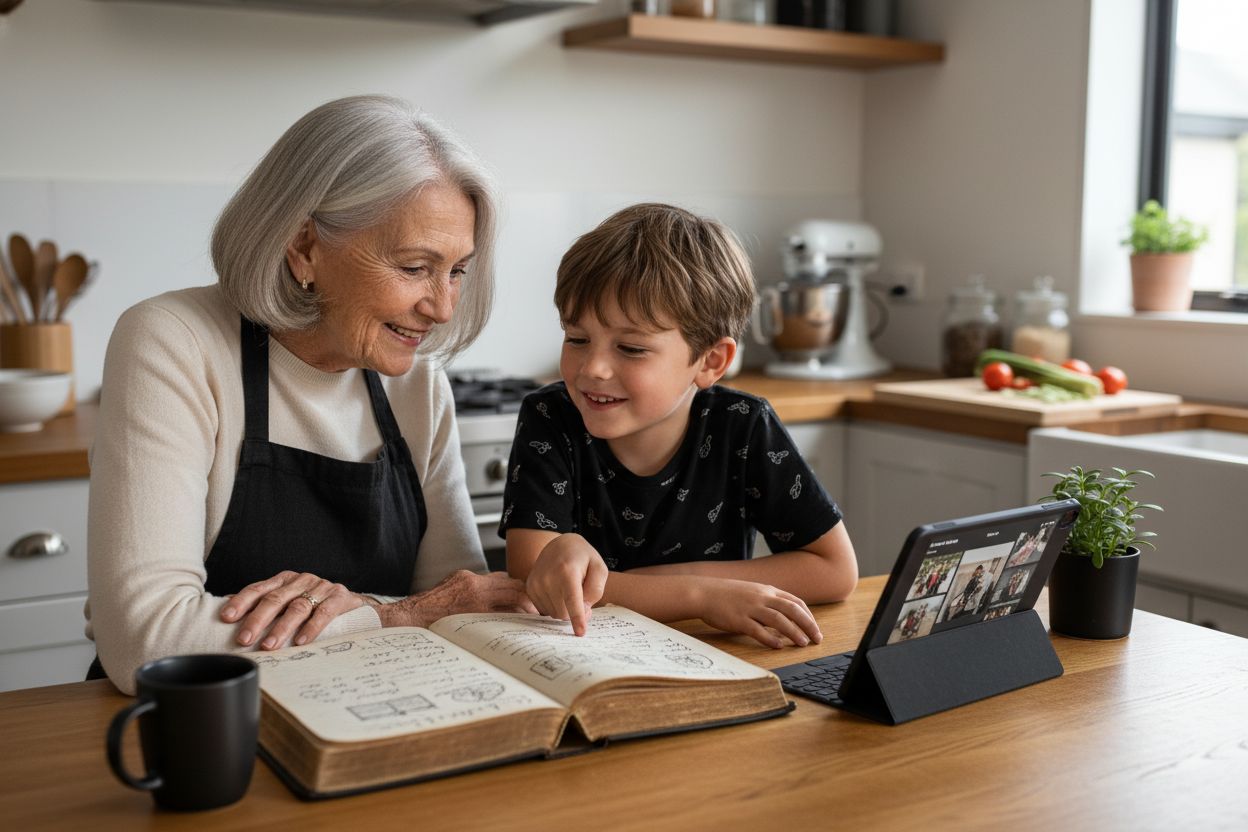
The oldest and most personal form of storytelling is oral tradition. Here, grandparents, parents, or older relatives sit directly with younger generations and share family stories. This form enables immediate emotional connections and non-verbal communication such as gestures and facial expressions.
Written Documentation
Written formats include:
- Handwritten diaries
- Family chronicles
- Autobiographical records
- Memoirs
They offer the advantage of permanently preserving stories and keeping them for future generations.
Digital Storytelling Platforms
Here is a comparison of the main storytelling formats:
| Storytelling Format | Characteristics | Benefits |
|---|---|---|
| Oral | PersonalnImmediatenInteractive | Strong emotional bondnNon-verbal communication |
| Written | PermanentnChronicle/DiarynArchived | Preservation for generationsnSustainable |
| Digital | MultimedianGlobalnTime-independent | Wide distributionnEasy accessibility |
Modern research shows that digital media are becoming increasingly important. These formats combine:
- Social media
- Family history websites
- Multimedia presentations
- Video and audio recordings
The major advantage: Stories can now be shared globally and independently of time, which greatly expands reach and accessibility.
Benefits for Children and Families Intergenerational storytelling is far more than just a nice tradition - it is a powerful tool for family development. Research shows that this exchange brings tremendous benefits for everyone involved.
Benefits for Children
For children, these stories mean much more than just entertainment. They build self-confidence and develop important coping strategies. By hearing family stories, children learn:
- To understand their own identity
- To develop emotional intelligence
- To better contextualize complex life situations
Benefits for Adults and Seniors
Older family members also benefit enormously. Telling stories:
- Boosts mental well-being
- Provides a sense of meaning and appreciation
- Helps process life memories
Our recommendation: Discover more about storytelling in everyday family life to strengthen connections between generations. Intergenerational stories are more than words - they are a bridge between past, present, and future that holds families together and keeps shared values alive.
Pedagogical Approaches and Implementation
Intergenerational storytelling requires conscious and creative pedagogical strategies to effectively reach and inspire children. Scientific research shows that the use of rich, stimulating language has a decisive impact on children's language development and reading skills.
Language Development
In particular, picture books without text offer excellent opportunities for interactive storytelling. Through shared interpretation and storytelling, families can:
- Promote children's language skills
- Stimulate creativity and imagination
- Develop emotional intelligence
Modern Storytelling Methods
Current research emphasizes the importance of digital storytelling formats. These combine traditional and modern approaches:
- Multimedia presentations
- Family history websites
- Interactive storytelling projects
Discover creative learning methods to make your family stories even more exciting. The key is to tell stories in a lively, interactive, and age-appropriate way - a bridge between tradition and modern pedagogy.
Challenges and Proven Solutions Intergenerational storytelling faces complex challenges despite its benefits. Scientific research shows that even the definition of "intergenerational" and "storytelling" can vary between research studies, which makes conceptual clarity difficult.
Narrative Challenges
What is crucial is the conscious design of narratives. Research emphasizes that families must actively decide:
- Which perspectives are prioritized?
- How can an honest representation be ensured?
- How do we avoid perpetuating prejudices?
Practical Solution Approaches
To address these challenges, experts recommend the following strategies:
- Open and respectful communication
- Active listening
- Multi-perspective narratives
- Regular reflection on family narratives
Learn more about creative learning activities that can help shape these complex narratives in a child-friendly and constructive way. The key lies in balancing authenticity, respect, and intergenerational understanding.
More Connection Through Personal Family Stories – Start Now With Edory
Many families wish that passing on experiences, values, and memories would succeed in our busy everyday lives. This article shows how intergenerational stories can strengthen relationships and provide children with guidance. This is exactly where Edory helps: Our platform makes it possible to create individual and age-appropriate stories tailored to your family's needs. Take the opportunity to expand your storytelling tradition with digital, secure, and playfully educational formats.
Try it yourself and discover how Edory helps you create valuable family moments. Explore educational children's stories and start each day with a new, personal story. Find out more now on Edory.ai and experience how easily storytelling fits into your daily life. Your family deserves stories that connect - start today!
Frequently Asked Questions
What are intergenerational stories?
Intergenerational stories are narratives that share experiences and memories between different age groups to preserve values and cultural heritage.
What formats are available for intergenerational storytelling?
There are oral traditions, written documentation such as diaries, and digital storytelling platforms.
What are the benefits of intergenerational stories for children?
For children, these stories build self-confidence, promote understanding of their own identity, and help develop emotional intelligence.
How can intergenerational storytelling be integrated into everyday family life?
Families can integrate storytelling into their daily routine by regularly using family gatherings, reading books together, or using digital media for storytelling.