 edory
edory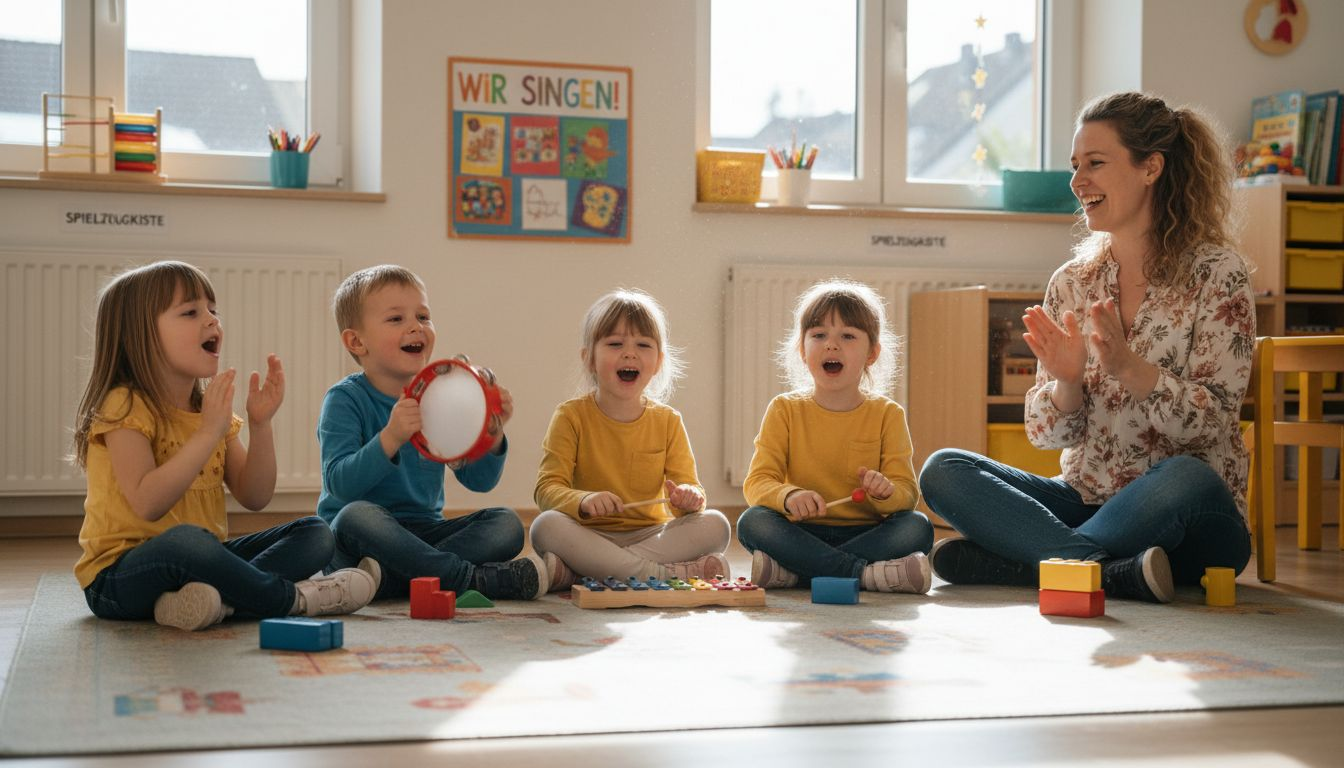
In everyday family life with kindergarten-age children, the question often arises of how to combine learning joy, creativity, and language development. Especially kindergarten songs with simple, repetitive texts and appealing melodies offer a playful way to support togetherness and language development. Whether cheerful movement songs or relaxed lullabies – the right song accompanies children through the day, stimulates imagination, and creates intense moments of togetherness.
Table of Contents
- What are Kindergarten Songs and Their Special Features
- Typical Song Types in Kindergarten Everyday Life
- Pedagogical Effects on Language Development and Social Behavior
- Song Selection: Age-Appropriate and Content-Safe
- Practical Tips for Parents: Application and Avoiding Mistakes
Key Takeaways
| Point | Details |
|---|---|
| Kindergarten songs promote development | They support children's linguistic, motor, and social development through targeted musical activities. |
| Different song types have specific goals | Movement songs, participation songs, and seasonal songs each contribute to promoting motor skills, interaction, and knowledge about nature. |
| Age-appropriate selection is crucial | Songs should be melodically simple and thematically relevant to meet the needs of children. |
| Parents should avoid singing mistakes | Overwhelming and performance pressure can reduce the joy of singing; patience and positive feedback are important. |
What are Kindergarten Songs and Their Special Features
Kindergarten songs are special musical compositions specifically tailored to the needs and developmental stages of preschool children. They differ fundamentally from other musical forms through their child-appropriate structure and pedagogical orientation. Children's songs in the kindergarten context are characterized by simple melodies and easily understandable texts composed specifically for young listeners.
The special features of these songs include several important aspects. They are usually held in diatonic or pentatonic key to avoid overwhelming the limited vocal range of children. Typically, kindergarten songs are divided into different categories:
- Movement songs that promote body motor skills
- Seasonal and participation songs
- Rain songs and play songs
- Rhythmic songs for language development
Musical education through such songs goes far beyond pure singing. Song projects show that kindergarten songs structure the daily and yearly routine while simultaneously supporting children's linguistic and social development. They help children express emotions, learn social competencies, and playfully develop musical fundamentals.
Pro Tip: Choose kindergarten songs that combine movement, language, and imagination to optimally promote your child's holistic development.
Typical Song Types in Kindergarten Everyday Life
Kindergarten everyday life is enriched by a variety of song types that specifically support children's development and interaction. Typical kindergarten songs are characterized by simple, catchy melodies and child-friendly texts that enable children to have fun and learn simultaneously.
The most important song categories in kindergarten everyday life include:
- Movement songs: Promote motor skills and coordinative development
- Participation songs: Strengthen social competencies and group interaction
- Lullabies: Support relaxation and emotional calming
- Seasonal songs: Convey knowledge about nature and the yearly cycle
- Birthday songs: Celebrate individual events and strengthen community feeling
Each song type fulfills a specific pedagogical function. Movement songs, for example, combine musical elements with physical activity and help children learn rhythmic movement patterns. Participation songs further promote language development and social interaction by motivating children to sing and play together.
The following overview presents the most important song types in kindergarten and their promotional effects side by side:
| Song Type | Main Goal | Example Effect | Typical Use Scenario |
|---|---|---|---|
| Movement songs | Promote motor skills | Improvement of coordination and balance | Circle or dance games |
| Participation songs | Interaction | More teamwork ability and language competence | Group activities |
| Lullabies | Relaxation | Emotional calming and sense of security | Quiet times, bedtimes |
| Seasonal songs | Expand knowledge | Strengthening nature understanding and rhythm | Celebrations, seasonal transitions |
| Birthday songs | Community | Promotion of togetherness and appreciation | Birthday celebrations in kindergarten |
Pro Tip: Vary the types of songs in kindergarten everyday life to playfully and joyfully support different developmental areas of your child.
Pedagogical Effects on Language Development and Social Behavior
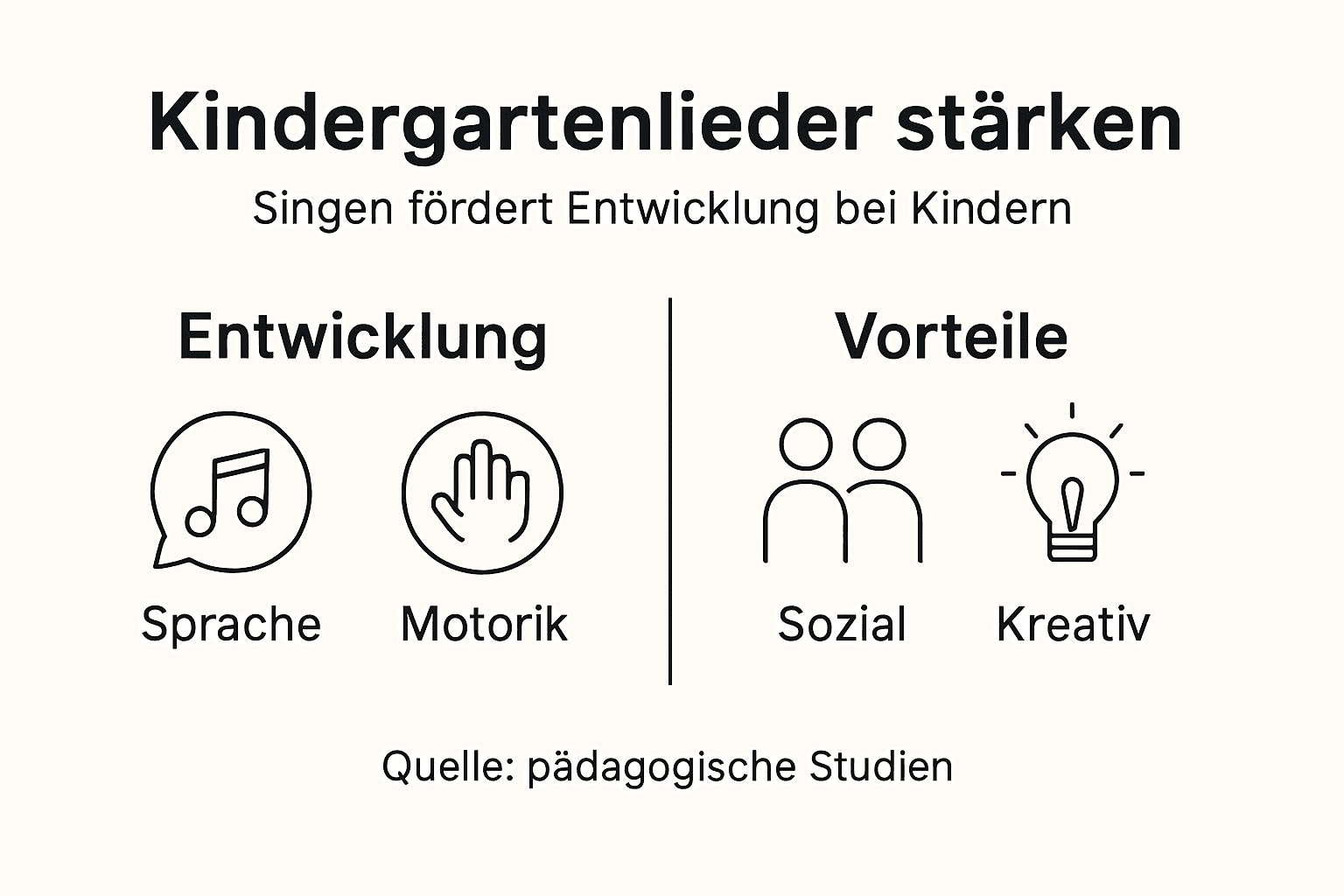
Kindergarten songs play a crucial role in children's development by simultaneously promoting linguistic, cognitive, and social abilities. Language development processes are specifically supported through musical activities, with songs being a particularly effective method for playfully educating children.
The pedagogical effects can be divided into different areas:
- Language development: Expansion of vocabulary
- Motor development: Coordination through rhythmic movements
- Social competencies: Promotion of teamwork
- Emotional intelligence: Expression and understanding of feelings
- Cognitive abilities: Memory and concentration capacity
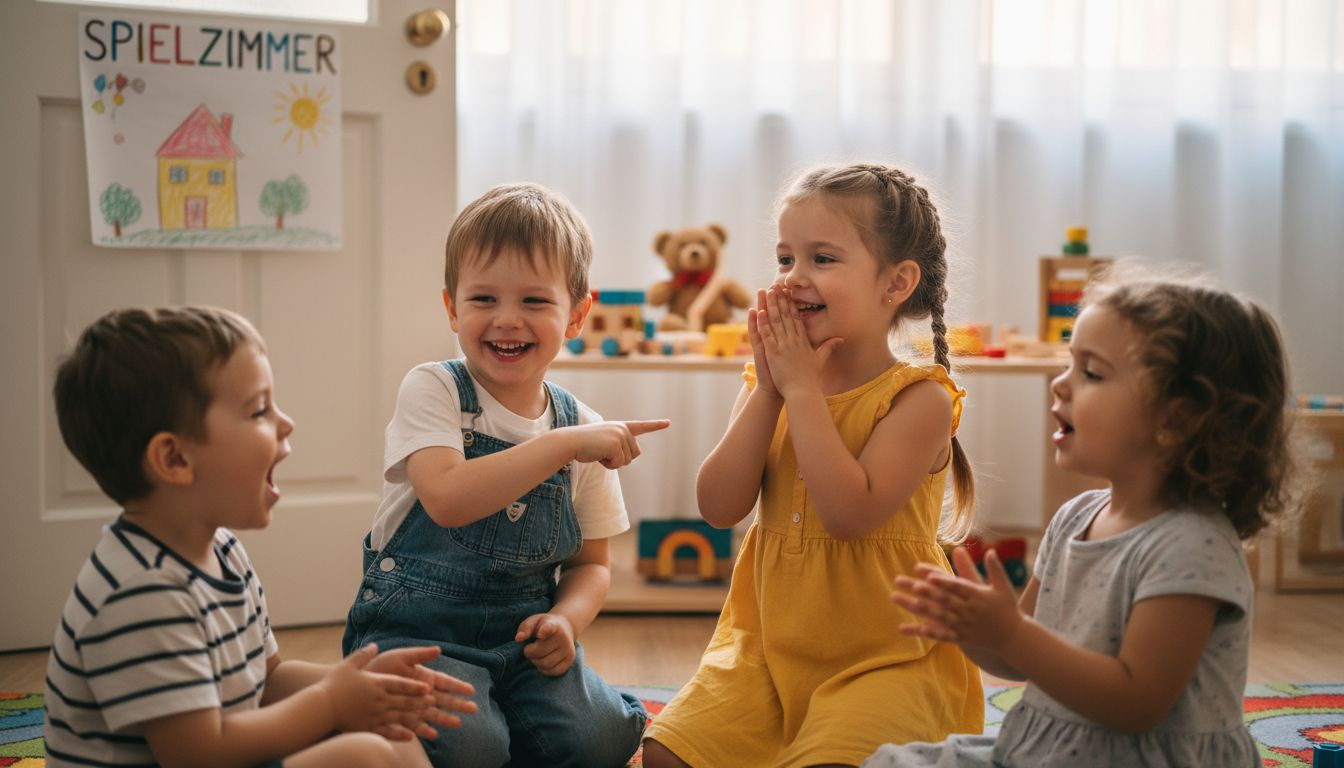
Interestingly, scientific studies show that singing together not only promotes language development but also strengthens social bonds. Children learn basic communication patterns through songs, rhythmic language structures, and simultaneously develop their emotional expression abilities. Music therapy studies demonstrate that musical interactions help children build social relationships and explore complex emotional worlds.
Pro Tip: Integrate short singing moments daily into family life to playfully support your child's language development and social bonding.
Song Selection: Age-Appropriate and Content-Safe
Selecting appropriate kindergarten songs requires sensitivity and pedagogical understanding. Criteria for children's songs include not only musical aspects but also content and developmental psychological considerations that ensure songs are truly age-appropriate.
Key selection criteria for age-appropriate songs:
- Melodic simplicity: Easy-to-remember tone sequences
- Text comprehensibility: Clear, simple language
- Thematic relevance: Connection to the child's world
- Vocal range: Adapted to children's vocal capabilities
- Positive messages: Encouraging, life-affirming content
Song selection should also consider development-specific aspects. Children's song recommendations emphasize that songs should not only entertain but also promote linguistic and musical abilities. They must emotionally appeal to children while being educational without being preachy.
The following table provides a quick overview of appropriate selection criteria and their importance:
| Selection Criterion | Why Important? | Recommended Implementation |
|---|---|---|
| Melodic simplicity | Avoids overwhelming | Choose simple tone sequences |
| Text comprehensibility | Promotes language development | Clear, age-appropriate words |
| Thematic relevance | Strengthens connection to everyday life | Choose themes from children's world |
| Vocal range | Matches children's voices | Songs in small tone range |
| Positive messages | Supports emotional learning | Prefer encouraging texts |
Pro Tip: Listen to songs beforehand together with your child and observe their reactions to make the right musical selection.
Practical Tips for Parents: Application and Avoiding Mistakes
Singing together with children is a wonderful way to promote development, but it requires some attention and sensitivity. Parent-child interactions require a patient and encouraging approach that combines fun and learning.
Mistakes to avoid when singing with children:
- Overwhelming: Don't choose overly complex songs
- Constant correction: Don't constantly criticize mistakes
- Performance pressure: Understand singing as playful fun
- Impatience: Respect individual learning pace
- Lack of motivation: Give positive feedback
The way parents use songs is decisive for learning success. Promoting musical interactions means lovingly accompanying children, observing their reactions, and creating a relaxed atmosphere. It's important to make singing a shared experience where fun and discovery are in the foreground.
Pro Tip: Start with short, simple songs and let your child explore the musical journey at their own pace.
Strengthening Children Together Through Creative Stories and Music
Kindergarten songs are a valuable support for children's linguistic and social development. But alongside songs, telling individual and age-appropriate stories can also playfully promote important skills and inspire children's imagination. If you're looking for effective ways to bring your child new learning stimuli and joy daily, the combination of singing and personal stories can significantly contribute to success.
Discover on Edory AI an innovative platform that enables parents to create new stories tailored to their child every day. These stories complement the pedagogical effects of songs by promoting language development, creativity, and emotional intelligence simultaneously. For more suggestions on child-friendly music and storytelling, visit our collection at Uncategorized – Edory AI – Educational Children's Stories. Start now on Edory AI and make your children's learning as exciting and diverse as their favorite kindergarten songs.
Frequently Asked Questions
What are kindergarten songs and what features do they have?
Kindergarten songs are songs specially tailored to the needs of preschool children with simple melodies and easily understandable texts. They promote children's linguistic, social, and motor development.
What types of kindergarten songs are there and what are they for?
There are different types such as movement songs, participation songs, lullabies, and seasonal songs. Each song type fulfills a specific pedagogical function, from promoting motor skills to strengthening social competencies.
How do kindergarten songs support children's language development?
Kindergarten songs promote language development through simple texts and rhythmic structures that make it easier to expand vocabulary and practice communication.
What criteria should you consider when selecting kindergarten songs?
Important criteria are melodic simplicity