 edory
edory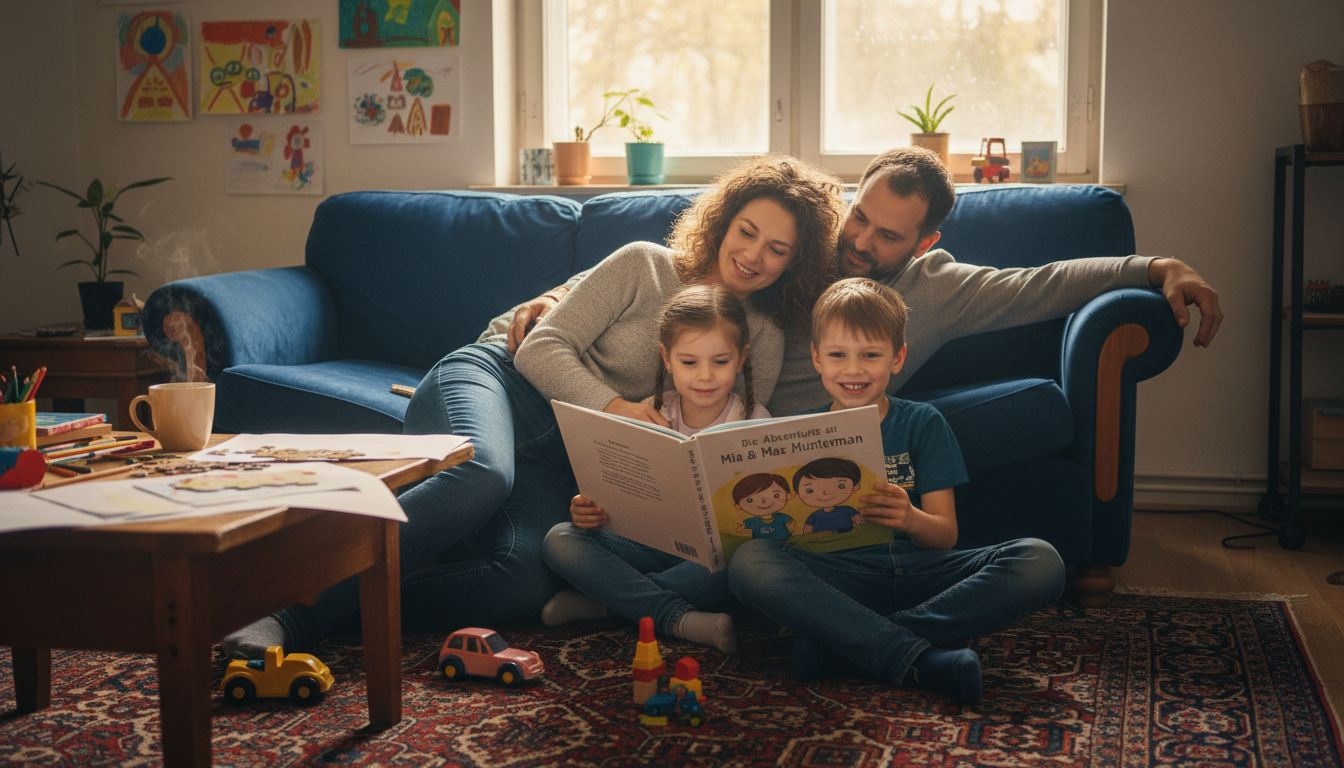
Some parents notice every evening how their children's attention wanes during story time. When preschoolers recognize themselves as heroes, their interest changes completely. A study from the University of Bern shows that children are not only more attentive with personalized books, but also retain content better. In this article, you'll discover why personalized sibling books offer unique opportunities to playfully support your children's learning and emotional bonding.
Table of Contents
- What exactly are personalized sibling books?
- What variants and design options are available?
- How individual personalization works
- Educational benefits for siblings and families
- Data protection and security in personalized children's books
- Costs, sources, and recommended alternatives
Key Findings
| Point | Details |
|---|---|
| Personalization increases reading motivation | Children form emotional connections with stories where they are the main characters, leading to more frequent reading moments. |
| Fostering sibling dynamics | Personalized sibling books strengthen cooperation and support between siblings and help resolve conflicts. |
| Variety of formats and customizations | There are numerous formats and design options tailored to your family's individual needs and learning goals. |
| Important data protection aspects | When creating personalized books, ensure providers handle your children's sensitive data responsibly. |
What exactly are personalized sibling books?
Personalized sibling books are stories written specifically for your family that include the names, characters, and situations of your children. Unlike standard children's books written for a broad audience, these books speak directly to your family and make each child the main actor in the story. Imagine your five-year-old daughter and three-year-old son are not just readers, but the heroes of a story written only for them. This creates an emotional bond that rarely occurs with ordinary books.
The special feature of personalized sibling books is their ability to bring together multiple children of different ages in a single story. The plot considers typical sibling dynamics: how older children help younger ones, how they experience adventures together, or how they learn to resolve conflicts. Personalized books for families strengthen these bonds by showing that cooperation between siblings is valuable and exciting. At the same time, you can use these books to deliberately incorporate educational content: concepts like friendship, courage, sharing, or overcoming fears can be naturally integrated into the narrative.
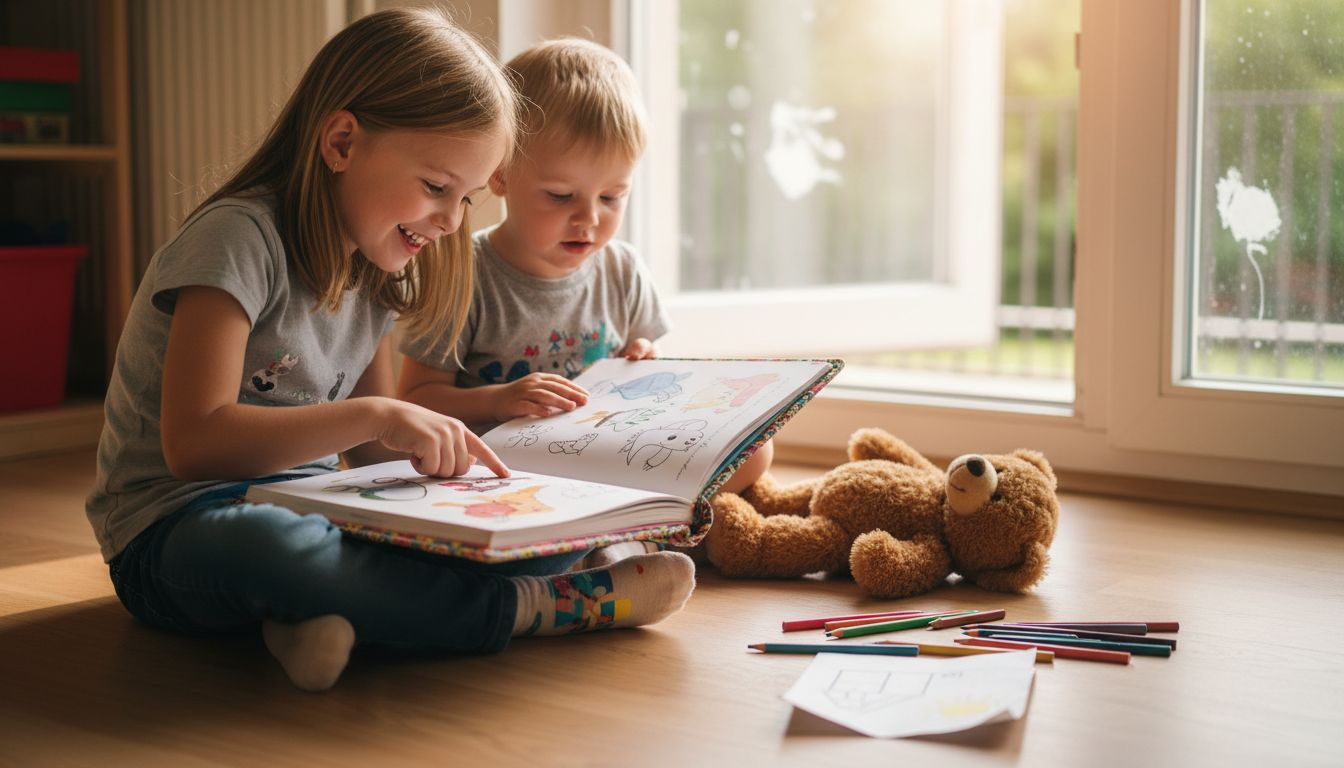
Creating such books is much easier today than it was in the past. You simply provide information about your children (names, interests, character traits, dynamics between them), and a system generates a custom-made story. This differs fundamentally from traditional book production. The result is not just a printed book, but often also a digital format you can use immediately. Many parents report that their children want to read personalized books much more frequently than standard books because they feel directly addressed.
Pro Tip: Use personalized sibling books not just for entertainment, but also to prepare for changes: a new sibling, moving house, or starting school can be playfully incorporated into the story to make transitions easier for your children.
What variants and design options are available?
With personalized sibling books, you have far more options than you might initially expect. The basic version involves entering your children's names and fundamental character traits, and the system generates a story from this. But this is just where it gets really interesting. You can decide whether you want a printed hardcover book with high-quality illustrations, a flexible softcover for daily use, or a purely digital format you can view on a tablet right away. Each option has its place: the hardcover becomes a treasured piece on your bookshelf, the softcover fits in any backpack, and the digital format is perfect for on-the-go.
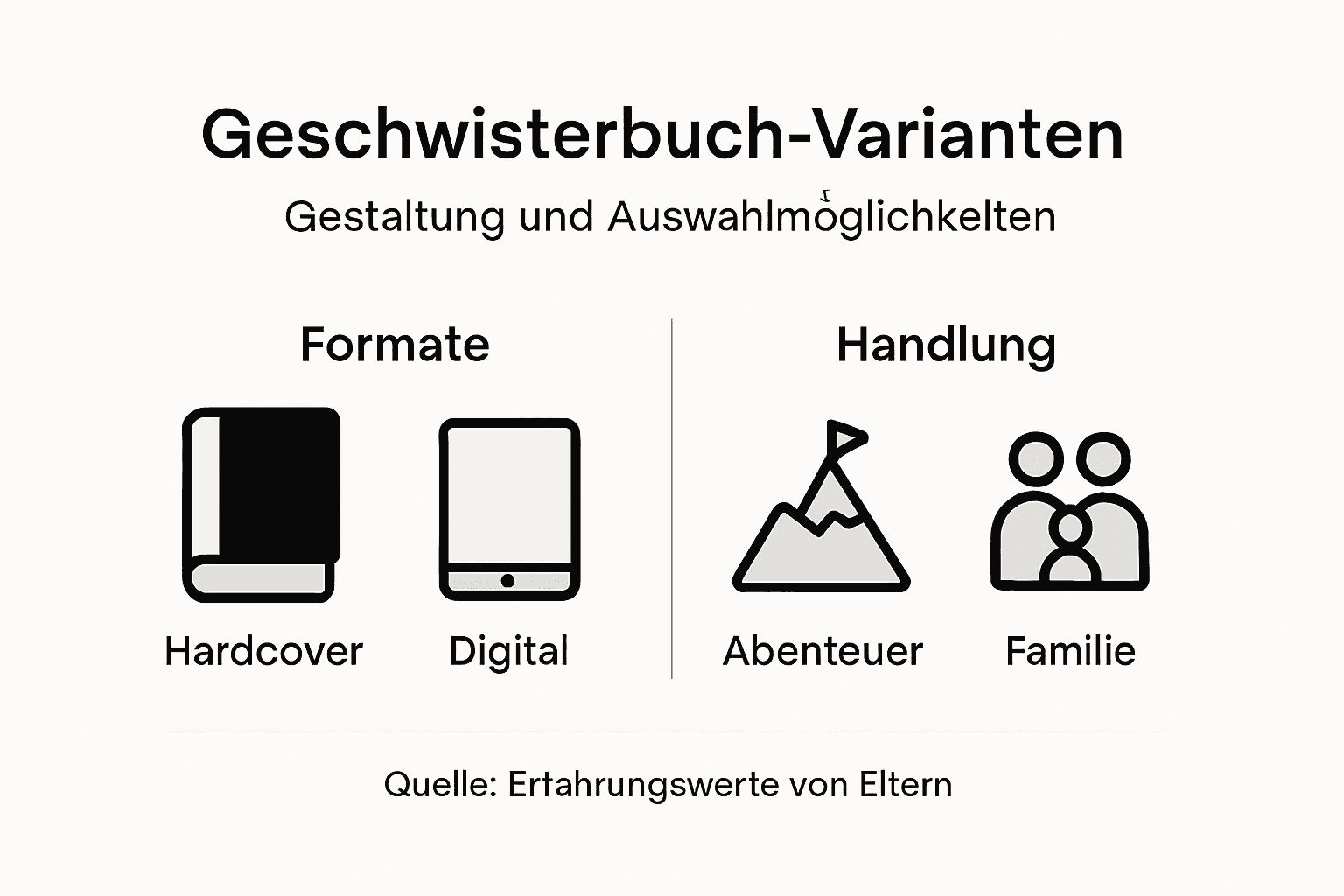
But design options go far beyond format. You can shape the plot yourself: should it be an adventure story in a fantasy world, a realistic story about your family's everyday life, or perhaps a fairy tale with a modern twist? Creative personalized children's stories show how many possibilities exist to realize your ideas. You can also choose the illustration style: colorful, modern designs or classic, hand-painted aesthetics. Some systems even let you design the characters yourself by choosing hair color, clothing, and other details. Others allow you to incorporate specific learning goals, such as learning to count, first English words, or emotional intelligence.
Additional design options are particularly useful for specific life situations. You can create books celebrating your children's first day of school, presenting the arrival of a new sibling positively, or playfully addressing anxiety disorders. Some parents use personalized books as a reward system: each time a child does something particularly well, a new story is added. Page numbers are also customizable, from short 8-page stories for three-year-olds to detailed 32-page adventures for older children.
Below you'll find an overview of different personalized sibling book formats and their typical uses:
| Format Type | Advantages | Suitable Situations |
|---|---|---|
| Hardcover | Durable, high-quality appearance | Gift, favorite book |
| Softcover | Flexible, easy to transport | On the go, everyday use |
| Digital | Immediately available, interactive | Travel, tablet or smartphone |
| Handmade | Personal, creative design | Individual bonding, craft project |
Pro Tip: For your first personalized book, choose a proven format and theme that directly appeals to your children – a new adventure with their favorite characters will ensure the book is read immediately and motivate you to try other variants.
How individual personalization works
Individual personalization begins with a simple questionnaire you complete. You first enter your children's names, their ages, and basic character traits. But it goes much deeper. You describe what your children love: are they adventurers or more thoughtful? Do they like animals, dinosaurs, space, or fairy tale characters? You also share the dynamics between siblings. Is the older child a protector? Do they play together or more separately? These details aren't just stored—they're woven directly into the story. The system uses this information to ensure each child truly feels recognized.
Next come the educational goals. You can specify which skills or concepts the story should convey. Should it help with adjusting to a new sibling? Reducing anxiety about the dentist? Strengthening friendship between children? Personalized learning content for children is constructed to feel playful while simultaneously working toward your goals. The special thing is that the system understands how to present this content age-appropriately for each child. The three-year-old brother gets simpler concepts, while the five-year-old sister receives more complex connections.
The final step is fine-tuning. You choose the illustration style, story length, format (hardcover, softcover, or digital), and details like character hair colors or clothing. Some systems also let you specify certain scenes or include words your family especially loves. Within minutes, the system delivers a fully personalized story written only for your family. Depending on your preference, the result is then printed, bound and sent to your home, or made immediately available digitally.
Pro Tip: Don't fill out the questionnaire too superficially: the more precisely you describe character traits, interests, and sibling dynamics, the better the story will actually fit your family, and the more frequently your children will want to read it.
Educational benefits for siblings and families
Personalized sibling books offer educational benefits that extend far beyond mere entertainment. The first and most important advantage is increased reading motivation. When your children read their own names and discover themselves as main characters in a story, an emotional connection forms that doesn't occur with standard children's books. A scientific study from the University of Bern showed that children retain content from personalized books better and pay more attention than with conventional books. This increased attention leads to better learning and deeper understanding of the conveyed content.
The second advantage concerns the socioemotional development of siblings. Personalized sibling books show both children how to cooperate, support each other, and solve problems together. They see themselves in roles where they stand up for each other. The older child recognizes their role as a model and protector as valuable, while the younger child learns to trust older siblings. This portrayal not only strengthens feelings of belonging but also helps manage jealousy or conflicts between siblings.
The third advantage is the ability to pursue targeted learning goals. You can design books to teach specific skills: learning letters and numbers, developing emotional intelligence, reducing fear of new situations, or fostering empathy. Because the story is built around your children, they don't perceive these learning goals as instruction but as exciting adventures with their best friends. This makes learning natural and effective.
The entire family also benefits. Reading aloud together and discussing these books creates precious moments of closeness. Family time with stories becomes a shared experience that bonds all family members and becomes wonderful memories over the years.
Pro Tip: Strategically use personalized sibling books during transition phases: a new sibling, starting school, or moving house become adventures where both children face the challenge together and learn from each other.
Data protection and security in personalized children's books
When you create personalized sibling books for your children, you disclose sensitive information: names, ages, interests, and sometimes even photos of your children. This data is valuable and must be protected. Data protection in children's books isn't just a technical requirement but a moral obligation to your children. Before using a system, you should carefully check how the provider handles this data. Trustworthy platforms encrypt your information, store it on secure servers, and never share it with third parties. You should also verify that the provider has a clear privacy policy explaining in understandable language which data is collected and why.
The legal basis for protecting children's data is very clearly defined in Germany and Europe. Strict protective measures for children's data are mandated by the General Data Protection Regulation (GDPR). This specifically means: the provider must obtain your explicit consent before storing your children's data. This consent must be voluntary, informed, and revocable at any time. You have the right to find out at any time what data about your children is stored, to correct or delete it. Ensure the provider clearly explains how long data is stored and what happens to it after the service ends.
In practice, this means you should pay attention to certain points during registration. First: is there a privacy policy in English that you fully understand? Second: can you manage, change, or delete your data yourself? Third: does the provider offer a secure payment method that protects your banking information? Fourth: are data shared or linked between different services? It's also particularly important whether the provider uses analytics tools that track your behavior or that of your children. Reputable providers avoid these practices or at least inform you transparently about them.
Pro Tip: Check a provider's privacy policies before registering your children and save confirmations of your consent: this way you'll later have proof that you took data protection seriously and can assert your rights at any time.
Costs, sources, and recommended alternatives
Prices for personalized sibling books vary significantly depending on the provider, format, and extent of personalization. A digital book you can download immediately after creation typically costs between 5 and 15 euros. Printed versions are more expensive: a high-quality hardcover with professional illustrations usually ranges from 25 to 50 euros, while premium editions with particularly elaborate design can cost up to 70 euros. Personalized sibling books on online marketplaces offer a wide range, as independent providers sell their handmade and digital versions at various prices. The price is usually worth it when you consider that you're getting a unique, custom-made product your child will treasure for years.
Sources for personalized sibling books are diverse. Specialized online platforms like Edory.ai let you configure books in your browser and order directly. Etsy and Amazon offer a wide selection from independent providers. Some traditional publishers have also added personalized options to their range. Local print shops can also create personalized books if you share your requirements with them. The advantage of local providers is direct contact and the ability to discuss special requests individually.
This table compares sources for personalized sibling books in terms of service and customization options:
| Provider Type |
🦉
📱 Now Available
Ready for the First Adventure?Get Edory AI for free and start today with personalized children's stories your child will love. ⭐⭐⭐⭐⭐ Over 1,000+ happy families · Start for free |
|---|