 edory
edory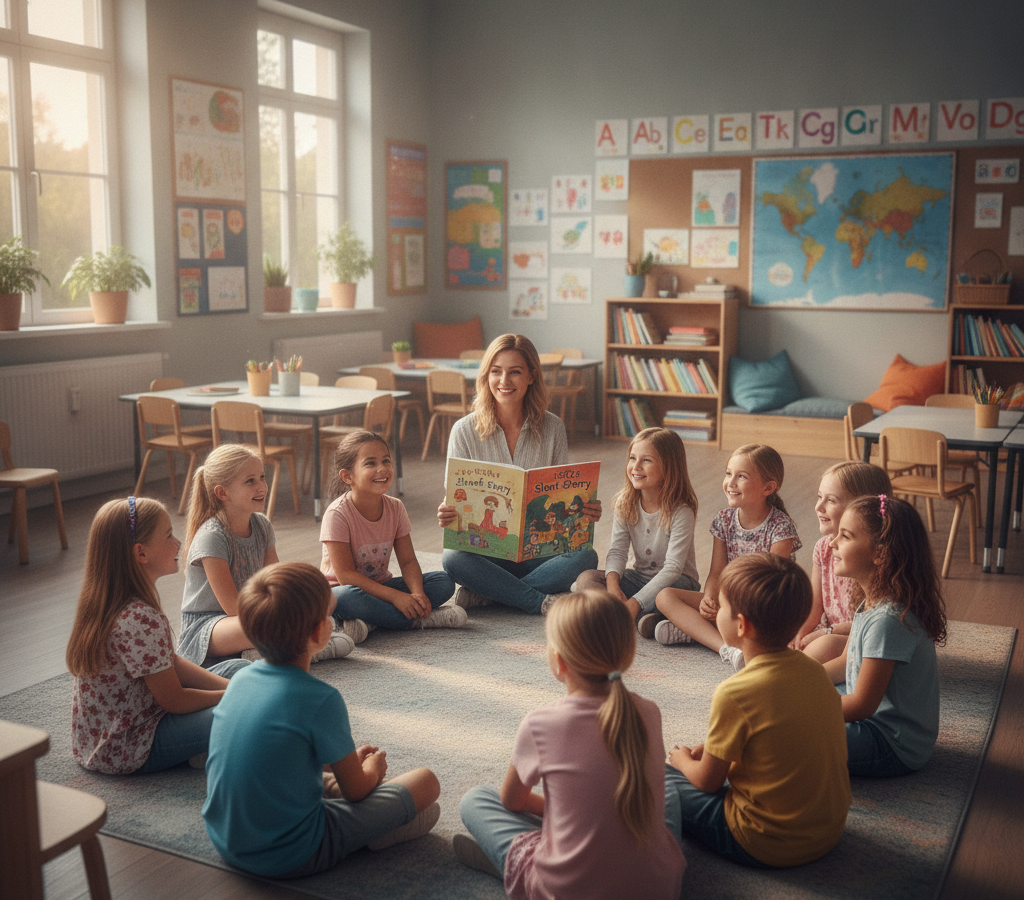
Why Short Children's Stories Are So Valuable in Teaching
Using short children's stories in primary school instruction is one of the most effective methods to inspire children to read and listen. Especially in primary school, where attention spans are still limited, short, lively stories hit the mark perfectly. They are manageable, motivating, and can easily be embedded into a 45-minute lesson block. But what makes a good short story for instruction – and how do you find the right texts?
In this article, you will learn as a parent or teacher how to use short stories strategically in school everyday life, which topics are particularly suitable, and how modern digital tools help create individual reading experiences.
What Makes a Good Children's Story for Primary School Teaching
Not every story is suitable for use in the classroom. A good short story for primary school meets several criteria at the same time: it is short enough to be read completely in one hour, contains a clear message, and offers conversation material for the group.
- Age-appropriate language: Sentences are short, words are familiar – but there are still new terms to discover.
- Strong main character: Children love characters they can identify with. It could be a brave fox, a curious girl, or a little robot.
- Clear plot: Beginning, problem, solution – done. This simple three-step structure helps beginning readers understand stories and tell them themselves.
- Instructive message: Whether friendship, honesty, or the multiplication table – the best message is one that exists in everyday life.
- Emotional anchor point: A scene that touches children, makes them laugh, or surprises them stays in their memory.
Imagine your daughter Lena becomes a brave detective in the story who finds a mysterious letter in the school building – and at the same time practices reading clues in German. That's exactly what makes a story unforgettable: the personal connection.
Topics That Work Particularly Well for Short Stories in Primary School
Good short stories for primary school address topics that children know and that are anchored in the curriculum. Here are some proven categories:
Friendship and Togetherness
Stories about friendship are timeless classics. They help children reflect on social situations: What to do if your best friend is sad? How do I resolve a quarrel on the playground? Such stories are excellent for introducing ethics or social studies lessons.
Nature and Animals
Children love animals. A short story about a hedgehog looking for its winter hibernation place in autumn can build bridges to science lessons and promote empathy at the same time. Nature stories are also great for free writing: How does the story continue?
Adventure and Fantasy
Dragons, pirates, space travel – adventure stories inspire imagination and encourage creative follow-up work. In German lessons, they can be used wonderfully to write your own stories or prepare role-plays.
Mathematics and Logic in Story Form
Did you know that short stories can also make math entertaining? A baker who doesn't know how many rolls to bake, a little monster that keeps doubling things – such narratives package mathematical concepts playfully. Apps like Edory AI go even further: here the child becomes the main character of the story and solves, for example, tricky arithmetic problems as a superhero to save the city.
Using Short Children's Stories Correctly in Teaching – Practical Methods
A good story alone is not enough – it also depends on how it is used in the classroom. Here are proven methods for primary school teachers and parents who want to practice at home:
Reading Aloud and Retelling
The teacher reads the story aloud, the children listen. Afterwards, students retell what happened in their own words. This trains active listening, language skills, and memory – all in one.
Silent Reading with Tasks
From grade 2 or 3 onwards, children can read short texts themselves. They then answer simple questions: Who is the main character? What was the problem? How was it solved? Reading comprehension is trained systematically.
Reading Circle and Group Work
Children take turns reading aloud – one sentence, one section, one character. This improves pronunciation, gives shy children a platform, and promotes a sense of community in the class.
Creative Continuation
After a short story, the teacher asks: "What happens next?" Children write or draw a continuation. This is one of the best exercises for creative writing and language expression.
Personalized Stories as Motivation
This is where a real game-changer comes in for 2026: With digital tools like Edory AI, parents and teachers can create a story in seconds in which the child appears themselves. The name, the favorite animal, the favorite color – everything becomes part of the story. This greatly increases children's willingness to read, because children are naturally enthusiastic when they see themselves in a story.
Short Children's Stories for Primary School Teaching: The Best Tips for Parents
As a parent, you can also support your child's school learning success with short stories at home. Here are some concrete everyday tips:
- Schedule daily reading time: Even 10 minutes a day makes a huge difference. Read a short story together – parents are also allowed to read aloud, that's not a sign of weakness!
- Connect to school lessons: Ask your child what topic is currently being covered in class and look for short stories that match. This way, school material connects with the joy of reading.
- Invent your own stories: At dinner or in the bathtub – invent mini-stories together. "Once there was a dragon who couldn't breathe fire…" – and your child continues.
- Use digital tools: Modern apps make it easier than ever to find or create child-friendly stories. Edory AI, for example, generates personalized adventures in seconds – ideal when time is short and you still want a motivating reading session.
- Ask questions instead of testing: After reading, ask "What did you like best?" rather than "What was the moral?" Curiosity and fun come first.
Why Personalized Stories Will Revolutionize Teaching in 2026
Educational research clearly shows: children learn best when they are emotionally involved. And what makes children more emotionally involved than a story in which they themselves participate? In 2026, personalized learning stories are no longer science fiction – they are reality.
Teachers and parents increasingly rely on AI-based tools to create differentiated reading offerings. A child who is just beginning to learn to read gets a simpler story. Another who already reads fluently experiences a more complex adventure. This differentiation, which used to require a lot of preparation time, now happens in seconds.
Imagine your son Ben wants to be an astronaut. With a personalized tool, he receives a short story in which he himself, as astronaut Ben, saves Earth – and incidentally learns something about planets, numbers, or parts of speech. This is not wishful thinking, this is 2026.
Practical Tip: How to Get Started Today
Want to get started right away? Here's a simple introduction for parents and teachers:
- Think about what topic your child or class is currently interested in – whether it's friendship, animals, or a particular lesson.
- Search for or create a short story on this topic – maximum two to three pages for first graders, up to five pages for third and fourth graders.
- Read the story together and talk about it afterwards – what did you like, what was surprising?
- Let the child continue the story – orally or in writing, in words or in a drawing.
- Repeat the ritual regularly. Reading joy develops through habit, not through force.
Tip for parents: With Edory AI (edory.ai), you can create a personalized story in a few seconds – your child is the main character. Whether adventure, friendship, or playful learning: the app tailors the story to your child precisely. Free on iOS & Android – just try it out and be amazed at how enthusiastic your child will be at the next reading session!