 edory
edory
Many parents wish for their child to not only enjoy being read to, but also to develop important skills for the future during this time. Especially in preschool age, children's literature demonstrably promotes language comprehension, imagination, and social interaction. Those who deliberately select stories that strengthen cognitive and emotional competencies are laying an important foundation for further development. Children's books are more than entertainment – they accompany learning experiences and strengthen your child's empathy.
Table of Contents
- How Children's Literature Significantly Influences Development
- Important Genres and Age Groups at a Glance
- Language and Value Transmission Through Stories
- Criteria for High-Quality and Supportive Children's Literature
- Risks, Stereotypes, and Challenges for Parents
Key Findings
| Point | Details |
|---|---|
| Impact of Children's Literature | Children's literature decisively promotes the cognitive, emotional, and social development of children through engaging stories and structures. |
| Genres and Age Groups | Different genres support specific developments and should be adapted to age groups. |
| Values and Language Development | Stories convey moral values and promote children's language abilities by presenting complex topics in a child-friendly manner. |
| Quality Criteria for Literature | High-quality children's books are characterized by age-appropriate language, profound narratives, diverse characters, and engaging illustrations. |
How Children's Literature Significantly Influences Development
Children's literature is more than just a form of entertainment – it is a powerful tool for promoting child development. Scientific studies show that children's books accomplish much more than simply reading stories. They are complex educational instruments that systematically support cognitive, emotional, and social abilities.
The process of reading development is extremely complex and is influenced by various factors. Scientific analyses of reading development clarify that children's literature contributes decisively to reading competency. Repetitive structures and vivid illustrations help children understand and interpret language. Stories about friendship, challenges, and emotions promote not only language comprehension but also develop important social and emotional competencies.
The educational significance of children's literature extends far beyond pure reading instruction. Books provide children with spaces to learn, explore, and reflect. They enable young people to understand complex feelings, develop empathy, and engage with different life situations. By immersing themselves in various narrative worlds, children expand not only their vocabulary but also learn important social concepts such as compassion, respect, and problem-solving.
Pro Tip: Select children's books that address age-appropriate topics and contain interactive elements such as questions or discussion prompts to actively support your child's reading development.
Important Genres and Age Groups at a Glance
Children's literature offers an impressive diversity of genres specifically tailored to different age groups and developmental stages. The development of children's and young adult literature reveals a rich history from traditional narrative forms to modern literary approaches that engage and support children in various ways.
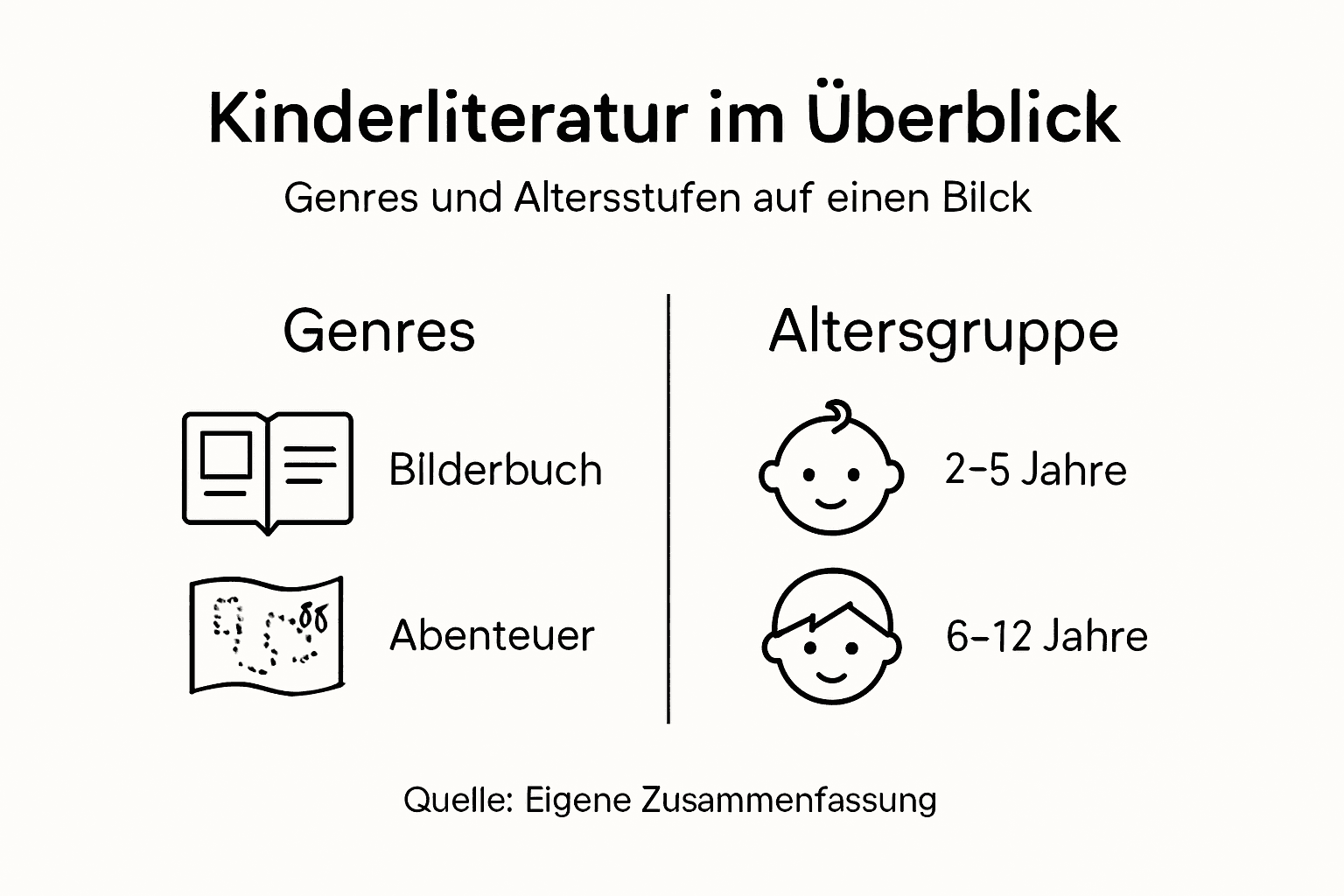
For toddlers and preschoolers, picture books with simple, clear structures and colorful illustrations are particularly suitable. Fairy tales and short stories with recognizable patterns help them understand first narrative connections. Primary school children already prefer adventure and friendship stories that explore more complex storylines and moral dilemmas. Fantasy literature becomes increasingly important in this age group.
Adolescents seek genres that address their growing identity and critical thinking. Novels about relationships, social challenges, and self-discovery are particularly valued. Dystopian literature, coming-of-age stories, and books dealing with social issues offer them opportunities for reflection and engagement with complex life questions.
Pro Tip: Carefully observe your child's reading interests and offer books that are slightly above their current comprehension level to gently challenge their reading abilities.
Here is an overview of which genres of children's literature can support various developmental areas:
| Genre | Promoted Competency | Age Group |
|---|---|---|
| Picture Book | Language development, imagination | 0-5 Years |
| Fairy Tale | Moral understanding | 3-8 Years |
| Adventure Novel | Problem-solving, courage | 7-12 Years |
| Fantasy Literature | Creativity, abstraction ability | 8-12 Years |
| Coming-of-Age Novel | Identity formation, reflection | 12-16 Years |
| Dystopia | Critical thinking, value change | 14+ Years |
Language and Value Transmission Through Stories
Stories are far more than mere entertainment - they are powerful instruments of language development and value formation. Children's literature as cultural authority plays a decisive role in shaping children's identity and social understanding. Through narrative structures, children learn not only new words and phrases but also develop a deeper understanding of moral concepts and social norms.

The transmission of values in children's books happens subtly and in an age-appropriate manner. Fairy tales and stories transport fundamental ethical principles such as compassion, respect, honesty, and helpfulness. For children, complex moral dilemmas become comprehensible through characters and their actions, allowing them to learn to adopt different perspectives and think empathetically. Language is used not only as a means of communication but as a tool for discovering the world and constructing meaning.
Particularly significant is the cultural dimension of stories. They convey not only individual values but also reflect social norms and traditions. Through various literary genres, children can learn how people think, feel, and act in different contexts. Translations deliberately take cultural nuances into account to ensure authentic and respectful value transmission.
Pro Tip: Choose stories that allow your child to explore moral concepts playfully and that gently challenge their language development.
Criteria for High-Quality and Supportive Children's Literature
The quality of children's literature extends far beyond aesthetic aspects. Scientific analyses of children's book research show that high-quality books contribute decisively to child development. Such books are distinguished by multilayered criteria that encompass both pedagogical and literary dimensions.
Age-appropriate language forms the foundation of good children's literature. Texts must precisely meet the language level and imagination of the respective age group. Illustrations play an equally important role - they should not only be aesthetically pleasing but also support the narrative, convey emotions, and stimulate imagination. Complex moral themes are presented carefully and understandably so that children can grasp them both emotionally and intellectually.
Additional central quality criteria include narrative structure, character credibility, and thematic depth. Good children's books offer more than simple entertainment - they encourage critical thinking, promote empathy, and show diverse life perspectives. They should respectfully portray diversity, question stereotypes, and gently challenge children to understand the world in its complexity.
Pro Tip: Read children's books carefully before reading aloud and reflect on what messages and values are being conveyed.
The following table summarizes central selection criteria for high-quality children's books:
| Criterion | Significance for Development | Practical Implementation |
|---|---|---|
| Age-Appropriate Language | Promotes understanding and motivation | Choose simple, clear sentences |
| Multilayered Narratives | Encourages reflection and thinking | Plot progression with depth |
| Diverse Characters | Conveys empathy and openness | Show diversity in figures |
| Clear Illustrations | Supports text comprehension and imagination | Combine image and text |
Risks, Stereotypes, and Challenges for Parents
Children's literature conveys more than just stories - it transmits subtle messages and worldviews. Intercultural challenges of children's literature show that parents must be particularly attentive to which narratives and role models they make accessible to their children.
Traditional children's books often harbor hidden risks through entrenched gender and cultural stereotypes. These can reinforce unconsciously adopted prejudices and imperceptibly shape children's perception of the world. Particularly problematic are depictions that cement gender roles, oversimplify cultural differences, or render minorities invisible. Parents should examine books critically and deliberately select those that promote diversity, empathy, and open perspectives.
Selecting high-quality literature requires active engagement. What matters is not only the content but also how characters are portrayed, their scope of action, and the values conveyed. Modern children's books should question clichés, show different life designs, and encourage children to understand the world in its complexity.
Pro Tip: Read children's books yourself first and critically reflect on the messages they contain before reading them to your children.
Deliberately Support Children's Literature with Personalized Stories
The importance of children's literature for child development is indisputable. Parents often face the challenge of finding high-quality, age-appropriate stories that not only entertain but also convey values and support language development. This is exactly where Edory comes in. Our platform understands the diverse needs of children of various ages and creates personalized narrative worlds that playfully combine knowledge and imagination.
Benefit from the opportunity to generate daily new stories that are precisely tailored to your child's interests and developmental level. On Edory.ai you will find a trustworthy source for educational children's stories that go beyond mere reading aloud and create real learning moments. Also explore our Uncategorized – Edory AI – Educational Children's Stories to get a first impression of the diversity and quality of our offerings.
Don't wait any longer and enrich your child's reading experiences with personalized digital stories that combine joy in reading and learning. Start now on Edory.ai and discover new ways to deliberately support your child's development with every story.
Frequently Asked Questions
How Does Children's Literature Support Language Development?
Children's literature promotes language development through diverse forms of expression and vivid illustrations. By reading aloud varied stories, children expand their vocabulary and learn new phrases.
What Topics Are Important for Different Age Groups in Children's Literature?
For toddlers, picture books with simple structures are recommended, while primary school children prefer adventure and friendship stories. For adolescents, topics such as identity formation and social challenges are significant.
How Can Parents Ensure They Select High-Quality Children's Literature?
Parents should pay attention to age-appropriate language, vivid illustrations, and diverse, credible characters. Additionally, it is important that books convey complex topics carefully and understandably.
What Risks Exist in Children's Literature Regarding Stereotypes?
Traditional children's books can convey entrenched gender and cultural stereotypes. Parents should critically examine what role models and narratives are conveyed to avoid prejudices.