 edory
edory
Did you know? 93 percent of 10-year-olds have access to the internet and grow up with digital stories. Yet, even in this connected world, the magic of classic favorite stories remains unbroken. They not only provide children with comfort and security, but also promote imagination, empathy, and important values. Choosing the right stories supports children's emotional and social development in a sustainable way.
Table of Contents
- What are children's favorite stories?
- Diversity and development of children's storytelling worlds
- The influence of stories on learning and emotions
- The role of parents in choosing stories
- Safety, media literacy, and digital offerings
Key Findings
| Point | Details |
|---|---|
| Emotional and social development | Favorite stories promote children's empathy, self-esteem, and moral understanding. |
| Digital media education | Parents should select high-quality, age-appropriate stories to support their children's development. |
| Interactive storytelling formats | Children increasingly interact with stories through digital media, which opens up new learning and experiential dimensions. |
| The importance of identification | Identifying with protagonists in stories strengthens self-confidence and helps children process complex life situations. |
What are children's favorite stories?
Favorite stories are much more than just a string of words for children. They are emotional maps that guide young explorers through unknown worlds. These special stories have a magical power: they touch the hearts and imaginations of children and shape their development in lasting ways.
In today's digital world, where children are increasingly growing up with electronic devices, favorite stories take on an even more important role. According to the Progress in International Reading Literacy Survey, 93% of 10-year-olds already had internet access in 2021 - a significant increase compared to previous years. Despite this digital presence, personal, emotional stories remain irreplaceable for children's development.
Favorite stories are characterized by some central features:
Here is a comparison of the main characteristics of children's favorite stories:
| Feature | Importance for children | Example effect |
|---|---|---|
| Emotional appeal | Strengthens empathy and bonding | Comforts during fearnPromotes joy in reading |
| Identification with characters | Supports self-awareness | Child sees themselves in the heronStrengthens self-confidence |
| Communication of values | Promotes moral thinking | Understanding of good and evilnLearning social rules |
| Orientation & Support | Provides security and structure | Bedtime routinesnExplains difficult situations |
- They directly address the child's emotions and imagination
- They enable identification with protagonists
- They convey important life wisdom and moral values
- They provide support and orientation in a complex world
Interestingly, children today experience stories no longer only in traditional formats, but increasingly in a mix of digital and traditional storytelling forms. Choosing age-appropriate stories: The guide for parents can help parents find the right stories for their children.
Diversity and development of children's storytelling worlds
Children's storytelling worlds are dynamic and multifaceted spaces where imagination, learning, and personal development merge together. In an increasingly digital society, these narrative spaces continuously expand and offer children ever new opportunities for exploration and understanding.
According to current research data, children today grow up in a world where digital and analog experiences seamlessly blend together. 93% of 10-year-olds already have internet access, and about 70% own their own smartphone. Digital learning worlds now enable children not only to consume stories, but also to experience and shape them interactively.
The diversity of children's storytelling worlds manifests itself in various dimensions:
- Multimedia storytelling formats
- Intercultural and multilingual narratives
- Personalized digital story experiences
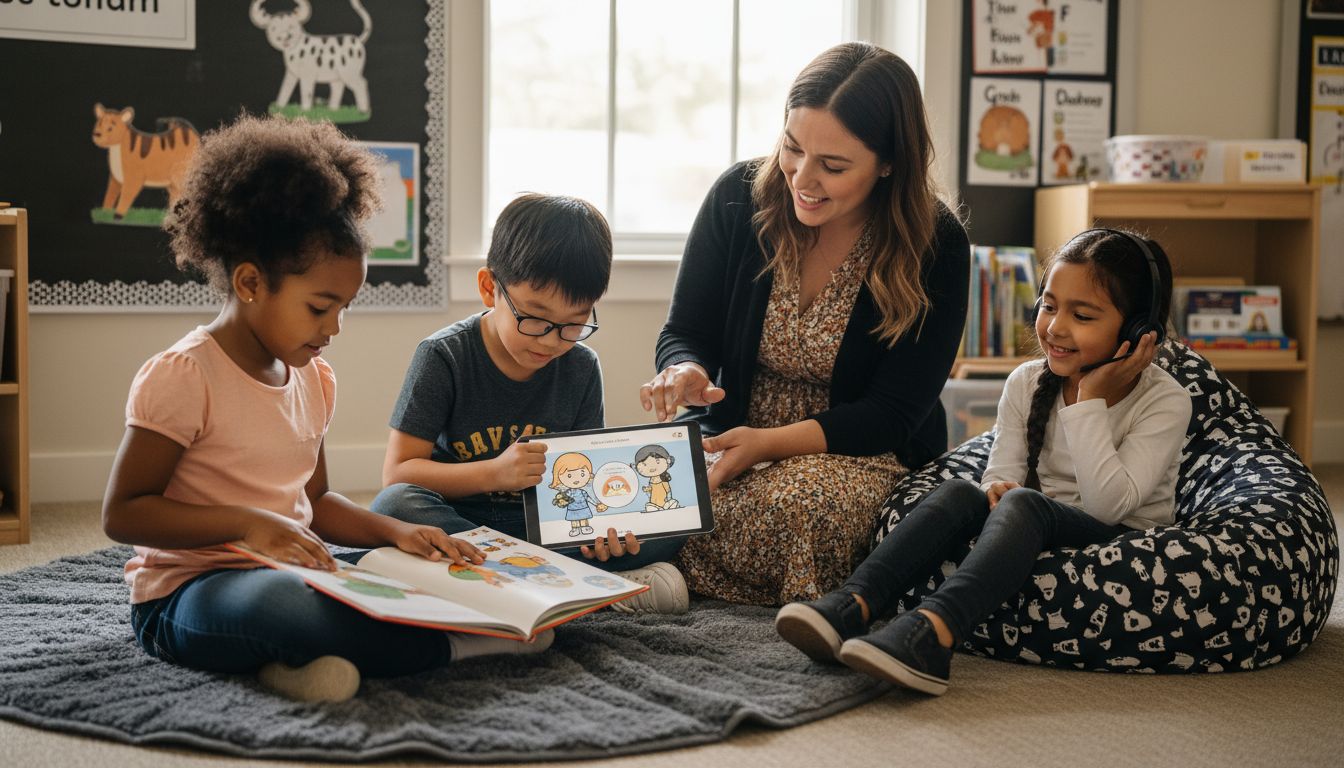
- Interactive storytelling environments
Stories from around the world: Exciting narratives for children and families demonstrates, for example, how rich and diverse modern childhood experiences through stories have become.
The influence of stories on learning and emotions
Stories are far more than entertaining narratives - they are powerful tools for children's emotional and cognitive development. They enable a profound connection between learning, imagination, and personal growth by conveying complex emotional worlds and social dynamics in a way that children can understand.
In today's digital learning world, children experience stories no longer just passively, but interactively and multimedially. As research data shows, children increasingly use digital platforms to browse content and share experiences. 93% of 10-year-olds already have internet access, which opens up new possibilities for emotional learning.
The central dimensions of impact for stories include:
- Development of empathy and emotional intelligence
- Promotion of communication skills
- Strengthening of self-understanding
- Conveying complex moral concepts
The educational value of storytelling for children emphasizes how stories not only entertain but can also fulfill a profound educational function.
The role of parents in choosing stories
Selecting stories is a sensitive and meaningful task for parents that encompasses far more than simply providing entertainment. It is an active process of emotional and intellectual guidance that significantly shapes and supports children's development.
In today's digital world, parents face the challenge of identifying high-quality stories among a wealth of media offerings. According to current research, 93% of 10-year-olds already have internet access, which underscores the importance of conscious and thoughtful media selection. Parents must not only pay attention to age recommendations, but also critically evaluate the emotional and educational quality of the content.
Important criteria when choosing stories include:
- Child's age and developmental stage
- Emotional resonance and identification potential
- Communication of positive values and learning content
- Quality of linguistic and narrative design
- Balance between entertainment and education
Edory Blog provides parents with additional guidance in selecting appropriate stories for their children.
Safety, media literacy, and digital offerings
The digital landscape for children is complex and requires a careful balance between protection and exploration. Parents face the challenge of enabling their children to have safe yet development-promoting digital experiences.
Currently, 93% of 10-year-olds already have internet access, and about 70% own their own smartphone. These figures underscore the need for targeted digital media education. Children today experience their world no longer just offline, but increasingly online - in front of computers, on mobile phones, on various platforms where content is browsed and experiences are shared.
Central aspects of digital media literacy include:
- Age-appropriate content selection
- Technical security settings
- Time management for digital media use
- Promotion of critical thinking
- Open communication about online experiences
Child safety on the internet: Explained in simple terms provides parents with practical guidance in this complex digital parenting landscape.
Discover personalized favorite stories for your child
Children need stories that not only entertain but also touch them emotionally and provide guidance. Yet in the flood of digital offerings, parents often find it difficult to select appropriate stories that convey values and spark imagination. This is exactly where Edory comes in: Our innovative platform creates personalized stories daily that are age-appropriate and tailored to your child's individual interests.
Would you like to offer your children safe and educational stories that they love and that support their development? On Uncategorized – Edory AI – Educational children's stories you will find exciting examples and inspiration. Also visit our main page https://edory.ai and experience how easy it can be to discover and create favorite stories. Start with Edory today and give your children daily adventures full of knowledge and imagination.
Frequently asked questions
What are the main features of favorite stories for children?
The main features are emotional appeal, identification with characters, communication of values, and orientation as well as support in a complex world.
How do favorite stories influence children's emotional development?
Favorite stories strengthen empathy, promote self-awareness, and help children understand complex emotional and social dynamics.
How have digital media changed the way children experience stories?
Digital media enable interactive and multimedia experiences that allow children not only to consume stories but also to actively shape them.
What role do parents play in selecting stories for their children?
Parents must select high-quality, age-appropriate stories and critically evaluate emotional and educational content to support their children's development.