 edory
edory
Everyone talks about good communication, yet hardly anyone knows how deeply it can actually work. Surprisingly, active listening can reduce misunderstandings in families and teams by up to 60 percent. Many are amazed to discover that listening is not the same as silence, but rather represents the most important active action for genuine connection.
Table of Contents
- What is Active Listening and Its Foundations?
- Why is Active Listening Important for Families and Education?
- How Does Active Listening Work in Communication?
- Understanding the Key Concepts of Active Listening
- Practical Examples of Active Listening in Everyday Life
Quick Overview
| Takeaway | Explanation |
|---|---|
| Increase Undivided Attention | Focus completely on the speaker to avoid misunderstandings. |
| Show Empathy | Put yourself in the other person's perspective to strengthen emotional connection. |
| Use Nonverbal Signals | Pay attention to body language and eye contact to signal genuine interest. |
| Ask Actively | Ask targeted questions to clarify uncertainties and gain deeper understanding. |
| Summarize and Reflect | Summarize what you heard to ensure you understood correctly and show appreciation. |
What is active listening and its foundations?
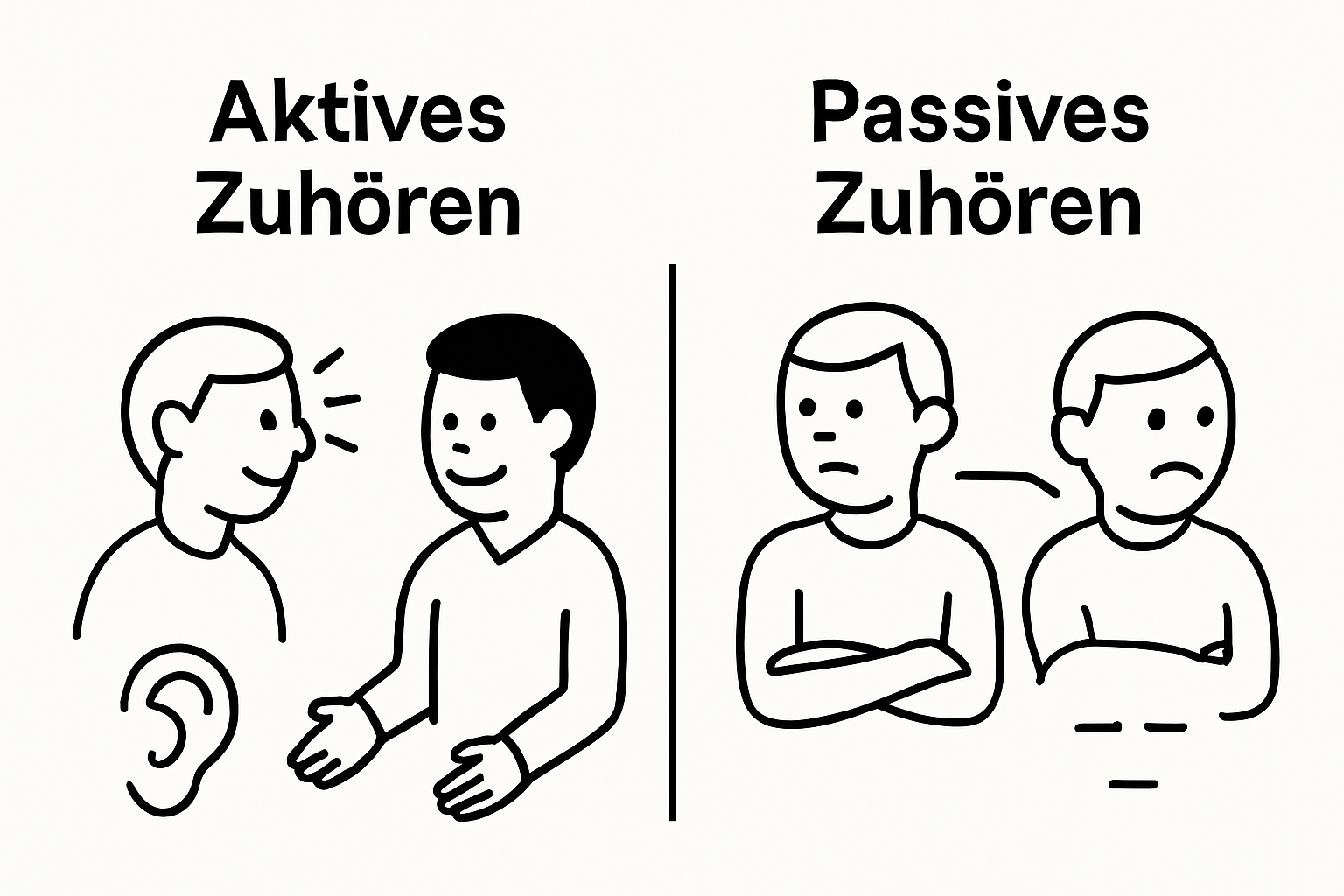
Active listening is a fundamental communication skill that means far more than simply listening to someone else's words. It's about fully understanding the conversation partner, perceiving their thoughts and feelings, and building a deeper emotional connection.
The core elements of active listening
The essence of active listening is based on several essential components:
- Undivided Attention: Complete focus on the speaker without distractions
- Empathetic Understanding: Putting yourself in the other person's perspective
- Nonverbal Signals: Open body language, eye contact, and attentive posture
Active listening is not just about hearing words, but grasping their deeper meaning. The listener focuses on understanding the emotional context and unspoken messages.
To present the essential components of active listening clearly, this table shows the various core elements and their respective descriptions.
| Core Element | Description |
|---|---|
| Undivided Attention | Complete focus on the speaker without distractions |
| Empathetic Understanding | Putting yourself in the other person's perspective |
| Nonverbal Signals | Show open body language, eye contact, and attentive posture |
| Emotional Perception | Recognize and consider the feelings and moods of the conversation partner |
| Active Reflection | Summarize what you heard and repeat it in your own words to ensure understanding |
The importance of active listening
Active listening is a key skill in interpersonal relationships. According to research from the National Communication Research Center, this communication technique not only improves mutual understanding but also strengthens trust and emotional bonds between people.
People who listen actively signal respect and appreciation. They show their conversation partner that their thoughts and feelings matter. This leads to deeper, more authentic conversations and stronger relationships.
Practical implementation means:
- Listen attentively to the speaker
- Ask questions to clarify uncertainties
- Summarize and reflect what you heard
Active listening is a skill that can be learned and practiced. With practice and patience, people can significantly improve their communication skills and build deeper, more meaningful connections with others.
Why is active listening important for families and education?
Active listening in families is not just a communication technique, but a crucial key to developing healthy and stable relationships between parents and children. It's about creating an atmosphere of mutual understanding and emotional security.
The emotional foundation of family relationships
In families, feelings and trust play a central role. Active listening helps parents understand their children's inner world and shows them that their thoughts and emotions are appreciated. This creates a foundation for:
- Emotional Security: Children feel understood and respected
- Building Trust: Open communication strengthens the bond
- Self-Esteem: Children develop confidence through appreciation
According to research from the Gordon Model, parents can build a deeper connection with their children through active listening and at the same time improve their parenting skills.
Importance for child development
Active listening has far-reaching effects on children's development. It not only promotes emotional intelligence but also supports important social skills. Children learn from the example of their parents how to communicate respectfully and express feelings.
Essential developmental aspects include:
- Improving communication skills
- Strengthening empathy
- Building conflict resolution skills
Through consistent active listening, parents convey to their children that their opinions and feelings matter. This significantly contributes to personality development and emotional well-being.
This table shows at a glance how active listening promotes child development at various levels.
| Developmental Aspect | Importance Through Active Listening |
|---|---|
| Communication Skills | Children learn to speak openly and listen |
| Empathy | Understanding for others' feelings is promoted |
| Self-Esteem | Appreciation boosts self-confidence |
| Conflict Resolution Skills | Children practice handling conflicts respectfully |
| Emotional Security | Feeling respected and understood in the family |
How does active listening work in communication?
Active listening is a complex communication technique that requires far more than just perceiving words. It is an active, conscious process of understanding, interpreting, and reflecting on what the conversation partner is communicating.
The basic principles of active listening
The process of active listening is based on several essential principles that enable meaningful communication:
- Complete Presence: Concentration on the speaker without distractions
- Empathetic Perception: Grasping the emotional level of the conversation
- Suspension of Judgment: Openness to different perspectives
According to research from the National Institute of Health, active listening involves strategically using nonverbal and verbal signals to build understanding and trust.
Techniques of active communication
The practical application of active listening includes various communication strategies:
Essential communication techniques:
- Paraphrasing the content you heard
- Asking targeted, open-ended questions
- Using body language that signals interest
By consciously mirroring emotions and summarizing what you heard, the listener signals genuine interest. This creates an atmosphere of mutual respect and promotes deeper dialogue.
The key is not just to hear, but to truly understand. Active listening means giving the conversation partner full space to articulate their thoughts and feelings without interrupting or rushing to judge. It is a skill that not only improves communication but fundamentally transforms human relationships.
Understanding the key concepts of active listening
Active listening is a complex communication skill that encompasses far more than passive reception of information. It is a dynamic process that requires empathy, concentration, and conscious interaction.
The mental attitude
The basis of active listening lies in an open and respectful mental attitude. It's about perceiving the conversation partner without prejudices and judgments. The most important aspects of this attitude are:
- Freedom from Prejudice: Willingness to accept other perspectives
- Emotional Neutrality: Taking the other person's feelings seriously
- Undivided Attention: Complete concentration on the speaker
According to research from the National Institute of Health, this inner attitude forms the foundation for successful communication.
Communication core elements
Active listening manifests itself through specific communicative behaviors. These aim to signal to the conversation partner that you fully perceive and want to understand them:
Central communication techniques:
- Maintaining eye contact
- Showing open body language
- Giving brief verbal confirmations
- Asking targeted questions without judgment
The art of active listening lies in finding a balance between restraint and empathetic participation. It's not about judging or teaching the other person, but about understanding them in their individuality.
Through conscious and attentive listening, people can build deeper connections, reduce misunderstandings, and foster a communication culture of mutual respect and understanding.
Practical examples of active listening in everyday life
Active listening is not an abstract theory, but a skill that can be concretely applied in various everyday situations. From family conversations to professional interactions, this communication technique can fundamentally improve relationships.
Active listening in family situations
In families, there are numerous