 edory
edoryHow Does Children's Imagination Work? The Complete Parent's Guide
· 11 minutes read
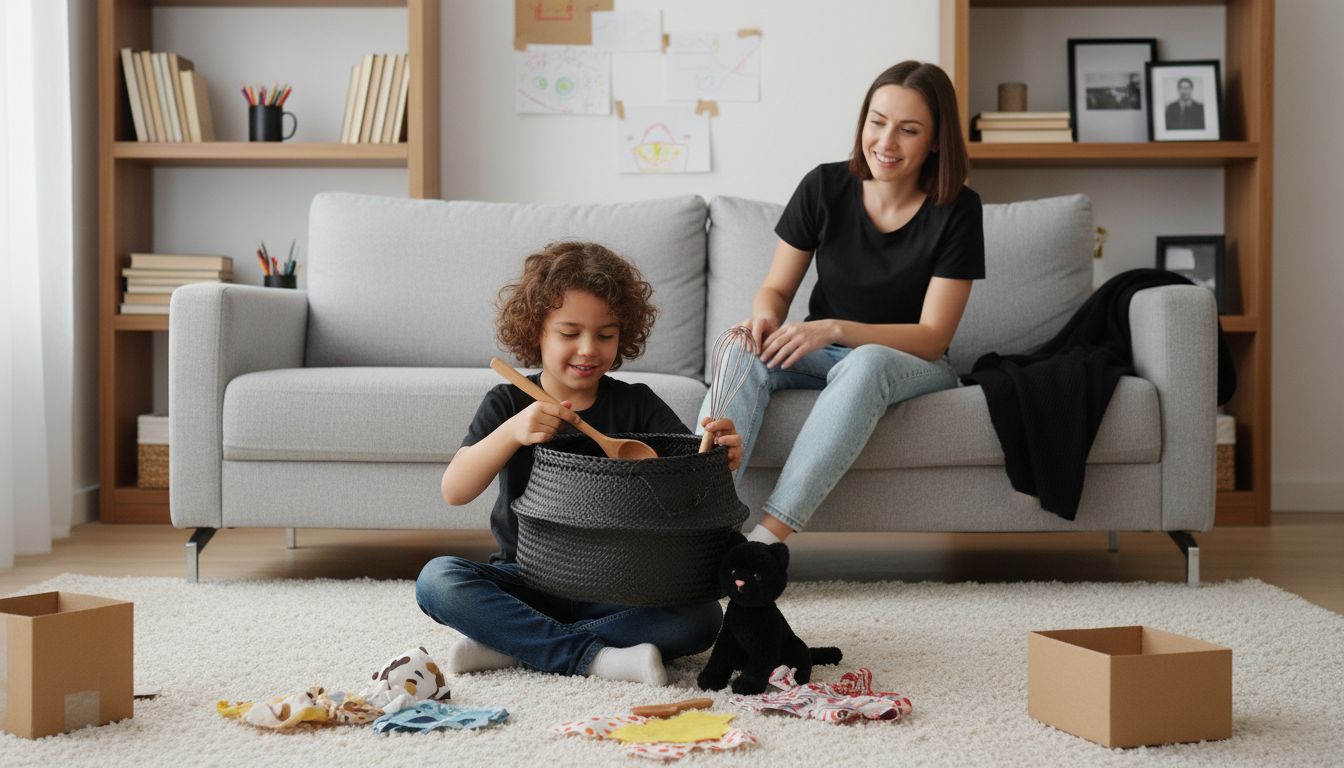
Did you know that around 98 percent of all preschool-aged children regularly play with invisible friends or made-up stories? Imagination is more than just a pastime — it is an engine for the development of creativity and social understanding. Anyone who understands the magical world of children's imagination recognizes the key role it plays in emotional growth and problem-solving ability.
Table of Contents
- What is children's imagination? Definition and characteristics
- Developmental stages of children's imagination in everyday life
- Experiencing different types of children's imagination
- The role of parents in fostering imagination
- Risks, misconceptions, and sensible boundaries
Key Insights
| Point | Details |
|---|---|
| Imagination as a developmental mechanism | Children's imagination is a decisive factor in cognitive and emotional development. It supports the understanding of the environment and the processing of emotions. |
| The role of the magical phase | Between the ages of three and seven, children experience an intense phase of imagination characterized by role play and belief in mythical creatures. |
| Parents as supporters | Parents should create a nurturing environment to support their children's imagination by providing time for free play and creative activities. |
| Risks and misconceptions | It is important not to view imagination as an escape from reality, but rather as a natural part of childhood that enables healthy development. |
What is Children's Imagination? Definition and Characteristics
Children's imagination is a fascinating and complex cognitive ability that enables children to create and experience inner worlds of ideas. According to Wikipedia, fantasy refers to the creative ability to generate inner images and ideas — an ability that is particularly pronounced in children.
A decisive phase of children's imaginative development begins as early as the age of three. The Family Handbook describes this period as the so-called magical phase, in which children playfully integrate mythical creatures and imaginary friends into their reality. Characteristic of this developmental stage is the ability to merge fantasy and reality in a unique way.
Children's imagination manifests itself in various ways:
- Creation of complex imaginary worlds
- Integration of imaginary friends
- Playful transformation of everyday objects
- Creative role play
This imaginative way of thinking is more than just a temporary state. It is an important developmental mechanism that helps children understand their environment, process emotions, and expand their cognitive abilities. Through free play and creative thinking, children learn to view situations from different perspectives and to use their imagination as a powerful tool for exploration and learning.
Developmental Stages of Children's Imagination in Everyday Life
The development of children's imagination is a fascinating process that manifests itself differently in various stages of life. The Family Handbook describes a particularly intense period between the ages of three and seven as the magical phase, during which children experience and shape their fantasy worlds with particular intensity.
During this developmental phase, according to Kita.de, children blend reality and fantasy in a unique way. This is reflected in various behaviors:
- Intense role play
- Creation of imaginary friends
- Belief in fantasy creatures
- Creative interpretation of everyday situations
This magical phase is more than just a temporary state. It is an important developmental mechanism that helps children explore their surroundings, process emotional experiences, and expand their cognitive abilities. With the start of school, a phase typically begins in which logical thinking increasingly gains in importance and the imaginative worlds recede somewhat into the background.
It is important for parents to understand that this phase of children's imaginative development is completely normal and even beneficial. Through fairy tales and creative stories, parents can specifically support children's imagination and positively influence the natural development of the power of imagination.
Experiencing Different Types of Children's Imagination
Role play forms a central form of expression of children's imagination, in which children explore different identities and life situations. Kita specialist texts describe this type of play as a significant mechanism through which children take on different roles and shape their imaginary world.
According to the Family Handbook, children's imagination manifests itself in various creative forms of expression:
- Symbolic play: Everyday objects are reinterpreted and filled with new meaning
- Role play: Children slip into various characters
- Creative activities: Painting, drawing, inventing stories
- Constructive play: Building and creating imaginary worlds
The variety of these types of imagination shows how complex and rich children's power of imagination is. Each child develops their own individual approach to imagination. Some children express their imagination more through movement and role play, while others explore their inner worlds through drawings or fantasy stories.
The most important types of children's imagination are summarized below:
| Type of Imagination | Description | Examples |
|---|---|---|
| Symbolic play | Reinterpretation of everyday objects | A stick becomes a magic sword; a cardboard box becomes a car |
| Role play | Slipping into characters | Playing doctor's surgery; pirate on a treasure hunt |
| Creative activities | Painting, drawing, inventing stories | Painting pictures; telling one's own stories |