 edory
edoryFamily Story Time: Complete Guide
· 11 minutes read
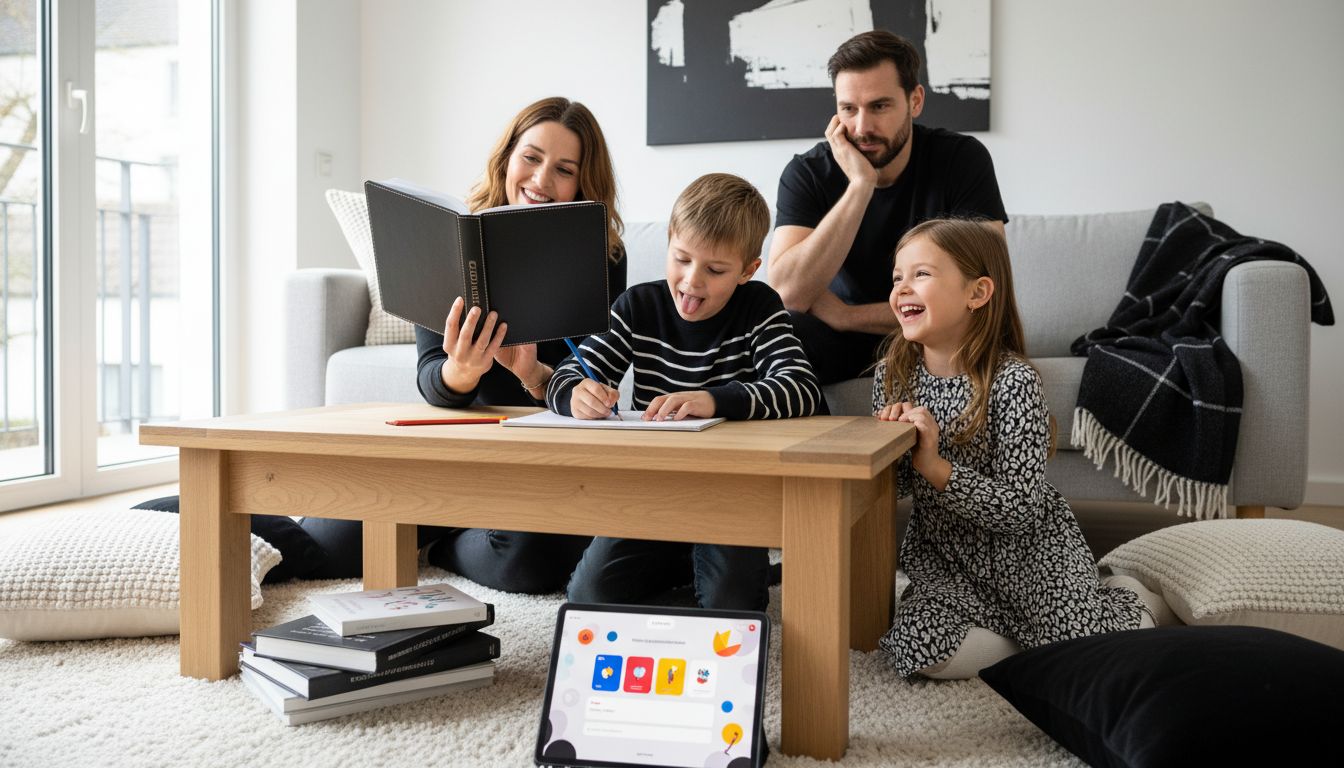
Did you know that children absorb up to 50 percent more new words through dialogic reading than through traditional listening? Shared stories are far more than entertainment – they connect generations, nurture imagination, and strengthen trust within the family. Those who embrace creative storytelling games and modern story apps create genuine experiences in which every child can actively participate and language development is encouraged through play.
Table of Contents
- What does family story time mean?
- Different forms of shared storytelling games
- Educational benefits for children and families
- Digital solutions and personalized story apps
- Safety and data protection aspects of digital offerings
Key Insights
Point | Details
Interactive Story Time | Family story time promotes active participation and creative development in children through dialogic reading.
Educational Benefits | Shared storytelling supports the linguistic, emotional, and cognitive development of children.
Variety of Storytelling Forms | Creative storytelling games strengthen collaboration and imagination and can easily be adapted to different age groups.
Digital Solutions and Data Protection | Personalized story apps offer interactive experiences, but require careful attention to data protection and safety.
What Does Family Story Time Mean?
Family story time is a special interactive experience in which families experience, share, and shape stories together. It goes far beyond traditional read-aloud sessions – it is a dynamic process of communication, creativity, and emotional connection. According to Familienhandbuch, dialogic reading is a central method in which parents and children do not merely consume stories, but actively explore them together. This means stories are not just read aloud, but discussed together, interpreted, and brought to life. Children are encouraged to ask questions, develop their own thoughts, and let their imagination flourish.
The ritual of family story time has several important aspects:
- Emotional bonding: A shared story experience strengthens the relationship between parents and children
- Language development: Wikipedia confirms that such storytelling promotes children's language skills
- Creativity: Children learn to imagine and tell their own stories
- Knowledge acquisition: Stories playfully convey new concepts and perspectives
The magic of this family story time lies not in perfect reading aloud, but in discovering, laughing, marveling, and learning together. It is a moment in which generations come together, share experiences, and build a deep, meaningful connection.
Different Forms of Shared Storytelling Games
Shared storytelling games are a wonderful way to bring families together and foster children's creativity. These interactive activities go far beyond traditional read-aloud sessions and create unique moments of connection and shared learning. Rainer Mensing emphasizes that storytelling games such as collectively inventing stories or creatively acting out well-known narratives enormously strengthen children's language competence and creativity.
Here are some inspiring forms of storytelling games:
- Continuation story: One person begins a story, and each family member adds a sentence
- Character guessing: Playfully guessing book characters through descriptions
- Pantomime stories: Non-verbal storytelling through movements and gestures
- Memory stories: Collectively reconstructing a narrative
Particularly interesting are multilingual storytelling activities, in which stories are told in different languages. This form of play not only supports language development, but also promotes intercultural understanding and an appreciation of linguistic diversity.
Here is a comparison of the most important forms of shared storytelling games:
Storytelling Game Form | Description | Areas of Development
Continuation Story | Story is expanded in turns | Creativity, Cooperation
Character Guessing | Guessing characters through clues | Imagination, Language Skills
Pantomime Stories | Stories told without words through gestures | Non-verbal Communication, Empathy
Memory Stories | Reconstructing a story together | Memory, Teamwork
Multilingual Activities | Stories told in different languages | Language Development, Intercultural Understanding
The magic of these storytelling games lies in their simplicity and flexibility. They require no expensive materials – only imagination, openness, and a willingness to play and learn together. Every family can develop their own rules and adapt the games to their interests and age groups.
Educational Benefits for Children and Families
Shared family story time is far more than an entertaining activity – it is a powerful educational tool that supports children's development in many ways. These interactive moments offer a unique opportunity for holistic learning and emotional connection. Familienhandbuch shows that dialogic reading enormously strengthens language development, text comprehension, and social interaction between parents and children. Children not only learn new words and language structures, but also develop important communicative skills through active participation and conversation during storytelling.
The educational benefits are wide-ranging:
- Linguistic development: Expansion of vocabulary and grammatical understanding
- Emotional intelligence: Fostering empathy through story characters
- Cognitive skills: Strengthening concentration, memory, and logical thinking
- Social competencies: Learning empathy and communication skills
DJI emphasizes that shared play fundamentally supports children's social competence, creativity, and cognitive development. Through shared storytelling experiences, children learn to understand different perspectives, process emotions, and develop their own narrative voice.