 edory
edoryLearning Storytelling for Parents: Inspiring & Supporting Children
· 11 minutes read
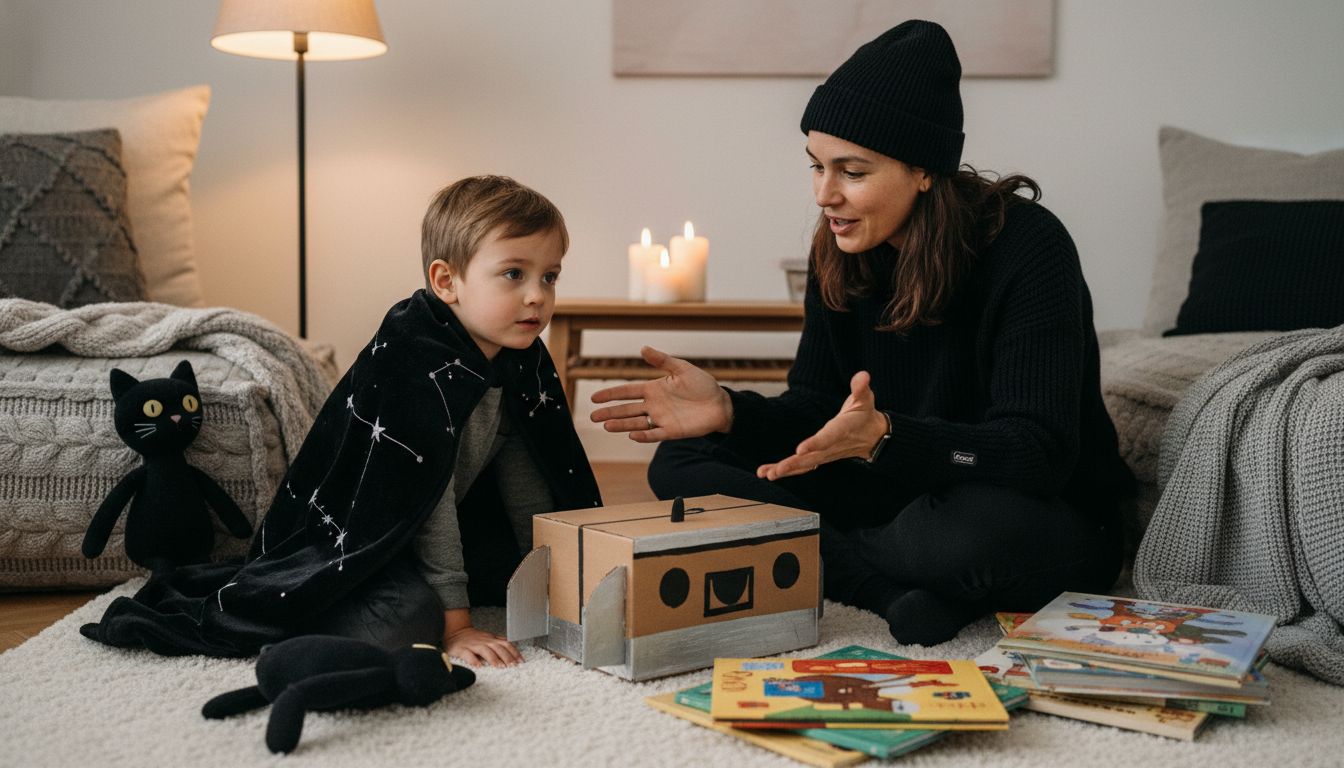
Did you know that over 80 percent of children love listening when stories are told in a lively way? A good introduction to the world of imagination has a positive effect on creativity and concentration. Those who consciously design their environment create an atmosphere in which children feel safe and quickly begin to dream. This transforms every story into an unforgettable adventure full of fun and curiosity.
Table of Contents
Step 1: Preparing the Storytelling Environment for Your Child
Step 2: Choosing Age-Appropriate and Interesting Topics
Step 3: Combining Educational Content with Fairytale Elements
Step 4: Creating Personalized Stories with the Edory App
Step 5: Reviewing the Impact and Development of Your Storytelling
Quick Summary
Key Point | Explanation
1. Create a suitable storytelling environment | A quiet, cozy area promotes your child's concentration and imagination. Props can help bring stories to life.
2. Choose age-appropriate topics | Stories should match your child's interests and developmental stage and be easy to understand.
3. Combine education with fantasy | Incorporate learning content with fairytale elements to make learning exciting and entertaining.
4. Use the Edory App for personalized stories | The app helps easily create stories based on your child's preferences and makes storytelling interactive.
5. Observe your child's engagement | Pay attention to nonverbal signals and feedback to continuously improve and adapt your storytelling style.
Step 1: Preparing the Storytelling Environment for Your Child
The perfect storytelling environment is the key to immersing your child in a magical world of stories and imagination. The goal here is to create a space that sparks curiosity, captures attention, and ignites your child's imagination. Choose a quiet, cozy area in your home — a place where your child feels safe and relaxed. This could be a snug reading corner, a soft rug with cushions, or even a special storytelling chair. It is important that the space is free from distractions such as television or tablets. How children learn to tell stories shows that a low-stimulation environment enormously boosts children's concentration and imagination.
Prepare small props that can bring your stories to life: stuffed animals, simple costumes, or objects that fit the story. These can help your child better immerse themselves in the narrative. A blanket can become a magic cloak, a cardboard box a spaceship — let creativity run free. Make sure the props are safe and age-appropriate. Once you have created the storytelling environment, you are ready to whisk your children away into magical story worlds.
Step 2: Choosing Age-Appropriate and Interesting Topics
The art of storytelling begins with carefully selecting topics that spark your child's imagination and attention. Every age has its own needs and interests, so it is important to find stories that are developmentally appropriate and at the same time exciting.
For children under three years old, stories should be short and simple, with clear, vivid characters and straightforward plots. Use animal stories or everyday scenes that your child knows and understands. Accompanying children with stories recommends choosing topics that address the child's emotions and experiences.
For preschool children between three and six years old, stories can become more complex, with more detail and gentle moral messages. Observe carefully what your child is interested in. Do they enjoy adventure, animals, magic, or everyday experiences? Let your child have a say in choosing the topic. This makes the story experience interactive and increases motivation. Avoid topics that might feel overwhelming or frightening. The fun and joy of listening should always be at the forefront.
With the right choice of topic, you transform story time into a magical experience that your child will love and never forget.
Step 3: Combining Educational Content with Fairytale Elements
The secret of successful storytelling lies in seamlessly merging education and fantasy. Your task is to package learning content in such a way that children do not perceive it as a lesson, but experience it as an exciting adventure. How Fairy Tales Inspire Imagination shows that fairytale elements can be a powerful bridge between the conveying of knowledge and children's imaginative capacity.
Transform scientific facts or mathematical concepts into stories with magical characters. For example: numbers become superheroes who solve arithmetic problems, or geometric shapes become knights who go on adventures. Make sure to incorporate the educational content subtly and in an age-appropriate way. For preschool children, this means short, simple learning elements. A fairy tale about a friendly tree can teach the basics of nature...