 edory
edory7 Ways to Promote Language Development with Picture Stories for Children
· 14 minutes read
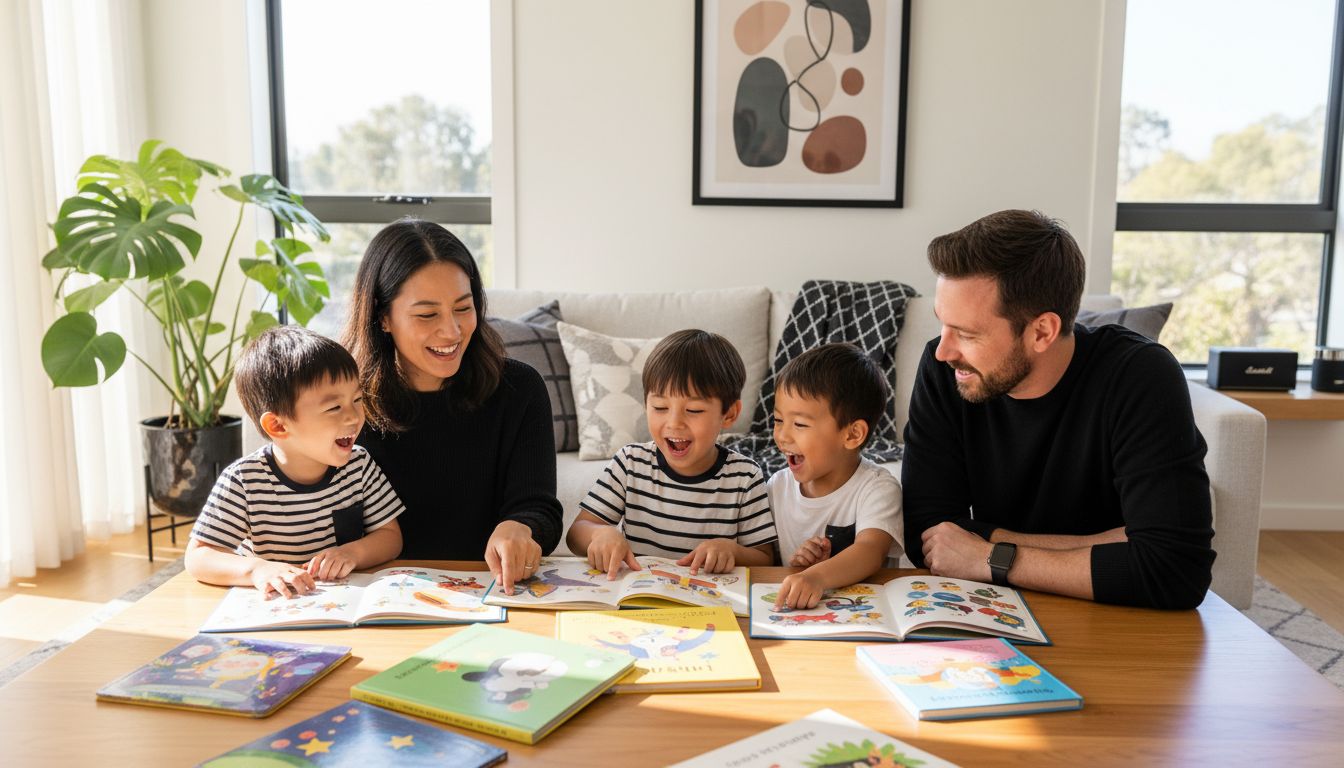
Over 80 percent of children measurably benefit from pictures when learning language. Picture stories transform reading aloud into a shared adventure, where children discover new words, sentence structures, and stories with all their senses. Everyday life offers many opportunities for pictures to creatively support children's language development. Whether through storytelling together, exploring, or role-playing — here you will learn how stories with pictures can ignite a love of language and motivation to learn.
Table of Contents
- Why picture stories promote language development
- Looking at pictures together and talking about them
- Inventing your own stories based on pictures
- Asking questions and encouraging storytelling
- Developing role-plays with characters from the pictures
- Collecting new words from the picture story
- Integrating picture stories into everyday life
Quick Summary
Insight | Explanation
1. Actively exploring picture stories | Children playfully learn new words and language structures through visual stories, which promotes language comprehension.
2. Asking open-ended questions | Open-ended questions encourage children to express their thoughts and use their imagination, improving their language skills.
3. Inventing their own stories | Children develop their language abilities by inventing creative stories based on pictures, thereby strengthening their ability to express themselves.
4. Using role-plays | Role-plays help children bring characters to life and invent dialogues, which supports their language development.
5. Integrating picture stories into everyday life | Picture stories can be woven into daily routines to create language moments in various situations and encourage learning.
1. Why Picture Stories Promote Language Development
Picture stories are more than just colorful pages in a book. They are a magical tool for supporting and enriching children's language development. Through visual narratives, children can learn language in a playful and intuitive way. When children look at picture stories, they activate several areas of their brain simultaneously. They learn new words in context, understand grammatical structures, and develop a feel for narratives. Visual cues help children understand meanings they are not yet able to express verbally.
In practical terms, this means for parents: take time to explore picture stories together. Point to pictures, name objects, describe actions. Ask questions like "What do you see here?" or "What is happening right now?". This interactive approach promotes not only vocabulary but also communication skills.
- Children learn new vocabulary through visual contexts
- They develop an understanding of narrative structures
- Visual language supports verbal language learning
The power of picture stories lies in their ability to bring language to life and make it exciting. No dry learning methods here — just pure joy in discovering and storytelling.
2. Looking at Pictures Together and Talking About Them
Looking at pictures together is a wonderful way to support your child's language development. It is not just about turning pages, but about creating an active conversation that encourages curiosity and communication.
Interactive viewing means more than just passive listening. Encourage your child to explore the pictures and talk about them. Ask open-ended questions like "What do you see here?" or "What is happening in the picture right now?". This approach helps children sharpen their powers of observation and put their thoughts into words.
Practical tips for an exciting picture book experience:
- Point out details in the picture
- Let your child invent stories
- Vary your questioning techniques
- Give space for creative interpretations
How Children Learn to Tell Stories: A Step-by-Step Guide can give you additional inspiration. The shared picture book experience thus becomes a magical moment of learning and connection.
3. Inventing Your Own Stories Based on Pictures
Inventing your own stories based on pictures is a magical key to language development. Children transform static images into vivid narratives, developing their linguistic and creative abilities in the process.
Creative storytelling is more than just an exercise. According to the Association for Special Education, children learn to grasp the meaning of images and put them into their own words, which enormously strengthens their ability to express themselves. Encourage your child to look at the pictures and develop stories.
Practical suggestions for creative storytelling:
- Ask open-ended questions about the picture
- Let your child invent the main characters
- Offer support without correcting
- Show enthusiasm for their ideas
Creative Storytelling with Children: Crafting Imaginative Stories can give you further inspiration. Every invented story is a small language adventure that helps your child grow a little more.
4. Asking Questions and Encouraging Storytelling
Questions are the key to motivating children to tell stories and playfully promoting their language development. They are like little doors to creativity that help children structure and express their thoughts.