 edory
edory
Around 80 percent of all children develop their language skills playfully and not through rigid exercises. Stories transform learning into an adventure where imagination and curiosity set the tone. Parents and educational professionals discover here how narratives not only entertain, but also promote important skills such as vocabulary, grammar and empathy. Those who harness the power of stories give children joy in speaking and a strong foundation for their future.
Table of Contents
- What Language Development Through Stories Means
- Different Methods of Children's Language Development
- Benefits of Individual Stories for Children
- Digital Tools and Safe Storytelling Platforms
- Common Mistakes and Proven Success Strategies
Key Findings
| Point | Details |
|---|---|
| Language Development Through Stories | Stories promote language development by using emotional narratives that challenge children linguistically and stimulate their imagination. |
| Individual Adaptation | Adapting methods to each child's individual needs and learning styles is crucial for successful language development. |
| Interactive Approaches | Dialogical reading and creative methods such as role-playing increase children's interaction and interest in language. |
| Avoiding Common Mistakes | Overwhelming children and lack of interaction can hinder language development; patience and regular, short reading sessions are important. |
What Language Development Through Stories Means
Language development through stories is a creative and playful approach to supporting children's language development. Children learn language not through dry exercises, but through vivid, emotional narratives that stimulate their imagination while challenging them linguistically. This method leverages children's natural curiosity and eagerness to learn by using stories as a bridge between entertainment and education.
The process of language development through stories includes several important aspects:
- Vocabulary Expansion: Children learn new words in the context of a story
- Grammatical Understanding: By listening to stories, children unconsciously grasp sentence structures
- Communication Skills: Stories encourage asking questions and storytelling
- Emotional Intelligence: Children develop empathy through characters and their experiences
Interestingly, Storytelling for Toddlers shows that stories not only entertain but also serve a profound educational function. They help children understand and interpret complex emotions and social situations. A child who regularly hears stories develops better language comprehension and richer linguistic expression.
The magic of language development through stories lies in its immediacy and emotionality. During a reading or storytelling session, children are completely immersed in the story. They learn unconsciously how language works: they pick up intonations, sentence rhythms, and new vocabulary. What matters is not perfect pronunciation, but the joy of listening and the desire to communicate. With this playful approach, language learning becomes a natural, joyful process that accompanies children throughout their lives.

Different Methods of Children's Language Development
Language development in children requires a diverse and creative repertoire of methods that are playful and individually tailored to the child's needs. Every child is unique, so parents and educators should combine different approaches to holistically support language development. The art lies in making language learning a natural and joyful process.
Here are some effective language development methods:
- Dialogical Reading: Interactive storytelling where children ask questions and help shape the story
- Role-Playing: Creative communication situations that expand language use and vocabulary
- Singing and Rhyming Games: Musical methods that playfully convey speech rhythm and word sounds
- Everyday-Integrated Communication: Conscious naming and explanation of actions and objects
Our 7 Ways to Language Development with Picture Stories show how picture stories in particular are an excellent method for stimulating children's language skills. Picture stories allow children to link visual and linguistic impressions and deepen their language comprehension.
Individualization of language development is particularly important. Children differ in their learning styles, interests, and language abilities. A method that works for one child doesn't necessarily work for another. Parents and educators should therefore remain flexible, observe carefully, and continuously adapt language development methods to the child's development. The key lies in patience, creativity, and the joy of jointly discovering language.
Benefits of Individual Stories for Children
Individual stories are more than just entertainment - they are a customized educational tool that addresses children on a deep emotional and cognitive level. Every child has a unique personality, their own interests, and developmental stages, which is why standardized stories often cannot have the same impact as personalized narratives.
The main benefits of individual stories include:
- Increased Motivation: Children identify more strongly with characters similar to their life worlds
- Emotional Connection: Personalized stories speak to the individual feelings and experiences of the child
- Learning Effectiveness: When content is tailored to the child's interests, attention and retention increase
- Self-Confidence: Stories that portray the child as protagonist strengthen their self-esteem
Our guide Language Development Through Stories demonstrates how individualized stories can positively influence language development. They enable direct engagement and motivate children to actively communicate and explore new linguistic structures.
The central added value lies in emotional resonance. When a child recognizes themselves in a story, they open themselves completely to the narrative. Identification with the protagonist awakens curiosity, promotes empathy, and creates a deep connection to the learning process. Individual stories are therefore not just an entertainment tool, but a powerful medium of holistic child education that supports language learning, emotional intelligence, and creativity equally.
Digital Tools and Safe Storytelling Platforms
The digital world offers parents and educators innovative ways to share stories with children in a safe, interactive, and educational manner. Modern storytelling platforms combine educational expertise with child-friendly technology to promote language learning and creativity.
Key features of safe digital storytelling platforms:
- Age-Appropriate Content: Strict control and filtering of story material
- Interactive Elements: Playful involvement of children in storytelling processes
- Data Protection: Highest security standards to protect children's user data
- Educational Quality: Development by childhood educators and language scientists
The Interactive Stories for Children demonstrate how digital technologies are revolutionizing storytelling. According to arxiv study, assistive reading tools that use eye-tracking technology can significantly improve reading proficiency in children with reading challenges. These technology-supported approaches enable individualized reading support.
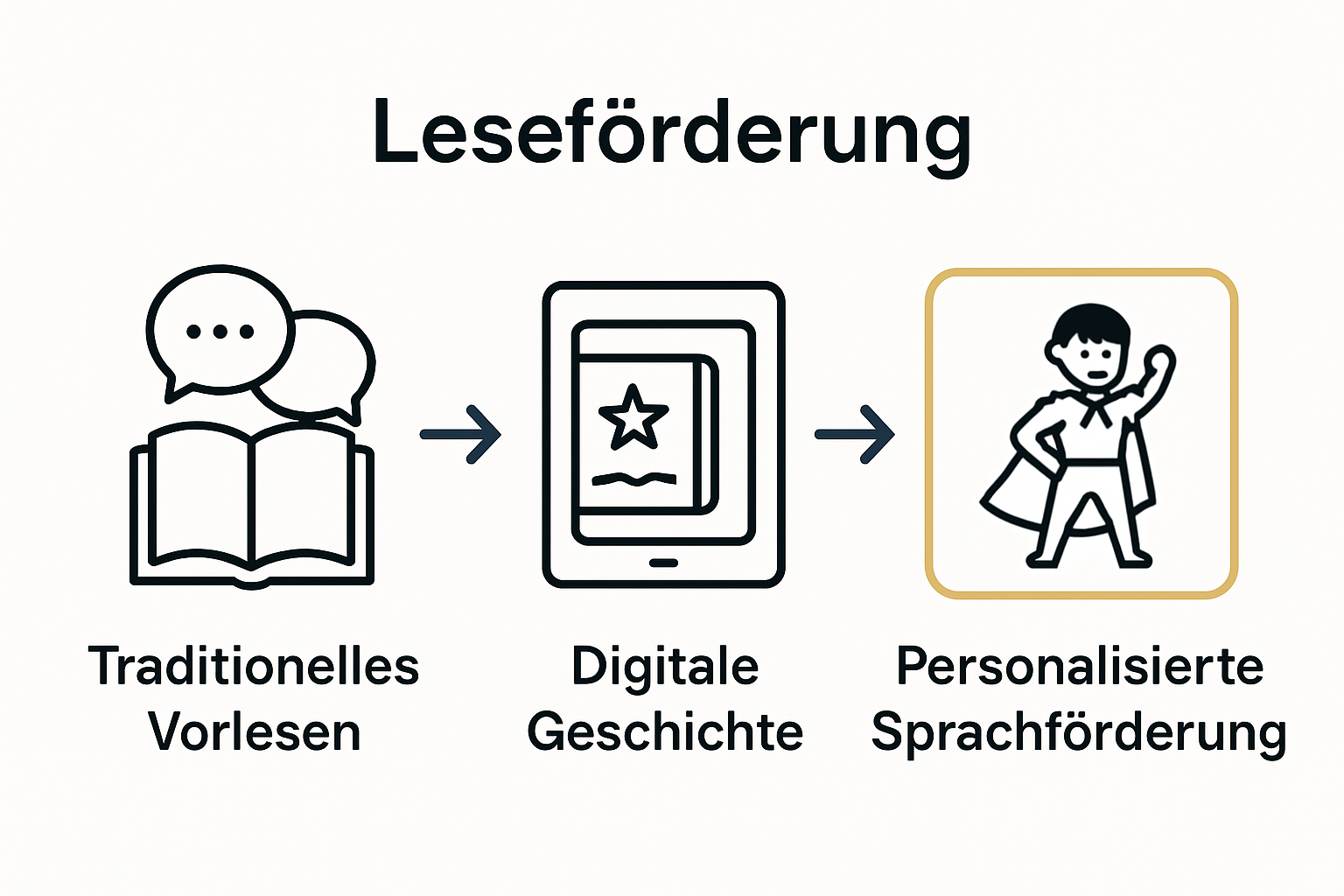
The Kita Biberbau daycare shows in its concept kita-biberbau how digital platforms can promote intercultural and language skills. Through the use of original stories and interactive media, these tools create a safe learning environment that motivates children to engage with language and stories in a curious and playful manner. What is always crucial is the conscious and pedagogically guided use of digital storytelling tools.
Common Mistakes and Proven Success Strategies
Language development through stories requires sensitivity, patience, and a deep understanding of children's learning processes. Many parents and educators underestimate the complexity of this task and fall into traps that hinder rather than promote language development. A conscious and reflective approach is crucial for success.
Common mistakes in language development:
- Overwhelming: Stories that are too complex or speaking tempo that is too fast
- Lack of Interaction: Passive reading without involving the child
- Impatience: Impatience or frustration with speech difficulties
- Standardized Approaches: No consideration of individual learning styles
The Guide to Creative Ways for Parents shows how important an individual approach to language development is. Successful strategies are based on patience, creativity, and understanding that every child learns uniquely.
Proven success strategies require a holistic approach. Parents should shape stories as interactive experiences: ask questions, interpret pictures together, share emotions, and give children space for their own interpretations. The art lies in creating a safe, loving environment where children can discover language playfully and without performance pressure. Consistency is also important: short but frequent story sessions are more effective than rare, long storytelling marathons.
Experience Language Development Through Stories with Edory
Promoting language through exciting and individual stories is a challenging task for parents and educators that requires patience and creativity. Many wish for an easy way to find customized stories that are tailored exactly to their child's interests and age. Edory.ai offers the solution to this need by automatically generating personalized and educationally valuable stories. This makes language development playfully simple and brings children real joy.
Discover how you can create new, interactive stories daily with Edory that optimally support your child's language comprehension and communication skills. Visit our page Uncategorized – Edory AI – Educational Children's Stories for exciting examples and learn more about the benefits of individual stories. Start now with us in the world of personalized language development and give your child a lasting learning advantage. More information at edory.ai – Your source for creative and safe children's stories.
Frequently Asked Questions
What Does Language Development Through Stories Mean?
Language development through stories is a creative approach that supports children's language development through vivid and emotional narratives. Children learn language by listening to and understanding stories that stimulate their imagination.
What Methods Exist for Language Development in Children?
Effective methods include dialogical reading, role-playing, singing and rhyming games, and everyday-integrated communication, all of which help promote language development playfully.
Why Are Individual Stories Important for Language Development?
Individual stories are important because they increase children's motivation and identification. They address personal experiences and feelings, making learning more effective and memorable.
How Can I Use Digital Tools for Language Development?
Digital tools should offer age-appropriate content, include interactive elements, and maintain the highest data protection standards. Such platforms can deliver stories in a safe and engaging way and promote language learning.
Recommendations
- Language Development Through Stories: The Complete Guide – Edory AI – Educational Children's Stories
- 7 Ways to Language Development with Picture Stories for Children – Edory AI – Educational Children's Stories
- Edory – Blog – Edory AI – Educational Children's Stories
- Understanding Children's Education Through Stories – Edory AI – Educational Children's Stories