 edory
edoryInclusion in Children's Stories: The Definitive Guide
· 11 minutes read
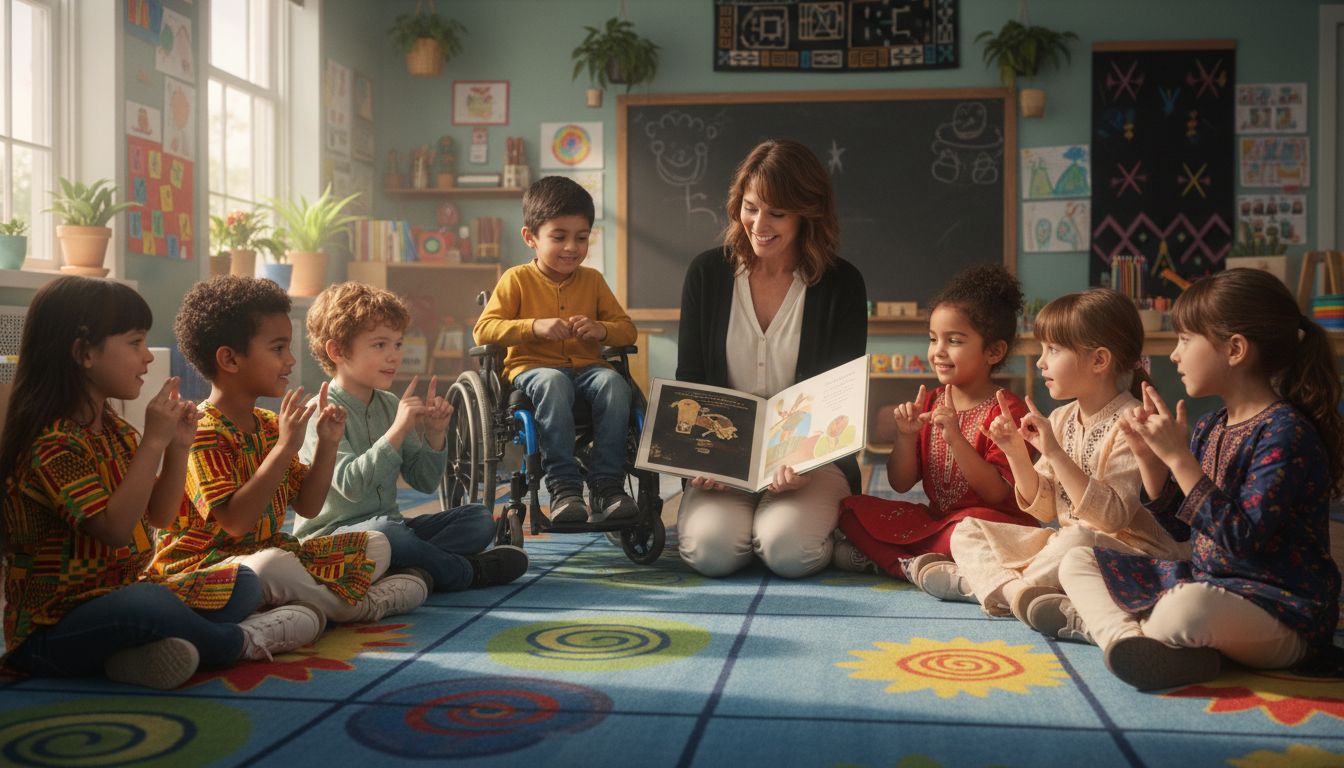
More than 15 million children in Germany are growing up today in a world full of differences. For them, belonging means more than mere acceptance. Inclusive children's stories create a space in which diversity is lived as a matter of course and every child feels seen. Anyone who wants to promote genuine appreciation and empathy will find in inclusive narratives an effective tool that awakens understanding and opens up new perspectives.
Table of Contents
- What does an inclusive children's story mean?
- Types of inclusive narrative forms in kindergarten
- How inclusion works in stories
- Characteristics of successful inclusive stories
- Practical requirements for inclusive stories
- Challenges and pitfalls in inclusion
Key Insights
Point | Details
Inclusive children's stories promote diversity | They respect and represent the uniqueness of every child and create a sense of appreciation.
Active involvement of children | Interactive storytelling formats and creative methods allow children to actively participate in the story experience.
Conscious representation of diversity | Stories should reflect different cultures and ways of life to enable identification for all children.
Avoidance of stereotypes | The focus is on authentic representation to avoid prejudices and integrate different perspectives.
What does an inclusive children's story mean?
Inclusive children's stories are more than just narratives – they are a powerful bridge of understanding and appreciation for children of the most diverse backgrounds. They aim to respect and represent every child in their uniqueness. Children's stories that embrace diversity can help children discover the world in all its richness and variety.
The core of inclusive children's stories lies in their ability to recognize difference as an enrichment. They consciously take into account the various living realities and experiences of children and create a storytelling atmosphere in which every child feels valued and visible. Concretely, this means:
- Characters with different abilities and backgrounds
- Stories that portray diversity naturally and respectfully
- Narratives that promote empathy and mutual understanding
Inclusive children's stories are more than a pedagogical tool – they are an invitation to empathize, understand, and grow. They help children see the world through the eyes of others and view differences not as obstacles, but as opportunities to learn and grow.
Types of inclusive narrative forms in kindergarten
In the everyday life of kindergarten, there are various creative methods for telling inclusive stories that involve children of different abilities and backgrounds on equal terms. Creative storytelling techniques make it possible to design stories in an interactive and engaging way.
A particularly interesting method is basal action stories. This special form of storytelling makes educational content accessible to children at different stages of development through sensory and linguistic immersion. They include activating repetition elements that specifically promote children's perceptual and communication skills.
Other inclusive narrative forms include:
- Narrative boxes: An interactive method in which stories are presented using objects in a box
- Role-play stories: Children can become actively involved and take on different perspectives
- Multimedia narratives: Stories with images, sounds, and movement elements
These diverse approaches make it possible to reach every child individually and honor their strengths. They create a space in which difference is not only accepted, but actively valued and embraced.
How inclusion works in stories
Inclusion in stories is a complex and nuanced art that means far more than simply depicting different characters. Stories for participation and experience play a decisive role in actively involving children in the storytelling process.
The core of inclusive stories lies in the conscious representation of diversity. This means designing narratives so that they reflect the different cultures, languages, and ways of life of the children. Through the deliberate selection of stories, opportunities for identification are created for all children – regardless of their individual backgrounds or abilities.
Important strategies for inclusive stories include:
- Characters with different backgrounds and abilities
- Fairy tales and stories from different cultural traditions
- Flexible narrative formats that engage different senses
- Narratives that promote empathy and mutual understanding
Through this conscious design, stories become a powerful tool for inclusion – they open doors to new perspectives and build bridges between the different life worlds of children.
Characteristics of successful inclusive stories
Successful inclusive stories are more than just narratives – they are bridges of understanding and togetherness. What makes a good story takes on a special significance in inclusive contexts.
The core of successful inclusive stories lies in careful character design. They avoid stereotypes and represent characters with different backgrounds, abilities, and life experiences. This diversity allows every child to recognize themselves in the story and develop a positive self-image.
Important characteristics of inclusive stories are:
- Interactive storytelling formats that actively involve children
- Narrative materials such as story bags or storytelling boxes
- Characters with different abilities and