 edory
edory
More than 60 percent of parents in Germany wish for a modern way to bring knowledge to their children. In a world where every child is unique, individually customizable learning stories are gaining increasing importance because they awaken curiosity and joy in learning. Anyone who wants to offer their preschool child exciting and personalized stories daily through an app discovers new ways to skillfully combine support and emotional bonding.
Table of Contents
- What does learning through stories mean?
- Forms of stories in educational practice
- Personalized and digital stories for children
- Effects of stories on learning processes
- Pedagogical opportunities and typical challenges
Key Findings
| Point | Details |
|---|---|
| Learning through stories | Stories promote understanding and emotional connection to learning content, which increases motivation and attention. |
| Diversity of stories | In educational practice, different forms of stories can be used to support individual and social learning processes. |
| Digital and personalized stories | Digital stories enable children to integrate their own experiences, which increases learning motivation and makes the learning process more accessible. |
| Effects on the learning process | Stories activate emotional and cognitive processes, making it easier to store knowledge and transfer it into real life. |
What does learning through stories mean?
Learning through stories is a powerful pedagogical method that enables children to understand and absorb knowledge in an emotional and sustainable way. This form of learning uses the natural human ability to better remember and process information through narrative structures.
The core mechanism is based on the fact that stories not only convey information, but also create emotions and contexts. Storytelling in education shows how characters and structured narratives can make theoretical content lively and understandable. Children learn not just passive facts, but actively experience learning content, which increases their attention and motivation.
The human brain is particularly receptive to narrative structures. Stories activate multiple brain regions and enable comprehensive cognitive processing. Emotional centers are involved, making learning content stored more deeply and sustainably. Additionally, empathizing with story characters promotes the development of empathy and social skills.
Pro tip: Choose stories that not only entertain but actively support learning goals and emotionally touch your children.
Forms of stories in educational practice
Stories in an educational context are versatile and dynamic tools that encompass far more than traditional fairy tales. Various forms of learning stories can be strategically deployed to support and guide children in their learning processes.
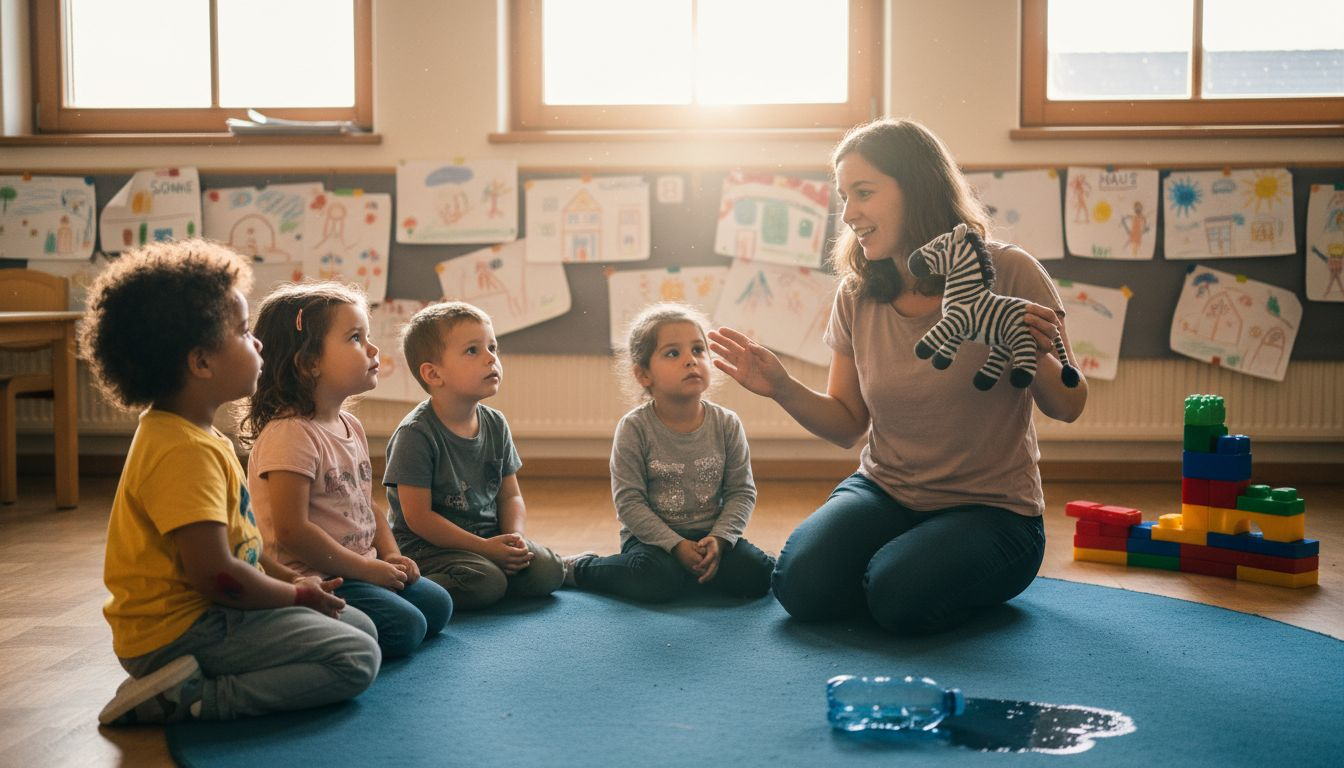
The range extends from individual learning stories that document personal developmental steps to group learning stories that depict shared experiences and social interactions. Storytelling in education shows that stories can be used as fairy tales, narratives about real situations, or structured narrative courses. They serve not only for knowledge transfer but also for motivation and emotional engagement.
Particularly valuable are learning stories that see children as active designers of their development. They enable a resource-oriented perspective in which individual strengths and learning progress are central. Narrative forms can convey complex content in age-appropriate and engaging ways by evoking emotions and clarifying relationships.
The following forms of learning stories differ in target audience, application, and benefits:
| Form of learning story | Target audience | Main benefit | Typical application |
|---|---|---|---|
| Individual learning story | Individual children | Promotion of individual development | Portfolio work, parent communication |
| Group learning story | Groups of children | Strengthening of social skills | Projects, group discussions |
| Fairy tales & fictional narratives | All age groups | Emotional learning & imagination | Introduction to topics, value transmission |
| Digital, personalized story | Tech-savvy children | Motivation & participation | E-learning, digital media projects |
Pro tip: Develop stories that respect your child's individual learning path and playfully nurture their curiosity and motivation.
Personalized and digital stories for children
Digital stories are revolutionizing the way children learn and discover their own narrative worlds. New technologies in education enable children to create stories that reflect their individual experiences and interests, thereby significantly boosting learning motivation.
Personalized stories go beyond traditional narrative forms. They not only adapt to the child's age and developmental stage but also integrate personal elements such as names, preferences, or local contexts. These individual narratives create a deeper emotional connection and make learning processes significantly more interesting and accessible.
The added value of digital and personalized stories lies particularly in their inclusivity. They can present learning content in ways that consider different perspectives and also reach children who struggle with standardized learning materials. Through interactive elements, customizable characters, and adaptive narrative structures, stories become a dynamic learning tool that promotes both creativity and understanding.
Pro tip: Encourage your child to create their own digital stories and playfully discover new perspectives and learning content.
Effects of stories on learning processes
Stories are more than just entertaining narratives. Storytelling in education shows how they can fundamentally transform learning processes. They create an emotional context that makes abstract content tangible and significantly improves the cognitive processing of information.
The neurobiological effects of stories are particularly fascinating. Stories in the learning process activate different brain regions, including emotional centers, which leads to significantly more sustainable storage of learning content. By empathizing with characters, children develop not only cognitive but also social understanding and empathy.
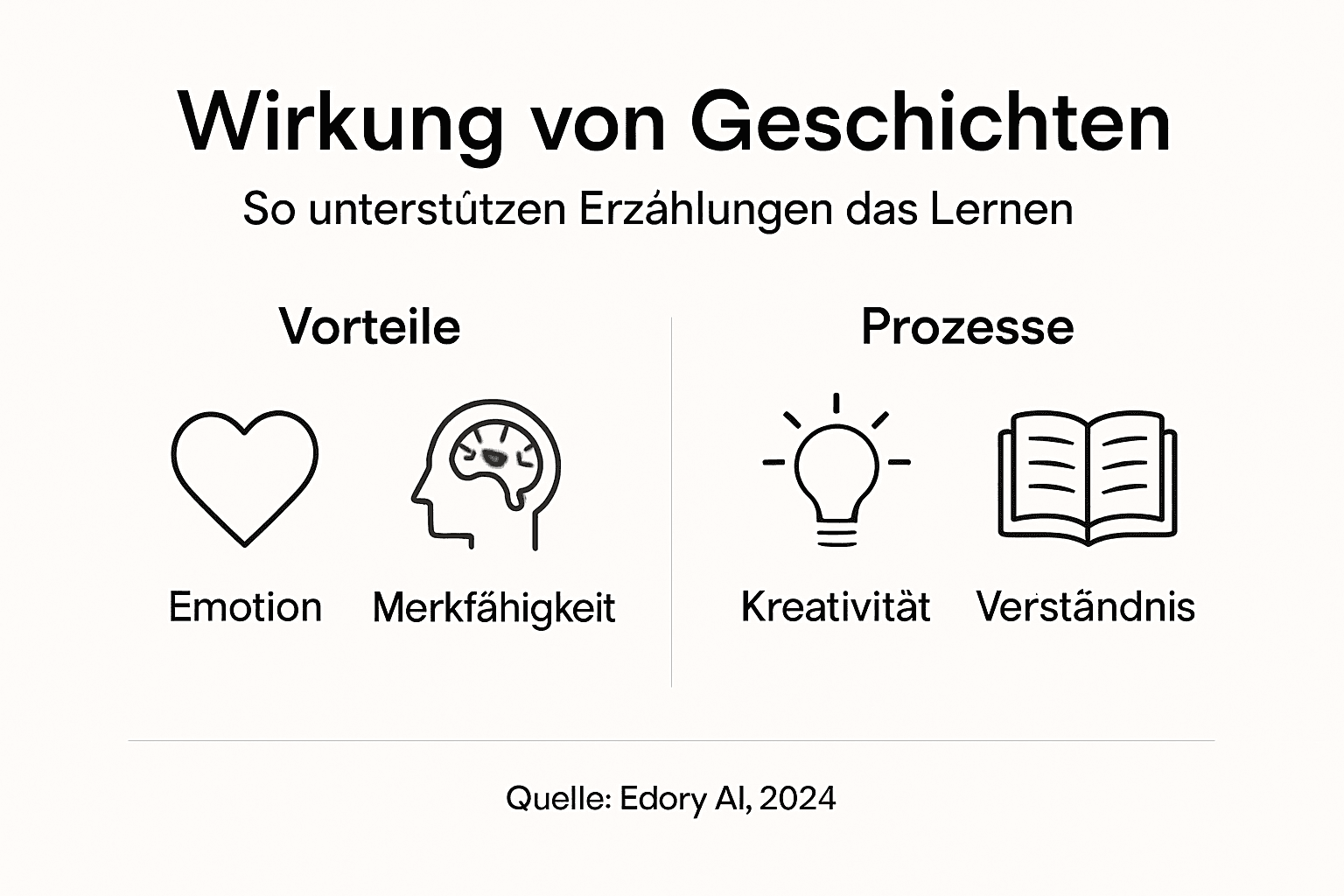
The multifaceted effects of stories encompass various learning aspects. They increase attention, promote creativity, and enable children to comprehend complex relationships visually. Narrative structures help place information in a meaningful context and thereby facilitate the transfer of knowledge to real-life situations.
Here are the central effects of stories for learning success summarized:
| Effect | Description | Pedagogical added value |
|---|---|---|
| Emotional activation | Stories touch feelings | More sustainable knowledge storage |
| Contextualization | Linking facts and everyday life | Facilitated knowledge transfer |
| Promotion of empathy | Empathizing with characters | Development of social skills |
| Increase in motivation | Exciting narratives promote interest | Longer attention span |
Pro tip: Choose stories that not only entertain but actively support learning processes and promote emotional intelligence.
Pedagogical opportunities and typical challenges
Story-based learning opens up diverse opportunities for educators and parents for innovative educational design. Digital learning tools in pedagogy enable stronger student participation and promote digital skills while creating an inclusive learning environment.
The pedagogical opportunities are particularly diverse. Learning stories as a pedagogical instrument allow resource-oriented observation that supports individual promotion and strengthens relationships between children, families, and educators. They enable a holistic view of learning processes and promote the development of social skills.
At the same time, narrative learning approaches bring challenges. High documentation efforts, ensuring story quality, and the need for thoughtful pedagogical practice require commitment and professionalism. It is important to use digital tools in ways that support educational goals and do not distract from essential learning processes.
Pro tip: Develop a balance between creative storytelling methodology and clear pedagogical learning objectives.
Learning through stories made easy with Edory
Learning through stories creates an emotional connection and promotes sustainable understanding in children. However, it is often a challenge for parents and educators to customize appropriate stories individually while meeting pedagogical standards. Edory offers an innovative solution for this: with personalized and daily new stories that strategically combine educational content with imaginative narratives. This makes learning not only effective but also exciting and motivating.
Discover on Uncategorized – Edory AI – Educational children's stories how we are revolutionizing narrative learning through Artificial Intelligence. Use Edory to offer your child tailor-made stories that playfully promote empathy, creativity, and knowledge. Visit https://edory.ai today and start with us on a new world of learning-promoting storytelling.
Frequently asked questions
What is learning through stories?
Learning through stories is a pedagogical method that uses narrative structures to enable children to understand and remember knowledge in an emotional and sustainable way.
How can stories increase children's learning motivation?
Stories awaken emotions and create contexts that make learning more interesting. This increases children's attention and engagement during the learning process.
What forms of stories are suitable for the educational sector?
In the educational sector, various forms of stories can be used, such as individual learning stories, group learning stories, fairy tales, and digital, personalized stories that are specifically tailored to the needs of the children.
How do stories affect the learning process and cognitive processing?
Stories activate different brain regions and promote empathy with characters, which leads to deeper and more sustainable storage of learning content. They also facilitate the transfer of knowledge to real-life situations.
Recommendations
- Storytelling for parents: Understanding and experiencing – Edory AI – Educational children's stories
- Parent-child relationship through stories – Edory AI – Educational children's stories
- Edory – Blog – Edory AI – Educational children's stories
- Children's education through stories simply understood – Edory AI – Educational children's stories
- How specialized education will help you advance
- Understanding Promoting Lifelong Learning for Everyone|CS