 edory
edory
Almost 80 percent of preschool parents notice that their child develops their own favorite fairy tales. However, every child reacts differently to stories – and that is where a real treasure for education lies. If you better understand which fairy tale motifs and characters your daughter or son loves, you can shape reading time purposefully. Here you will learn how to recognize your child's individual fairy tale interests step by step and use them for lively learning fun.
Table of Contents
- Step 1: Gather Your Child's Fairy Tale Interests
- Step 2: Analyze Typical Reactions While Reading Aloud
- Step 3: Compare Favorite Motifs and Characters
- Step 4: Deliberately Test Suitable New Fairy Tales
- Step 5: Check the Effect of Fairy Tales on Your Child
Quick Overview
| Key Point | Explanation |
|---|---|
| 1. Observations Promote Understanding | Pay attention to your child's emotional connection to fairy tales. Systematic observations help identify individual preferences. |
| 2. Open Questions Encourage Discussions | Have conversations about the stories and ask open questions to explore your child's thoughts and feelings. |
| 3. Document Reactions for Analysis | Keep a reaction log to record your child's emotional and cognitive development over time. |
| 4. Comparison of Favorite Characters and Motifs | Analyze which characters and motifs captivate your child to gain deeper insights into his or her fantasy world. |
| 5. Regularly Test and Adapt Fairy Tales | Experiment with new fairy tale variations to better serve your child's interests and stimulate his or her imagination. |
Step 1: Gather Your Child's Fairy Tale Interests
Parents can deliberately explore their children's fairy tale preferences by proceeding attentively and methodically. The goal is to understand your child's individual tastes and emotional touchpoints and to discover his or her fantasy world.
Exploring fairy tale interests begins with systematic observation. Pay attention to which stories captivate your child during reading time and how these stories create an emotional connection. Children's individual approaches to fairy tales show that each child has unique preferences. Have conversations about the stories and ask open questions like "What did you especially like about the story?" or "Which character did you like best?"
Another effective method is deliberately offering different types of fairy tales. Present fairy tales from different cultures, with different protagonists and plot patterns. Note your child's reactions and look for patterns in his or her preferences. Representative studies on fairy tale interests show that preferences can differ by age and gender.
Pro Tip: Keep a small "fairy tale diary" where you document your child's favorite stories, reactions, and developments.
Comparison of methods for analyzing your child's fairy tale preferences:
| Method | Advantages | Suitable for These Age Groups |
|---|---|---|
| Systematic Observation | Recognizes emotional bonds | Preschool and elementary school age |
| Open Conversations | Promotes opinion formation | From age 4 |
| Fairy Tale Diary | Tracks development over time | From kindergarten |
Step 2: Analyze Typical Reactions While Reading Aloud
Analyzing your child's reactions while reading aloud is an important key to understanding his or her emotional and cognitive development. The goal is to observe carefully how your child responds to different stories and narrative styles and which aspects of the fairy tales particularly fascinate him or her.
Children's reactions while reading aloud show that children don't just passively consume fairy tales, but actively interact with them. Pay attention to nonverbal signals such as body posture, facial expression, and attention. Observe whether your child is tense, smiling, rolling their eyes, or leaning back relaxed. Such reactions reveal much about emotional engagement with the story.
Also pay attention to verbal reactions. Encourage your child to ask questions, make guesses, and share feelings. Note down comments like "What happens now?" or "That's unfair!" as well as remarks about individual characters. Age and gender-specific fairy tale reactions can help you better understand your child's development.
Pro Tip: Keep a reaction log with date, story, and observed emotions to document developments and preferences over time.
Step 3: Compare Favorite Motifs and Characters
Comparing favorite motifs and characters is a fascinating process that gives you deep insights into your child's emotional and creative world. The goal is to understand which story elements particularly fascinate your child and which characters most ignite his or her imagination.
Typical favorite characters of children show that children often develop very differentiated preferences. Pay attention to which characters your child repeatedly mentions or describes with particular intensity. Are they the brave heroes, the helpless princesses, or perhaps the cunning tricksters? Create a kind of character map where you note the qualities that your child particularly appreciates in certain figures.
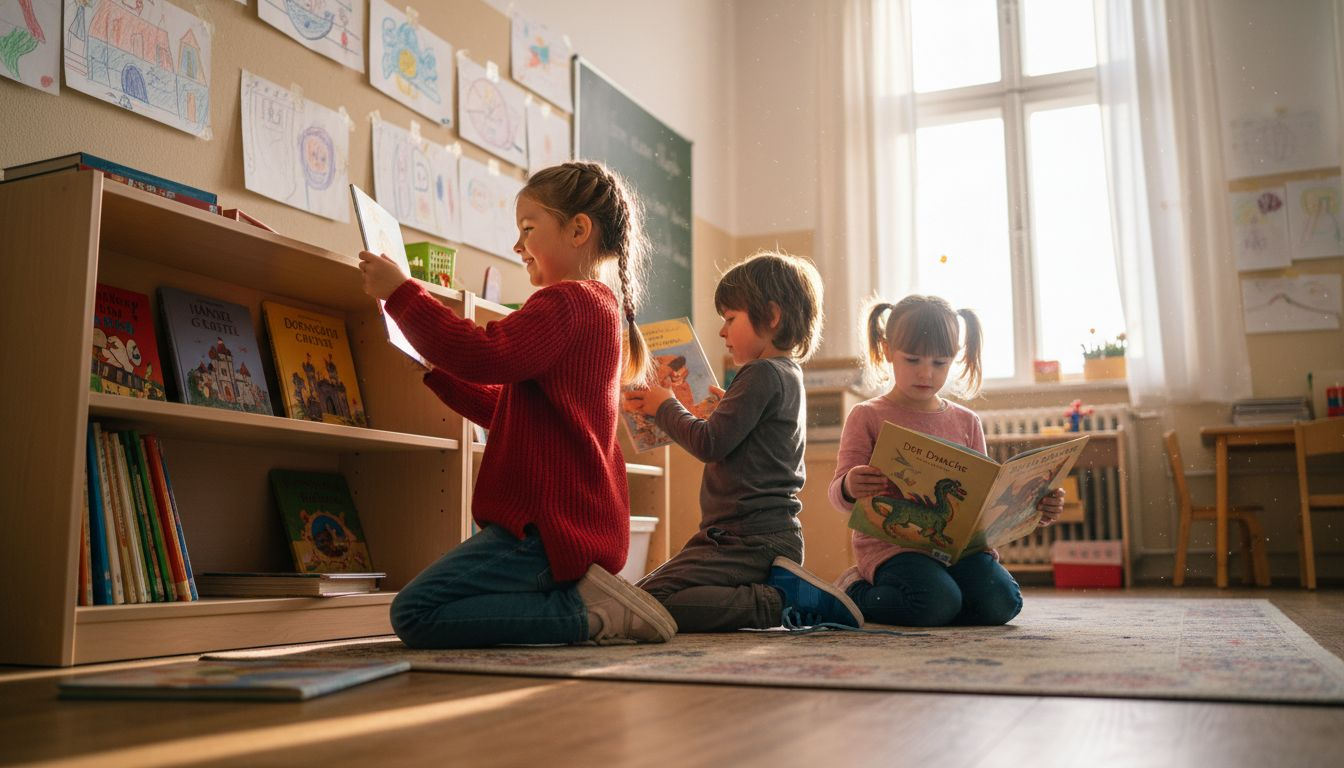
Fairy tale motifs as mirrors of children's wishes often reveal hidden emotional needs. Compare the recurring motifs in the stories. Look for patterns such as transformation, hero journeys, or justice conflicts. Discuss these motifs gently with your child and let him or her share his or her thoughts and feelings about the characters and events.
An overview of typical fairy tale motifs and their significance for child development:
| Fairy Tale Motif | Significance for Children | Recognizable Reactions |
|---|---|---|
| Transformation | Promotes creativity | Wonder, fantasy questions |
| Hero's Journey | Strengthens self-confidence | Suspense, expressions of courage |
| Justice Conflict | Develops value awareness | Outrage, justice comments |
| Magical Moments | Stimulates imagination | Enthusiastic comments |
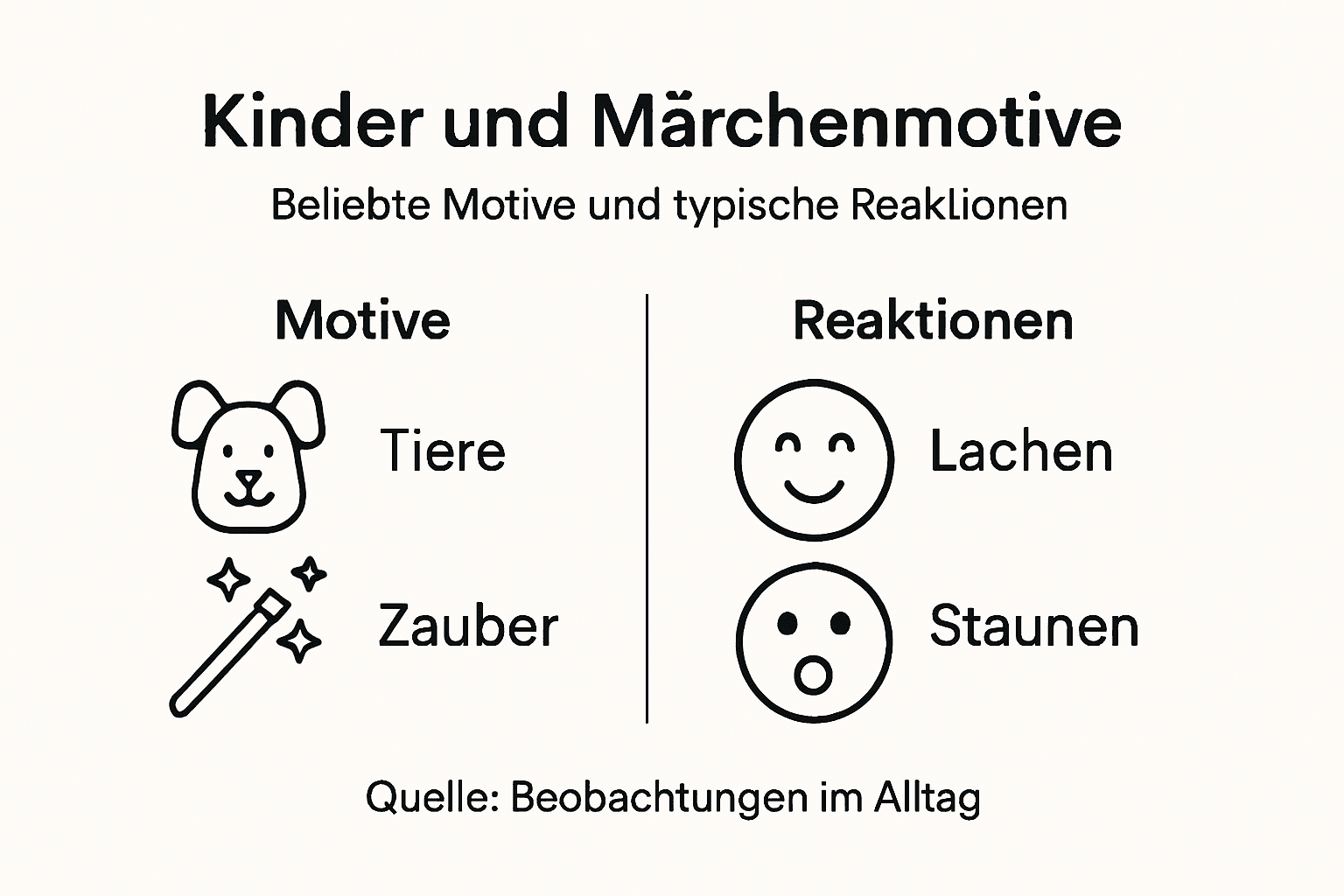
Pro Tip: Create a visual fairy tale map with your child where favorite characters and their special qualities are documented.
Step 4: Deliberately Test Suitable New Fairy Tales
Deliberately testing new fairy tales is an exciting journey of discovery that helps you better understand your child's development and interests. The goal is to find fairy tales that not only entertain but also promote your child's imagination and emotional development.
Modern fairy tales and child development show that systematic selection and testing of new stories is crucial for children's education and entertainment. Start with a small selection of fairy tales that covers different themes and characters. Read these stories aloud and carefully observe your child's reactions. Pay attention to body language, attention, and verbal comments.
For a successful test, it is recommended to try different fairy tale variations. Vary fairy tales by length, complexity, and narrative style. Note which aspects particularly fascinate your child. Is it the hero journeys, the magical moments, or the character developments? Encourage your child to ask questions and share his or her thoughts.
Pro Tip: Create a small "fairy tale diary" where you record your child's reactions, favorite moments, and new discoveries.
Step 5: Check the Effect of Fairy Tales on Your Child
Examining the effect of fairy tales is a sensitive and important process that helps you better understand your child's emotional and psychological development. The goal is to find out how fairy tales influence your child's inner world and development.
Favorite fairy tales as a development mirror provide insights into how children cope with conflicts and challenges. Have empathetic conversations after reading. Ask your child about his or her feelings, what particularly moved him or her, and which characters he or she liked or disliked. Pay attention to body language, tone of voice, and spontaneous comments.
Fairy tales and mental health can address important inner images and needs. Observe whether your child revisits aspects of the story in play or in conversations. Note which themes occupy him or her and how he or she processes the stories. These observations help you understand the emotional impact of the fairy tales.
Pro Tip: Document your child's reactions in a special fairy tale diary to recognize development trends.
Discover Your Child's Favorite Fairy Tales with Edory.ai
Recognizing and deliberately choosing your child's favorite fairy tales is often a challenge. Parents want to understand individual preferences and playfully explore the emotional impact of stories. Important are observing reactions, comparing characters and motifs, and testing new fairy tales to optimally promote imagination and development. This is exactly where Edory.ai comes in by offering personalized and diverse children's stories that are created fresh daily and thus specifically address interests and developmental stages.
Experience a unique combination of educational value and fairy tale entertainment on Edory.ai. The app makes it easy for parents to find personalized stories or even generate new ones, allowing you to discover your child's favorite motifs and characters more specifically. Also check out our collection on the page Uncategorized – Edory AI – Educational Children's Stories for diverse story inspirations. Use this opportunity now because in doing so you not only promote your child's emotional development but give him or her fascinating new worlds to dream and learn in every day.
Start your discovery journey to your child's favorite fairy tales today and visit https://edory.ai.
Frequently Asked Questions
How can I recognize my child's fairy tale interests?
To recognize your child's fairy tale interests, it is important to observe attentively which stories particularly captivate him or her. Have conversations with your child about the stories and ask open questions to better understand his or her preferences.
What methods help me analyze my child's favorite motifs?
Comparing favorite motifs can provide exciting insights. Pay attention to which characters your child frequently mentions and which themes fascinate him or her most, and create an overview of these elements.
How do I deliberately test new fairy tales with my child?
To test new fairy tales, select a small collection from different themes and characters. Read these stories aloud and observe your child's reactions to find out what he or she likes best.
What are typical reactions from children when reading fairy tales aloud?
Typical reactions can include smiling, asking questions, or emotional behavior, such as getting caught up in suspenseful passages. Pay attention to these nonverbal signals to understand your child's emotional engagement.
How do I document the effect of fairy tales on my child's development?
Document your child's reactions and feelings after reading in a fairy tale