 edory
edory
Every third family in Germany uses storytelling time to foster their children's imagination. Parents know how valuable creative stories are for preschool children. A lovingly designed storytelling space offers more than just entertainment. You will learn how to use simple ideas to create a curious and relaxed atmosphere from which exciting stories and educational moments emerge.
Table of Contents
- Step 1: Prepare the Creative Storytelling Space
- Step 2: Choose Appropriate Topics and Storytelling Structures
- Step 3: Build Exciting Characters and Plot
- Step 4: Use Interaction and Questions Purposefully
- Step 5: Check the Impact of the Story Together
Quick Summary
| Important Point | Explanation |
|---|---|
| 1. Create a Creative Storytelling Space | Design a relaxed atmosphere without pressure to encourage children's imagination. |
| 2. Use Open Questions | Use open-ended questions to encourage children to think along and co-create. |
| 3. Develop Exciting Characters | Create vivid characters and exciting plots that touch children emotionally. |
| 4. Consider Thematic Relevance | Choose topics from children's everyday lives to increase their interest. |
| 5. Reflection After Storytelling | Conduct a shared reflection to deepen understanding and emotional connection. |
Step 1: Prepare the Creative Storytelling Space
A creative storytelling space is more than a physical location. It is a safe emotional area where children can freely unfold their imagination. To create this space, parents must consciously design conditions that foster creativity and love of storytelling.
First, it requires a quiet, relaxed atmosphere without performance pressure. Giving storytelling room means giving children time and leisure. Create a fixed storytelling time, such as after dinner or before bedtime, when stories can emerge. An open attitude is important: let your children freely associate without interrupting or correcting them.
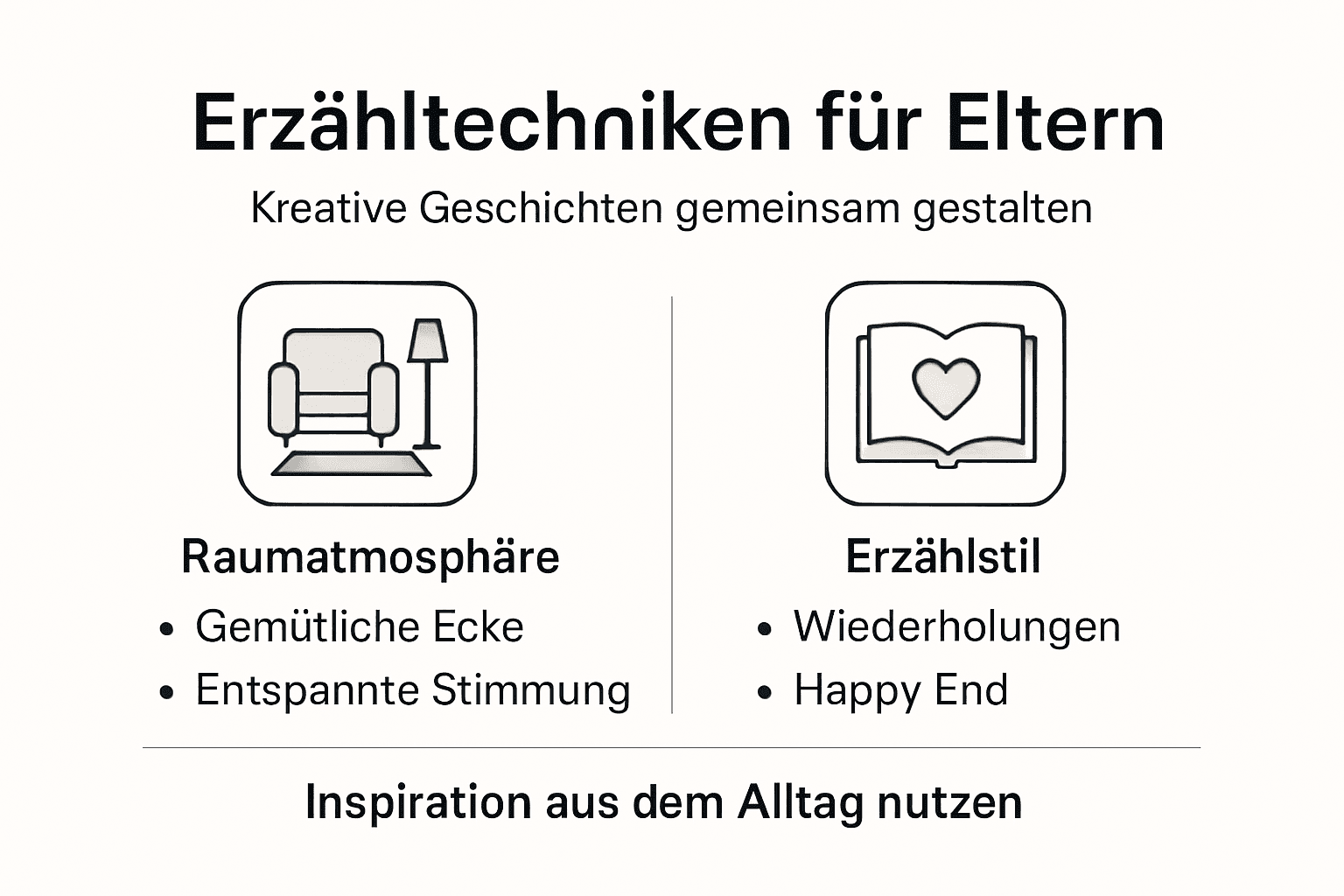
Prepare the space with stimulating elements. A cozy corner with pillows, a selection of picture books, or interesting objects can spark imagination. Listen actively, ask gently open questions, and show genuine interest in your child's stories.
Pro Tip: Keep a small storytelling journal to record and honor your child's special stories.
Key factors in designing a creative storytelling space at a glance:
| Factor | Contribution to Creativity | Practical Examples |
|---|---|---|
| Atmosphere | Relaxed storytelling | Candlelight, calm music, pillows |
| Time Structure | Ritualized, promotes focus | Fixed time after dinner |
| Materials | Inspiration for stories | Picture books, interesting objects |
| Parental Behavior | Appreciative and open | Active listening, no corrections |
Step 2: Choose Appropriate Topics and Storytelling Structures
When telling stories, choosing the right topic is crucial for your children's fascination and engagement. The perfect story combines imagination with familiar elements and speaks directly to your little ones' imagination.
Stories from everyday experiences form an excellent foundation. Children from age two love narratives that connect to their own experiences. Choose topics from their immediate everyday world such as family outings, kindergarten moments, or adventures with toys. A clear and simple storytelling structure with a distinct beginning, middle, and end helps them follow the story.
Pay attention to positive storytelling patterns. Stories with repetitions and a happy ending give children a sense of security and predictability. Experiment with different storytelling styles such as dialogue, role-play, or interactive storytelling where your child can contribute ideas. Adjust your storytelling style to your child's age and interests.
Pro Tip: Prepare a small treasure box with objects that can serve as storytelling prompts and inspire your child's imagination.
Comparison of different storytelling styles for children:
| Storytelling Style | Characteristics | Benefits for Children | Ideal for Age Group |
|---|---|---|---|
| Dialogue | Reciprocal speech | Promotes language & empathy | Toddlers from age 3 |
| Role-play | Playing along, imitating | Creativity, social skills | Preschool age |
| Interactive Storytelling | Child contributes ideas | Confidence, co-creation | From age 4 |
| Classic Storytelling | Narrator reports | Security, clear structures | Infants to toddlers |
Step 3: Build Exciting Characters and Plot
The heart of every children's story is vivid characters and a gripping plot. Your task is to create a world that touches children emotionally and inspires their imagination.

When developing characters, it's about creating personality through clear goals and conflicts. Give your protagonists characteristic traits that children can easily understand and identify with. A shy bear who wants to become brave, or a little robot who learns about friendship can be wonderful starting points. Make sure your characters overcome challenges and show emotions.
The plot should be dynamic and surprising. Build small plot arcs that captivate children without overwhelming them. Use simple but effective turns and let your characters overcome obstacles. A credible story structure with a satisfying ending gives children a sense of security and joy.
Pro Tip: Let your child contribute ideas for character traits or plot elements during storytelling to foster their creativity.
Step 4: Use Interaction and Questions Purposefully
Interactive storytelling is a magical way to immerse children deeper into the world of narratives. It transforms passive listeners into active story explorers who participate with enthusiasm and curiosity.
Language development through targeted questioning can be designed playfully and entertainingly. Ask open-ended questions that encourage thinking ahead and predicting. For example, ask: "What do you think will happen next?" or "How do you feel at this point in the story?". This type of interaction not only increases attention but also promotes critical thinking and your child's language skills.
The art is to incorporate questions naturally into the flow of the narrative. Don't interrupt the story too often, but choose strategic moments for interaction. Leave room for imagination and individual interpretations. Sometimes a deliberate pause or a questioning look is enough to encourage your child to think along and help tell the story.
Pro Tip: Write down particularly creative answers and ideas from your child to include them in future stories.
Step 5: Check the Impact of the Story Together
Reflection after storytelling is a crucial moment that is often overlooked. It's about exploring together the emotional and content resonance of the story and deepening your child's understanding.
Open conversation techniques help gauge the story's impact. Ask gentle, inviting questions such as: "What did you like most about the story?" or "Which character did you like best?". Make sure your questions really encourage reflection and don't just allow yes or no answers.
Observe your child's reactions carefully. Facial expressions, body language, and spontaneous comments often reveal more than words. Was it fascinated, scared, happy, or thoughtful? These moments provide valuable insights into how your child processes the story emotionally and help you tailor future stories even better to your child.
Pro Tip: Keep a small notebook to record your child's special reactions and favorite moments.
Create Creative Stories Effortlessly with Edory AI
Parents face the challenge of regularly telling their children exciting and age-appropriate stories while fostering imagination, language development, and individual interests. The article shows how important it is to create a safe storytelling space and use interactive storytelling techniques. However, parents often lack the time or inspiration for varied stories that are perfectly tailored to their child.
This is where Edory AI comes in. Our innovative platform supports you in generating new, creative stories daily – personalized to your child's age and preferences. This way, you combine learning content playfully with magical storytelling worlds and create valuable moments together filled with imagination. Experience how simple and exciting storytelling can be. Discover inspiring ideas in the Uncategorized – Edory AI – Educational Children's Stories section and start your journey into the world of customized stories now. Visit Edory AI and let intelligent storytelling tools inspire your creativity!
Frequently Asked Questions
How can I create a creative storytelling space for my child?
To create a creative storytelling space, provide a relaxed atmosphere without performance pressure. Set up a cozy corner with pillows and inspiring materials like picture books, and establish fixed storytelling times to regularly encourage stories.
What topics are suitable for storytelling with children?
Topics that connect to the child's experiences are particularly suitable. Choose everyday experiences such as family outings or adventures with toys and use simple storytelling structures for clarity and comprehensibility.
How do I develop exciting characters for my children's stories?
To develop exciting characters, give them clear goals and challenges. Make sure these characteristics are easy to understand, like a shy bear, and show emotions to create a connection with children.
What questions can I ask while storytelling to encourage interactivity?
Ask open-ended questions that encourage your child to think along, such as "What do you think happens next?" or "How do you feel about this?". These questions promote participation and critical thinking. Try to integrate these questions organically into the narrative flow.
How can I check the impact of stories on my child?
After storytelling, you should reflect together on what your child enjoyed. For example, ask: "Which character did you like best?". Pay attention to your child's reactions to gain valuable insights into how they emotionally process the story.
What are some tips to encourage my child's creativity in storytelling?
To encourage creativity, you can create a treasure box with storytelling prompts. Let your child contribute ideas for characters or plot elements during the story to spark imagination and promote active participation.