 edory
edory7 Creative Games for Toddlers from Age 2 to Learn Through Play
· 14 minutes read
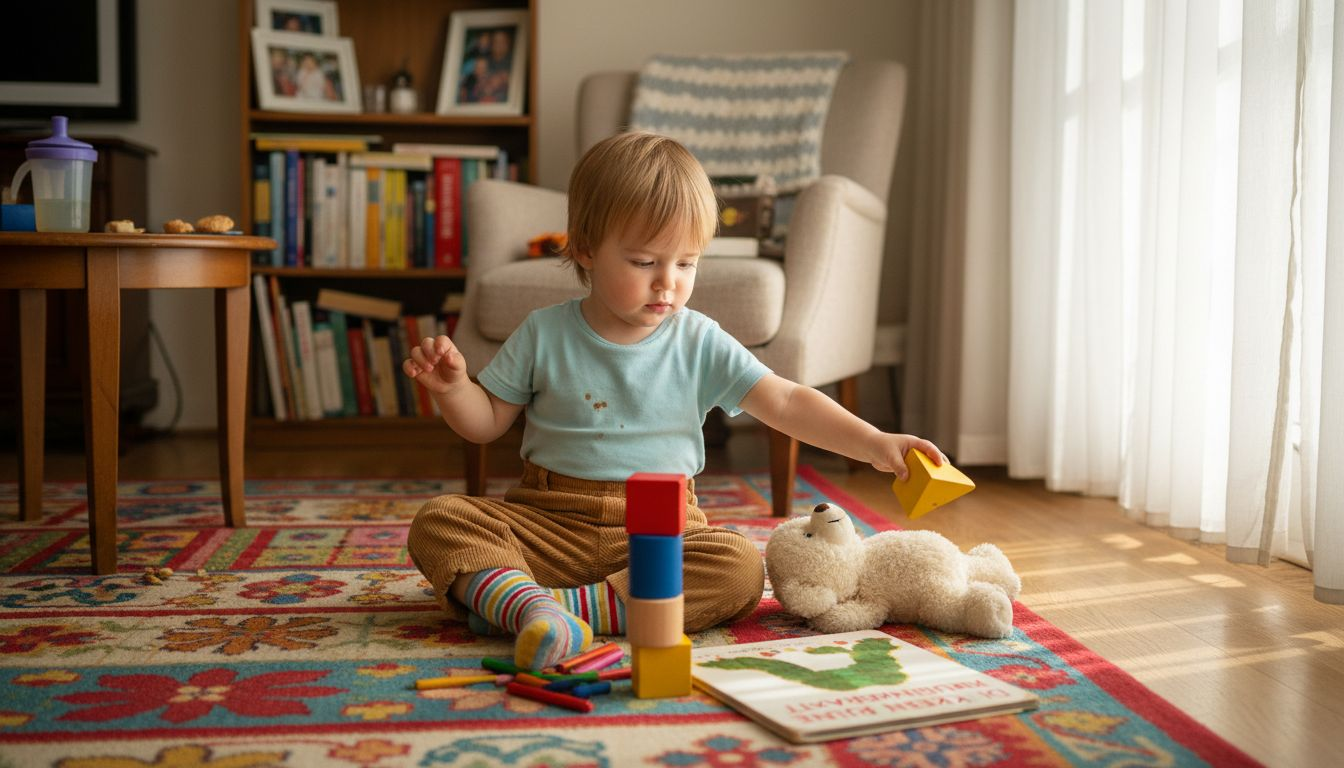
A lack of inspiration for meaningful indoor activities can quickly make everyday life with toddlers challenging. Especially in bad weather or when the little ones need to burn off energy, the desire for varied play ideas grows. Practical and creative games promote important skills while bringing fun to shared learning. With simple activities and everyday materials, you can specifically strengthen the senses, concentration, fine motor skills, and language development. Whether it's feel and touch games, sorting colors and shapes, or imitating animal sounds – each idea offers your child new impulses to explore. Look forward to concrete tips you can implement right away and discover how play and learning go hand in hand.
Table of Contents
- Feel and Touch Games for the Senses
- Discovering Colors and Shapes with Everyday Objects
- Playfully Imitating Animal Sounds and Noises
- Stacking Games for Fine Motor Skills and Patience
- Rhymes and Finger Games for Language Development
- Role Play with Stuffed Animals for the Imagination
- Movement and Dance Games for Body Coordination
Quick Summary
Key Insight | Explanation
1. Feel and touch games promote sensorimotor skills | These activities strengthen eye-hand coordination and fine motor skills in toddlers.
2. Discovering colors and shapes with everyday objects | Sorting helps develop visual perception and basic mathematical knowledge.
3. Animal sounds promote language development | By imitating noises, children improve their listening comprehension and vocabulary.
4. Role play strengthens social skills | Children learn empathy and communication through playing with stuffed animals.
5. Movement games improve body coordination | Rhythmic games improve motor skills and self-confidence in toddlers.
1. Feel and Touch Games for the Senses
Feel and touch games are fantastic ways for toddlers from age two to develop their sensory skills. These creative activities help children not only sharpen their perception but also promote important motor competencies. The goal of these games is the playful stimulation of various sensory impressions. Children learn to distinguish the size, texture, and composition of objects by feeling different materials.
Here are some exciting possibilities for feel and touch games:
- Tactile bath with various materials: Fill a shallow bowl with lentils, chestnuts, or small balls
- Feeling pouches: Hide various objects in a cloth bag
- Guessing matching object pairs: Let your child match objects by touch
These games support important developmental aspects such as:
- Eye-hand coordination
- Fine motor skills
- Concentration ability
- Sensory perception
Pro Tip: Vary the materials and objects regularly to maintain your child's interest and maximize sensory stimulation.
2. Discovering Colors and Shapes with Everyday Objects
The world of colors and shapes is a fascinating field of discovery for toddlers. Children can explore mathematical foundations in a playful way by sorting everyday objects by size, shape, and color. These activities help children not only sharpen their visual perception but also support their cognitive development. Through sorting and matching, toddlers learn basic mathematical concepts in a playful and intuitive way.
Here are creative ways to explore:
- Sorting socks by color and size
- Building and classifying shapes with LEGO bricks
- Grouping kitchen materials by color
- Arranging buttons or marbles according to various criteria
Important learning goals in color and shape play:
- Distinguishing basic geometric shapes
- Color perception and color naming
- Spatial understanding
- Logical thinking
Children learn best through practical experience with familiar objects.
Pro Tip: Keep the exercises short and varied so that your child maintains their enjoyment of learning.
3. Playfully Imitating Animal Sounds and Noises
Imitating animal sounds is a fantastic way for toddlers to promote their language development and auditory perception. Children can discover and learn animal sounds that stimulate their creativity and imagination. By playfully imitating noises, children not only develop their language skills but also train their hearing and concentration. It is an entertaining method to understand the connection between an animal and its sound.
Creative play ideas for animal sounds:
- Guessing games with animal noises
- Pantomime of animals with matching sounds
- Collecting and matching the sounds of various animals
- Combining animal sounds with movements
Important learning goals in animal sound play:
- Sharpening auditory perception
- Promoting linguistic creativity
- Training concentration and attention
- Expanding vocabulary
Playful learning is the most fun for children and optimally supports their development.
Pro Tip: Use everyday situations such as picture books or walks to discover animal sounds together.
4. Stacking Games for Fine Motor Skills and Patience
Stacking games are a wonderful way to playfully teach toddlers important motor skills. Fine motor activities support children's development in a fun and educational way. By stacking building blocks, cups, or towers, children learn to perform precise movements and improve their manual dexterity. These games not only promote skill but also teach children patience and perseverance, as they carefully place one piece on top of another without the structure collapsing. This playful challenge encourages children to concentrate and think strategically.