 edory
edoryBedtime Books for Children 2026: The Best Recommendations
· 7 minutes read
Why Good Bedtime Story Books for Children in 2026 Are So Important
Goodnight story books for children 2026 recommendations – hardly any topic keeps parents as busy as the question: Which book are we reading tonight? Reading aloud in the evening is far more than a nice ritual. It is closeness, security, and at the same time a powerful tool for your child's language development and emotional intelligence. Those who read aloud regularly give their child a real head start – and that is truer than ever in 2026.
In this post, you will find carefully selected book recommendations, practical tips for the evening read-aloud routine, and learn how digital helpers like Edory AI can take the bedtime experience to a whole new level. Let's dive together into the wonderful world of children's stories!
What Makes a Good Bedtime Book?
Not every book is equally well suited for bedtime. A truly good read-aloud book for the evening fulfils certain criteria that you should keep in mind when buying:
Calming language: Short sentences, gentle images, a quiet narrative flow – this helps the body switch off from everyday life.
Positive emotions: Stories that end with a good feeling promote sound sleep and positive dreams.
Age-appropriate content: What is ideal for a three-year-old can be boring for a school-age child. Pay attention to the recommended age.
Beautiful illustrations: Especially for younger children, the pictures are just as important as the text.
Manageable length: 5 to 15 minutes of reading aloud is ideal – long enough to get absorbed, but not so long that the child becomes overstimulated.
The Best Bedtime Books for Children in 2026 – Our Recommendations
The book market in 2026 offers a wonderful selection of new and tried-and-tested titles. Here are our favourites, divided by age group:
For the Youngest (Ages 2–4)
"Sleep Well, Little Star" – A heartwarming story about a little star searching for its place in the sky. Perfect for children who still find falling asleep a challenge.
"The Dream Creature" – A fluffy fantasy being gently accompanies children into the land of dreams. The illustrations are colourful but kept calm.
"Night Night, Mouse!" – A wonderful rhyming book with short, musical sentences. Ideal for joining in and repeating along.
For Preschoolers (Ages 4–6)
"The Moon and the Brave Girl" – A strong protagonist overcomes her fear of the dark. A great character for girls and boys to identify with equally.
"Timo and the Dream Dragon" – Timo travels through different dream worlds with a friendly dragon. This book stimulates the imagination without causing excitement.
"100 Bedtime Stories for Curious Children" – A collection of short stories from which you can choose a different one each evening. Especially good for children who don't like long books.
For School-Age Children (Ages 6–10)
"The Secret Library of Dreams" – A little girl discovers a magical library where every book leads to a different dream world. Exciting, but not thrilling enough to disturb sleep.
"Friends for Life – Adventure in the Moonlight" – Two best friends experience a nocturnal adventure and learn something about trust and togetherness along the way.
"Can't Sleep? Never Again!" – A funny non-fiction storybook about how sleep works – explained in a child-friendly way and guaranteed to promote sleep.
Tips for the Perfect Evening Read-Aloud Routine
The best book is of little use if the surrounding conditions aren't right. Here are tried-and-tested tips to make reading aloud a truly relaxing ritual:
Stick to a fixed time: Children's bodies love routines. Those who start reading aloud at the same time every evening give their child a reliable signal: Now it's time to be calm.
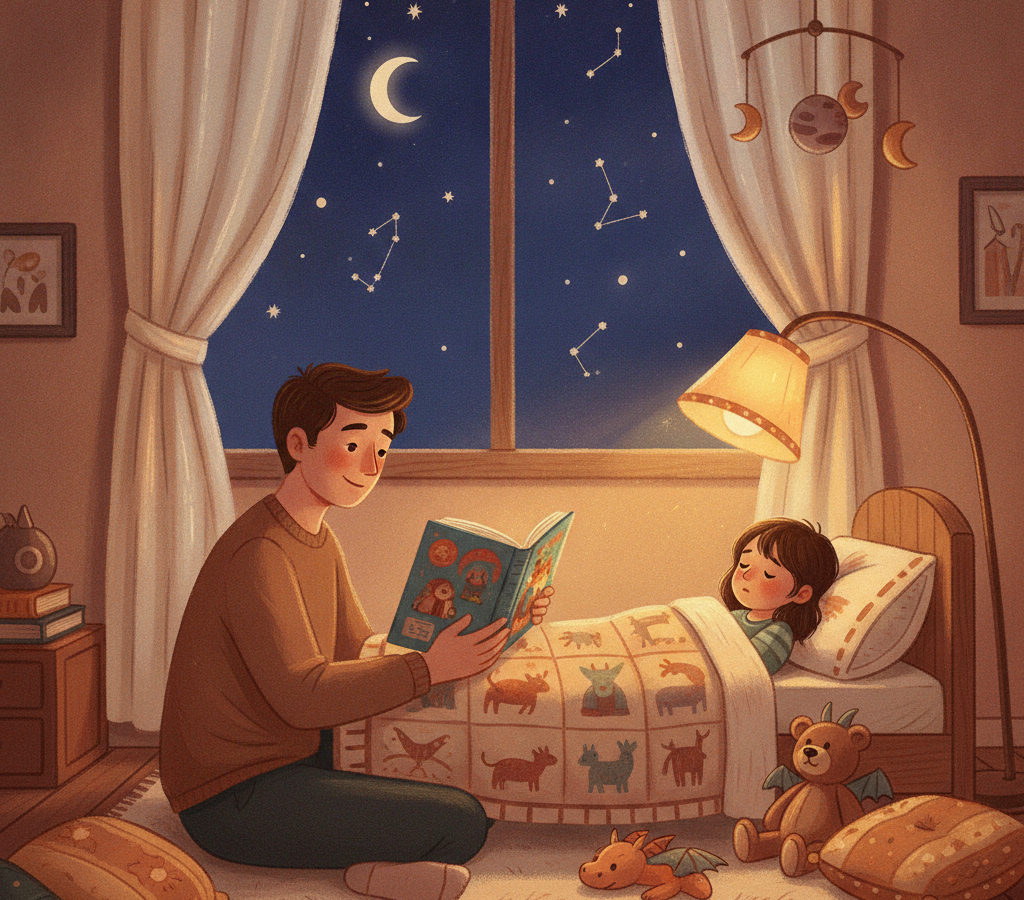
Create a cosy atmosphere: Dimmed lighting, a snuggly blanket, perhaps a small night light – all of this helps the nervous system to wind down.
Choose together: Let your child have a say in which book is read. This strengthens their sense of autonomy and increases their motivation to listen.
Read slowly and expressively: Those who play with voice and rhythm bring every story to life. Imagine your daughter Lena becoming a fearless pirate sailing on a moonbeam – the more vividly you tell it, the deeper she is drawn in.
A brief conversation afterwards: One or two questions about the story promote language comprehension and emotional processing. "What did the little star do at the end?" is perfectly sufficient.
Digital Additions: When Books Aren't Enough
Sometimes the favourite book has been read cover to cover, the child wants a story with themselves as the hero, or you simply don't have time to browse through the bookshop. This is exactly where modern digital solutions come in. Apps like Edory AI enable parents to...