 edory
edoryHow Long Should a Bedtime Story Be? (2026)
· 7 minutes read
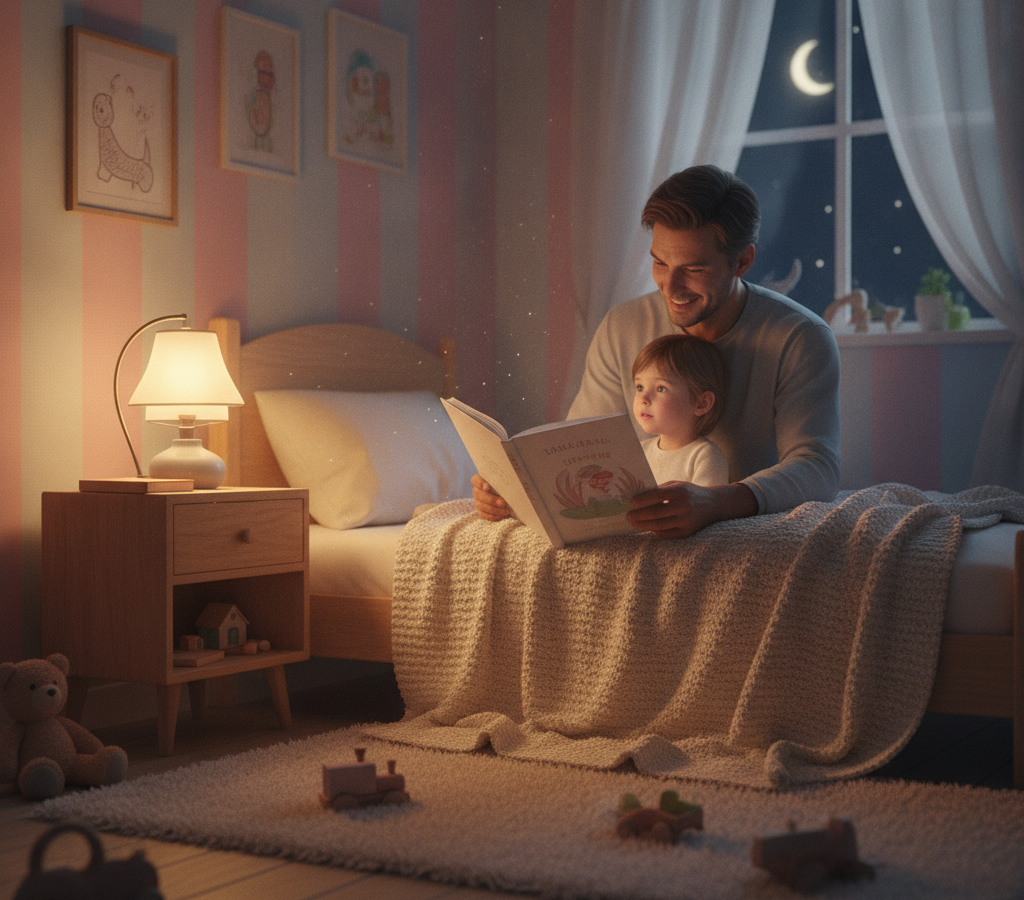
The perfect length of a bedtime story – what really matters
Many parents wonder in the evenings, when their child is already in bed and their eyes are slowly growing heavy: How long should a bedtime story for children be? Too short, and the child feels short-changed. Too long, and the little listener falls asleep halfway through – or, even worse, is wide awake afterwards and wants more.
The good news: there is no magic number of minutes, but there are very concrete reference values that make life easier for parents. In this article, you will learn how to find the ideal length for your child – depending on their age, the routine, and the story itself.
Why the length of the story matters at all
Reading aloud before bed is far more than just a nice tradition. Studies and parental experience reports show time and again: a fixed bedtime routine – and that includes the bedtime story – helps children settle down more quickly, sleep better, and feel emotionally safe.
But for this routine to truly work, the story must end at the right time. If it is too short, the child does not feel truly "arrived". They miss the calm transition from the exciting day into the night. If it is too long, however, the effect can reverse: the brain stays active, the imagination runs at full speed, and falling asleep becomes more difficult.
The ideal story gently accompanies the child to the threshold of sleep – not beyond it.
Reference values by age: How long is too long?
Your child's age is the most important factor when estimating the right length of a bedtime story. Here are tried-and-tested guidelines for 2026:
Babies and toddlers (0–2 years)
At this age, it is not about the story itself, but about your voice, your rhythm, and your closeness. Two to five minutes is perfectly sufficient. Short, simple rhymes or picture books with one sentence per page are ideal. The child hears your voice and feels safe – that is all they need.
Kindergarten children (3–5 years)
Now the real story time begins! Children this age love simple adventures, animals, and characters who are similar to them. The ideal length is 5 to 10 minutes, which corresponds to roughly 400 to 700 words. A story with a clear beginning, a small problem, and a soothing ending works perfectly. Imagine your daughter Lena becoming a brave pirate who finds a lost teddy bear and brings it safely home – done in eight minutes, and Lena falls asleep smiling.
Primary school children (6–9 years)
At this age, children can already follow more complex storylines and love it when stories become exciting. Here, a bedtime story may last 10 to 20 minutes. What is important, however, is that the story still ends with a calming, resolved ending. Cliffhangers are rather unsuitable for bedtime – they keep children awake instead of helping them fall asleep.
Older children (10+ years)
With ten- to twelve-year-olds, reading aloud often shifts to reading together or independent reading. If stories are still read aloud, they can last up to 20–30 minutes – but again, pay attention to the child's signals. Yawning, heavy eyes, and quiet breaths are the sign to gently let the story wind down.
How long should a bedtime story for children be – the 3 decisive factors
Besides age, there are three further factors that determine the ideal length:
The child's energy level: On exciting days (birthday, outing, lots of impressions), the child often needs a slightly longer, calmer story to truly wind down. On quiet days, a short story is often enough.
The content of the story: Action-packed, exciting stories keep the brain active for longer. Calm, descriptive stories – for example, about a hike through a forest or a sheep counting clouds – prepare the child better for sleep.
The surrounding routine: If the story is embedded in a broader evening routine (brushing teeth, putting on pyjamas, a short conversation about the day), then it does not have to do all the "calming work" on its own. Five to ten minutes will then usually suffice.
Practical tips: How to find the perfect length for your child
Theory is good, practice is better. Here are concrete tips you can try out this very evening:
Observe your child: Are they...