 edory
edoryBedtime Stories for Kids vs. Sleep Meditation 2026
· 7 minutes read
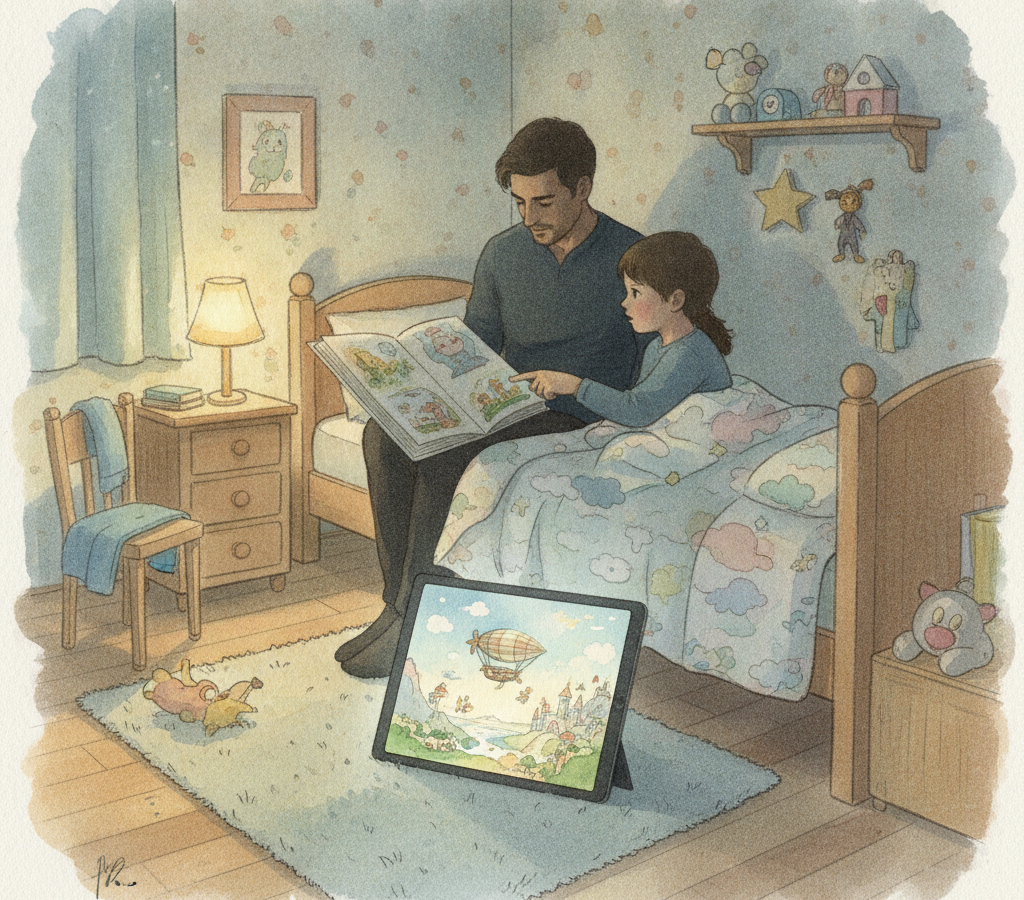
When the lights go out and the hustle and bustle of the day finally dies down, many parents face the same question: What really helps my child fall asleep? The bedtime stories for kids vs. children's sleep meditation comparison shows: both methods have their strengths – but depending on the child, age, and evening mood, one or the other can work significantly better. In this article, you'll learn what sets the two approaches apart, when each one is a better fit, and how you can get the best of both worlds for your family.
What Are Bedtime Stories for Kids, Exactly?
Bedtime stories for kids are short, mostly low-tension narratives that gently carry children into the world of imagination. Traditionally, a parent reads aloud – with a calm voice, perhaps with a flickering nightlight in the background. The story has characters, a small plot, and usually a soothing ending. Imagine your daughter Lena becoming a brave pirate searching the high seas for a lost treasure – and finally falling asleep, exhausted but happy, in her hammock aboard the ship. Such personalized stories work particularly well because children identify directly with the main character. Apps like Edory AI allow parents to create exactly that in seconds: the child becomes the main character, and the story can be tailored to their interests, name, and learning topics.
Benefits of Bedtime Stories for Kids at a Glance:
- Promotes imagination and language development
- Strengthens the bond between parent and child
- Can playfully convey values, friendship, or even math
- Highly personalizable
- Creates a familiar bedtime ritual
What Is Sleep Meditation for Children?
Sleep meditation for children is a guided relaxation exercise that deliberately brings body and mind to rest. Children are guided to observe their breathing, relax their muscles, or imagine a peaceful place – such as a meadow, a beach, or a cave full of soft pillows. The guided sessions are available as audio files, on streaming platforms, or through dedicated apps. Unlike a story, meditation has no plot in the traditional sense. It's not about experiencing an adventure, but about consciously letting the body go. Especially for children who tend to overthink at night, struggle with sleep problems, or are very restless, sleep meditation can be a real help.
Benefits of Sleep Meditation for Children:
- Demonstrably reduces stress and inner restlessness
- Helps with difficulty falling asleep through physical relaxation
- Promotes body awareness and emotional self-regulation
- Works well without a parent being present
- Particularly suitable for older children from around age 5–6
Bedtime Stories for Kids vs. Children's Sleep Meditation: The Key Differences
So that you can make the right choice for your child, let's take a direct look at both methods side by side:
1. Age and Developmental Stage
Stories work even with babies and toddlers from around one year of age – the parents' voice is soothing, even if the content isn't fully understood yet. Guided meditation, on the other hand, requires a certain level of language comprehension and the ability to perceive one's own body. Many child psychologists recommend not starting with meditation until preschool age.
2. Bonding and Closeness
Reading or telling a story creates a very special moment of togetherness. Parents and child share a common experience – this strengthens the emotional bond. Meditation, on the other hand, is often practiced alone or with audio guidance. That's not worse, just different: it encourages the child's independence.
3. Educational Value
Bedtime stories can be educational at the same time: a child who helps a dragon count gold coins in a story is practicing math on the side. With tools like Edory AI, these learning aspects can be built directly into the personalized story – completely playfully and without pressure. Meditation, on the other hand, trains emotional competencies: stress regulation, mindfulness, and letting go of worries. These are skills that are useful in everyday life well beyond just falling asleep.
4. Flexibility and Effort
A short meditation runs at the push of a button – no reading aloud, no thinking about what tonight's story should be. That's practical, especially on stressful days. Stories, on the other hand, require a bit more preparation – or an app that takes care of this work in seconds.
5. What Children Themselves Prefer
In an informal survey among parents from parenting forums in 2026, over 70 percent stated that their children clearly prefer stories over meditation – especially when the story reflects their own life and interests. However, older children (ages 8–12) often discover meditation on their own as a "trick" for falling asleep and use it independently.
When Is Each Method Better Suited?