 edory
edoryWriting Your Own Goodnight Stories for Children: Tips for 2026
· 7 minutes read
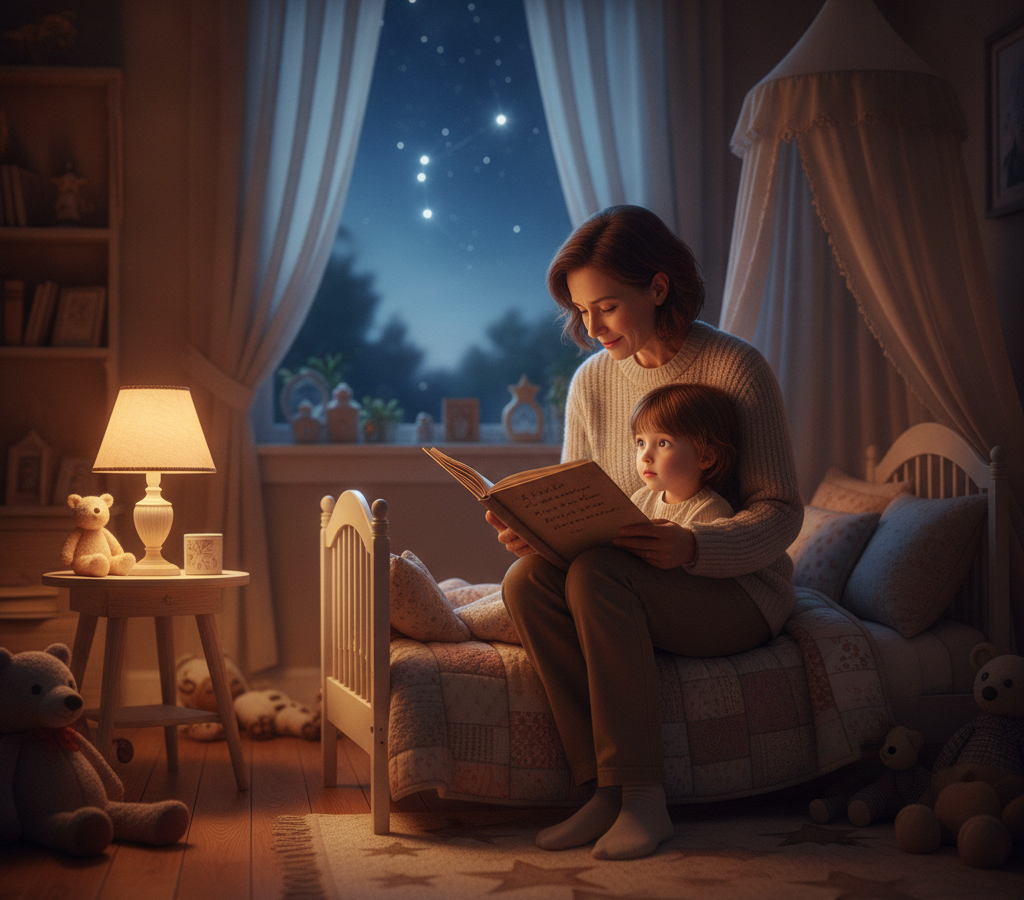
Why Self-Written Goodnight Stories Are So Valuable
Writing your own goodnight stories for children – that might sound like a lot of effort at first, but it's one of the most beautiful things you can do as a parent for your child. A self-invented story is no ordinary book. It carries the voice, the warmth, and the love of the person telling it. And children can feel that.
Imagine your daughter Lena becomes a brave pirate who sails the starry sky on a flying ship with her best friend Max – and along the way accidentally saves the multiplication tables. Moments like these stay in the memory for a lifetime.
In this article, you'll get concrete tips on how to write your own goodnight stories for children – even if you wouldn't describe yourself as creative.
The Right Basic Structure for a Bedtime Story
Every good story needs a framework. That applies to short bedtime stories too. Children love repetition – they enjoy it when a story follows a familiar pattern that gives them a sense of security. Here is a simple structure you can use again and again:
- Opening: Who is the main character? Where are we?
- Problem or adventure: What happens? What needs to be solved?
- Climax: The most exciting moment – hearts are allowed to beat a little faster here.
- Resolution: The main character overcomes the obstacle – ideally through courage, cleverness, or friendship.
- Ending: A calm, cozy conclusion – perfect for falling asleep.
This structure works wonderfully for children aged 3 to 10. You don't need to reinvent the wheel – you just need to fill it with your child's name.
Writing Your Own Goodnight Stories: Practical Tips for Getting Started
Many parents don't struggle with the writing itself, but with getting started. A blank page or an open document can feel daunting. Here are some practical ways to kick things off:
1. Make Your Child the Main Character
This is the most powerful trick of all. Use your child's real name, their favorite color, their favorite animal, or their best friend. When your son Ben suddenly encounters a talking fox in the forest who needs his help – he's immediately hooked. This personalization creates a sense of importance and self-efficacy that strengthens children.
2. Ask Your Child for Wishes and Ideas
Children are the most creative story generators of all. Simply ask in the afternoon: "Should tonight's story be about a dragon or a mermaid?" Or: "What should your hero win today?" These small moments of involvement greatly increase the anticipation of bedtime.
3. Use Everyday Situations as Inspiration
Did you visit the supermarket today? Perfect – then tonight's bedtime story can be about a magical child who discovers that the carrots are secretly talking to each other in the supermarket. Children love recognizing their everyday life in magical versions.
4. Just Start Writing or Speaking
Perfectionism is the enemy of a good bedtime story. You don't need to deliver a literary masterpiece. Your child doesn't want to hear the perfect adjective – they want your voice, your warmth, your enthusiasm. Speak freely, improvise, and laugh along when you yourself are surprised by your own plot twist.
Language Techniques That Bring Children's Stories to Life
You don't need to be a professional author to tell a compelling story. But a few small tricks help make your stories more vivid:
- Sounds and onomatopoeia: "Suddenly there was a BANG! – and the door flew open." Children love sound words.
- Repetition: "He knocked once. He knocked twice. He knocked three times – and then the door finally opened." Rhythm both soothes and captivates at the same time.
- Direct speech: Let your characters talk! Dialogue brings stories to life and gives you as the storyteller the chance to play with different voices.
- Sensory details: What does the enchanted forest smell like? What does the soft fur of the unicorn feel like? Details like these draw children deep into the story.
- A calm ending: Let the story gently wind down – the hero lies down on a soft mossy meadow, the moon sends golden rays, eyes grow heavy...
Apps like Edory AI (edory.ai) automatically use exactly these principles: personalization, gentle language, and a structure that calms children – ideal for when you no longer have the energy for your own ideas.
Common Mistakes When Writing Your Own Stories – and How to Avoid Them
Even when writing stories, there are typical pitfalls. Here are the most common ones – and how to avoid them:
Stories That Are Too Long
A bedtime story for children under 6 should not be longer...