 edory
edory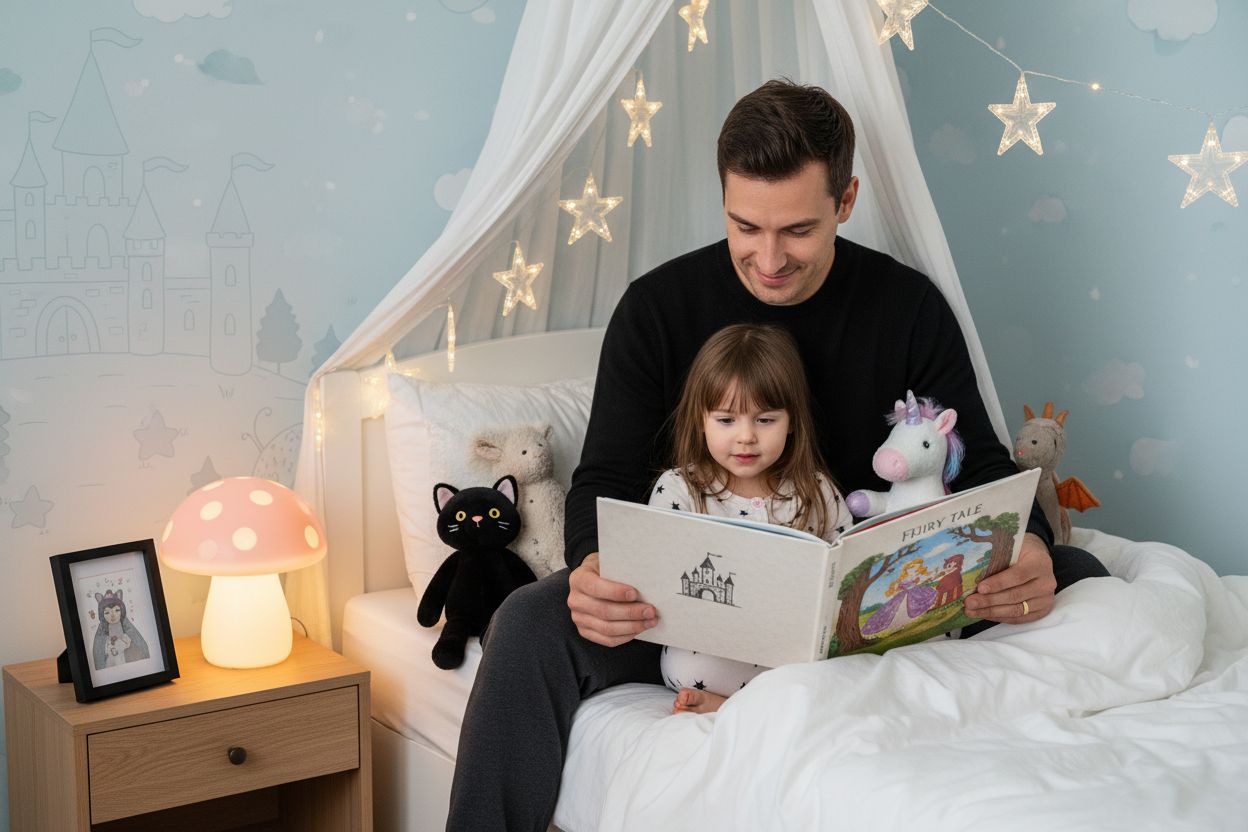
Fairy tales often accompany children as a beloved bedtime ritual and are considered classics for falling asleep. Suddenly, a study shows that regular reading of fairy tales demonstrably improves children's language development and text comprehension. But what's surprising is that it's not just about the story itself, but especially about how creatively and sensitively it's told – this is where the magic emerges that goes far beyond simply reading aloud.
Table of Contents
- The Importance of Fairy Tales for Children
- The Best Classic Fairy Tales for Falling Asleep
- Modern Fairy Tales for Gentle Sleep
- Tips for Choosing the Right Story
- How to Tell Fairy Tales in an Engaging Way
- The Benefits of Reading Aloud Before Sleep
- Creative Variations of Fairy Tales for More Fun
Summary
| Takeaway | Explanation |
|---|---|
| Fairy tales promote emotional intelligence. | They help children understand and process complex emotions. |
| Fairy tales convey important moral values. | They transport ethical principles in a playful way and strengthen children's understanding of good and evil. |
| Story selection is crucial. | Stories should be age-appropriate and emotionally safe to create a soothing atmosphere. |
| Creative storytelling brings stories to life. | Variations such as new settings or perspective changes spark children's imagination and make storytelling more engaging. |
| Reading aloud improves language and thinking skills. | Regular reading aloud promotes language development and strengthens emotional bonds between parents and children. |
1: The Importance of Fairy Tales for Children
Fairy tales are more than just simple bedtime stories. They are powerful instruments of education, entertainment, and emotional development for children. Why fairy tales are so important for children goes far beyond mere entertainment value.
The educational significance of fairy tales can be summarized in several core aspects:
-
Developing emotional intelligence: Fairy tales help children understand and process complex emotions.
-
Conveying moral values: Traditional stories transport important ethical principles in a playful manner.
Children learn more than just a story through fairy tales. They recognize subtle nuances of human behavior, develop empathy, and learn to overcome challenges. Fairy tales offer a safe space to explore difficult topics such as courage, friendship, overcoming fears, and moral decisions.
According to child psychologists, fairy tales play a crucial role in cognitive and emotional development. They foster imagination, train logical thinking, and help children understand complex life concepts.
The special appeal of fairy tales lies in their universal language. They speak to children on a deep, emotional level and enable them to experience conflicts and solutions in a protected environment. Every fairy tale story is a journey of self-discovery that helps children discover and develop their inner strengths.
For parents, this means a unique opportunity to grow and learn together with their children. Bedtime fairy tales are not just a ritual of comfort, but also a valuable educational tool.
2: The Best Classic Fairy Tales for Falling Asleep
Classic fairy tales are timeless treasures that have enchanted generations of children. 7 short fairy tales for falling asleep offer magical moments that transport children into a world of fantasy and dreams.
The selection of the best classic fairy tales includes some particularly popular stories:
- Cinderella: A story of hope and transformation
- Snow White: A fairy tale about inner beauty and kindness
- Little Red Riding Hood: A tale about caution and courage
Characteristic elements of these fairy tales make them perfect bedtime stories. They are short enough not to overwhelm children, but complex enough to stimulate their imagination.
According to fairy tale researchers, these stories have a calming effect. They convey a clear moral message while simultaneously offering emotional security. The typical structures with good-versus-evil conflicts help children process complex feelings.
In particular, Brothers Grimm fairy tales have a soothing quality. Their stories are not just entertainment, but also a form of emotional education. They teach children subtle life lessons in a gentle, non-didactic way.
When selecting fairy tales for bedtime, pay attention to age- and developmentally appropriate versions. Not every original version is suitable for young children. Modern adaptations are often designed more sensitively and in a more child-friendly manner.
Reading these classic stories aloud creates not only a magical moment before bed, but also strengthens the bond between parents and children.
3: Modern Fairy Tales for Gentle Sleep
Modern fairy tales differ significantly from traditional stories and offer new, creative approaches for children. Children and fantasy stories continue to evolve and reflect current social themes.
The special features of modern fairy tales include:
- Diversity and inclusion: Stories with various protagonists
- Contemporary themes: Environmental protection, friendship, acceptance
Characteristic features of modern fairy tales are their more open narrative structures. They often dispense with classic good-versus-evil schemes and present more complex characters.
According to child psychologists, modern fairy tales help children develop emotional intelligence. They encourage critical thinking and show alternative solutions to conflicts.
Examples of contemporary bedtime fairy tales:
- A girl saves the planet through environmental protection
- A boy learns to form friendships across differences
- A child discovers the power of empathy
Important for parents: Modern fairy tales should be told in an age-appropriate and sensitive manner. They should inspire children without overwhelming them.
The power of these new stories lies in their ability to convey complex worldviews in a child-friendly way. They show children that there is not just one perspective and that diversity can be a strength.
Modern fairy tales for falling asleep offer more than just entertainment. They are tools for education, empathy, and personal development.
4: Tips for Choosing the Right Story
Choosing the perfect bedtime story requires sensitivity and understanding of the child's individual needs. Selecting age-appropriate stories is a key to a successful bedtime ritual.
Important criteria when selecting stories:
- Consider the child's age: Adjust story complexity accordingly
- Emotional safety: Choose content that doesn't trigger fear
- Story length: Not too long, not too short
Psychological aspects play a significant role. Child psychologists recommend paying attention to the individual reactions and needs of the child.
Check the following points before reading:
- Is the story age-appropriate?
- Does it convey positive messages?
- Does it appeal to the child's imagination?
Particularly important is emotional resonance. A good bedtime story should calm, not excite. It should convey security and enable gentle dreams.
Modern parents increasingly pay attention to diversity and positive role models in stories. A story that demonstrates courage, kindness, and respect can provide valuable learning experiences.
The reading itself is at least as important as story selection. A calm voice, slow speech, and a relaxed posture support the falling asleep process.
Ultimately, it's about creating a trusting atmosphere in which children feel safe and loved.
5: How to Tell Fairy Tales in an Engaging Way
Telling fairy tales is an art that transports children into a world of fantasy. Telling stories creatively requires more than just reading words aloud.
Basic techniques for engaging fairy tale storytelling:
- Use voice modulation
- Employ body language
- Set pauses purposefully
According to communication experts, nonverbal signals play a crucial role in storytelling. The voice becomes an instrument that conveys emotion.
Important strategies for captivating storytelling:
- Maintain eye contact with the child
- Use different voice tones for characters
- Speak slowly and clearly
Psychological aspects are decisive. The right storytelling technique can foster both attention and relaxation. A soft whisper can create more suspense than loud declamation.
Children love it when stories come to life. Transform yourself into the characters. A gentle voice for a fairy, a deep growl for a dragon – such details make fairy tales unforgettable.
Pace is crucial. Storytelling that's too fast can make children anxious, while storytelling that's too slow leads to boredom. The key lies in balance.
Finally: Every child is different. Observe their reactions and adjust your storytelling style accordingly. A fairy tale telling is an interactive journey between storyteller and listener.
6: The Benefits of Reading Aloud Before Sleep
Reading aloud is far more than a bedtime routine – it is a powerful educational experience. 7 perfect children's books for falling asleep show how enriching this daily moment can be.
Scientific benefits of evening reading:
- Promote language development
- Strengthen emotional bonding
- Support cognitive abilities
Educational studies document the comprehensive effects of reading aloud. Children who are read to regularly develop better language skills and a deeper understanding of text.
Additional significant benefits:
- Improvement of vocabulary
- Strengthening of concentration ability
- Promotion of imagination
Psychological aspects play a crucial role. Reading together creates a safe emotional space. Children experience comfort and attention while learning simultaneously.
Evening reading also has physiological benefits. It helps reduce stress, lowers cortisol levels, and prepares the body for a relaxed sleep phase.
For parents, reading aloud means more than just education. It is quality family time, a moment of closeness and mutual trust. Memories of shared reading evenings last a lifetime.
What matters is not perfection, but consistency and attention. Even short stories can have great impact.
7: Creative Variations of Fairy Tales for More Fun
Fairy tales don't always have to be told the same way. Creativity brings them to life and makes them exciting. Telling fairy tales in modern ways opens up entirely new dimensions of storytelling.
Creative variation options for fairy tales:
- Swap roles
- Invent new plot locations
- Build in unexpected twists
Child psychologists confirm that variations stimulate children's imagination and creativity. Adapting familiar stories makes them more interesting and interactive.
Possible variation strategies:
- Combine protagonists from different fairy tales
- Introduce modern elements