 edory
edory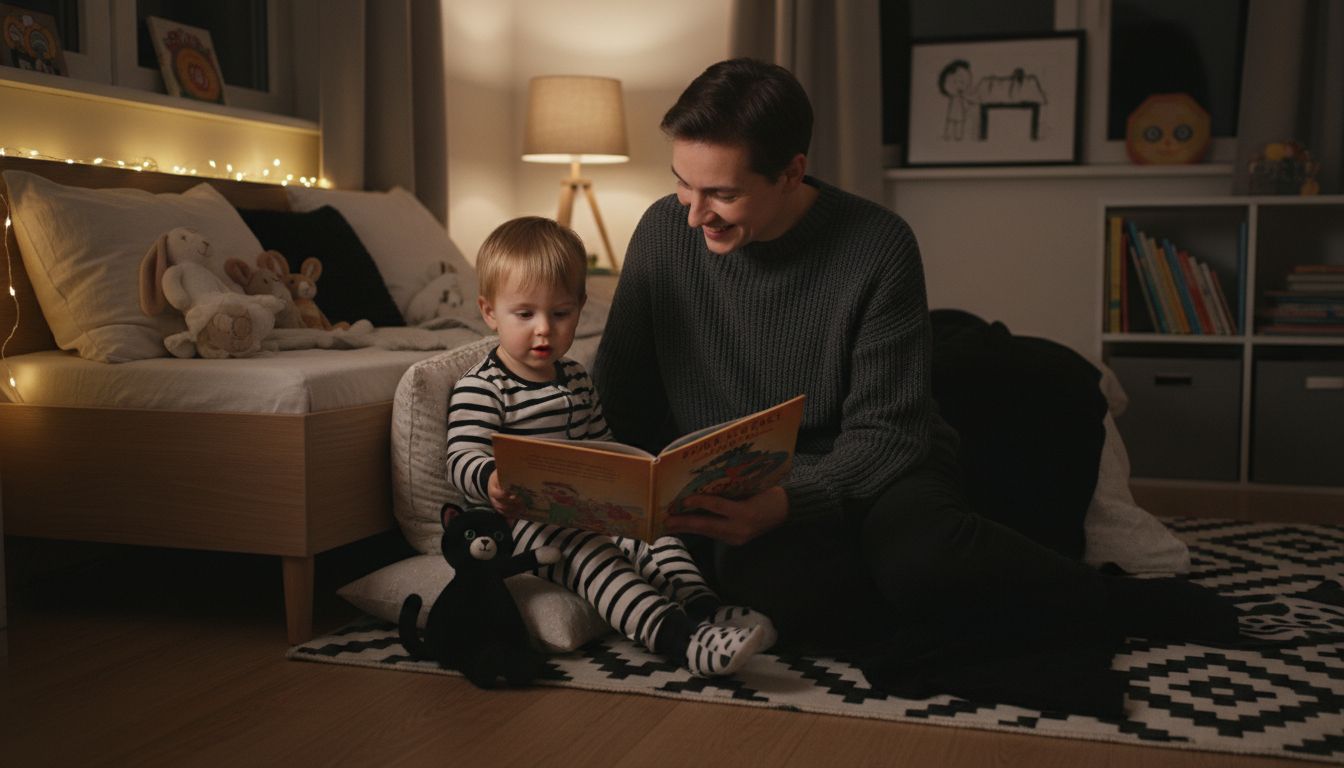
Almost every second family reports that reading aloud together is one of the most beautiful moments of the day. In hectic times, many parents look for ways to give their children security and closeness. Reading rituals offer far more than just entertainment: they lay the foundation for emotional security, promote language development, and strengthen the bond. Those who consciously use the magic of stories not only give their child joy, but actively accompany them in their development.
Table of Contents
- Why Rituals are Important When Reading Aloud
- Choosing Age-Appropriate Topics for Little Children
- Building Language Development Playfully
- Experiencing Feelings and Empathy Through Stories
- Simple Narrative Structure Creates Security
- Child Participation Increases Interest
- Promoting Relaxation and Harmony Before Sleep
Summary
| Takeaway | Explanation |
|---|---|
| 1. Rituals provide security and comfort | Regular reading rituals help children stabilize emotionally and strengthen the bond between parents and child. |
| 2. Age-appropriate stories promote understanding | Stories should match the child's world of experience to support interest and language development. |
| 3. Active involvement increases interest | Children should be actively involved in the storyline to promote their attention and motivation. |
| 4. Developing emotional intelligence through stories | Stories help children understand emotions and develop empathy, which strengthens their social competence. |
| 5. Relaxing rituals for harmonious sleep | A mindful reading ritual can help children relax and create a safe sleep environment. |
1. Why Rituals are Important When Reading Aloud
Reading rituals are more than just an evening routine – they create a magical connection between parents and children. These precious moments before bedtime are not only cozy and comfortable, but have a deeper pedagogical significance.
According to insights from Psychologie Heute, reading rituals provide a protected space that conveys calm and security. They structure the daily routine and give toddlers emotional stability. Regularity is the key: children love predictability and feel secure when they know what comes next.
The benefits go far beyond cozy moments. According to Spektrum, these rituals promote language development and expand the vocabulary of the little ones. At the same time, they train concentration ability and create a deep emotional bond.
Practical tips for a successful reading ritual:
- Always choose a quiet location at the same time
- Turn off distractions like phones or televisions
- Snuggle together and let peace settle in
- Sometimes let your child decide which story is read
The secret lies in consistency and attention. An evening reading ritual is more than a story – it's a gift of comfort and love.
2. Choosing Age-Appropriate Topics for Little Children
Choosing the right story is an art in itself to make reading aloud a magical experience. Not every story is suitable for every age, and that's completely normal.
According to Stiftung Lesen, the selection of age-appropriate topics is crucial for children's language development and vocabulary building. Stories must meet children's world of experience to awaken interest and understanding.
For toddlers, this concretely means a world full of discoveries and simple stories. Topics like family, friendship, animals, and first feelings are ideal. Avoid overly complex plots or abstract concepts that could overwhelm children.
Practical Guidance by Age Groups:
- 1 to 2 years: Short stories with many pictures and simple plots
- 2 to 3 years: Repeating elements and rhymes
- 3 to 4 years: First adventure stories with familiar situations
Current research shows that age-appropriate topics not only support cognitive development but also greatly promote reading motivation. The goal is to choose stories in which children can see themselves and that stimulate their imagination.
3. Building Language Development Playfully
Learning to speak can be as entertaining as an exciting adventure. Children love it when language comes alive and is fun.
According to insights from Stiftung Lesen, playful elements like rhymes and songs greatly support language development. Children not only expand their vocabulary but also develop a refined sense of language.
Interactive reading activities are the key to success. Current studies show that asking questions and acting out story scenes significantly promote language competence and text comprehension.
Creative Methods for Language Development:
- Use rhymes and rhythmic texts
- Act out stories with distributed roles
- Encourage children to make sounds and movements with the story
- Ask open questions about the course of events
The secret lies in playful ease. The more fun children have speaking and listening, the better they learn new words and expressions.
4. Experiencing Feelings and Empathy Through Stories
Stories are more than just words on paper – they are bridges into children's emotional world. Through narratives, small people learn how diverse and nuanced emotions can be.
Stories as an emotional educational journey: Each story offers children the chance to explore, understand, and name feelings. Characters become teachers of empathy, showing how to perceive and express joy, sadness, fear, and compassion.
The pedagogical value of storytelling lies precisely in this emotional development. Children learn not only to listen but also to read between the lines and understand the feelings of others.
Practical Strategies for Emotional Development:
- Vary your facial expressions and tone of voice when reading
- Discuss the feelings of characters together
- Encourage children to share their own interpretations
- Make connections to their own experiences
When parents tell stories vividly, they become guides of emotional intelligence. Every read-aloud book is a small treasure chest full of learning experiences.
5. Simple Narrative Structure Creates Security
Toddlers love stories with a clear and predictable structure. A simple narrative structure gives them emotional orientation and creates an atmosphere of trust and comfort.
The power of predictability: A classic narrative structure with a clear beginning, middle, and end helps children understand and process the story. They learn patterns of action and develop a sense for narrative logic.
What makes a good children's story lies precisely in this structure. A story should be like a little journey with a hero, a problem, and a solution at the end.
Elements of a Child-Friendly Narrative Structure:
- Include repeating elements
- Simple plot without too many subplots
- Clear sequence of events
- Predictable but exciting turns
When stories are like a familiar landscape where children can move safely, magical moments of understanding and comfort emerge.
6. Child Participation Increases Interest
Reading aloud is not a monologue but an interactive adventure. The more children are involved, the more exciting the shared journey through the story becomes.
According to Stiftung Lesen, active involvement of children during reading greatly increases their interest and attention. Children are not passive listeners but co-authors of their story world.
Current research shows that parent-child interactions during reading significantly increase motivation and enjoyment of reading.
Strategies for Child Involvement:
- Ask questions about the story
- Let your child make sounds or animal noises
- Develop guesses about what happens next together
- Encourage children to continue the story
When children feel part of the story, reading transforms from a chore into a magical experience.
7. Promoting Relaxation and Harmony Before Sleep
The final phase before bedtime is magical. Mindful reading can transform the transition from day to night into a soothing ritual that provides comfort and inner peace.
The gentle art of falling asleep: Children need more than just a story. They need an atmosphere of tenderness and security. The voice of parents becomes an anchor of calm, an emotional lighthouse in the darkness.
Stories for falling asleep can be a wonderful tool for creating a relaxed sleep environment. What's important is a calm voice and a slow speaking pace.
Strategies for Harmonious Goodnight Moments:
- Read softly and gently
- Offer body contact through cuddling
- Use dimmed lighting
- Play calm music in the background
- Slow down your breathing rhythm
A successful goodnight ritual is more than bedtime – it's a promise of love, security, and comfort.
This table summarizes the main points and strategies of the article on the importance of reading rituals for children.
| Topic | Description | Important Aspects |
|---|---|---|
| Reading Rituals | Create a magical connection and emotional stability. | Regularity, predictability |
| Age-Appropriate Topics | Promote language development and reading motivation. | Choose topics appropriate for the age |
| Language Development | Playful elements that expand vocabulary. | Rhymes, acting out, asking questions |
| Emotional Development | Stories as bridges to feelings and empathy. | Characters as teachers of empathy |
| Narrative Structure | A clear structure provides security and comfort. | Simple and predictable structure |
| Child Involvement | Child activity increases interest and enjoyment. | Questions, sounds, guesses |
| Goodnight Rituals | Promote relaxation and harmony before sleep. | Calm voice, dim light, cuddling |
Creating Magical Goodnight Moments with Edory AI
Reading aloud goodnight stories is more than a routine – it creates emotional security and playfully promotes language and empathy. However, parents often face the challenge of finding age