 edory
edory
Stories have accompanied children from an early age and appear in every classroom. But it becomes really exciting when you know that children not only hear information through stories, but experience it directly on an emotional level. Many think learning happens solely through facts and exercises. The surprising truth: stories are the secret engine that makes true understanding and sustainable knowledge in children possible in the first place.
Table of Contents
- The Power of Stories in the Learning Process
- Why Children Learn More Effectively Through Stories
- How Stories Stimulate Imagination
- Key Elements of Educational Stories
- Stories as a Tool for Social and Emotional Education
Quick Summary
| Takeaway | Explanation |
|---|---|
| Stories promote learning through emotions | Children learn effectively by building emotional connections to narratives. |
| Narratives simplify complex concepts | Stories make abstract ideas tangible and understandable by placing them in context. |
| Imagination is stimulated through stories | Children develop creative thinking processes and can mentally simulate alternative realities. |
| Social and emotional skills through storytelling | Stories help children develop empathy and understand different perspectives. |
| Interactive elements increase engagement | Active participation in the storytelling process promotes learning interest and information absorption in children. |
The Power of Stories in the Learning Process
Stories are far more than entertaining content for children. They are a powerful tool in the learning process that conveys knowledge, emotions, and understanding in a unique way. Every story carries the ability to simplify complex concepts, develop empathy, and promote cognitive progress.
Narratives as Learning Bridges
Scientific studies show that stories have an incredible impact on children's learning. Research in Frontiers in Psychology demonstrates that narrative approaches significantly improve children's comprehension abilities. Stories create emotional connections and contexts that make abstract concepts tangible and understandable.
Children don't simply receive information; they experience it through stories. A fairy tale about courage can convey character development better than direct moral instruction. They learn through the journeys of protagonists, their challenges and decisions.
Cognitive and Emotional Development
Stories stimulate multiple areas of child development:
- Language skills are promoted through rich vocabulary and narrative structures
- Social competencies develop through understanding different perspectives
- Creative thinking is stimulated as children put themselves in the shoes of characters
Interestingly, our interactive storytelling approach can help children not only learn, but also actively participate in the learning process. Stories become dynamic educational spaces where knowledge becomes alive and meaningful.
Why Children Learn More Effectively Through Stories
Stories are not merely entertainment, but a complex pedagogical instrument that fundamentally transforms learning. They offer a unique approach to understanding that goes far beyond traditional learning methods, enabling children to acquire knowledge more deeply and sustainably.
Neurobiological Foundations of Learning Through Stories
According to research from Edutopia, stories support dual coding of information—both visually and verbally. This means that children process information simultaneously through different sensory channels, significantly improving memory performance and comprehension.
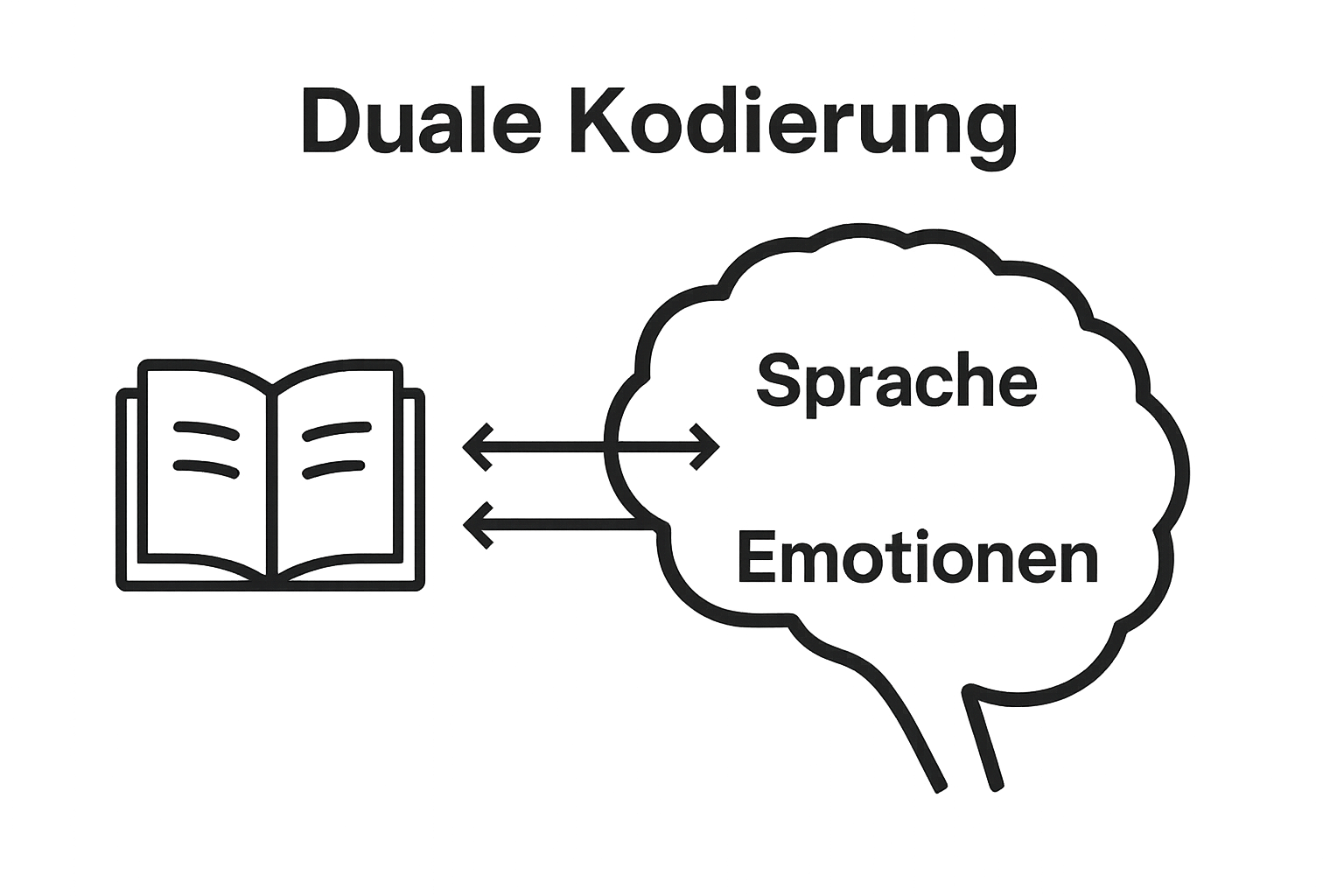
When children hear a story, they activate not only language centers, but also areas of the brain associated with experiences, emotions, and imagination. Stories create mental maps where new information can be located and structured.
Emotional and Cognitive Learning Benefits
The learning effect of stories is based on several key mechanisms:
- Emotional connection: Stories generate feelings that charge information with personal significance
- Contextual embedding: Abstract concepts become tangible through narrative contexts
- Attention binding: Engaging narratives captivate children and increase their learning motivation
Our interactive storytelling approach uses precisely these mechanisms. By designing stories as dynamic learning spaces, we enable children not only to acquire knowledge, but also to actively explore and process it.
The following table provides an overview of the key mechanisms through which stories support learning and understanding in children.
| Mechanism | Description |
|---|---|
| Emotional Connection | Stories link information with feelings, which strengthens memory and understanding. |
| Contextual Embedding | Narratives make abstract content tangible through meaningful contexts. |
| Attention Binding | Engaging narratives provide increased motivation and concentration during learning. |
| Mental Simulation | Children visualize and mentally imagine the actions and situations of protagonists. |
| Perspective Taking | Through stories, children learn to understand other viewpoints and develop empathy. |
How Stories Stimulate Imagination
Imagination is a crucial developmental area in children that is stimulated and expanded in remarkable ways through stories. Narratives are not just entertainment, but powerful tools that enable children to think beyond their immediate reality and create creative worlds.
Mental Simulations Through Narratives
According to research from the National Institutes of Health, stories enable children to mentally simulate experiences and construct alternative realities. When children listen to a story, they activate complex cognitive processes that go far beyond simply listening.
Through stories, children learn to create mental images and imagine situations they have never experienced. A fairy tale about a dragon doesn't just let them listen, but encourages them to move through this fantastical world themselves, develop strategies, and explore unknown challenges.
Creative Thinking Processes and Symbolic Understanding
The development of imagination through stories encompasses several essential aspects:
- Symbolic thinking: Children learn to understand abstract concepts through narrative metaphors
- Hypothetical reasoning: They begin to think through possible scenarios and alternative action options
- Perspective taking: By empathizing with various characters, they expand their social understanding
Our interactive storytelling approach supports exactly these creative processes. By designing stories as dynamic, interactive experiences, we encourage children to actively use and expand their imagination.
Key Elements of Educational Stories
Educational stories are more than simple narratives. They are complex pedagogical instruments that must be carefully constructed to effectively educate and inspire children. The art lies in seamlessly combining entertainment and education.
Structural Foundations of Meaningful Narratives
According to communication design studies, stories for children must be colorful, creative, and visually appealing. The structure of an educational story includes several crucial components that generate attention and support learning processes.
Character development plays a central role. Children identify with protagonists who overcome realistic challenges. These characters should embody emotions and values that inspire children and prompt them to reflect.
Core Elements of Effective Educational Stories
A high-quality pedagogical story is characterized by the following aspects:
- Age-appropriateness: Language and complexity must match the developmental stage of children
- Moral depth: Subtle value transmission without wagging a finger
- Interactive elements: Opportunities for children to experience and reflect on the story
Our approach to interactive children's stories integrates exactly these principles. We design stories as dynamic learning journeys that actively involve children and awaken their natural curiosity.
The following table presents the core elements of educational children's stories and compares them in terms of their purpose and impact on children's learning.
| Element | Purpose | Impact on Learning |
|---|---|---|
| Age-Appropriateness | Adapt content and language to developmental stage | Safety, comprehensibility, motivation |
| Moral Depth | Subtly convey values and ethics | Promotion of social and emotional competencies |
| Interactive Elements | Actively involve children in events | Increased participation and sustainable learning gains |
| Character Development | Create identification opportunities | Support for empathy and self-reflection |
Stories as a Tool for Social and Emotional Education
Stories are more than entertainment. They are powerful instruments for developing social and emotional competencies in children. Through narrative experiences, children learn to view the world from different perspectives and navigate complex emotional landscapes.
Emotional Intelligence Through Narratives
According to AWO Hessen-Süd, stories play a crucial role in promoting linguistic-cognitive, social, and emotional development in children. Narratives enable children to identify, understand, and regulate feelings.
When children experience the emotions of characters in stories, they develop empathy and emotional resonance. They learn to name, differentiate, and empathize with emotions. A fairy tale that shows sadness, courage, or kindness helps children recognize and understand these feelings in their own lives.
Social Learning Processes Through Stories
Stories offer unique opportunities for social learning:
- Conflict resolution: Children learn various strategies for managing challenges
- Perspective taking: They practice understanding and respecting the views of others
- Moral development: Narratives convey social values and ethical principles
Our interactive storytelling approach creates safe spaces where children can explore and learn complex social situations. We design stories as bridges between fantasy and real emotional intelligence.