 edory
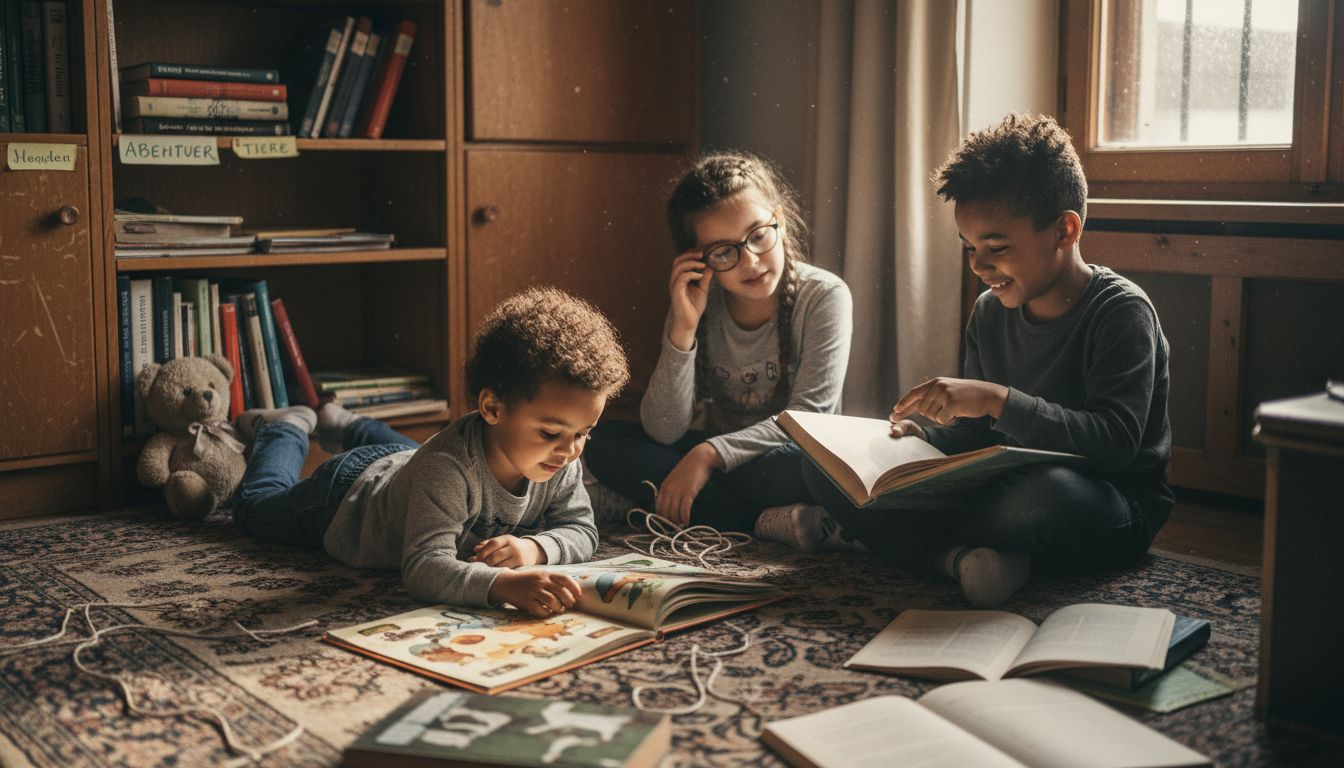
Many parents wish for their children to develop an open and curious attitude toward different ways of life from the preschool age onward. Especially in children's books, values like social diversity and mutual respect can be conveyed in a playful manner. Whether different cultures, family models, or languages become visible, modern children's books create space for empathy and acceptance and help break down prejudices from the very beginning.
Table of Contents
- What Does Diversity in Children's Books Mean?
- Forms of Social Diversity in Books
- Impact of Diverse Stories on Children
- Appropriate Criteria for Stereotype-Free Selection
- Typical Mistakes and Risk Factors When Reading
- Practical Tips for Everyday Life with Diverse Books
Key Findings
| Point | Details |
|---|---|
| Importance of Diversity | Diversity means a respectful representation of social diversity in children's books. |
| Influence on Development | Diverse stories promote empathy, social relationships, and expand children's horizons. |
| Selection Criteria for Books | Pay attention to authentic characters and avoid stereotypical representations when selecting books. |
| Active Reading and Discussion | Open dialogue culture and critical reflection are crucial for understanding diversity. |
What Does Diversity in Children's Books Mean?
Diversity in children's books means much more than just colorful illustrations or random characters. It's about a conscious and respectful representation of social diversity that gives children a comprehensive and inclusive perspective of their world.
According to current scientific research, diversity in children's books encompasses the targeted representation of different life realities, including:
- Different cultural backgrounds
- Diverse family structures
- Various languages and countries of origin
- Different physical and mental abilities
- Gender and sexual diversity
The educational value of such books lies in depicting social differences in a child-friendly manner. They serve as important media that significantly shape children's views of themselves and others. Through diverse representations, values, social order, and social hierarchies are conveyed, which promotes the development of empathy and intercultural competence.
Diversity-conscious children's books have the potential to break down prejudices at an early age and establish an open, respectful basic attitude. They show children that differences are not only accepted but valued.
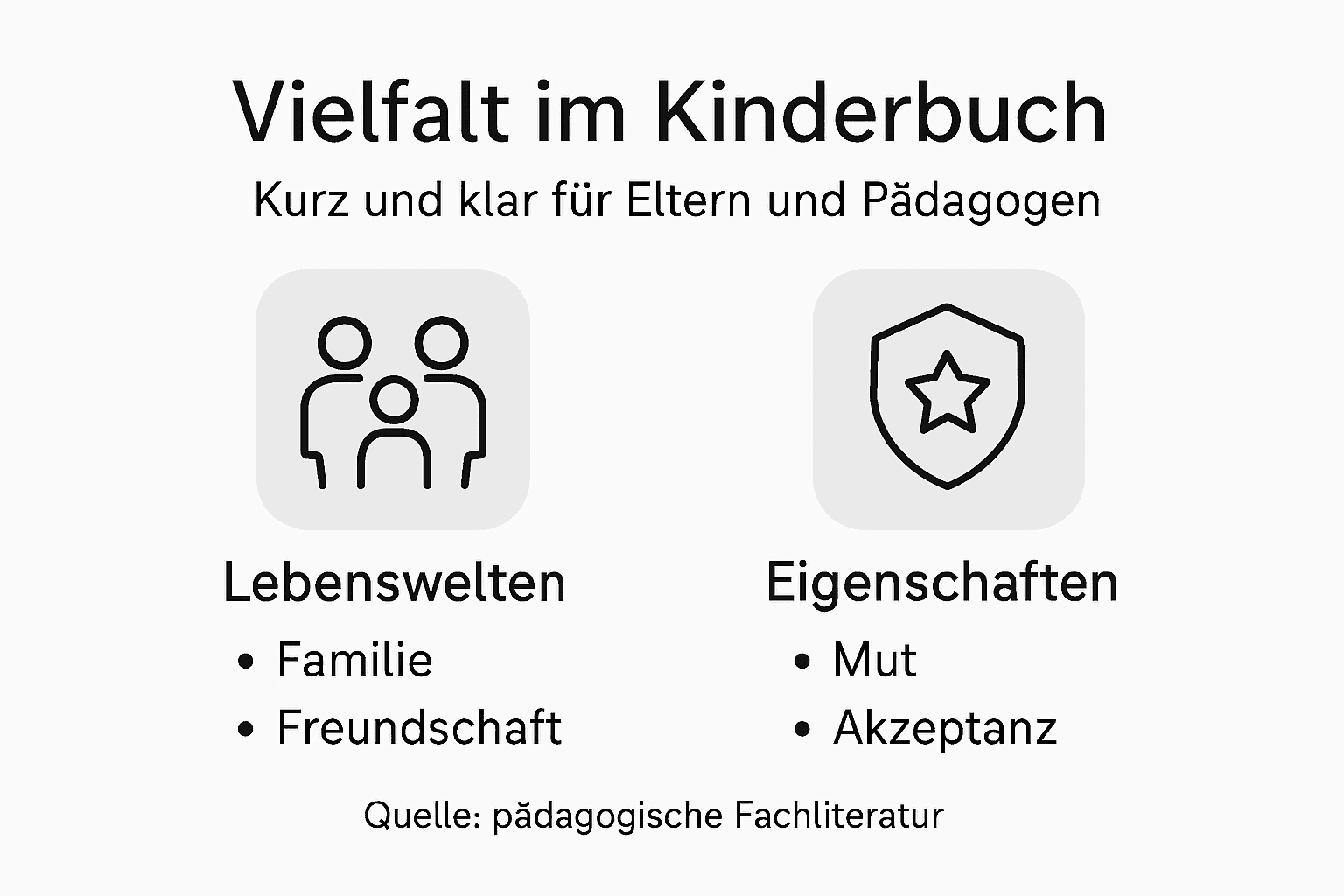
Pro Tip: Choose children's books that show authentic and non-stereotypical characters and portray different life choices positively.
Forms of Social Diversity in Books
Social diversity in children's books is a complex and dynamic concept that encompasses much more than a simple representation of different characters. It's about a profound and respectful portrayal of the diversity of our modern society.
According to scientific findings, different dimensions of diversity in children's books can be distinguished:
- Ethnic and Cultural Diversity
- Gender Roles and Sexual Identity
- Physical and Mental Abilities
- Social Background and Class Affiliation
- Family Structures and Life Models
Modern children's literature aims to overcome stereotypical and marginalized representations and instead create an authentic and inclusive perspective. Illustrations and narrative structures are increasingly developing to make heterogeneous characters visible and understandable.
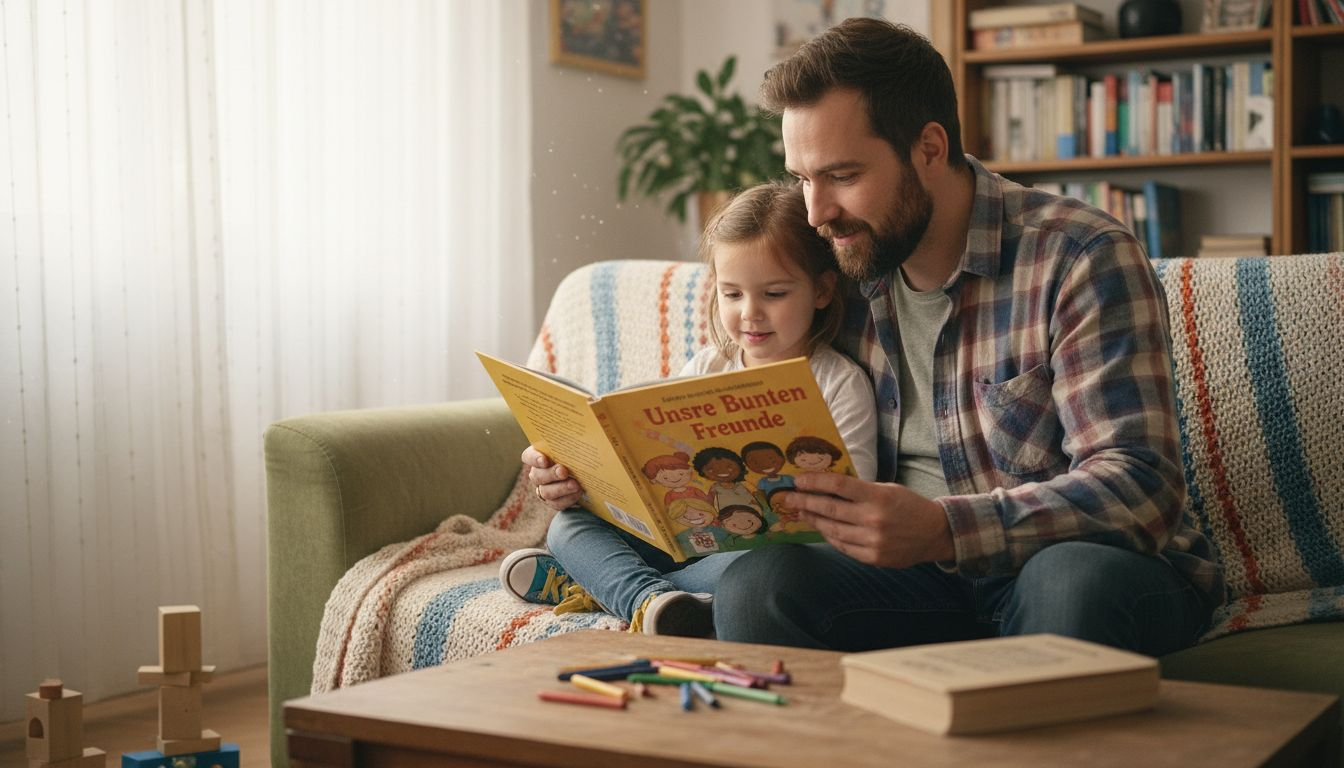
Particularly important is a conscious reflection on forms of representation. It's not just about showing diversity, but also presenting it contextually and respectfully. Children's books can thus become important educational tools that break down prejudices and promote empathy.
For a better overview, here is a summary of the most important dimensions of social diversity in children's books:
| Diversity Dimension | What is Addressed? | Relevance for Children |
|---|---|---|
| Cultural Background | Different nationalities and cultures | Understanding of origin |
| Family Structures | Blended, rainbow, and extended families | Empathy and tolerance |
| Abilities | Physical and mental aspects | Inclusion and acceptance |
| Gender Identity | Diverse genders and orientations | Respect for individuality |
| Social Belonging | Different social classes | Reduction of social prejudices |
Pro Tip: When purchasing children's books, ensure that characters are portrayed as multidimensional and authentic rather than as mere stereotypes.
Impact of Diverse Stories on Children
Diverse stories have transformative power in child development. They are much more than simple entertainment—they are powerful tools for personality development and social awareness.
Children's books with diverse content influence child development on multiple levels:
- Emotional Development: Strengthening of empathy
- Cognitive Development: Expansion of perception
- Social Development: Reduction of prejudices
- Identity Formation: Self-reflection and acceptance
- Perspective-Taking: Understanding different life worlds
The positive effects of such stories are manifold. They help children understand the world in all its complexity and beauty. Through encounters with different characters and life realities, children learn not only to accept differences but to appreciate them.
Particularly significant is the role of these books in prejudice prevention. By presenting stories with different perspectives authentically and respectfully, they create a bridge between different life worlds and promote deeper mutual understanding.
Pro Tip: Deliberately read books to your children that portray different life choices and cultures in a positive and authentic manner.
Appropriate Criteria for Stereotype-Free Selection
Selecting stereotype-free children's books requires a sensitive and conscious approach. The goal is to find literature that represents diversity authentically and respectfully, without falling into stereotypes or oversimplified portrayals.
Criteria for inclusive book selection include important aspects:
- Authentic Character Portrayal
- Multiperspective Narrative Perspectives
- Respectful Language
- Positive Representation of Minorities
- Avoidance of Stereotypes
The analysis of children's books should be conducted critically and differentiated. It is important that stories present diversity as self-evident normalcy and not as exoticism or something special.
Narrative structure plays a crucial role. Books should show complex characters who are more than just carriers of a single trait. They should depict individual stories, dreams, and personalities that go beyond origin, appearance, or abilities.
Pro Tip: Apply various criteria to children's books: ensure that characters are portrayed as multidimensional, active, and self-determined.
Typical Mistakes and Risk Factors When Reading
Selecting and presenting children's books with diversity themes requires high pedagogical sensitivity. Not every well-intentioned story automatically leads to better understanding.
Typical mistakes in book selection can unintentionally have negative effects on child development:
- Unreflective Adoption of Stereotypes
- Superficial Representation of Diversity
- Lack of Contextual Explanations
- Overwhelming Children with Complex Topics
- Reduction of Characters to Single Traits
Particularly problematic are books that use diversity only as decoration or exotic elements instead of telling authentic and multifaceted stories. The danger is that instead of understanding, new prejudices emerge.
Parents and educators must therefore actively accompany the reading process, answer questions, and encourage critical reflection. Open dialogue helps children understand the nuances and complexity of diversity.
Pro Tip: First read children's books yourself and prepare for possible questions and conversation needs from your children.
Practical Tips for Everyday Life with Diverse Books
Working with children's books that portray diversity requires more than just reading aloud. It involves a conscious, reflective approach that helps children understand and appreciate diversity.
Practical strategies for family life include important aspects:
- Regular Joint Reading
- Develop Open Dialogue Culture
- Explore Different Perspectives
- Take Children's Questions Seriously
- Select Books with Different Life Worlds
Active listening and willingness to dialogue are crucial. Children often have surprising and profound questions about stories that address diversity. An appreciative approach can significantly promote their empathy and understanding of different life choices.
Particularly important is how parents and caregivers accompany the books. It's not about providing ready-made answers but about exploring stories together and understanding the perspectives of the characters.
The following overview shows practical methods for how parents and educators can promote diversity in everyday reading:
| Method | Goal | Example Application |
|---|---|---|
| Joint Discussion | Promoting critical reflection | Share thoughts after reading |
| Literary Perspective-Taking | Creating understanding for other life worlds | Tell the story from a secondary character's perspective |
| Diverse Book Selection | Experiencing diversity as normalcy | Choose varying main characters |
| Allow and Address Questions | Involve children in discussion | Open question rounds after reading |
| Authentic Everyday Transfer | Promote transfer to own experiences | Identify similarities and differences |
Pro Tip: Take time for in-depth conversations after reading aloud and let your children share their thoughts and feelings about the story.
Experience Diversity Vividly with Personalized Stories
The article clearly shows how important authentic and stereotype-free representation of diversity is in children's books for our children's development. Parents face the challenge of finding books that not only entertain but also promote empathy and break down prejudices. This is exactly where Edory.ai comes in: With stories tailored individually to your child and full of diversity, we support you in playfully bringing values of tolerance and openness into everyday life.
Try out how easy it is to discover new stories every day that respectfully depict different life worlds. Whether different cultures or family structures, Edory provides a safe and creative environment that positively accompanies children's identity formation. Start now with Diverse Children's Stories and experience how learning and fantasy become a powerful connection. Visit Edory.ai and create stories together with your child that not only show diversity but make it experiential.
Frequently Asked Questions
Leitfäden zum Thema
Kindergeschichten zum Vorlesen