 edory
edory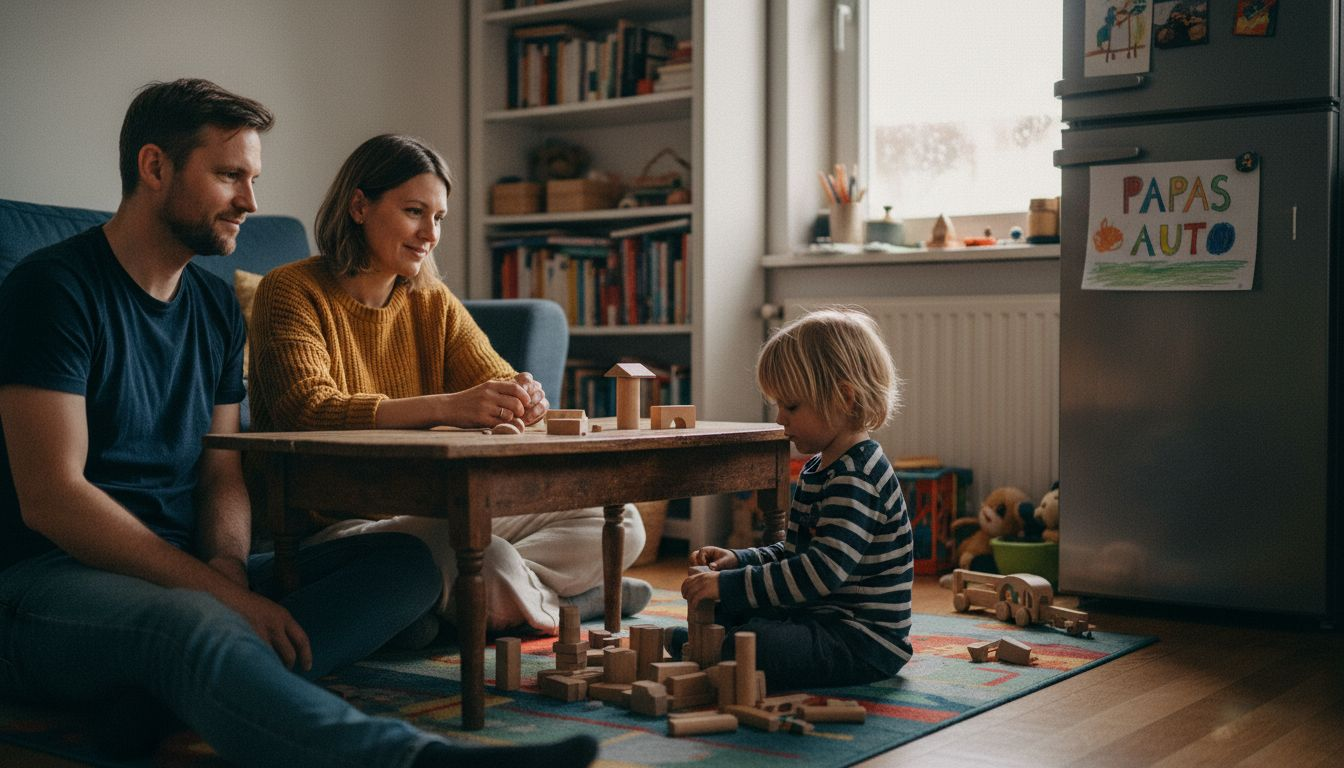
Everyone knows the moment when children immerse themselves completely in their own fantasy world and seemingly endlessly discover new things. This is exactly where learning and individual development begin, which parents want to actively accompany. A stimulating environment with suitable stories and varied nature experiences supports your child in independently trying out new things and unfolding their personality.
Table of Contents
- Step 1: Organize a Stimulating Environment
- Step 2: Observe Your Child Purposefully in Everyday Life
- Step 3: Document Early Interests
- Step 4: Set Personalized Impulses with Stories
- Step 5: Check Progress and Development
Brief Summary
| Important Point | Explanation |
|---|---|
| 1. Create a Stimulating Environment | A safe and inspiring learning environment promotes independence and creativity in children. |
| 2. Observe Your Child Purposefully | Systematic observation helps you better understand your child's development, interests, and strengths. |
| 3. Document Interests Early | Targeted documentation enables the recognition of your child's talents and individual inclinations. |
| 4. Use Personalized Stories | Through personal stories, your child's language development and emotional bonding are strengthened. |
| 5. Check Development Regularly | Regular monitoring of progress supports targeted encouragement and timely identification of challenges. |
Step 1: Organize a Stimulating Environment
Creating a stimulating environment for children is essential for their development and motivation to learn. A carefully prepared environment supports children in independently researching, discovering, and expanding their abilities.
Important aspects when designing a child-friendly learning environment are varied and inspiring materials that enable children to engage in independent learning. A prepared environment should meet the following criteria:
- Safe and well-organized spaces
- Age-appropriate and easily accessible materials
- Flexible design options
- Retreat areas for focused play
In addition to indoor spaces, nature experience areas also play an important role. Nature-based outdoor areas offer children diverse learning opportunities and promote their healthy development. Important features include varied terrain structures, different plants, and the opportunity to actively explore the surroundings.
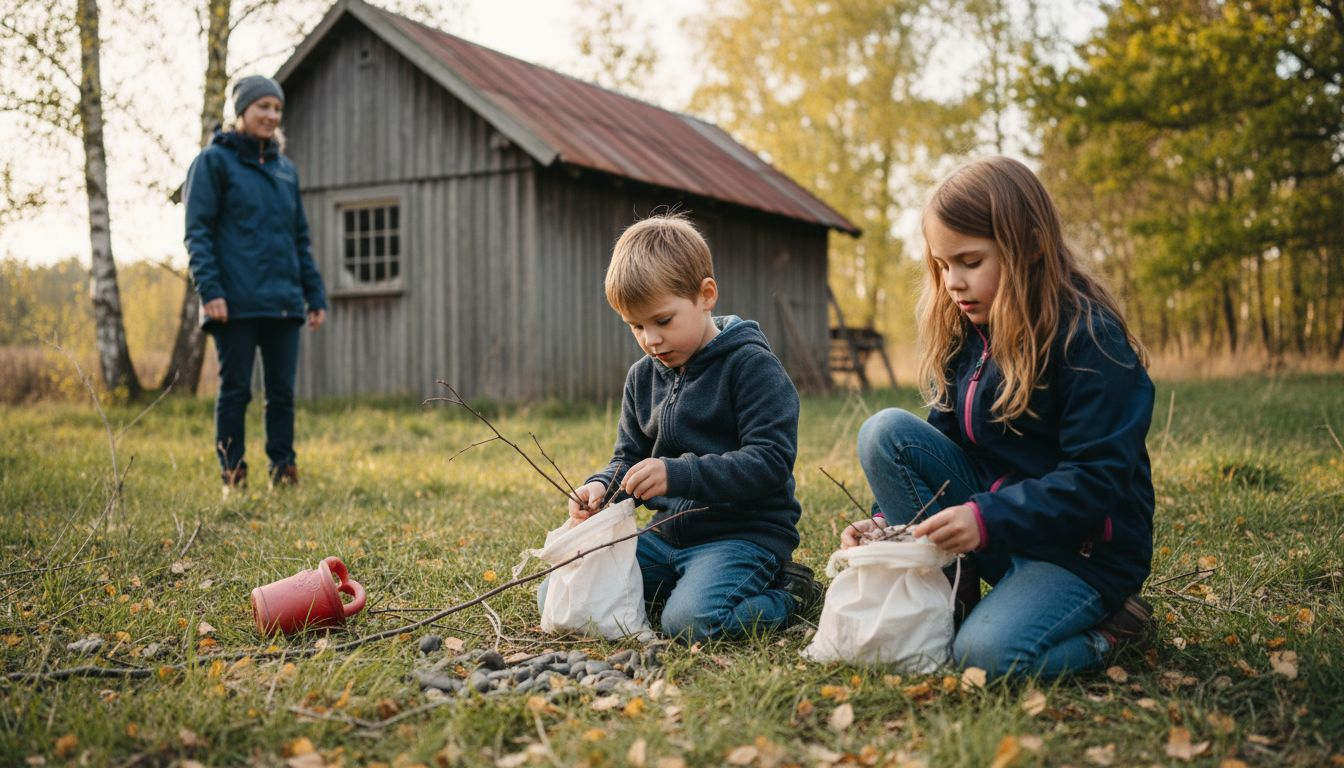
The following table summarizes the most important advantages and features of indoor spaces and nature experience areas for children's learning:
| Room Type | Special Advantages | Suitability for Activities |
|---|---|---|
| Indoor space | Structure and clarity | Creative design, role-playing |
| Nature experience area | Natural sensory stimulation | Movement, discovery journeys |
Pro Tip: Observe your child carefully and adjust the environment regularly to their changing interests and abilities.
Step 2: Observe Your Child Purposefully in Everyday Life
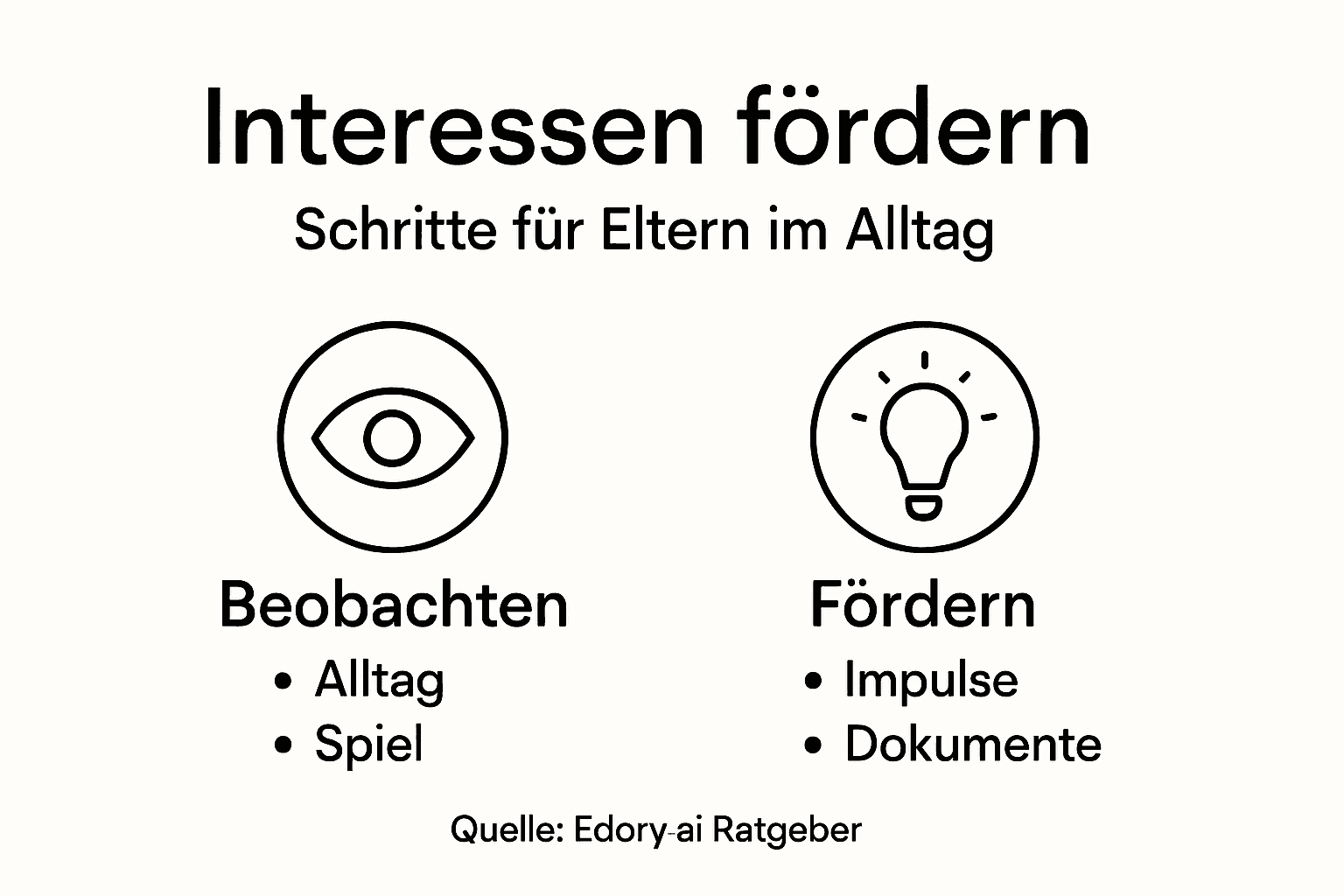
Purposefully observing your child is a crucial key to understanding their development, interests, and unique personality. Systematic observation helps you recognize your child's unique talents and needs and support them purposefully.
Behavioral observation is a systematic method for objectively and neutrally recording children's behavior. The following aspects are important:
- Observe your child in different situations
- Pay attention to play behavior and interactions
- Document your observations
- Recognize strengths and challenges
Fostering children's self-concept means more than just observing. Secure attachments and experiences of self-efficacy are crucial for a positive self-image. Pay special attention to your child's language development and how they explore their surroundings.
The more carefully you observe your child, the better you can support them in their development.
Pro Tip: Keep a brief observation journal to record your child's progress and special characteristics.
Step 3: Document Early Interests
Documenting your child's early interests is a crucial step in understanding and purposefully supporting their individual developmental potential. Systematic observation enables you to recognize and appreciate your child's unique talents and inclinations.
Early documentation of interests involves targeted recording of media and social activities. You should consider the following aspects:
- Note play behavior and preferred activities
- Pay attention to recurring patterns and interests
- Collect examples of creative expressions
- Document developmental steps and learning progress
Developmentally appropriate educational planning requires culturally sensitive and authentic documentation. Observe how your child learns, communicates, and interacts with their environment.
Careful documentation is the key to understanding your child's individual learning journey.
Pro Tip: Use a digital or analog folder to collect and organize drawings, short texts, and photos.
An overview of central methods of observation and documentation in family life:
| Method | Purpose of Application | Tool/Medium |
|---|---|---|
| Behavioral observation | Recognizing interests and patterns | Notebook, mobile app |
| Development journal | Tracking progress | Folder, digital journal |
| Creativity collection | Recording creative expressions | Collection folder, photo documentation |
Step 4: Set Personalized Impulses with Stories
Stories are a powerful tool to enable individual learning experiences for children and purposefully support their development. Personalized stories help you capture your child's attention and foster their imagination and language development.
Personalized impulses with stories support emotional and language development in a unique way. The following aspects are important:
- Incorporate your child's current interests
- Integrate familiar people or places into the stories
- Use a lively and emotional narrative style
- Encourage your child to actively participate in shaping the story
The use of personal stories not only supports language development but also strengthens self-concept. Through dialogic reading, you create a close emotional bond and motivate your child to learn.
Every personalized story is a key to your child's world.
Pro Tip: Experiment with different storytelling styles and let your child contribute their own ideas to the story.
Step 5: Check Progress and Development
Systematically observing and assessing your child's development is crucial to understanding their individual progress and providing targeted support. Development monitoring enables you to strengthen their abilities and identify potential challenges early on.
Developmental monitoring and assessment help identify important milestones. You should consider the following aspects:
- Document developmental steps regularly
- Compare progress with age-appropriate milestones
- Pay attention to individual development speeds
- Remain open to professional consultation
Ongoing observation of child development requires a holistic and culturally sensitive perspective. Evaluate learning progress flexibly and individually without putting pressure on your child.
Every child develops uniquely - your loving guidance is the key to success.
Pro Tip: Keep a development journal and reflect on progress at regular intervals together with your child.
Discovering Children's Interests and Purposefully Nurturing Them with Personal Stories
Parents face the challenge of recognizing their children's early interests and supporting them individually. The need for loving attachment on the one hand and the desire for playful learning on the other is highlighted in the article with a focus on systematic observation, documentation, and personalized impulses. Many parents seek practical ways to tailor learning environments and stories precisely to their children's current preferences and thus strengthen language and emotional development.
This is where Edory.ai comes in as an innovative platform for personalized children's stories. Our app helps parents easily create new stories every day that are specifically tailored to each child's age and individual interests. This way, you playfully combine educational content with imagination and create not only learning-promoting impulses but also an intensive bond through shared storytelling moments. Learn more on our category page for Uncategorized Stories and directly on our homepage.
Take advantage of digital support to encourage your child's interests and development even more precisely and set creative impulses with personalized stories. Discover now how simple and effective individual stories can enrich your child's learning and start today on Edory.ai.
Frequently Asked Questions
How do I recognize my child's interests?
To recognize your child's interests, observe them in different play situations. Pay attention to frequently recurring activities or topics and note these over a period of several weeks.
What materials are suitable for promoting independence?
Age-appropriate and easily accessible materials are important for promoting independent learning. Ensure that your child can interact with a variety of toys and materials that engage different senses.
How can I systematically document observations?
You can systematically document observations by keeping an observation journal. Note specific behavioral patterns and developmental steps to recognize progress over time.
How can I create personalized stories for my child?
To create personalized stories, incorporate your child's current interests and familiar places or people. Integrate these elements into the plot and use a lively narrative style to stimulate your child's imagination.
Why is development monitoring important for supporting my child?
Development monitoring helps document progress and recognize your child's strengths and challenges. Regularly check developmental steps and compare them with age-appropriate milestones to provide targeted support.
How often should I adjust my child's learning environment?
It is advisable to adjust the learning environment regularly, about every few weeks. Observe your child's changing interests and abilities and redesign the environment accordingly to maintain curiosity and motivation.