 edory
edory
Fairy tales have accompanied children for generations and are far more than trivial bedtime stories. They convey important values in just a few lines, often teaching more than many textbooks combined. Over 80 percent of parents confirm that fairy tales teach their children important social behavior. These narratives package complex life lessons into exciting adventures and thus promote the development of empathy, courage, and creativity. Anyone who looks closely will recognize in every story an invitation to discover the world and themselves anew.
Table of Contents
- What is Educational Content in Fairy Tales?
- Different Fairy Tale Types and Their Learning Objectives
- Central Values and Competencies in Fairy Tales
- Age-Appropriate Instruction and Storytelling Methods
- Opportunities and Challenges for Children and Parents
- Avoiding Typical Mistakes in Using Fairy Tales
Key Takeaways
| Point | Details |
|---|---|
| Educational Content in Fairy Tales | Fairy tales convey moral and social values that help children understand complex life situations. |
| Diversity of Fairy Tale Types | Different fairy tale types offer specific learning opportunities and address various developmental needs. |
| Age-Appropriate Instruction | Adapting storytelling methods to the age group is crucial for children's understanding and emotional security. |
| Opportunities and Challenges | Fairy tales promote emotional intelligence and creativity, but also carry risks if not chosen age-appropriately. |
What is Educational Content in Fairy Tales?
Fairy tales are more than just fantastical bedtime stories. They are powerful tools for knowledge transfer that bring children complex life wisdom in a playful and understandable way. Educational content in fairy tales are subtle pedagogical messages that appeal to children both emotionally and cognitively.
These stories convey important moral and social learning content. Classic fairy tales show characters who overcome challenges, make decisions, and experience the consequences of their actions. In doing so, fundamental human values such as courage, compassion, honesty, and perseverance are conveyed. For example: Cinderella teaches children that kindness and perseverance are rewarded, while envy and arrogance fail.
Educational content in fairy tales encompasses various dimensions:
- Moral Development: Distinguishing between good and evil
- Emotional Intelligence: Recognizing and understanding feelings
- Social Competencies: Conflict resolution and interpersonal relationships
- Psychological Resilience: Strategies for coping with challenges
Interestingly, parents can support these learning processes by telling fairy tales in a modern and interactive way.
 A shared conversation about the story helps children understand the hidden educational content and apply it to their own life situations.
Fairy tales are timeless teachers that help children understand the world—not through dry instruction, but through emotional and meaningful narratives.
Different Fairy Tale Types and Their Learning Objectives
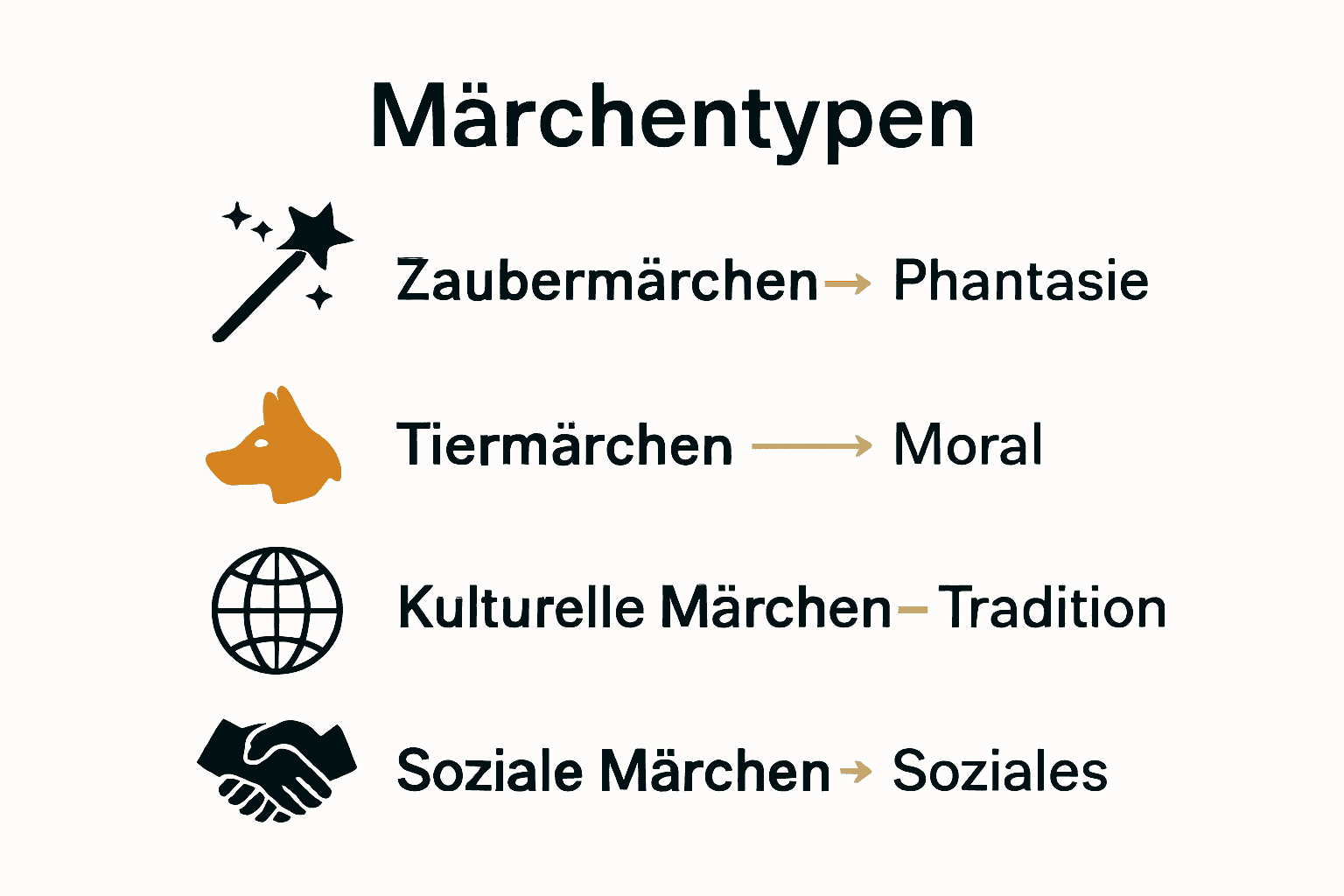
Fairy tales are by no means a homogeneous genre, but rather encompass various types, each pursuing different learning objectives and pedagogical intentions. The diversity of these narrative forms makes it possible to convey complex life themes to children in an accessible and entertaining way.
The most important fairy tale types include:
- Magic Fairy Tales: Focus on magical transformations and show children how imagination can overcome boundaries
- Animal Tales: Convey moral lessons through personified animal characters
- Cultural Fairy Tales: Transport traditional values and social norms
- Social Fairy Tales: Address interpersonal relationships and conflict resolution strategies
Particularly interesting are everyday fairy tales that address real-life situations. They help children develop social competencies and better understand daily life challenges. Each fairy tale type offers specific learning opportunities that go far beyond simple entertainment.
The pedagogical power of fairy tales lies in their ability to convey complex messages emotionally and narratively. They are not just stories, but interactive educational tools that challenge children to think, feel, and grow.
Central Values and Competencies in Fairy Tales
Fairy tales are more than just entertaining stories—they are powerful tools for conveying central values and competencies. Character development is at the center, with children learning to understand complex moral concepts through the experiences of fairy tale characters.
The most important values include:
- Courage: Overcoming fears and challenges
- Compassion: Understanding and respect for others
- Honesty: Importance of truth and integrity
- Perseverance: Persistence through difficulties
- Self-Confidence: Belief in one's own abilities
Particularly valuable are educational stories that appeal to children emotionally and cognitively, as they convey complex life wisdom playfully. Each fairy tale character becomes a projection surface for important developmental tasks: the brave hero shows children how to overcome obstacles, while helpful secondary characters demonstrate the importance of cooperation and kindness.
The pedagogical power of fairy tales lies in their ability to make abstract concepts tangible. They are not just entertainment, but emotional educational tools that help children learn and internalize complex social and moral competencies playfully.
Age-Appropriate Instruction and Storytelling Methods
The art of storytelling is a complex pedagogical challenge that requires precise adaptation to children's developmental stages. Age-appropriate storytelling methods take into account the cognitive, emotional, and linguistic abilities of children in different developmental phases.
According to ifak-kindermedien, the foundation of successful storytelling is adapting the narrative structure to the comprehension level of the target audience. For toddlers, this means short, simple stories with clear plot lines, while school-age children can already understand more complex narrative structures.
The most important storytelling methods for different age groups:
- 0-3 Years: Short, rhythmic stories with repetitions
- 3-5 Years: Fairy tales with simple moral messages
- 5-7 Years: Stories with initial more complex conflicts
- 7-10 Years: Narratives with more nuanced characters
Also, Joseph Campbell's theory of the hero's journey offers valuable insights: each age group needs a version of the classic hero's journey adapted to their developmental stage. Young children need clear good-versus-evil distinctions, while older children can already understand nuanced moral gray areas.
The art lies in creating stories that entertain, challenge, and educate children simultaneously—without overwhelming them. A delicate balancing act between entertainment and pedagogy.
Opportunities and Challenges for Children and Parents
Fairy tales are a double-edged sword in child-rearing—they hold enormous educational potential and at the same time subtle risks that parents must navigate carefully. The challenge lies in choosing stories that inspire children without overwhelming or frightening them.
The most important opportunities for children include:
- Emotional Intelligence: Development of empathy and emotional understanding
- Moral Development: Learning social values
- Creativity: Promotion of imagination and creativity
- Problem-Solving Competence: Recognition of action strategies
- Resilience: Coping with challenges and setbacks
Parental tasks in storytelling play a crucial role in positively shaping these learning processes. Parents must actively accompany the stories, answer questions, and jointly reflect on critical moments.
The greatest challenges lie in age-sensitive selection and interpretation of fairy tales. Not every story is suitable for every developmental stage. Overly complex conflicts or too intense emotional scenes can overwhelm children and trigger fears. The key lies in a gentle, dialogue-oriented approach that takes children seriously and respects their individual reactions.
Avoiding Typical Mistakes in Using Fairy Tales
Using fairy tales in child-rearing requires sensitivity and understanding. Pedagogical errors can undermine the intended educational goals and produce unintended negative effects instead of positive development.
Here are the most common pitfalls that parents and educators should avoid:
- Overinterpretation: Not every detail needs to be explained immediately
- Moral Rigidity: Don't convey stories too dogmatically
- Age-Inappropriate Selection: Not considering the child's developmental stage
- Emotional Overload: Stories that are too intense or frightening
- Lack of Interaction: No conversation opportunities after the story
How Fairy Tales Stimulate Imagination shows that creative engagement with stories is crucial. What's important is dialogue on equal footing that gives the child room for their own interpretations and feelings.
The key lies in a balanced approach: Fairy tales should challenge children without overwhelming them. They must open developmental spaces, provide emotional security, and at the same time respectfully support children's imagination and creativity.
Discovering and Promoting Educational Content in Fairy Tales Playfully
The special thing about fairy tales is their ability to bring children important values and competencies like courage, compassion, and perseverance. However, parents often face the challenge of selecting the right stories for their child's age and conveying the learning content in an age-appropriate way. This is exactly where Edory.ai comes in: Our platform offers personalized and daily newly generated fairy tales that are specifically tailored to your child's needs and developmental level. This way, we support you in optimally utilizing the pedagogical opportunities of fairy tales and avoiding typical storytelling mistakes.
Discover at Uncategorized – Edory AI – Educational Children's Stories how playful educational stories naturally promote emotional and cognitive development. Start now with Edory and transform every reading hour into an inspiring learning experience for your child. Visit https://edory.ai and experience the future of personalized children's storytelling.
Frequently Asked Questions
What is the Educational Content in Fairy Tales?
Educational content in fairy tales are pedagogical messages that bring children emotional and cognitive skills, such as values like courage, compassion, and honesty.
What Different Types of Fairy Tales Exist and What Learning Objectives Do They Pursue?
There are various types of fairy tales, including magic fairy tales, animal tales, cultural fairy tales, and social fairy tales. Each type conveys different learning objectives, such as overcoming challenges or understanding interpersonal relationships.
How Can Parents Support Storytelling?
Parents can support the learning process by telling fairy tales in a modern and interactive way, conducting reflective conversations about the moral, and respecting children's emotional reactions.
What Typical Mistakes Should Be Avoided When Using Fairy Tales?
Parents should avoid overinterpretation, moral rigidity, age-inappropriate selection of fairy tales, emotional overload, and lack of interaction to achieve positive educational goals.