 edory
edory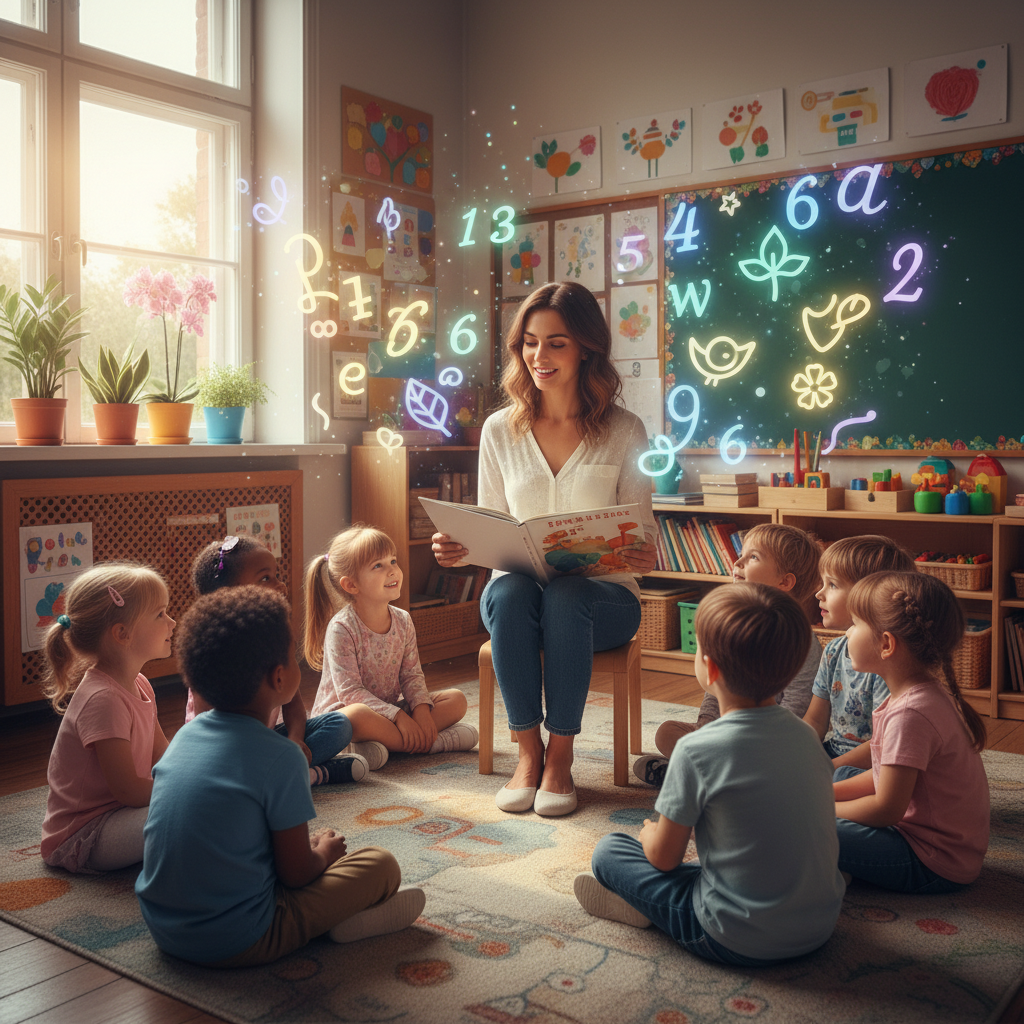
Educational fairy tales for kindergarten and elementary school have developed into an indispensable tool in early childhood education by 2026. These specially designed stories combine entertainment with important learning objectives in a unique way and promote both the linguistic and socio-emotional development of children. Modern pedagogical approaches show that fairy tales are far more than just entertainment – they are powerful instruments for holistic education.
What makes educational fairy tales so valuable for education?
Educational fairy tales differ from classical fairy tales through their deliberately integrated learning elements. They convey not only moral values but also concrete knowledge about natural sciences, mathematics, language, and social competencies. Studies from 2026 show that children retain up to 65% more information through narrative learning than through traditional teaching methods.
The power of storytelling activates multiple brain regions simultaneously and creates emotional connections to the learning material. For example, when a fairy tale prince must collect numbers to solve a riddle, children learn mathematical concepts playfully without perceiving it as "instruction."
The best subject areas for educational fairy tales
Natural sciences and environmental education
Fairy tales about talking animals, magical plants, or weather phenomena are excellent for conveying scientific basics. A fairy tale about a little bee can explain the pollination process, while the story of a water droplet illustrates the water cycle. These stories awaken children's natural curiosity and lay the foundation for scientific thinking.
Mathematical basic concepts
Numbers, shapes, and size relationships can be wonderfully embedded in fairy tale adventures. A giant who must learn to share, or a princess who collects geometric shapes, make abstract mathematical concepts tangible and understandable.
Social and emotional competencies
Educational fairy tales for kindergarten and elementary school are particularly valuable for developing empathy, conflict resolution, and emotional intelligence. Stories about friendship, courage, helpfulness, and overcoming fears give children important tools for social interaction.
Practical implementation in kindergarten and elementary school
Age-appropriate design
For kindergarten children, educational fairy tales should have simple storylines and clear messages. Attention spans are still limited, so stories of 5-10 minutes in length work best. Repetitive elements and catchy rhymes help with understanding and memorization.
Elementary school children can already follow more complex plot lines and grasp multi-layered learning objectives. Here, fairy tales can last 15-20 minutes and interconnect various subjects.
Integrating interactive elements
Modern educational fairy tales thrive on interaction. Children can:
- Help determine the decisions of fairy tale characters
- Solve riddles and tasks together with the protagonists
- Incorporate songs and movements into the story
- Contribute their own ideas for the course of the story
- Summarize the moral of the story in their own words
Digital support and modern media
In 2026, educators have numerous digital tools at their disposal to make educational fairy tales even more effective. Interactive whiteboards, tablets with special fairy tale apps, and virtual reality elements can intensify the storytelling experience without impairing children's imagination.
Augmented reality books have proven particularly successful, where characters come to life when scanned with a tablet. This technology combines traditional reading with modern media and appeals to different learning styles.
Creating your own educational fairy tales
Teachers and educators can develop their own educational fairy tales with simple means. They should follow these steps:
- Define a clear learning objective (What should children learn?)
- Choose age-appropriate protagonists
- Develop an exciting conflict
- Weave the learning objective organically into the plot
- Find a positive, instructive resolution
- Plan interactive elements
Successful examples from practice in 2026
In many German educational institutions, proven concepts have already been established by 2026. The "Number Forest Fairy Tales" combine mathematical basics with nature experiences, while the "Feeling Princess Stories" promote emotional intelligence. Multilingual fairy tales are also particularly successful, specifically addressing children with migration backgrounds while deepening German language skills.
Involving parents
The success of educational fairy tales increases significantly when parents are involved in the learning process. In 2026, many institutions send fairy tale collections home or organize family fairy tale afternoons. This deepens what was learned at home and makes parents important partners in the educational process.
Challenges and solution approaches
Not all children respond equally to fairy tale approaches. Some prefer realistic stories or have cultural reservations about certain fairy tale elements. Here, flexibility is required: Educational fairy tales for kindergarten and elementary school should be diverse and adaptable to reach all children.
Another aspect is the balance between education and entertainment. Too much learning material can destroy the fairy tale magic, too little makes the story pedagogically worthless. By 2026, experienced educators increasingly find the happy medium.
Future outlook: Fairy tales in tomorrow's education
The development of educational fairy tales is only in its infancy in 2026. Artificial intelligence will soon make it possible to adapt fairy tales in real time to the needs of individual children. Personalized stories based on each child's learning progress and interests will revolutionize the learning experience.
At the same time, the human component remains indispensable. The voice of the educator, the shared discussion about the story, and the emotional connection between storyteller and listener cannot be replaced by any technology.
Practical tips for everyday life
For the successful integration of educational fairy tales into daycare and school routines, experts in 2026 recommend the following strategies:
- Introduce regular fairy tale times (daily 10-15 minutes)
- Use various storytelling forms (reading aloud, free narration, audio plays)
- Let children invent their own fairy tales
- Pick up fairy tale content in other activities (crafting, painting, singing)
- Offer training for educational staff
- Build fairy tale libraries in your institutions
Educational fairy tales for kindergarten and elementary school are more than just a pedagogical trend in 2026 – they have become an established instrument of holistic education. They appeal to heart and mind equally and create sustainable learning experiences that accompany children throughout their lives.
Would you like to learn more about the practical implementation of educational fairy tales in your institution? Contact us for a free consultation and discover how you can optimally use the power of stories for your children's education. Together, we will develop a custom-tailored fairy tale concept for your pedagogical everyday life!