 edory
edory
More than 80 percent of all parents in Germany wish for stories that not only entertain but also actively contribute to their children's development. Personal fairy tales offer exactly this added value, because they can promote fantasy, language, and values in a playful way. With age-appropriate and individually designed narratives, children discover important life skills in a safe environment, while parents can actively address their child's needs.
Table of Contents
- What Makes Fairy Tales Special for Children
- Different Types of Fairy Tales and Their Characteristics
- Pedagogical and Emotional Benefits of Classic Fairy Tales
- Modern and Digital Forms of Children's Fairy Tales
- Safety Aspects and Age-Appropriate Handling of Fairy Tales
Key Takeaways
| Point | Details |
|---|---|
| Importance of Fairy Tales | Fairy tales are complex educational tools that help children learn important life lessons. |
| Psychological Function | They offer symbolic tools to cope with fears and emotions. |
| Types of Fairy Tales | The distinction between folk tales, literary fairy tales, and magical tales reveals different narrative structures and benefits. |
| Age-Appropriate Selection | Careful selection and contextualization of fairy tales are crucial for children's emotional well-being. |
What Makes Fairy Tales Special for Children
Fairy tales are far more than just entertaining stories - they are complex educational tools that play a fundamental role in child development. They offer children a magical space in which they can explore complicated life topics in an age-appropriate and understandable way. Historical research shows that fairy tales were not originally written specifically for children, but developed into an important instrument of children's education through their special narrative structure.
The special power of fairy tales lies in their unique narrative structure. They present typical characters - the hero, the villain, the helper - in a clear, easy-to-understand framework. This strongly typified narrative form helps children understand complex moral concepts such as good and evil, courage and compassion. Each story offers a journey in which the protagonist overcomes challenges and emerges stronger in the end - a metaphor for the personal development that children themselves experience.
Fairy tales also serve an important psychological function. They give children symbolic tools to cope with their own fears and insecurities. Magical elements such as enchanted princes, talking animals, or supernatural events allow children to process difficult emotions and conflicts on a safe, imaginative level. Scientific dissertations confirm that fairy tales stimulate children's imagination and intuition in a particularly effective way.
Pro Tip: Choose fairy tales that are age-appropriate and can be discussed together with your child to maximize educational impact.
Different Types of Fairy Tales and Their Characteristics
Fairy tales form a multifaceted literary world with various forms, each following different narrative traditions and pedagogical approaches. Scientific research shows that fairy tales can be divided into basic categories such as folk tales, literary fairy tales, and magical tales, each with its own characteristic features.
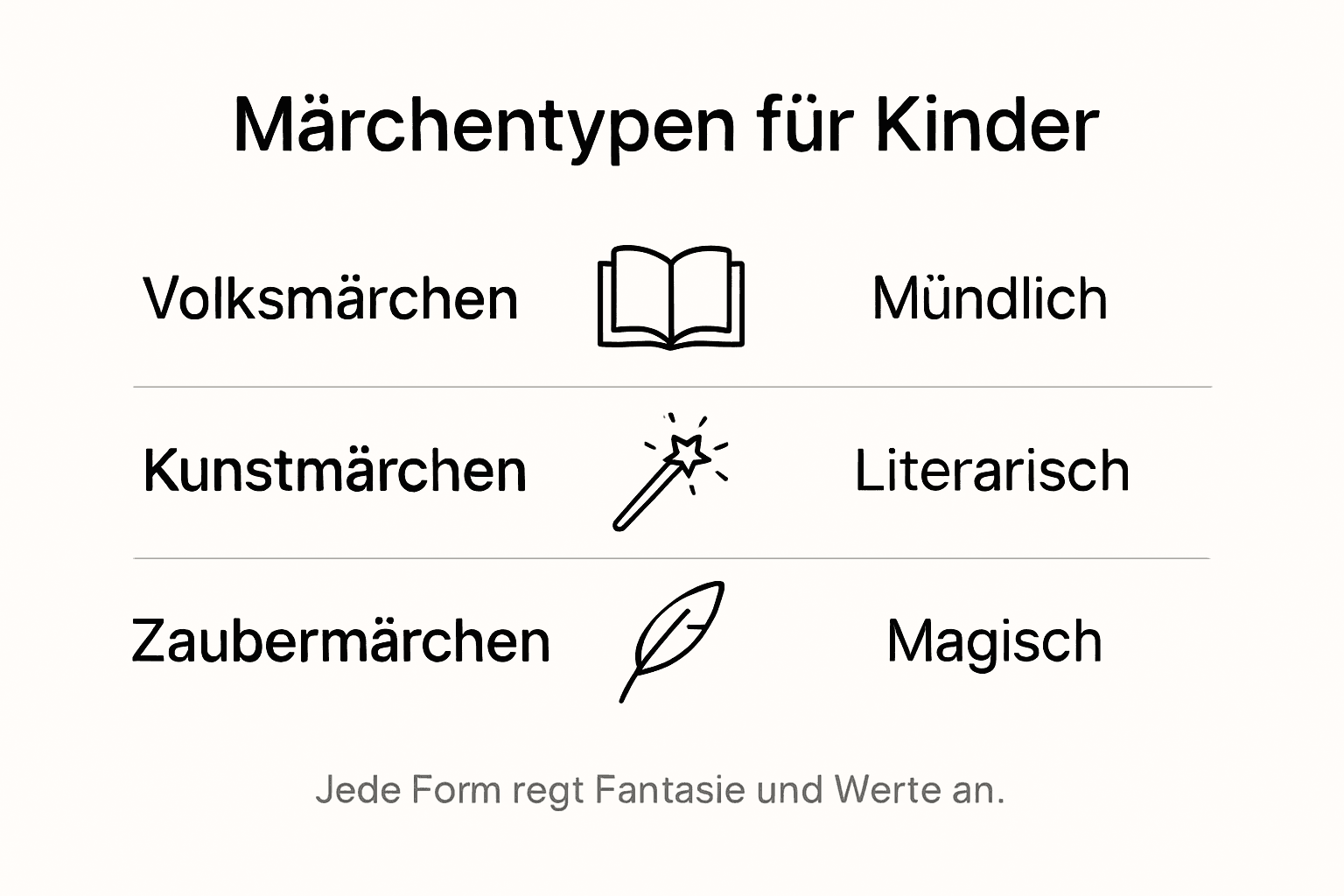
Folk tales represent the oldest form of fairy tale storytelling. They were passed down orally through generations and are characterized by simple, stereotypical characters and a clear moral structure. These fairy tales often convey the social norms and values of a culture. Literary fairy tales, on the other hand, are refined literary works by individual authors that are intentionally crafted and often possess more complex narrative structures and psychological depth.
Magical tales form a special subgroup distinguished by magical elements and fantastic plot lines. Detailed analyses clarify that these fairy tales contain typical motifs such as trials, rewards, and the battle between good and evil. Also characteristic are supernatural helpers, transformations, and magical objects that accompany the protagonist on his hero's journey.
The following table provides a quick overview of the most important types of fairy tales and their characteristic features:
| Type of Fairy Tale | Origin and Tradition | Typical Elements | Educational Value |
|---|---|---|---|
| Folk Tales | Oral transmission through generations | Stereotypical figures, clear morality | Transmission of values and norms |
| Literary Fairy Tales | Crafted literarily by authors | Complex narrative structure, psychology | Stimulation of imagination, depth |
| Magical Tales | Part of folk tale tradition | Magical objects, supernatural helpers | Promotion of creativity and courage |
Pro Tip: Encourage children to discover different types of fairy tales and explore their individual characteristics.
Pedagogical and Emotional Benefits of Classic Fairy Tales
Fairy tales are far more than entertaining stories - they are powerful pedagogical tools for the emotional and social development of children. Scientific research in literary education shows that fairy tales play a crucial role in conveying values and promoting aesthetic sensibility.
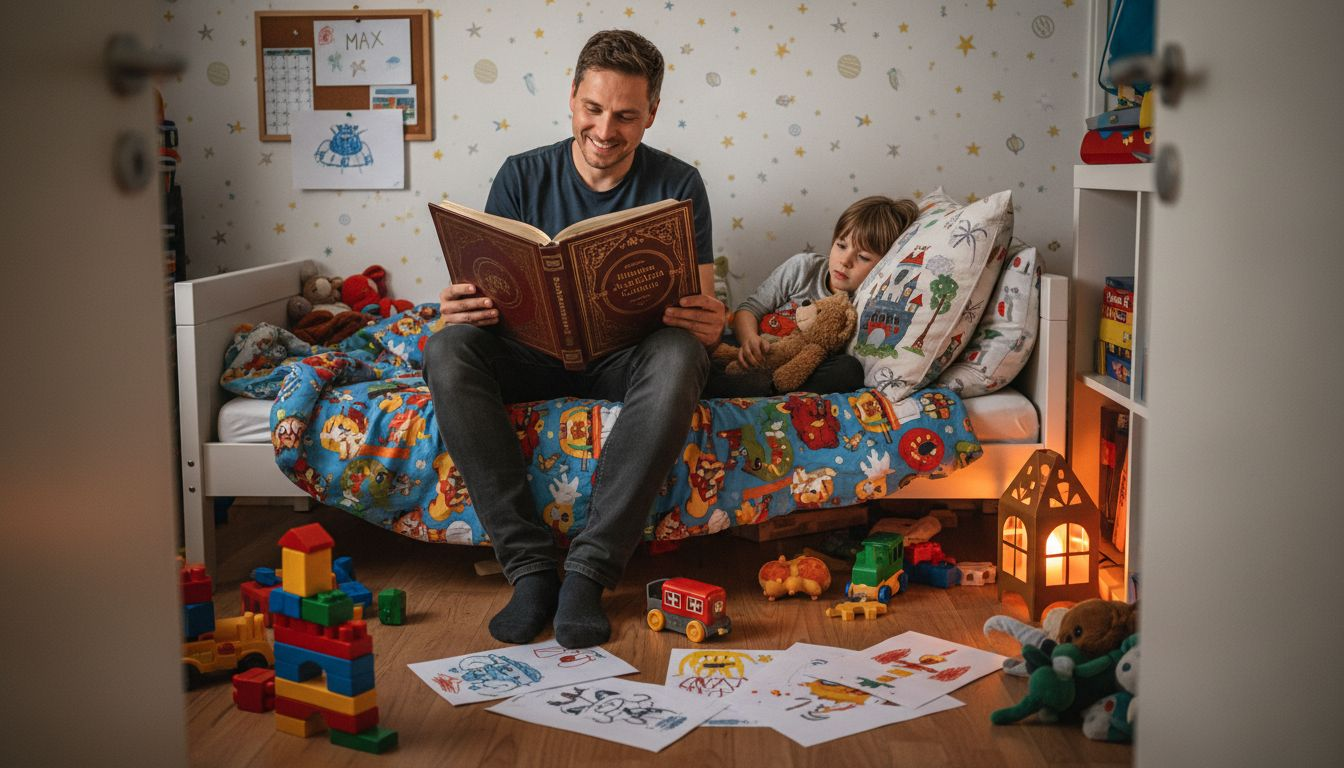
Emotional education through fairy tales is based on the possibility of identification. Children experience the protagonists as role models and learn to understand and process complex feelings. Research on emotional development clarifies how fairy tales help children develop empathy and build emotional intelligence. The characters go through challenges, conflicts, and resolutions that serve children as emotional learning models.
Through the symbolic representation of moral conflicts, fairy tales offer a safe space for psychological development. They convey fundamental values such as courage, helpfulness, and justice in a way that emotionally touches children and cognitively challenges them. The fairy tale structure allows children to reflect on difficult life situations without being directly confronted.
Pro Tip: Read fairy tales together with your children and take time to talk about the characters' emotional experiences.
Modern and Digital Forms of Children's Fairy Tales
The digital revolution has fundamentally changed the world of fairy tales. Research on the digital development of children's fairy tales shows that modern technologies open up completely new forms of storytelling and interaction possibilities. Audiobooks, interactive apps, and multimedia platforms expand the traditional boundaries of fairy tale storytelling and create innovative access points for children.
The new digital formats offer more than just a transfer of classic stories. They enable interactive experiences in which children can actively intervene in the narrative. Animated characters, sound effects, and playful elements transform passive listening into a multisensory experience. Contemporary research on children's literature confirms that these digital adaptations preserve classic fairy tale motifs while interpreting them in modern ways.
The challenge is to preserve the original pedagogical power of fairy tales. Digital versions must respect the emotional depth and moral substance of classic stories. They should not only entertain but continue to convey central values such as empathy, courage, and helpfulness. The best digital fairy tales succeed when they combine traditional narrative structures with contemporary interactive elements.
Below, classic and digital fairy tale formats are compared in terms of experiences and learning opportunities:
| Aspect | Classic Fairy Tale Book | Digital Fairy Tale (App/Audiobook) |
|---|---|---|
| Narrative Form | Reading aloud, shared reading | Interactive experiences, animations |
| Sensory Experience | Visual, auditory, imagination stimulation | Multisensory, image, sound, interaction |
| Advantages | Intense bonding, concentration | Curiosity, active participation |
| Challenges | Less interactivity | Risk of distraction, screen time |
Pro Tip: Choose digital fairy tale formats that balance interaction and storytelling.
Safety Aspects and Age-Appropriate Handling of Fairy Tales
Fairy tales can be both enriching and challenging for children. Scientific research on fairy tale instruction shows that careful and age-appropriate selection and presentation are crucial for children's emotional well-being. Original fairy tales often contain violent or disturbing elements that can be unsettling without pedagogical guidance.
For parents and educators, this means deliberately selecting and contextualizing fairy tales. Contemporary research on children's literature recommends adapting stories according to the developmental stage of children. Depending on age, darker or overly complex scenes should be softened or explained. It is also important to create a safe discussion space where children can express their feelings and questions.
The keys to safe fairy tale instruction lie in support, reflection, and open dialogue. Adults should help children understand metaphorical messages and decipher the symbolic meaning of challenges in stories. This is not about downplaying content, but about an age-appropriate interpretation that does not overwhelm children emotionally.
Pro Tip: Read fairy tales together with your children and take time to talk about the plot and feelings.
Rediscover Fairy Tale Education with Edory.ai
Understanding the emotional power and pedagogical significance of fairy tales is the first step in supporting children on their developmental journey. Reading and discussing age-appropriate and imaginative stories together promotes values such as courage and compassion. If you are looking for safe and child-friendly fairy tales tailored precisely to your child's age and interests, Edory.ai offers the perfect solution.
Our innovative platform creates the ideal framework for promoting imagination and emotional intelligence through personalized fairy tales. Discover exciting stories in our Uncategorized – Edory AI – Educational Children's Stories category and experience how easily you can create new fairy tales daily with Edory that combine education with entertainment.
Don't wait until tomorrow. Use the opportunity now for an individualized and pedagogically valuable fairy tale experience. Visit https://edory.ai and start today the journey for your child into an exciting world full of fantasy and values.
Frequently Asked Questions
What are the benefits of fairy tales for children?
Fairy tales promote children's emotional and social development by conveying values such as courage and helpfulness and stimulating imagination.
How do folk tales differ from literary fairy tales?
Folk tales are traditional and passed down orally, while literary fairy tales are crafted by authors and can contain more complex stories.
What role do magical elements play in fairy tales?
Magical elements allow children to process difficult feelings and conflicts in an imaginative way and promote their creativity and imagination.
How can I select fairy tales that are age-appropriate?
Choose fairy tales that correspond to your child's developmental level, considering both thematic depth and potentially disturbing elements.