 edory
edoryMore than 60 percent of parents are looking for ways to help their children become more patient and focused. Shared reading and storytelling offer a simple way to foster these important skills. With thoughtful steps and varied ideas, parents can create not only wonderful family rituals but also lay the foundation for patience, understanding, and emotional strength in children.
Table of Contents
- Step 1: Choose suitable stories together
- Step 2: Tell varied stories regularly
- Step 3: Deliberately integrate patience-building elements
- Step 4: Ask comprehension questions after each story
- Step 5: Reflect on and reinforce patient behaviors
Quick Summary
| Main Point | Explanation |
|---|---|
| 1. Choose stories together | Let your child actively participate in selecting stories to spark their interest. |
| 2. Practice regular storytelling | Integrate fixed storytelling times into daily life to promote patience and concentration. |
| 3. Introduce patience-building elements | Plan waiting moments during storytelling to strengthen concentration. |
| 4. Ask comprehension questions | Ask open-ended questions after stories to promote understanding and reflection. |
| 5. Reflect on patient behaviors | Hold reflection conversations and keep a patience journal to reinforce what was learned. |
Step 1: Choose suitable stories together
Choosing stories together is a wonderful way to foster your child's interest and patience. Take time to browse through bookshelves or online libraries together and let your child actively participate in the decision. Children develop a deeper connection to stories when they feel that their opinion matters and is respected.
Make sure to select stories that match your child's developmental stage and interests. Younger children enjoy short, illustrated stories with simple plots, while older children prefer more complex narratives with greater detail. Talk with your child about the themes of the stories and show enthusiasm for their suggestions. Sometimes a story that seems uninteresting at first glance can reveal hidden treasures of excitement and learning opportunities upon closer inspection.
A helpful tip is to prepare a small selection of books and give your child the freedom to choose. This strategy gives them a sense of control and participation without overwhelming them. Experiment with different genres such as adventure, fantasy, fairy tales, or even non-fiction to increase curiosity and reading enjoyment.
Step 2: Tell varied stories regularly
Regular storytelling is a magical key to developing patience and concentration in children. The goal is to create a vibrant storytelling tradition that not only entertains your child but also promotes their language and emotional skills. In telling stories creatively with children you will find more inspiring ideas.
Use different storytelling strategies to capture your child's attention. Experiment with different tones of voice, speaking speeds, and dramatic pauses. Sometimes you can also make the story interactive and ask your child to make sounds or perform movements. This variety helps train patience and maintain interest.
A practical tip is to integrate fixed storytelling times into your daily routine. This could be, for example, bedtime or a quiet hour in the afternoon. Stay flexible and observe when your child is most attentive and receptive to stories. Consistency will give your child security and improve their ability to concentrate for longer periods.
Step 3: Deliberately integrate patience-building elements
Patience is a skill that can be systematically developed with targeted elements and creative strategies. This phase is about deliberately creating moments that challenge your child while motivating them to expand their attention span. Use accompanying children with stories as an inspiring resource for your patience strategies.
An effective method is introducing short waiting moments during storytelling. Deliberately pause the story at exciting points and encourage your child to speculate about what might happen next. This technique challenges concentration while teaching how to tolerate suspense. Encourage your child to share their thoughts and make predictions. This not only promotes patience but also fosters creative imagination.
As a practical tip, I recommend developing small reward systems. Set realistic goals for endurance and concentration and acknowledge your child's progress. For example, you could keep a progress chart where you together mark moments when your child was particularly patient. This positive reinforcement motivates and makes the learning process a shared, playful adventure.
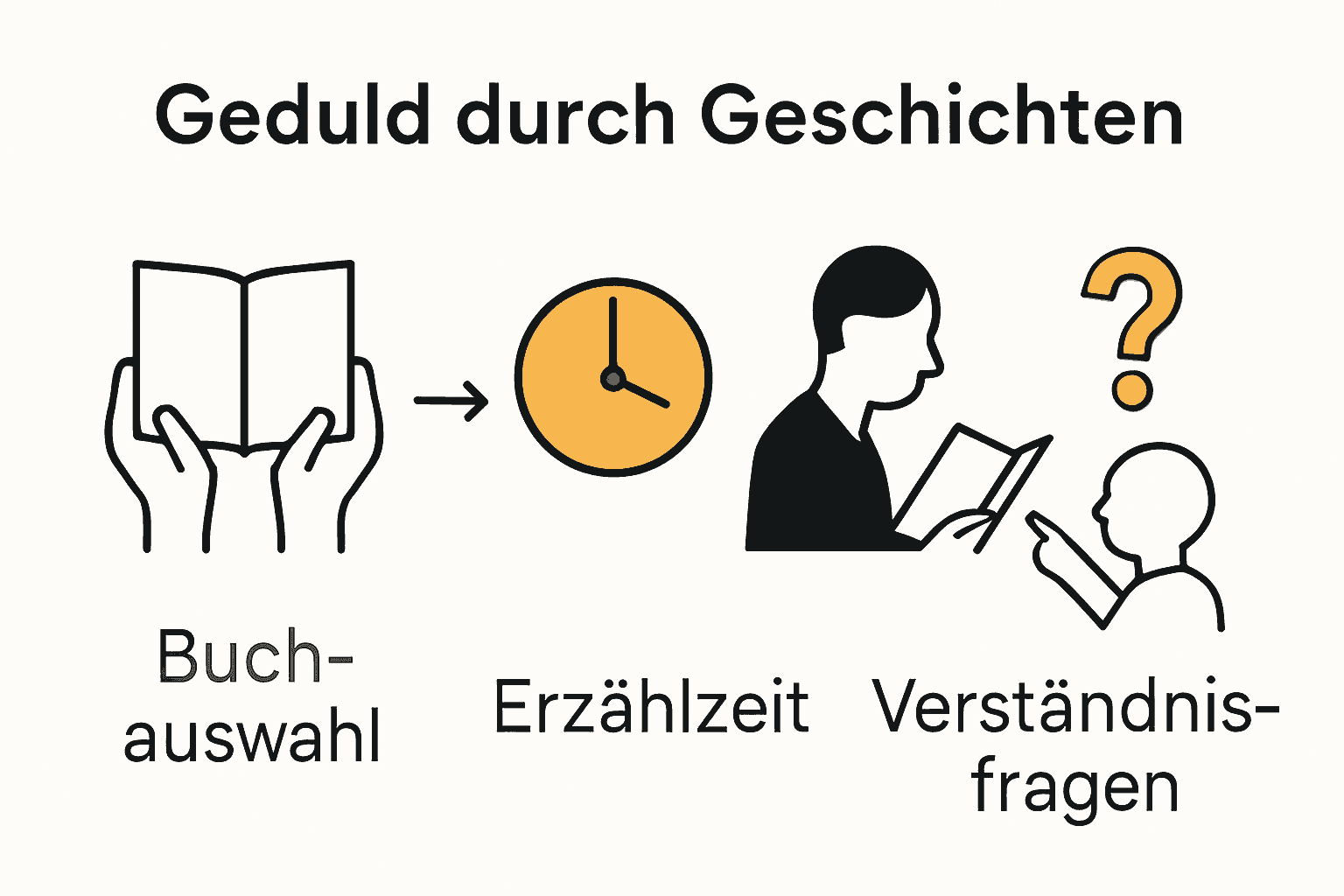
Step 4: Ask comprehension questions after each story
Comprehension questions are a powerful tool to promote your child's attention and active listening. After each story, targeted questions provide an opportunity to deepen understanding while training patience and concentration skills. Let yourself be inspired by storytelling in family life for ideas on how to make this process lively.
Start with open-ended questions that require more than simple yes or no answers. For example, ask: Why do you think the main character acted that way? Or what feelings did you have during the story? This type of question encourages your child to think more deeply about the plot, reflect on emotions, and develop their own interpretations. Give your child time to think and show genuine interest in their thoughts.
A practical tip is to make the questions playful. Sometimes a small guessing game or a humorous approach can increase motivation. Perhaps introduce a type of questionnaire where your child can earn points for thoughtful answers. This positive reinforcement makes thinking about stories an exciting adventure and helps train patience in a playful way.
Step 5: Reflect on and reinforce patient behaviors
Reflecting on and reinforcing patient behaviors is a crucial step in developing emotional intelligence in children. Similar to the story of I Want Siblings Too, where Peter learns to interact patiently with his sister, parents can also actively help strengthen patient behaviors. This involves consciously noticing positive moments and discussing them together.
Hold regular reflection conversations where you review situations from recent days together. Ask your child about moments when they were particularly patient or when they had difficulty staying calm. As shown in The Little Witch, true strength lies in being patient and waiting for recognition. These conversations help your child understand and improve their own behavior.
A practical tip is to introduce a patience journal. Have your child write down or draw small successes and challenges. Link this with positive reinforcement and small rewards. This way, patience becomes a tangible and exciting journey of self-development. This playful method makes reflection a motivating and entertaining process.
Playfully foster patience with personalized stories from Edory
Training patience in children can be challenging, especially when it comes to strengthening concentration and endurance while listening. Your article shows how important it is to consciously choose stories, tell them in varied ways, and accompany them with child-friendly questions. Edory understands these needs and offers an innovative solution: personalized stories tailored exactly to your child's age and interests. This way you can deliberately foster your child's patience and imagination without additional stress.
Discover in our category Uncategorized – Edory AI – Educational children's stories how easy daily storytelling can be. Don't wait until impatience and boredom overshadow your shared time. Visit Edory.ai now and start with custom narratives to excitingly and sustainably build patience. Your family will feel the positive changes – try it today and create lasting memories with stories that endure.
Frequently Asked Questions
How can I choose the right stories with my child?
To choose the right stories together, browse through books or online libraries with your child. Encourage them to express their opinion and try different genres to spark their interest.
Why is regular storytelling important for my child's patience?
Regular storytelling promotes patience by creating a vibrant storytelling tradition. Integrate fixed storytelling times into your daily routine, for example before bedtime, to establish a routine.
What methods help my child develop patience during storytelling?
To promote patience, pause the story at exciting points and let your child guess what happens next. Use rewards for patient behavior to encourage progress.
How do I ask comprehension questions after storytelling?
Ask open-ended questions that encourage your child to think, such as: "Why did the main character act that way?" Engage with the answers and show interest to strengthen active listening.
What can I do to reflect on and reinforce patient behaviors?
Hold regular reflection conversations with your child about patient and impatient moments. Keep a patience journal to document successes and reward these small steps forward to support positive development.
How do I find suitable stories for different age groups?
Make sure to select stories that reflect your child's developmental stage. Younger children prefer short, illustrated stories, while older children appreciate more complex content, so try different formats.