 edory
edory
Over 80 percent of all people still remember fairy tales from their childhood in adulthood. Children's fairy tales fascinate not only through magic and wonder, they also shape the values and imagination of entire generations. But their roots reach far back into the cultural history of countries like Germany and France. Those who want to understand why fairy tales are so important for children and how they influence current developments today will find exciting insights here into the origins, structure, and impact of this special narrative form.
Table of Contents
- What are Children's Fairy Tales? Origins and Definition
- Traditional and Modern Forms of Fairy Tales
- How Children's Fairy Tales Are Created: Processes and Influencing Factors
- Typical Features and Narrative Structures of Children's Fairy Tales
- Educational Benefits and Risks in Children's Daily Life
- Creating Children's Fairy Tales Digitally: Opportunities and Challenges
Key Findings
| Point | Details |
|---|---|
| Origins and Development | Children's fairy tales have their roots in oral traditions and reflect cultural approaches to values and morality. |
| Structure and Symbolism | Fairy tales follow typical narrative structures with clear moral messages and archetypal characters. |
| Educational Value | They offer children emotional coping strategies and promote social skills such as empathy and conflict resolution. |
| Digital Transformation | The digital revolution opens new forms of storytelling, but also presents challenges regarding emotional depth. |
What are Children's Fairy Tales? Origins and Definition
Children's fairy tales are more than just fantastic stories. They are complex narrative works that have enchanted generations of children through their magical blend of fantasy and moral teaching. These traditional narratives convey universal messages and help children understand and process complex life situations.
The origins of children's fairy tales reach far back into human cultural history. Originally, these stories were passed down orally - transmitted from generation to generation before being written down. Traditional fairy tales often emerged in rural communities, where they served as a means of conveying values, moral lessons, and cultural knowledge.
The structure of children's fairy tales typically follows a classic pattern: A protagonist faces a challenge, goes through trials and adventures, and grows through his experiences. Characters such as evil witches, benevolent fairies, brave princes, and cunning animals symbolize different human qualities and moral archetypes. These narrative elements help children explore complex emotional and ethical concepts in an accessible and entertaining way.
Fairy tales fulfill a deeper psychological function than mere entertainment. They offer children symbolic coping strategies for fears, conflicts, and challenges. By identifying with fairy tale heroes, children learn resilience, courage, and the importance of kindness and justice. The timeless stories reflect universal human experiences and support the emotional and moral development of young minds.
Traditional and Modern Forms of Fairy Tales
Over time, fairy tales have undergone a remarkable evolution. From oral traditions in rural communities to modern digital storytelling forms, they have maintained their essence: to enchant and teach people through stories. Modern fairy tales today integrate new technologies and social changes into their narrative structure.
Traditional fairy tales were distinguished by certain characteristic features. They were usually short, contained clear moral messages, and were set in a timeless, undefined world. Typical elements were magic formulas, supernatural beings such as fairies and giants, and clear good-versus-evil constellations. The protagonists were often outsiders or orphans who mastered challenges through courage, cunning, and inner strength.
Modern fairy tale forms expand on these traditional structures. They reflect more complex social realities and integrate more diverse characters and perspectives. Contemporary fairy tales experiment with narrative techniques, break classical patterns, and enable more nuanced hero journeys. Digital platforms and interactive media open up entirely new storytelling possibilities where children can actively participate in story development.
The transformation of fairy tales reflects social developments. While traditional fairy tales often conveyed patriarchal and Eurocentric worldviews, modern versions strive for inclusivity, equality, and the portrayal of diverse life experiences. They convey values such as empathy, acceptance, and individual empowerment. This development makes fairy tales a living, dynamic cultural heritage that continuously adapts to the needs of new generations.
How Children's Fairy Tales Are Created: Processes and Influencing Factors
The creation process of children's fairy tales is a complex interplay of creative inspiration, cultural context, and narrative traditions. Storytellers do not develop fairy tales by chance, but according to carefully developed creative strategies. Fantastical stories emerge through a combination of personal experiences, cultural heritage, and the ability to translate complex emotions into accessible narratives.
The basic building blocks of a children's fairy tale begin with archetypal elements. Typical creation processes initially involve the development of a central conflict that drives the story forward. Characters are carefully constructed to represent specific moral or psychological dimensions. Supernatural elements, transformations, and magical twists serve not only entertainment but also the symbolic representation of human development processes and internal conflicts.

Modern fairy tale storytellers use various sources of inspiration. Childhood memories, local folklore, psychological insights, and social changes flow into story development. Children's fantasy plays a central role here - the ability to convey complex emotions and life experiences through fantastical narratives distinguishes a good fairy tale from an outstanding one.
The creative process often follows a structured dramaturgy. Storytellers begin with a protagonist who must overcome a challenge. The journey includes trials, setbacks, and ultimately a transformation that changes not only the hero but also the listener or reader. This narrative structure makes fairy tales much more than pure entertainment - they are tools for cultural transmission of knowledge, morality, and human experience.
Typical Features and Narrative Structures of Children's Fairy Tales
Children's fairy tales follow a complex narrative architecture that has been refined over centuries. Their structure is not a random sequence of events, but a thoughtful system of symbolic storytelling elements. Educational content in fairy tales conveys central social and moral messages through a precise narrative form that appeals to children emotionally and intellectually.
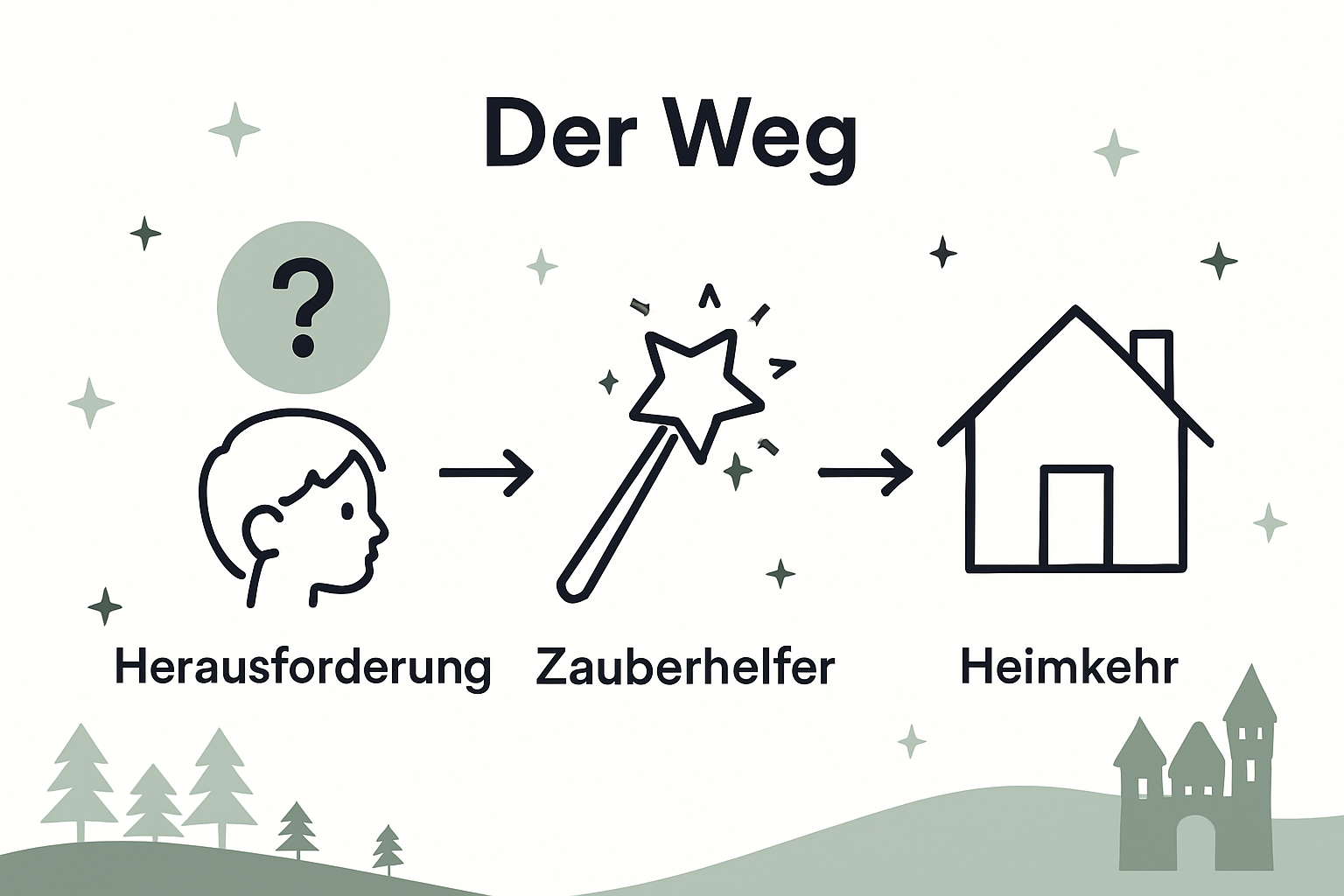
The classical structure of children's fairy tales can be divided into typical phases. First, the protagonist is introduced in a familiar life situation, which is usually characterized by challenges or injustices. This is followed by a confrontation with supernatural events or magical beings that help the hero or test him. The turning point lies in the active overcoming of obstacles through courage, cunning, or moral integrity. The hero's journey typically ends with a transformation and a just resolution.
Particularly characteristic features include clear moral archetypes. Differences between fairy tales and fables show that fairy tales possess more complex psychological levels. While fables often convey direct lessons, fairy tales work with symbolic dimensions. Supernatural elements such as talking animals, magic spells, and magical objects serve not only entertainment but symbolize inner developmental processes and emotional maturation.
The narrative structure of children's fairy tales is based on universal psychological patterns. They reflect fundamental human experiences such as the struggle between good and evil, the importance of courage and compassion, and the possibility of personal transformation. The stories enable children to explore and understand complex emotional states and moral dilemmas on a safe, metaphorical level.
Educational Benefits and Risks in Children's Daily Life
Fairy tales fulfill an important educational function in children's daily lives that goes far beyond mere entertainment. They offer children a safe space to process complex emotional experiences and develop fundamental social skills. Edory's Education Blog emphasizes that carefully selected stories can be crucial for child development.
The educational value of fairy tales manifests itself in several key areas. Children learn empathy, conflict resolution, and moral orientation through narrative structures. The stories subtly convey values such as courage, compassion, and justice. At the same time, they offer safe coping strategies for childhood fears and insecurities by translating complex emotional worlds into understandable images and actions.
However, fairy tales also carry potential risks. Some traditional narratives convey outdated social stereotypes or simplified gender roles. Supernatural elements can trigger fear in sensitive children or create unrealistic expectations. Parents and educators must therefore carefully select fairy tales and conduct accompanying conversations to contextualize narrative content in an age-appropriate manner.
Balancing educational benefits and potential risks requires a reflective approach to fairy tales. They should be understood as tools for communication and development - not as rigid teaching texts. Through careful selection, accompanying discussions, and age-appropriate interpretation, fairy tales can become valuable instruments for children's education and emotional intelligence.
Creating Children's Fairy Tales Digitally: Opportunities and Challenges
The digital revolution is changing the way children's fairy tales are created and told. Developing fantastical stories now means more than ever combining creative technologies and traditional storytelling craft. Artificial intelligence, interactive platforms, and multimedia design options open up entirely new dimensions of storytelling.
The opportunities of digital fairy tale creation are diverse. Interactive elements allow children to actively intervene in the storyline, shape characters, and explore alternative plot threads. Personalized fairy tales can take into account individual experiences and learning needs. Artificial intelligence helps generate stories that dynamically adapt to children's interests and developmental stages.
At the same time, digital fairy tale formats present significant challenges. The risk of overstimulation and distraction through technical possibilities exists as well as risks of losing control over narrative structures. How fairy tales stimulate imagination becomes a complex balancing act between technological innovation and educational responsibility. Parents and educators must ensure that digital fairy tales do not lose the emotional depth and symbolic power of traditional storytelling forms.
The future of children's fairy tales lies in a balanced approach. Digital technologies should complement the original magic of storytelling, not replace it. Creative concepts that combine interactivity with narrative depth will shape the fairy tales of the coming generation. What remains crucial is the ability to touch children emotionally, ignite their imagination, and convey important life lessons in an accessible, inspiring way.
Discover the Magic of Fairy Tale Creation with Edory
Children's fairy tales are created through an exciting blend of fantasy, cultural heritage, and creative storytelling techniques. Parents and educators often face the challenge of finding appropriate stories that are both educational and captivating for children. The goal is to stimulate children's imagination while conveying valuable values. This is exactly where Edory comes in, offering an innovative solution for creating individually tailored fairy tales.
With Edory, you can discover new, personalized stories every day that are tailored to your child's interests and age. The platform combines proven narrative structures with modern artificial intelligence, making every story unique and inviting children to dream along. Learn more about the exciting world of Uncategorized – Edory AI – Educational Children's Stories and how Edory helps you support the development of imagination and moral understanding in your child with ease.
Start now and inspire your children's imagination with stories that excite and nurture them. Visit https://edory.ai and become part of a new era of storytelling.
Frequently Asked Questions
How are Children's Fairy Tales Told?
Children's fairy tales are often told through oral transmission or in written form, frequently using traditional structures and archetypal characters to convey complex emotions and moral lessons.
What Elements are Typical of Children's Fairy Tales?
Typical elements of children's fairy tales include supernatural beings, clear moral messages, a structured hero's journey, and the introduction of conflicts and their resolution through courage and inner strength.
What is the Educational Value of Children's Fairy Tales?
Children's fairy tales help children develop empathy, conflict resolution, and moral orientation. They offer safe coping strategies for fears and are important for emotional intelligence.
How do Digital Technologies Impact the Creation of Children's Fairy Tales?
Digital technologies enable interactive elements that allow children to actively participate in stories. However, they also present challenges regarding emotional depth and narrative control.