 edory
edory
More than 80 percent of children in Germany regularly come into contact with fairy tales. But why have these fantastic stories fascinated so many young listeners for generations? Fairy tales are not just stories; they are engines for imagination, creativity, and children's emotional development. Those who understand how fairy tales purposefully promote imagination accompany children on their path to greater imagination and inner strength.
Key Findings
| Point | Details |
|---|---|
| Promotion of Imagination | Fairy tales stimulate children's imagination and offer unique developmental opportunities through supernatural elements and complex characters. |
| Psychological Benefits | Fairy tales enable children to cope with fears and insecurities and develop resilience through symbolic coping strategies. |
| Role of Parents | Parents should actively participate in the storytelling experience and provide emotional security to support their children's imagination development. |
| Avoidance Strategies | Do not use imagination as an educational tool and appreciate children's interpretations to create a safe space for creativity. |
Table of Contents
- Definition of Fairy Tales and Imagination Development
- Psychological Mechanisms Behind Fairy Tale Effects
- Examples: How Imagination Grows Through Stories
- Role of Parents in Telling Fairy Tales
- Common Mistakes and How to Avoid Them
Definition of Fairy Tales and Imagination Development
Fairy tales are more than just simple stories – they are magical tools for children's development that stimulate imagination and creativity in a special way. Fairy tales are defined as freely invented prose texts that tell of wondrous events and do not require a specific temporal or geographical classification. They exist in all cultures and convey universal human experiences.
Imagination development begins very early in a child's life. According to research by the Max Planck Society, this process begins around the second year of life with so-called "pretend play." Children begin to imagine alternative realities and develop complex mental scenarios in the process. This ability is deeply social: it often arises in shared play with adults and is continuously strengthened through narrative experiences like fairy tales.
If children are given regular contact with fairy tales and fantasy stories, they can systematically expand their imaginative competence. Fairy tales offer several unique developmental opportunities:
- Supernatural elements stimulate imagination
- Complex characters enable emotional identification
- Narrative structures promote creative thinking
- Metaphorical representations help process abstract concepts
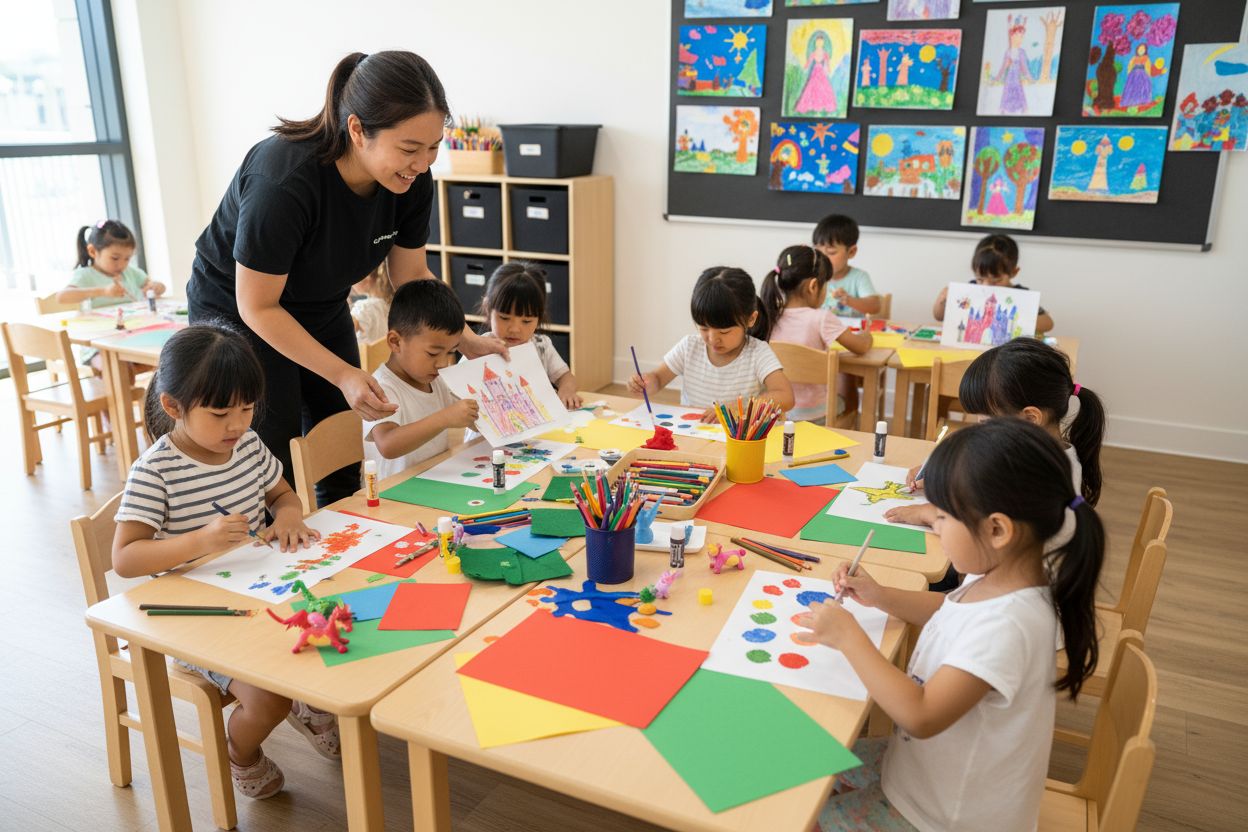
Through this playful and creative engagement with fairy tale worlds, children develop not only their imagination but also important cognitive and socio-emotional skills.
Here is an overview of the developmental effects of fairy tales:
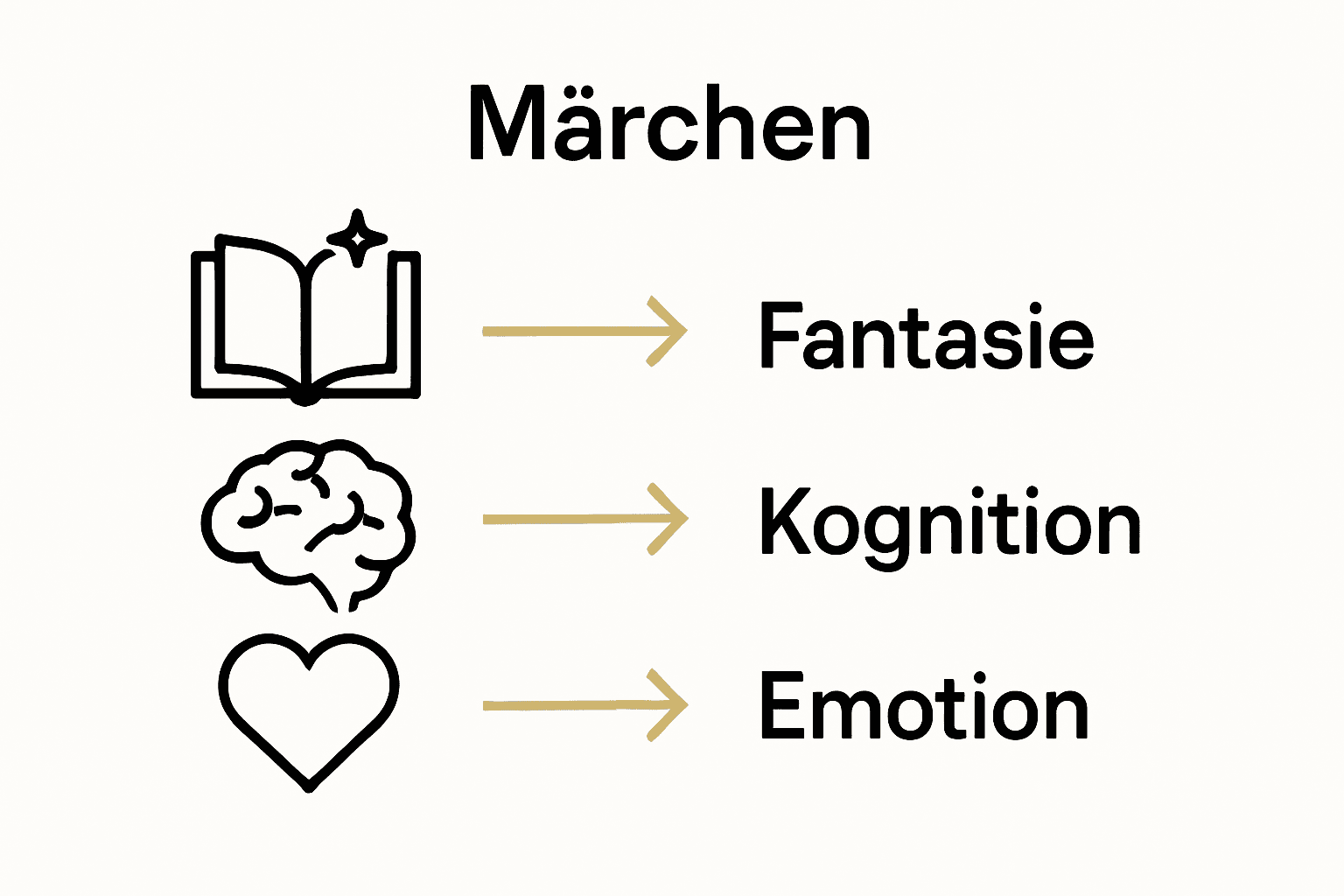
| Area of Development | How Fairy Tales Support It | Example Mechanisms |
|---|---|---|
| Imagination | Supernatural elements | Magical creaturesnNew worlds |
| Creativity | Narrative structures | Alternative endingsnRetelling stories |
| Cognitive abilities | Complex scenarios | Problem solvingnThinking in images |
| Socio-emotional strength | Identification with characters | Hero's journeysnEmotional reflection |
Psychological Mechanisms Behind Fairy Tale Effects
Fairy tales are not simply stories, but profound psychological instruments with remarkable effects on children's development. Symbolic processing plays a central role in this. Psychological interpretive approaches understand fairy tales as powerful means of coping with unconscious conflicts by conveying complex feelings and developmental challenges through universal symbols and archetypes.
The renowned child psychologist Bruno Bettelheim emphasized that fairy tales offer children a unique opportunity to manage fears and insecurities imaginatively. The hero's journeys in fairy tales show children symbolic coping strategies: the protagonist overcomes obstacles, transforms, and returns strengthened. These narrative patterns help children emotionally process their own challenges and develop resilience.
Scientists like Maria Tatar emphasize that fairy tales not only entertain but also support important psychological development processes. They present typical problem-solving patterns that help children:
- Understand complex emotional situations
- Reflect on moral dilemmas
- Recognize social dynamics
- Explore their own possible actions
Fairy tales work like a psychological training ground: they offer a safe space where children can practice mental strategies, regulate emotions, and playfully strengthen their inner resilience.
Examples: How Imagination Grows Through Stories
Stories are powerful catalysts for children's imagination development, offering far more than simple entertainment. Neurobiological research shows that fairy tales and stories possess a unique ability to stimulate children's imagination. Children think in images, and fantastic narratives with magical beings like unicorns, fairies, and talking animals expand their mental experiential spaces in a playful way.
Narrative worlds offer children a safe space to explore complex thoughts and emotions. When a child hears a story about a brave hero who overcomes obstacles, it unconsciously learns problem-solving strategies. These symbolic experiences help children develop their own creativity and expand mental boundaries.
Creative storytelling techniques can help parents purposefully support imagination development:
- Create interactive storytelling experiences
- Use open narrative structures
- Encourage children to co-tell stories
- Incorporate imaginative details
By actively shaping stories, children learn to control and expand their own imagination. They develop not only language skills but also emotional intelligence and creative thinking.
Role of Parents in Telling Fairy Tales
Shared storytelling experiences are the key to successful imagination promotion. Parents are more than just storytellers – they are emotional interpreters and trusted companions in the magical world of fairy tales. Bruno Bettelheim emphasizes that jointly hearing and interpreting stories is crucial for children's emotional development.
The way parents tell fairy tales can fundamentally shape a child's imagination space. It is not just about repeating words, but about creating an emotional landscape. Children need parents who take fantastical statements seriously without negating them or rationalizing them too much. A playful approach to fantasy beings like the tooth fairy can inspire children's imagination.
Storytelling in family life enables parents to actively support imagination development. Here are key strategies:
- Listen actively and ask questions
- Appreciate children's imaginative interpretations
- Bring your own creativity
- Convey emotional security
Through mindful and loving fairy tale storytelling, parents create a magical space where children can freely develop their imagination while building emotional resilience.
Common Mistakes and How to Avoid Them
Children's fantasy world is sensitive and easily disrupted. A common mistake by parents is instrumentalizing fantasy beings for educational purposes. For example, when parents threaten that the tooth fairy won't visit if teeth aren't brushed properly, magical fantasy is degraded to a pressure tactic.
Another challenge is over-interpreting fairy tales. Many parents tend to explain stories or take a moralistic stance. Modern storytelling approaches instead recommend giving children space for their own interpretations. The power of fairy tales lies in their openness and the possibility that children discover meanings themselves.
Here are the most important avoidance strategies:
- Do not misuse imagination as an educational tool
- Don't impose moral lessons
- Appreciate children's interpretations
- Let stories have their effect unaltered
Those who tell fairy tales mindfully and respectfully create a protected space for children's creativity and emotional development.
Reshape Your Child's Imagination World
In this article, you've learned how important fairy tales are for your child's imagination development and emotional strength. Yet often you lack the time to constantly find new and suitable stories. Your child yearns for adventures that match their interests, and you want pedagogically valuable content. This is exactly where we come in to make your daily story search easier. Discover our collection of educational children's stories tailored to the needs of modern families.
With Edory.ai, you create fresh, personalized stories for your child every day with fairy-tale and educational elements. Promote creativity and joy of learning directly on your smartphone and let your child actively participate in the stories. Take the next step and test Edory's diverse possibilities right now. Stay tuned for updates and exclusive insights on our homepage. Your child deserves imagination without limits – start today!
Frequently Asked Questions
How do fairy tales promote children's imagination?
Fairy tales stimulate imagination by using supernatural elements, complex characters, and exciting narrative structures that engage children's imagination.
Why are stories important for children's emotional development?
Stories enable children to understand emotional situations, identify with characters, and reflect on their own feelings, which contributes to developing resilience.
What role do parents play in telling fairy tales?
Parents are crucial to imagination promotion through emotional engagement and active participation; they should not only tell stories but also appreciate children's creative expression.
What are common mistakes when telling fairy tales?
A common mistake is instrumentalizing fantasy beings for education or over-interpreting stories, which can impair children's imagination.